Interface
- ABBHIRAMI.M
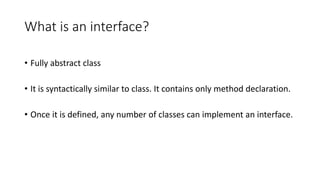
What is an interface?
• Fully abstract class
• It is syntactically similar to class. It contains only method declaration.
• Once it is defined, any number of classes can implement an interface.
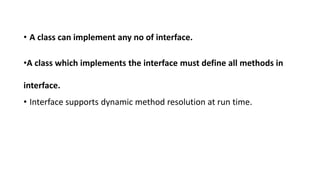
• A class can implement any no of interface.
•A class which implements the interface must define all methods in
interface.
• Interface supports dynamic method resolution at run time.
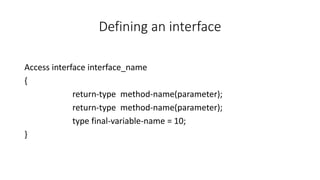
Defining an interface
Access interface interface_name
{
return-type method-name(parameter);
type final-variable-name = 10;
}
Main concept
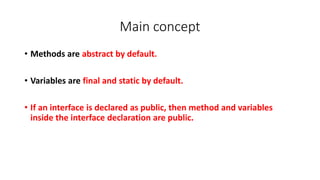
• Methods are abstract by default.
• Variables are final and static by default.
• If an interface is declared as public, then method and variables
inside the interface declaration are public.
Implementing Interface
Access class class_name [extends class] [implements interface1,in2,…n]
{
class body//
}
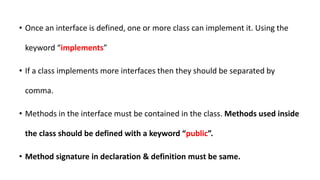
• Once an interface is defined, one or more class can implement it. Using the
keyword “implements”
• If a class implements more interfaces then they should be separated by
comma.
• Methods in the interface must be contained in the class. Methods used inside
the class should be defined with a keyword “public”.
• Method signature in declaration & definition must be same.
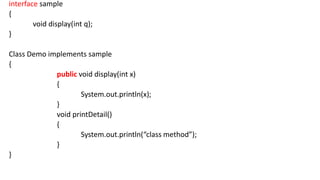
interface sample
{
void display(int q);
}
Class Demo implements sample
{
public void display(int x)
{
System.out.println(x);
}
void printDetail()
{
System.out.println(“class method”);
}
}
Class d
{
public static void main(String arg[])throws IOException
{
Demo s = new Demo();
s. display(10);
s. printDetail()
}
}
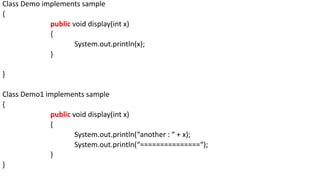
Class Demo implements sample
{
public void display(int x)
{
System.out.println(x);
}
}
Class Demo1 implements sample
{
public void display(int x)
{
System.out.println(“another : “ + x);
System.out.println(“===============“);
}
}
Class d
{
public static void main(String arg[])
{
sample s = new Demo();
Demo1 d1=new Demo1();
s. display(10); // method in demo
s=d1;
s. display(10); // method in demo1
}
}
Partial Implementation
• If a class doesn’t define all the methods in interface, then the class
must be declared as abstract.
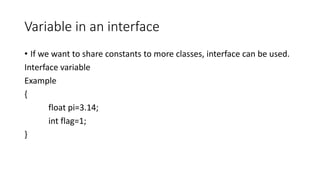
Variable in an interface
• If we want to share constants to more classes, interface can be used.
Interface variable
Example
{
float pi=3.14;
int flag=1;
}
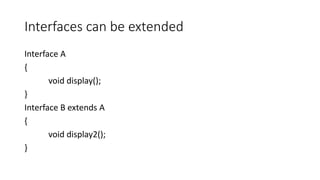
Interfaces can be extended
Interface A
{
void display();
}
Interface B extends A
{
void display2();
}
Conclusion
• So for now in these slides we have discussed about a small topic
named “interface”.
• Hope you get a little bit of what interface exactly is.

Interface

  • 1.
  • 2.
    What is aninterface? • Fully abstract class • It is syntactically similar to class. It contains only method declaration. • Once it is defined, any number of classes can implement an interface.
  • 3.
    • A classcan implement any no of interface. •A class which implements the interface must define all methods in interface. • Interface supports dynamic method resolution at run time.
  • 4.
    Defining an interface Accessinterface interface_name { return-type method-name(parameter); return-type method-name(parameter); type final-variable-name = 10; }
  • 5.
    Main concept • Methodsare abstract by default. • Variables are final and static by default. • If an interface is declared as public, then method and variables inside the interface declaration are public.
  • 6.
    Implementing Interface Access classclass_name [extends class] [implements interface1,in2,…n] { class body// }
  • 7.
    • Once aninterface is defined, one or more class can implement it. Using the keyword “implements” • If a class implements more interfaces then they should be separated by comma. • Methods in the interface must be contained in the class. Methods used inside the class should be defined with a keyword “public”. • Method signature in declaration & definition must be same.
  • 8.
    interface sample { void display(intq); } Class Demo implements sample { public void display(int x) { System.out.println(x); } void printDetail() { System.out.println(“class method”); } }
  • 9.
    Class d { public staticvoid main(String arg[])throws IOException { Demo s = new Demo(); s. display(10); s. printDetail() } }
  • 10.
    Class Demo implementssample { public void display(int x) { System.out.println(x); } } Class Demo1 implements sample { public void display(int x) { System.out.println(“another : “ + x); System.out.println(“===============“); } }
  • 11.
    Class d { public staticvoid main(String arg[]) { sample s = new Demo(); Demo1 d1=new Demo1(); s. display(10); // method in demo s=d1; s. display(10); // method in demo1 } }
  • 12.
    Partial Implementation • Ifa class doesn’t define all the methods in interface, then the class must be declared as abstract.
  • 13.
    Variable in aninterface • If we want to share constants to more classes, interface can be used. Interface variable Example { float pi=3.14; int flag=1; }
  • 14.
    Interfaces can beextended Interface A { void display(); } Interface B extends A { void display2(); }
  • 15.
    Conclusion • So fornow in these slides we have discussed about a small topic named “interface”. • Hope you get a little bit of what interface exactly is.