Interface
• using interface, you can specify what a class
must do, but not how it does it.
• Interfaces are syntactically similar to classes,
but they lack instance variables, and their
methods are declared without any body.
• Through the use of the interface keyword,
Java allows you to fully abstract the interface
from its implementation.
Interface
• Using interface, you can specify a set of
method which can be implemented by one or
more classes.
• The interface, itself, does not actually define
any implementation.
• A class can implement more than one
interface.
• A class can only inherit a single superclass.
Defining an Interface
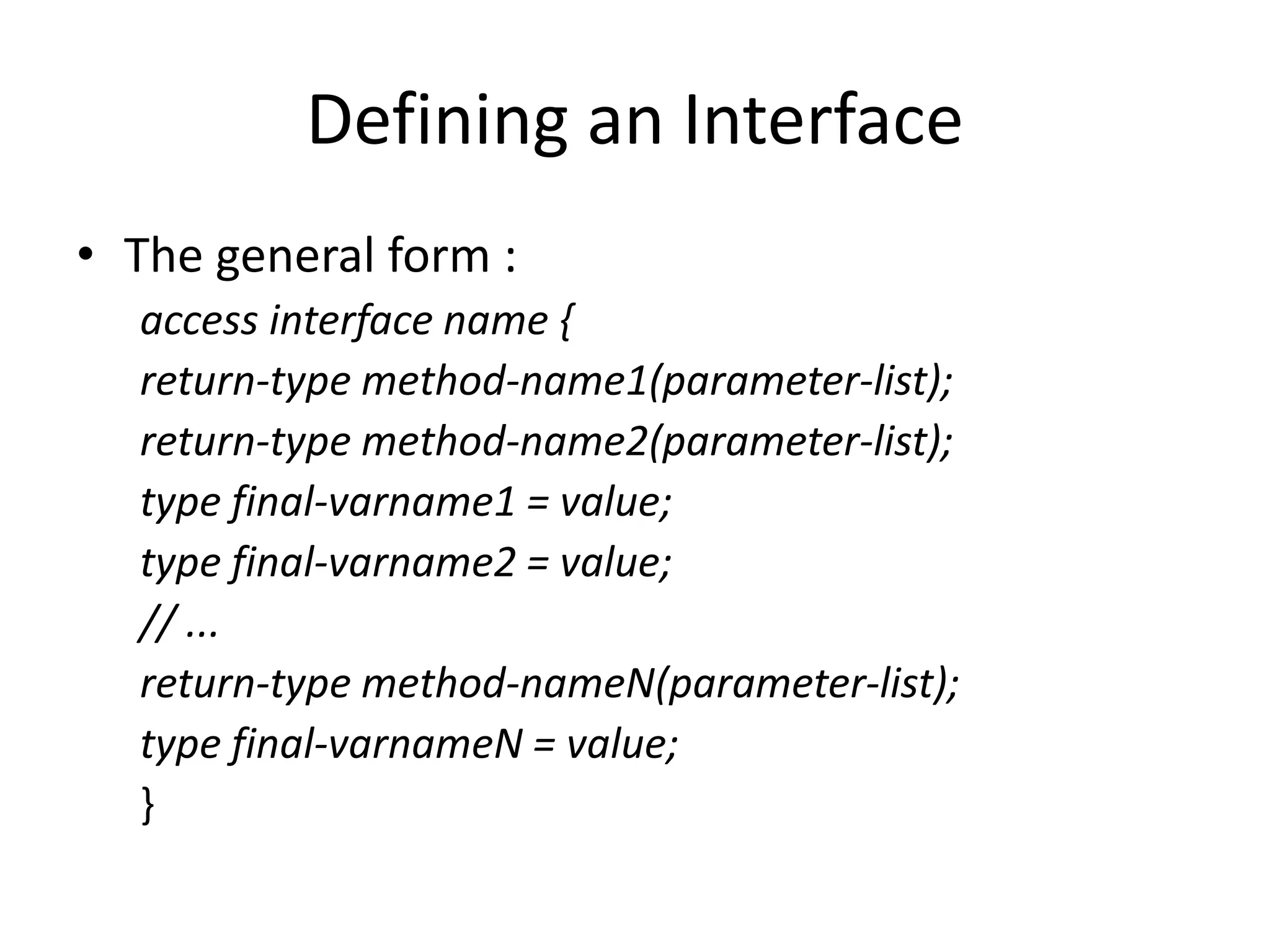
• The general form :
access interface name {
return-type method-name1(parameter-list);
return-type method-name2(parameter-list);
type final-varname1 = value;
type final-varname2 = value;
// ...
return-type method-nameN(parameter-list);
type final-varnameN = value;
}
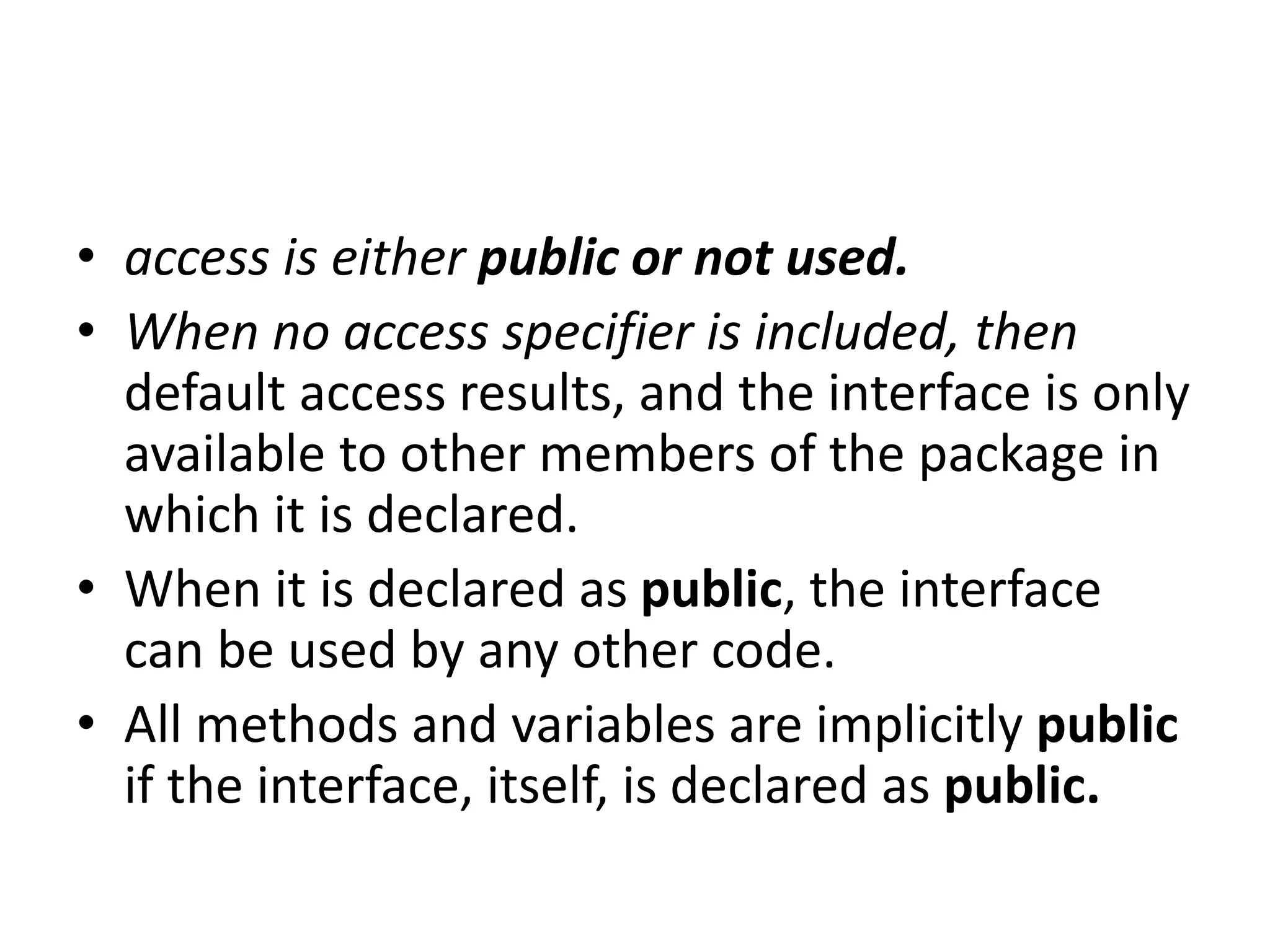
• access is either public or not used.
• When no access specifier is included, then
default access results, and the interface is only
available to other members of the package in
which it is declared.
• When it is declared as public, the interface
can be used by any other code.
• All methods and variables are implicitly public
if the interface, itself, is declared as public.
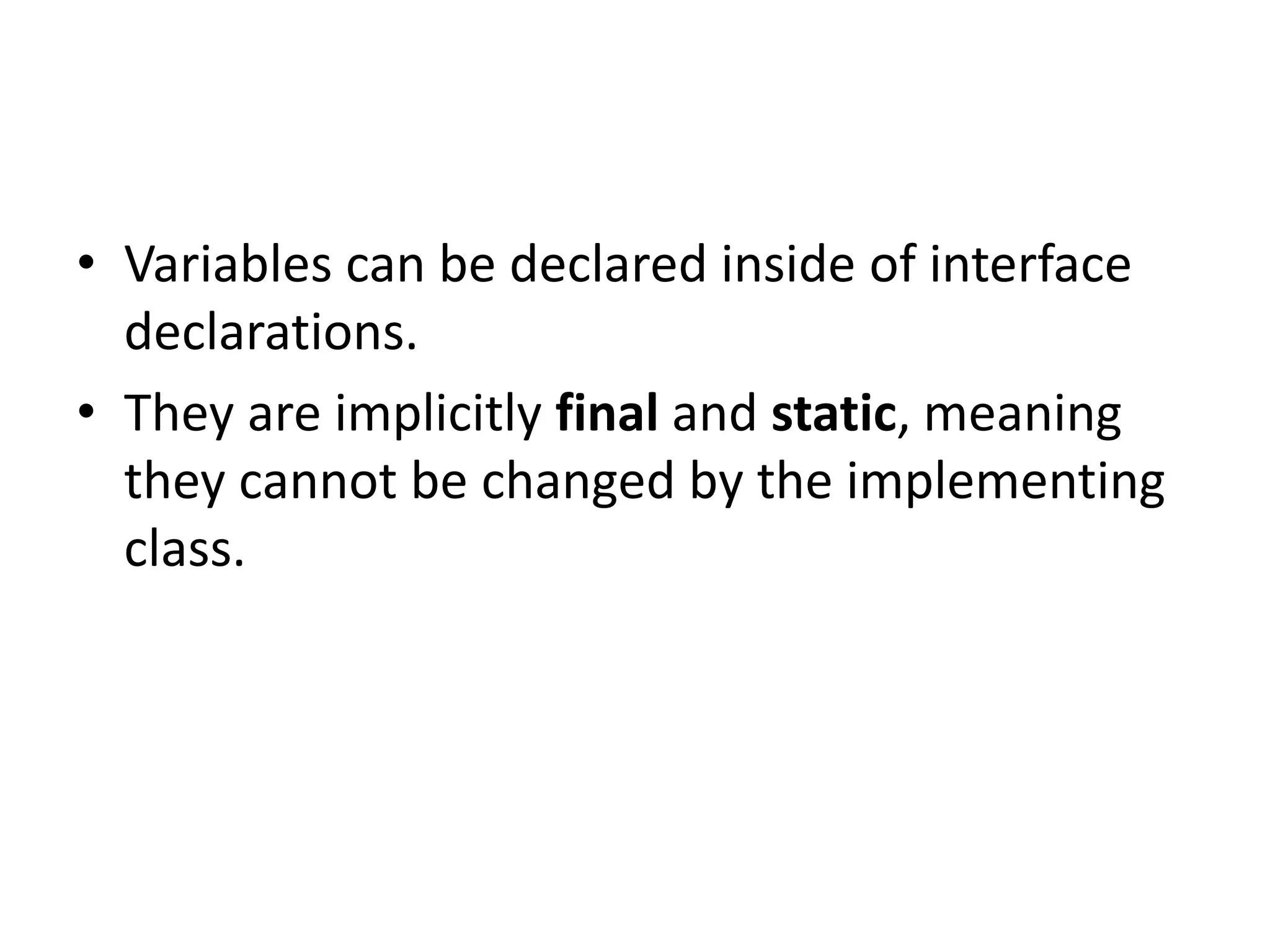
• Variables can be declared inside of interface
declarations.
• They are implicitly final and static, meaning
they cannot be changed by the implementing
class.
Sample
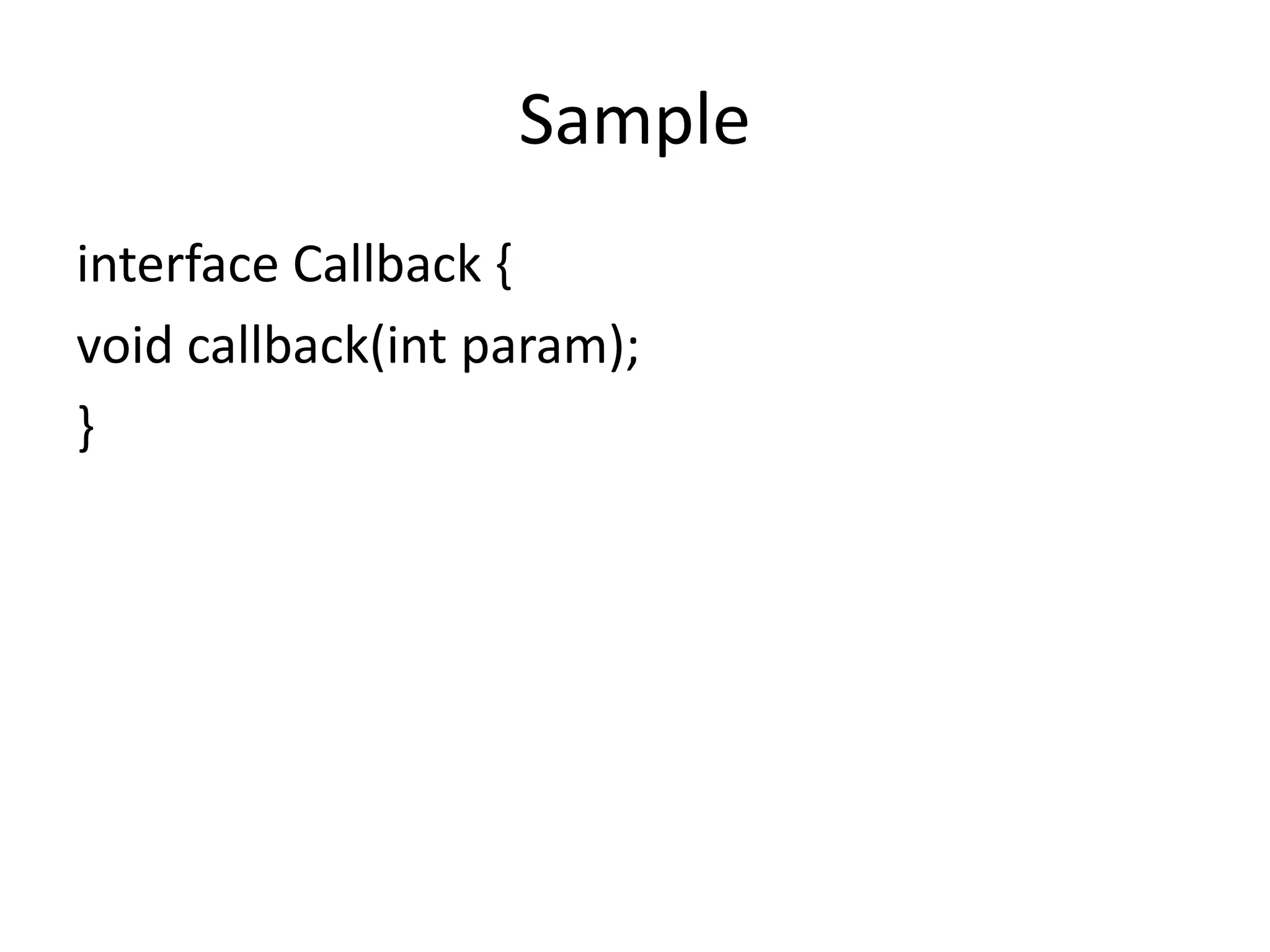
interface Callback {
void callback(int param);
}
Implementing Interfaces
• To implement an interface, include the
implements clause in a class definition, and
then create the methods defined by the
interface.
• The general form:
access class classname [extends superclass]
[implements interface [,interface...]] {
// class-body
}
Sample
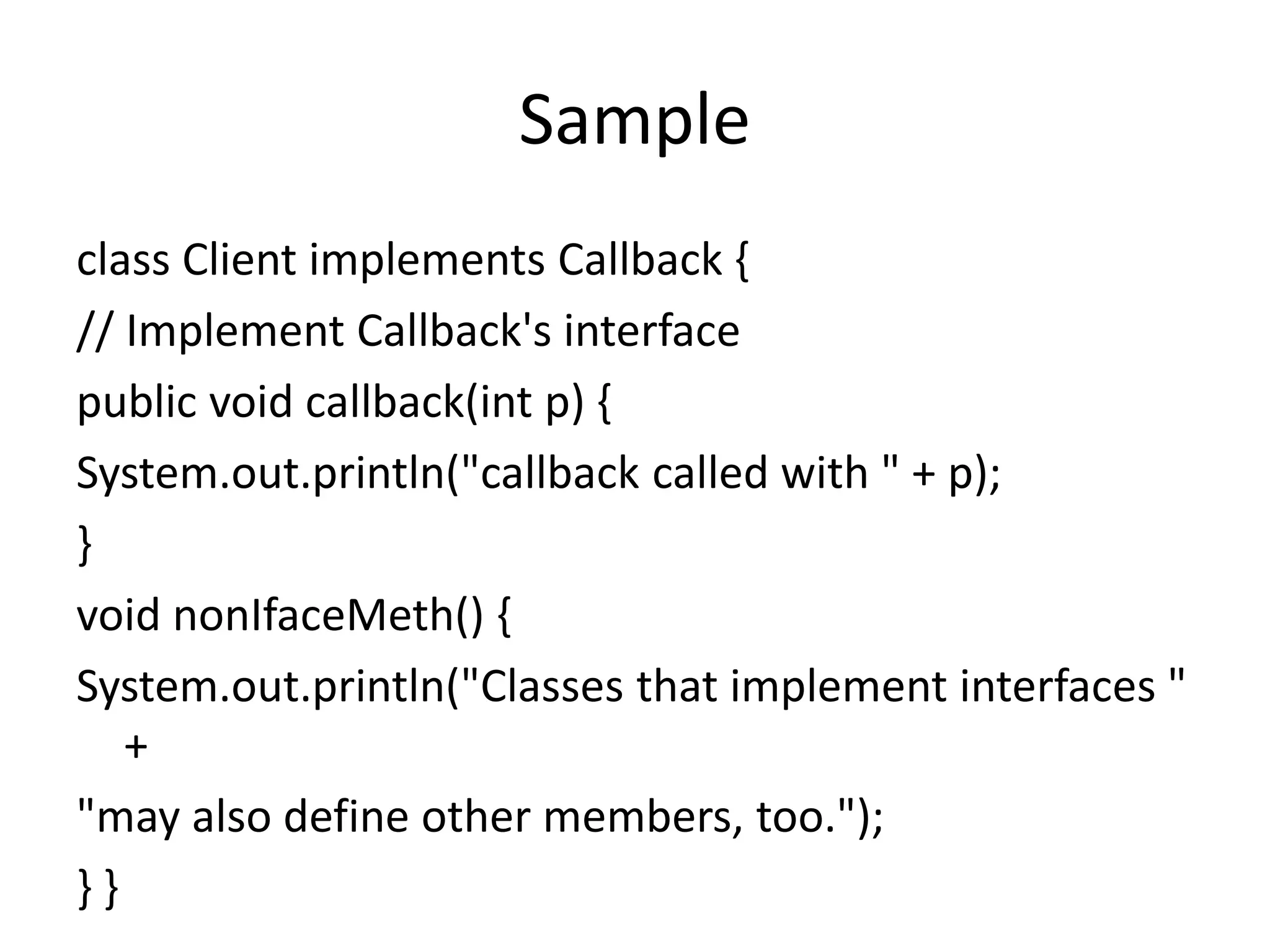
class Client implements Callback {
// Implement Callback's interface
public void callback(int p) {
System.out.println("callback called with " + p);
}
void nonIfaceMeth() {
System.out.println("Classes that implement interfaces "
+
"may also define other members, too.");
} }
Partial Implementations
• If a class includes an interface but does not
fully implement the methods defined by that
interface, then that class must be declared as
abstract.
Interface sample
// Define an integer stack interface.
interface IntStack {
void push(int item); // store an item
int pop(); // retrieve an item
}
class FixedStack implements IntStack {
private int stck[];
private int tos;
FixedStack(int size) {
stck = new int[size];
tos = -1;
}
public void push(int item) {
if(tos==stck.length-1) // use length member
System.out.println("Stack is full.");
else
stck[++tos] = item;
}
// Pop an item from the stack
public int pop() {
if(tos < 0) {
System.out.println("Stack underflow.");
return 0;
}
else
return stck[tos--];
} }
class IFTest {
public static void main(String args[]) {
FixedStack mystack1 = new FixedStack(5);
FixedStack mystack2 = new FixedStack(8);
// push some numbers onto the stack
for(int i=0; i<5; i++) mystack1.push(i);
for(int i=0; i<8; i++) mystack2.push(i);
// pop those numbers off the stack
System.out.println("Stack in mystack1:");
for(int i=0; i<5; i++)
System.out.println(mystack1.pop());
System.out.println("Stack in mystack2:");
for(int i=0; i<8; i++)
System.out.println(mystack2.pop());
}
Variables in Interfaces
• To import shared constants into multiple
classes by simply declaring an interface that
contains variables which are initialized to the
desired values.
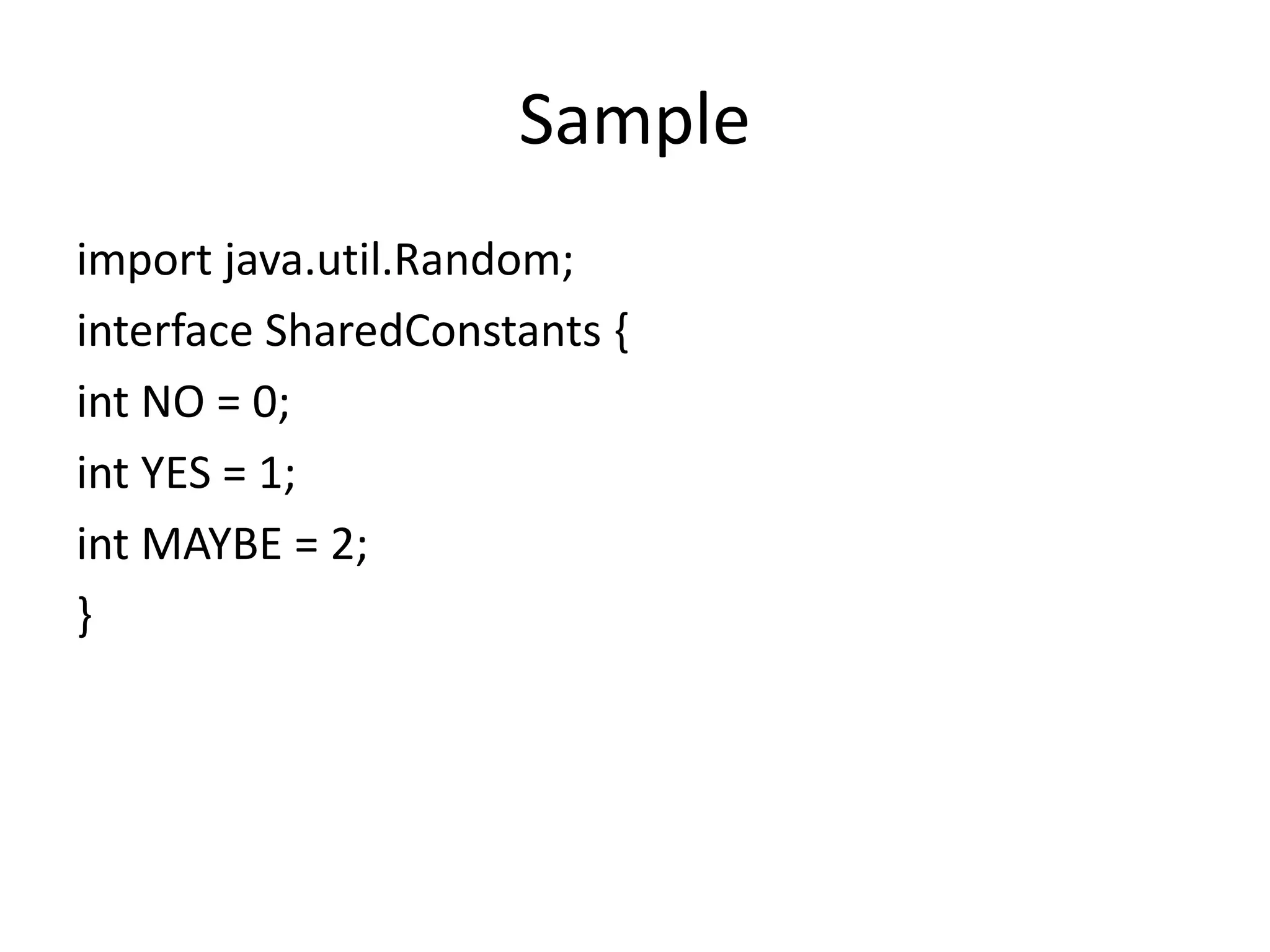
Sample
import java.util.Random;
interface SharedConstants {
int NO = 0;
int YES = 1;
int MAYBE = 2;
}
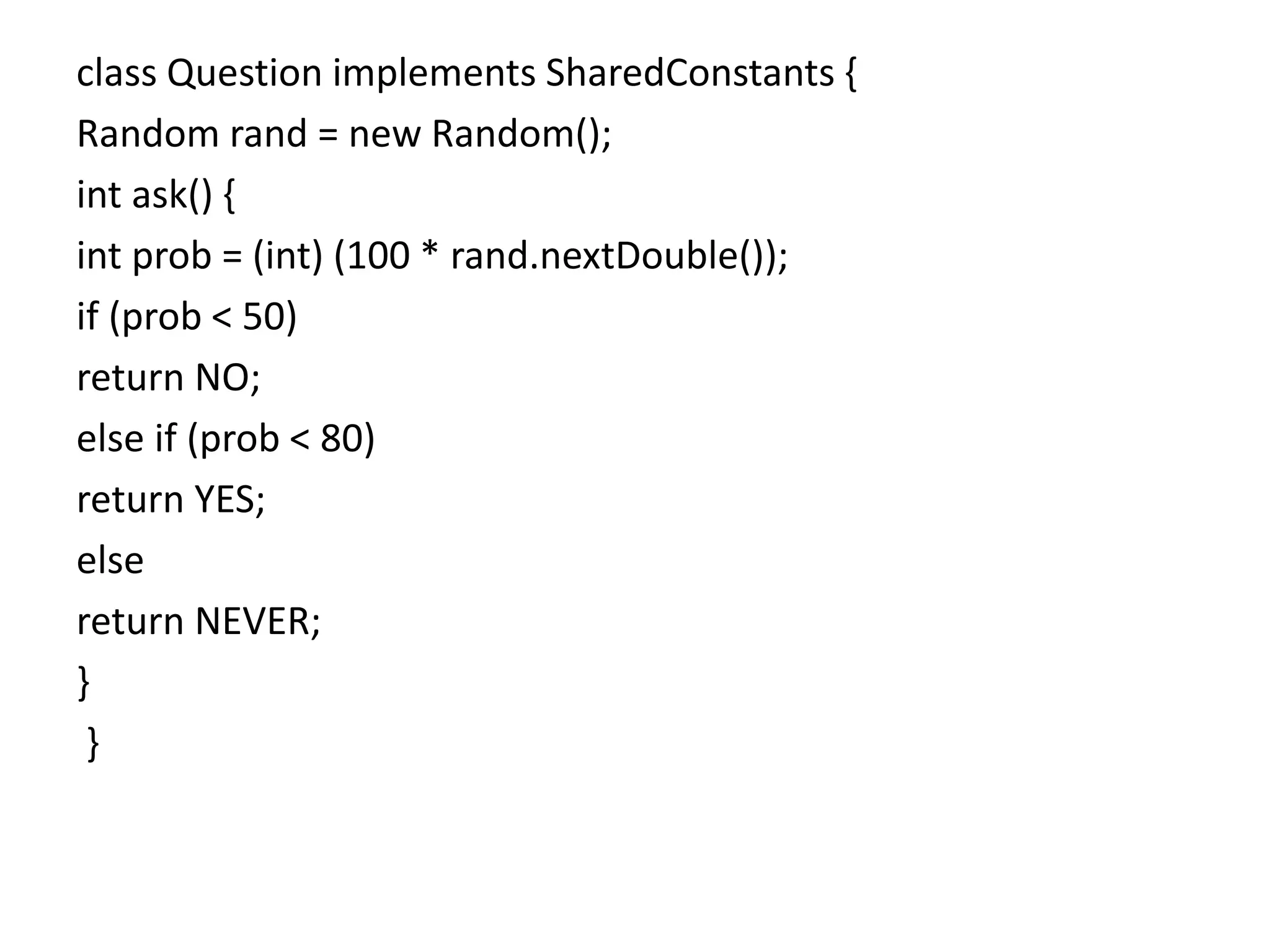
class Question implements SharedConstants {
Random rand = new Random();
int ask() {
int prob = (int) (100 * rand.nextDouble());
if (prob < 50)
return NO;
else if (prob < 80)
return YES;
else
return NEVER;
}
}
class AskMe implements SharedConstants {
static void answer(int result) {
switch(result) {
case NO:
System.out.println("No");
break;
case YES:
System.out.println("Yes"); break;
case MAYBE:
System.out.println("Maybe");
break;
} }
public static void main(String args[]) {
Question q = new Question();
answer(q.ask());
answer(q.ask());
answer(q.ask());
answer(q.ask());
} }
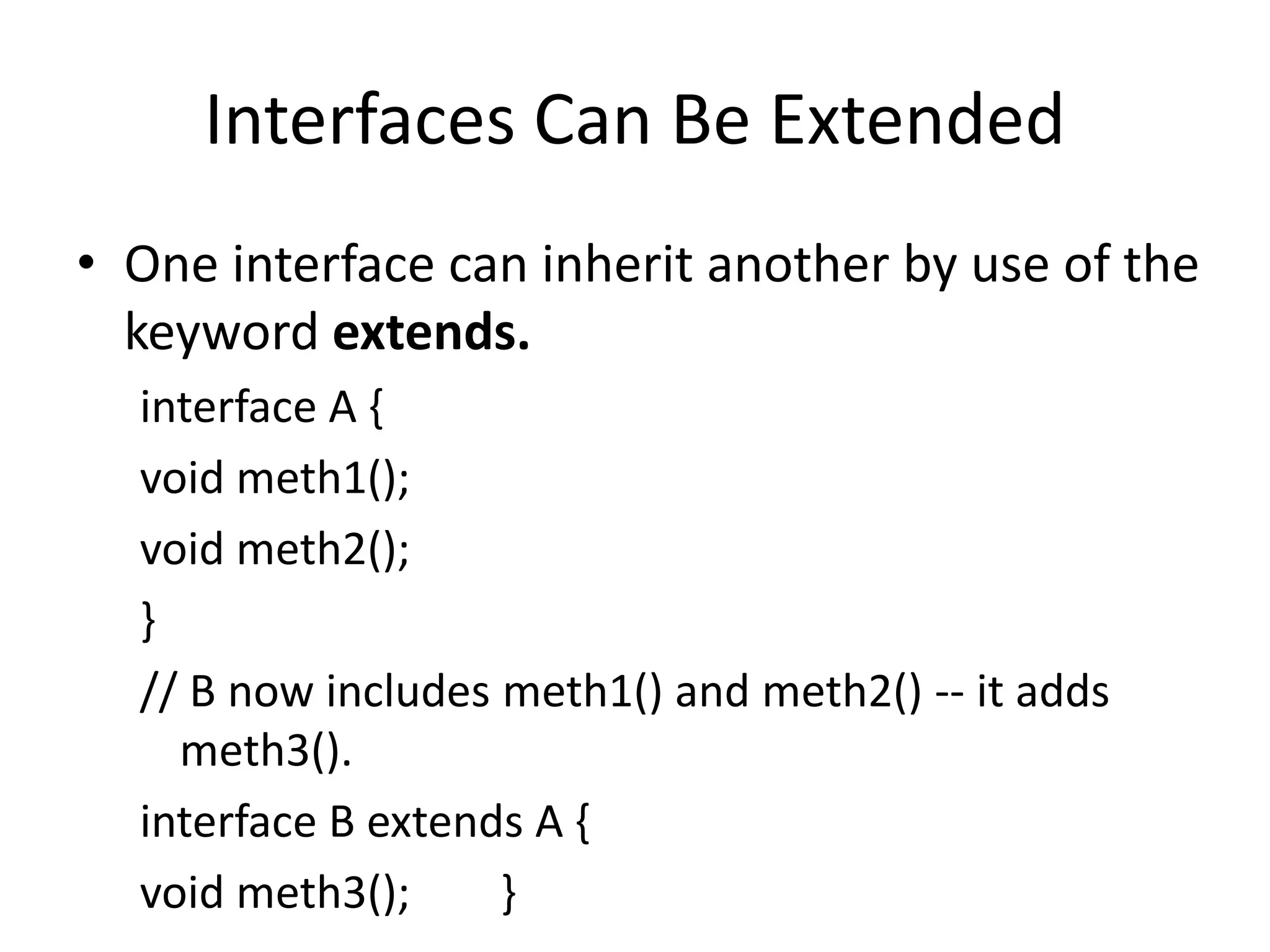
Interfaces Can Be Extended
• One interface can inherit another by use of the
keyword extends.
interface A {
void meth1();
void meth2();
}
// B now includes meth1() and meth2() -- it adds
meth3().
interface B extends A {
void meth3(); }

Java interface

  • 1.
  • 2.
    • using interface,you can specify what a class must do, but not how it does it. • Interfaces are syntactically similar to classes, but they lack instance variables, and their methods are declared without any body. • Through the use of the interface keyword, Java allows you to fully abstract the interface from its implementation.
  • 3.
    Interface • Using interface,you can specify a set of method which can be implemented by one or more classes. • The interface, itself, does not actually define any implementation. • A class can implement more than one interface. • A class can only inherit a single superclass.
  • 4.
    Defining an Interface •The general form : access interface name { return-type method-name1(parameter-list); return-type method-name2(parameter-list); type final-varname1 = value; type final-varname2 = value; // ... return-type method-nameN(parameter-list); type final-varnameN = value; }
  • 5.
    • access iseither public or not used. • When no access specifier is included, then default access results, and the interface is only available to other members of the package in which it is declared. • When it is declared as public, the interface can be used by any other code. • All methods and variables are implicitly public if the interface, itself, is declared as public.
  • 6.
    • Variables canbe declared inside of interface declarations. • They are implicitly final and static, meaning they cannot be changed by the implementing class.
  • 7.
    Sample interface Callback { voidcallback(int param); }
  • 8.
    Implementing Interfaces • Toimplement an interface, include the implements clause in a class definition, and then create the methods defined by the interface. • The general form: access class classname [extends superclass] [implements interface [,interface...]] { // class-body }
  • 9.
    Sample class Client implementsCallback { // Implement Callback's interface public void callback(int p) { System.out.println("callback called with " + p); } void nonIfaceMeth() { System.out.println("Classes that implement interfaces " + "may also define other members, too."); } }
  • 10.
    Partial Implementations • Ifa class includes an interface but does not fully implement the methods defined by that interface, then that class must be declared as abstract.
  • 11.
    Interface sample // Definean integer stack interface. interface IntStack { void push(int item); // store an item int pop(); // retrieve an item } class FixedStack implements IntStack { private int stck[]; private int tos; FixedStack(int size) { stck = new int[size]; tos = -1; }
  • 12.
    public void push(intitem) { if(tos==stck.length-1) // use length member System.out.println("Stack is full."); else stck[++tos] = item; } // Pop an item from the stack public int pop() { if(tos < 0) { System.out.println("Stack underflow."); return 0; } else return stck[tos--]; } }
  • 13.
    class IFTest { publicstatic void main(String args[]) { FixedStack mystack1 = new FixedStack(5); FixedStack mystack2 = new FixedStack(8); // push some numbers onto the stack for(int i=0; i<5; i++) mystack1.push(i); for(int i=0; i<8; i++) mystack2.push(i); // pop those numbers off the stack System.out.println("Stack in mystack1:"); for(int i=0; i<5; i++) System.out.println(mystack1.pop()); System.out.println("Stack in mystack2:"); for(int i=0; i<8; i++) System.out.println(mystack2.pop()); }
  • 14.
    Variables in Interfaces •To import shared constants into multiple classes by simply declaring an interface that contains variables which are initialized to the desired values.
  • 15.
    Sample import java.util.Random; interface SharedConstants{ int NO = 0; int YES = 1; int MAYBE = 2; }
  • 16.
    class Question implementsSharedConstants { Random rand = new Random(); int ask() { int prob = (int) (100 * rand.nextDouble()); if (prob < 50) return NO; else if (prob < 80) return YES; else return NEVER; } }
  • 17.
    class AskMe implementsSharedConstants { static void answer(int result) { switch(result) { case NO: System.out.println("No"); break; case YES: System.out.println("Yes"); break; case MAYBE: System.out.println("Maybe"); break; } } public static void main(String args[]) { Question q = new Question(); answer(q.ask()); answer(q.ask()); answer(q.ask()); answer(q.ask()); } }
  • 18.
    Interfaces Can BeExtended • One interface can inherit another by use of the keyword extends. interface A { void meth1(); void meth2(); } // B now includes meth1() and meth2() -- it adds meth3(). interface B extends A { void meth3(); }