Interfaces
Dr. M H B Ariyaratne
buddhika.ari@gmail.com
https://goo.gl/LtuPma
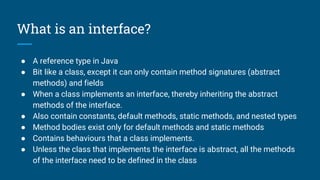
What is an interface?
â—Ź A reference type in Java
â—Ź Bit like a class, except it can only contain method signatures (abstract
methods) and fields
â—Ź When a class implements an interface, thereby inheriting the abstract
methods of the interface.
â—Ź Also contain constants, default methods, static methods, and nested types
â—Ź Method bodies exist only for default methods and static methods
â—Ź Contains behaviours that a class implements.
â—Ź Unless the class that implements the interface is abstract, all the methods
of the interface need to be defined in the class
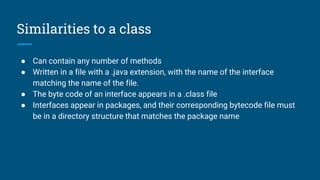
Similarities to a class
â—Ź Can contain any number of methods
â—Ź Written in a file with a .java extension, with the name of the interface
matching the name of the file.
â—Ź The byte code of an interface appears in a .class file
â—Ź Interfaces appear in packages, and their corresponding bytecode file must
be in a directory structure that matches the package name
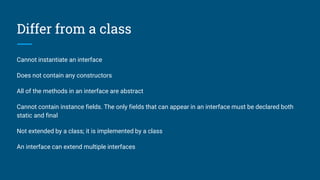
Differ from a class
Cannot instantiate an interface
Does not contain any constructors
All of the methods in an interface are abstract
Cannot contain instance fields. The only fields that can appear in an interface must be declared both
static and final
Not extended by a class; it is implemented by a class
An interface can extend multiple interfaces
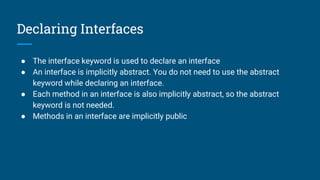
Declaring Interfaces
â—Ź The interface keyword is used to declare an interface
â—Ź An interface is implicitly abstract. You do not need to use the abstract
keyword while declaring an interface.
â—Ź Each method in an interface is also implicitly abstract, so the abstract
keyword is not needed.
â—Ź Methods in an interface are implicitly public
Implementing Interfaces
When a class implements an interface, we can think of the class as signing a contract, agreeing to
perform the specific behaviors of the interface. If a class does not perform all the behaviors of the
interface, the class must declare itself as abstract.
A class uses the implements keyword to implement an interface. The implements keyword appears in
the class declaration following the extends portion of the declaration.
Thank you

13. interfaces

  • 1.
    Interfaces Dr. M HB Ariyaratne buddhika.ari@gmail.com https://goo.gl/LtuPma
  • 2.
    What is aninterface? â—Ź A reference type in Java â—Ź Bit like a class, except it can only contain method signatures (abstract methods) and fields â—Ź When a class implements an interface, thereby inheriting the abstract methods of the interface. â—Ź Also contain constants, default methods, static methods, and nested types â—Ź Method bodies exist only for default methods and static methods â—Ź Contains behaviours that a class implements. â—Ź Unless the class that implements the interface is abstract, all the methods of the interface need to be defined in the class
  • 3.
    Similarities to aclass â—Ź Can contain any number of methods â—Ź Written in a file with a .java extension, with the name of the interface matching the name of the file. â—Ź The byte code of an interface appears in a .class file â—Ź Interfaces appear in packages, and their corresponding bytecode file must be in a directory structure that matches the package name
  • 4.
    Differ from aclass Cannot instantiate an interface Does not contain any constructors All of the methods in an interface are abstract Cannot contain instance fields. The only fields that can appear in an interface must be declared both static and final Not extended by a class; it is implemented by a class An interface can extend multiple interfaces
  • 5.
    Declaring Interfaces â—Ź Theinterface keyword is used to declare an interface â—Ź An interface is implicitly abstract. You do not need to use the abstract keyword while declaring an interface. â—Ź Each method in an interface is also implicitly abstract, so the abstract keyword is not needed. â—Ź Methods in an interface are implicitly public
  • 6.
    Implementing Interfaces When aclass implements an interface, we can think of the class as signing a contract, agreeing to perform the specific behaviors of the interface. If a class does not perform all the behaviors of the interface, the class must declare itself as abstract. A class uses the implements keyword to implement an interface. The implements keyword appears in the class declaration following the extends portion of the declaration.
  • 7.