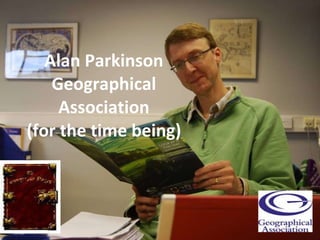

Alan Parkinson Geographical Association (for the time being)
http://about.me/alanparkinson http://livinggeography.blogspot.com
 
Today’s session… Why are these ‘interesting times’ ? How can the GA help you through them ? “ Curriculum making” – practical activities Some ideas to take away... The future curriculum (incl. OFSTED’s view)
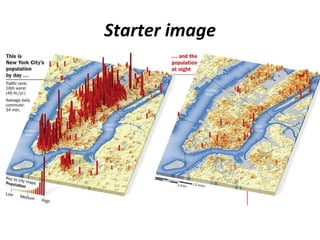
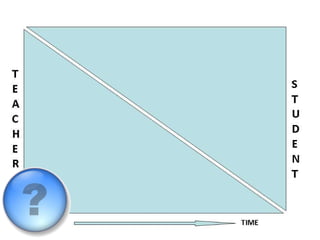
Starter image
 
Furthering the learning and teaching of geography... Action Plan for Geography – jointly with RGS-IBG 2006-11
2010 White Paper  “ The Importance of Teaching”
Curriculum making in “interesting times…” Geography Why are they interesting ?
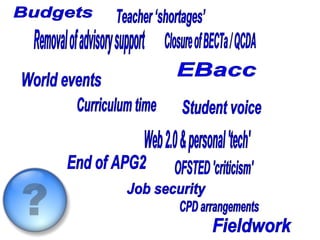
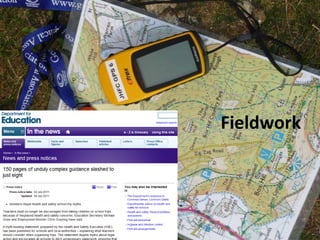
Budgets Closure of BECTa / QCDA Removal of advisory support End of APG2 EBacc Curriculum time OFSTED 'criticism' Student voice Web 2.0 & personal 'tech' World events Teacher ‘shortages’ Job security CPD arrangements Fieldwork
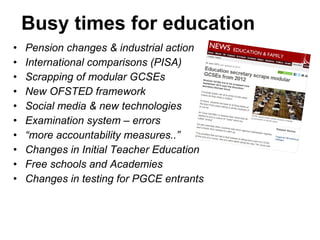
Busy times for education Pension changes & industrial action International comparisons (PISA) Scrapping of modular GCSEs New OFSTED framework Social media & new technologies Examination system – errors “ more accountability measures..” Changes in Initial Teacher Education Free schools and Academies Changes in testing for PGCE entrants
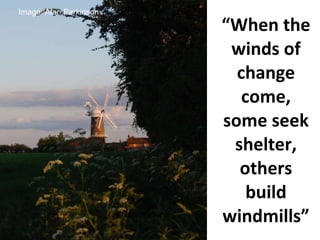
“ When the winds of change come, some seek shelter, others build windmills” Image: Alan Parkinson
National Curriculum Review The first phase of the review process started after April 14 2011. The Programmes of Study for Maths, Science, PE and English will be decided.  This is also when the government will decide which other subjects (apart from these) will be a statutory part of the national curriculum. Hopefully this will include geography at all stages. The 2 nd  phase begins in ‘early 2012’, when consultation on the programmes of study for the rest of the national curriculum will be decided.  First teaching of the 1 st  phase subjects is September 2013.  The second phase programmes of study will be known in 2013, for first teaching September 2014
Tim Oates Chair of Curriculum Review Aims "embody for all children in England their cultural and scientific inheritance, enhance their understanding of the world around them and introduce  them to the best that has been thought and written"
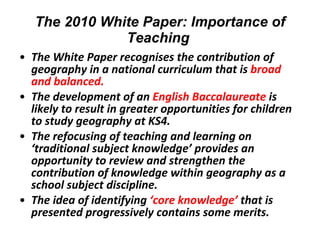
The 2010 White Paper: Importance of Teaching    The White Paper recognises the contribution of geography in a national curriculum that is  broad and balanced.  The development of an  English Baccalaureate  is likely to result in greater opportunities for children to study geography at KS4.  The refocusing of teaching and learning on ‘traditional subject knowledge’ provides an opportunity to review and strengthen the contribution of knowledge within geography as a school subject discipline. The idea of identifying  ‘core knowledge’  that is presented progressively contains some merits.
Core knowledge What  are we going to be teaching ? What is core knowledge in geography ?
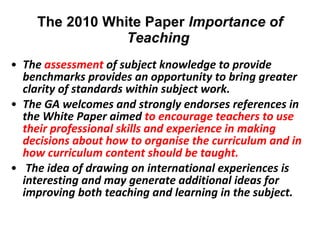
The 2010 White Paper  Importance of Teaching    The  assessment  of subject knowledge to provide benchmarks provides an opportunity to bring greater clarity of standards within subject work.  The GA welcomes and strongly endorses references in the White Paper aimed  to encourage teachers to use their professional skills and experience in making decisions about how to organise the curriculum and in how curriculum content should be taught.    The idea of drawing on international experiences is interesting and may generate additional ideas for improving both teaching and learning in the subject.   
 
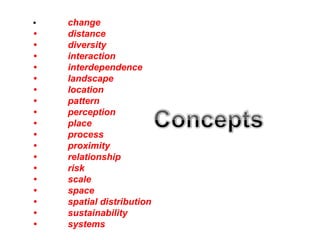
•   change •   distance •   diversity •   interaction •   interdependence •   landscape •   location •   pattern •   perception •   place •   process •   proximity •   relationship •   risk •   scale •   space •   spatial distribution •   sustainability •   systems
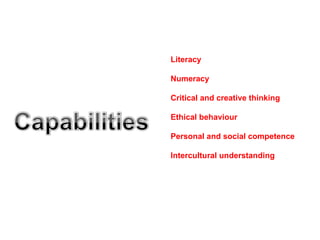
Literacy Numeracy Critical and creative thinking Ethical behaviour Personal and social competence Intercultural understanding
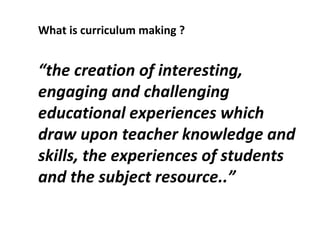
What is curriculum making ? “ the creation of interesting, engaging and challenging educational experiences which draw upon teacher knowledge and skills, the experiences of students and the subject resource..”
 
OFSTED Christine Gilbert May 2011 SSAT event “ LITERACY”
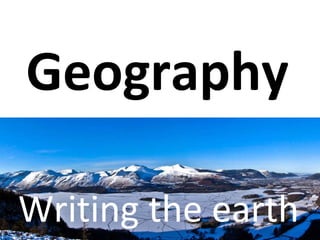
Geography Writing the earth
 
 
What is knowledge? The Geographical Association’s Manifesto ( www.geography.org.uk/adifferentview ) states clearly, to learn geography requires both ‘ vocabulary’  (geographical information) and ‘ grammar’  (big ideas or concepts). These represent different kinds of knowledge and both are important.   The core subject knowledge mentioned in the White Paper may be thought of as ‘vocabulary’. It does not just accrete naturally: it has to be taught and learned. This need not mark the end of relevant and engaging geography!  Knowledge development is not to be confused only with closed facts, nor with the very old fashioned idea of education based solely on the accumulation of fragmented, received information.  But extensive factual world knowledge – geography’s vocabulary -  is useful.
What is knowledge? The vocabulary is probably best learned in context of the ideas or concepts (the grammar) we are trying to develop with students: ideas such as, countries, regions, interdependence, climate, place, location.  It can be built into lessons with careful teaching. World knowledge is enabling knowledge  and in some ways  brings to life powerful conceptual understanding  of the world and how it is made.  One without the other diminishes students’ geographical capability - their understanding of the world and their relationship with it.
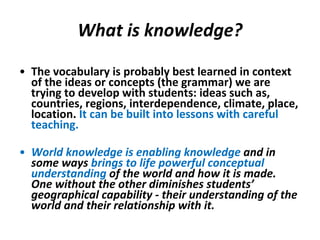
Latest GA resources....
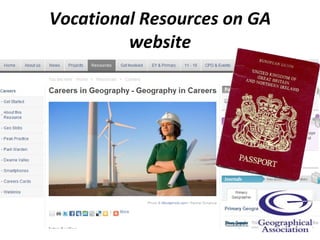
Vocational Resources on GA website
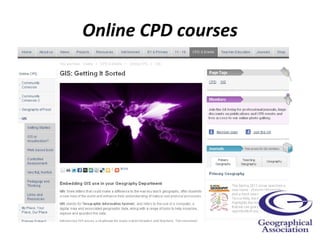
Online CPD courses
“ The Language of Landscape”
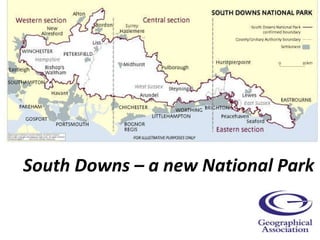
South Downs – a new National Park
Making Geography Happen Young People’s Geographies


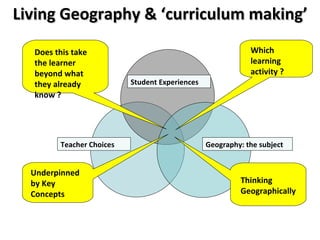
Student Experiences Geography: the subject Teacher Choices Underpinned by Key Concepts Thinking Geographically Which learning activity ? Does this take the learner beyond what they already know ? Living Geography & ‘curriculum making’
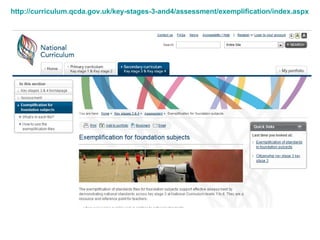
http://curriculum.qcda.gov.uk/key-stages-3-and4/assessment/exemplification/index.aspx
In productive classrooms there are three main bundles of energy that drive and shape the outcomes. First there are the students themselves and what we know about how they learn. Then there are teachers who use  knowledge  and skill about teaching to organise lessons in the most accessible way. But perhaps the most important resource of all is the subject.  Why is this subject significant to students? How does it contribute to educational achievement? What is worthwhile trying to teach? What is relevant to learn? How can my subject be motivating, rewarding and enjoyable to learn?'
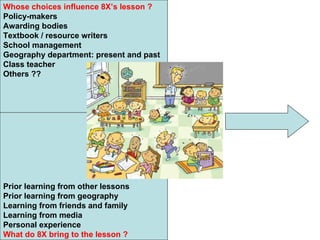
Whose choices influence 8X’s lesson ? Policy-makers Awarding bodies Textbook / resource writers School management Geography department: present and past Class teacher Others ?? Prior learning from other lessons Prior learning from geography Learning from friends and family Learning from media Personal experience What do 8X bring to the lesson ?
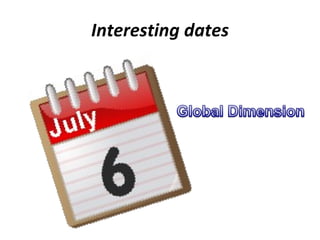
Interesting dates
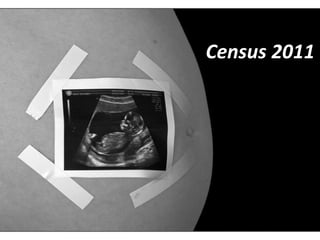
Census 2011
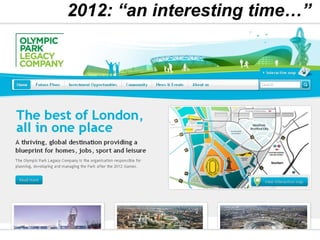
2012: “an interesting time…”
Interesting classrooms… the pedagogy the assessment the resources the ‘teacher’ the location the format the reflection and feedback
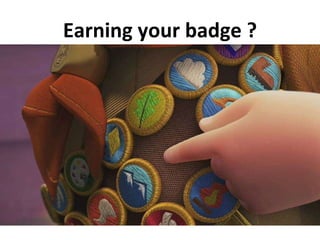
Earning your badge ?
Fieldwork
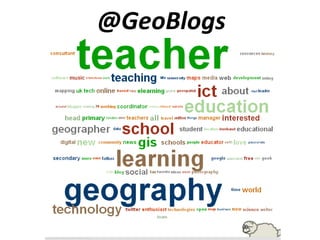
@GeoBlogs
“ Childhood is a branch of cartography” Michael Chabon
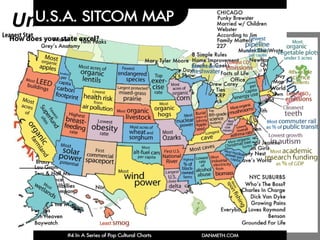
United States of....
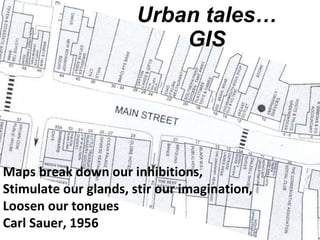
Urban   tales… GIS Maps break down our inhibitions, Stimulate our glands, stir our imagination, Loosen our tongues Carl Sauer, 1956
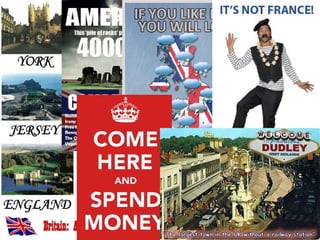
UK Tourism : “an interesting time” Chinese tourists growing in number Staycationing ?
Smartphone apps & functionality ?
Assessment
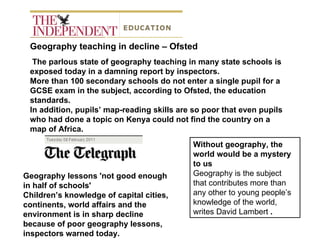
Geography teaching in decline – Ofsted The parlous state of geography teaching in many state schools is exposed today in a damning report by inspectors. More than 100 secondary schools do not enter a single pupil for a GCSE exam in the subject, according to Ofsted, the education standards.  In addition, pupils’ map-reading skills are so poor that even pupils who had done a topic on Kenya could not find the country on a map of Africa. Geography lessons 'not good enough in half of schools' Children’s knowledge of capital cities, continents, world affairs and the environment is in sharp decline because of poor geography lessons, inspectors warned today.  Without geography, the world would be a mystery to us  Geography is the subject that contributes more than any other to young people’s knowledge of the world, writes David Lambert  .
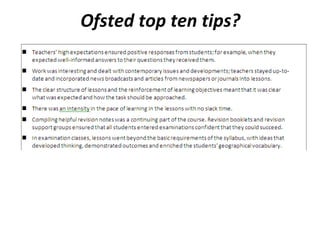
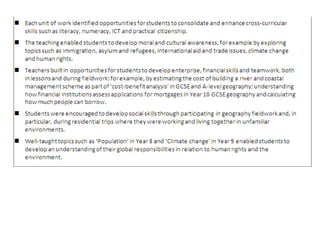
Ofsted top ten tips?
 
 
http://geographical.ning.com JOIN THE NING
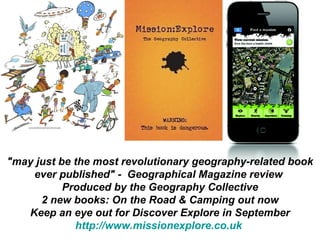
"may just be the most revolutionary geography-related book ever published" -  Geographical Magazine review  Produced by the Geography Collective 2 new books: On the Road & Camping out now Keep an eye out for Discover Explore in September http://www.missionexplore.co.uk
Presentation available at: http://slideshare.net/geoblogs I am grateful to my colleague Ruth Totterdell for a document relating to the curriculum review and OFSTED that has been incorporated into this document as slides
Weblinks http://www.bbc.co.uk/news/world-asia-pacific-12301421   http://www.geographyteachingtoday.org.uk http://www.geography.org.uk http://geographical.ning.com  – JOIN US

Interesting Times

  • 1.
  • 2.
    Alan Parkinson GeographicalAssociation (for the time being)
  • 3.
  • 4.
  • 5.
    Today’s session… Whyare these ‘interesting times’ ? How can the GA help you through them ? “ Curriculum making” – practical activities Some ideas to take away... The future curriculum (incl. OFSTED’s view)
  • 6.
  • 7.
  • 8.
    Furthering the learningand teaching of geography... Action Plan for Geography – jointly with RGS-IBG 2006-11
  • 9.
    2010 White Paper “ The Importance of Teaching”
  • 10.
    Curriculum making in“interesting times…” Geography Why are they interesting ?
  • 11.
    Budgets Closure ofBECTa / QCDA Removal of advisory support End of APG2 EBacc Curriculum time OFSTED 'criticism' Student voice Web 2.0 & personal 'tech' World events Teacher ‘shortages’ Job security CPD arrangements Fieldwork
  • 12.
    Busy times foreducation Pension changes & industrial action International comparisons (PISA) Scrapping of modular GCSEs New OFSTED framework Social media & new technologies Examination system – errors “ more accountability measures..” Changes in Initial Teacher Education Free schools and Academies Changes in testing for PGCE entrants
  • 13.
    “ When thewinds of change come, some seek shelter, others build windmills” Image: Alan Parkinson
  • 14.
    National Curriculum ReviewThe first phase of the review process started after April 14 2011. The Programmes of Study for Maths, Science, PE and English will be decided. This is also when the government will decide which other subjects (apart from these) will be a statutory part of the national curriculum. Hopefully this will include geography at all stages. The 2 nd phase begins in ‘early 2012’, when consultation on the programmes of study for the rest of the national curriculum will be decided. First teaching of the 1 st phase subjects is September 2013. The second phase programmes of study will be known in 2013, for first teaching September 2014
  • 15.
    Tim Oates Chairof Curriculum Review Aims "embody for all children in England their cultural and scientific inheritance, enhance their understanding of the world around them and introduce them to the best that has been thought and written"
  • 16.
    The 2010 WhitePaper: Importance of Teaching   The White Paper recognises the contribution of geography in a national curriculum that is broad and balanced. The development of an English Baccalaureate is likely to result in greater opportunities for children to study geography at KS4. The refocusing of teaching and learning on ‘traditional subject knowledge’ provides an opportunity to review and strengthen the contribution of knowledge within geography as a school subject discipline. The idea of identifying ‘core knowledge’ that is presented progressively contains some merits.
  • 17.
    Core knowledge What are we going to be teaching ? What is core knowledge in geography ?
  • 18.
    The 2010 WhitePaper Importance of Teaching   The assessment of subject knowledge to provide benchmarks provides an opportunity to bring greater clarity of standards within subject work. The GA welcomes and strongly endorses references in the White Paper aimed to encourage teachers to use their professional skills and experience in making decisions about how to organise the curriculum and in how curriculum content should be taught.   The idea of drawing on international experiences is interesting and may generate additional ideas for improving both teaching and learning in the subject.  
  • 19.
  • 20.
    change • distance • diversity • interaction • interdependence • landscape • location • pattern • perception • place • process • proximity • relationship • risk • scale • space • spatial distribution • sustainability • systems
  • 21.
    Literacy Numeracy Criticaland creative thinking Ethical behaviour Personal and social competence Intercultural understanding
  • 22.
    What is curriculummaking ? “ the creation of interesting, engaging and challenging educational experiences which draw upon teacher knowledge and skills, the experiences of students and the subject resource..”
  • 23.
  • 24.
    OFSTED Christine GilbertMay 2011 SSAT event “ LITERACY”
  • 25.
  • 26.
  • 27.
  • 28.
    What is knowledge?The Geographical Association’s Manifesto ( www.geography.org.uk/adifferentview ) states clearly, to learn geography requires both ‘ vocabulary’ (geographical information) and ‘ grammar’ (big ideas or concepts). These represent different kinds of knowledge and both are important.   The core subject knowledge mentioned in the White Paper may be thought of as ‘vocabulary’. It does not just accrete naturally: it has to be taught and learned. This need not mark the end of relevant and engaging geography! Knowledge development is not to be confused only with closed facts, nor with the very old fashioned idea of education based solely on the accumulation of fragmented, received information. But extensive factual world knowledge – geography’s vocabulary - is useful.
  • 29.
    What is knowledge?The vocabulary is probably best learned in context of the ideas or concepts (the grammar) we are trying to develop with students: ideas such as, countries, regions, interdependence, climate, place, location. It can be built into lessons with careful teaching. World knowledge is enabling knowledge and in some ways brings to life powerful conceptual understanding of the world and how it is made. One without the other diminishes students’ geographical capability - their understanding of the world and their relationship with it.
  • 30.
  • 31.
  • 32.
  • 33.
    “ The Languageof Landscape”
  • 34.
    South Downs –a new National Park
  • 35.
    Making Geography HappenYoung People’s Geographies
  • 36.
  • 37.
  • 38.
  • 39.
    Student Experiences Geography:the subject Teacher Choices Underpinned by Key Concepts Thinking Geographically Which learning activity ? Does this take the learner beyond what they already know ? Living Geography & ‘curriculum making’
  • 40.
  • 41.
    In productive classroomsthere are three main bundles of energy that drive and shape the outcomes. First there are the students themselves and what we know about how they learn. Then there are teachers who use knowledge and skill about teaching to organise lessons in the most accessible way. But perhaps the most important resource of all is the subject. Why is this subject significant to students? How does it contribute to educational achievement? What is worthwhile trying to teach? What is relevant to learn? How can my subject be motivating, rewarding and enjoyable to learn?'
  • 42.
    Whose choices influence8X’s lesson ? Policy-makers Awarding bodies Textbook / resource writers School management Geography department: present and past Class teacher Others ?? Prior learning from other lessons Prior learning from geography Learning from friends and family Learning from media Personal experience What do 8X bring to the lesson ?
  • 43.
  • 44.
  • 45.
  • 46.
    Interesting classrooms… thepedagogy the assessment the resources the ‘teacher’ the location the format the reflection and feedback
  • 47.
  • 48.
  • 49.
  • 50.
    “ Childhood isa branch of cartography” Michael Chabon
  • 51.
  • 52.
    Urban tales… GIS Maps break down our inhibitions, Stimulate our glands, stir our imagination, Loosen our tongues Carl Sauer, 1956
  • 53.
    UK Tourism :“an interesting time” Chinese tourists growing in number Staycationing ?
  • 54.
    Smartphone apps &functionality ?
  • 55.
  • 56.
    Geography teaching indecline – Ofsted The parlous state of geography teaching in many state schools is exposed today in a damning report by inspectors. More than 100 secondary schools do not enter a single pupil for a GCSE exam in the subject, according to Ofsted, the education standards. In addition, pupils’ map-reading skills are so poor that even pupils who had done a topic on Kenya could not find the country on a map of Africa. Geography lessons 'not good enough in half of schools' Children’s knowledge of capital cities, continents, world affairs and the environment is in sharp decline because of poor geography lessons, inspectors warned today. Without geography, the world would be a mystery to us Geography is the subject that contributes more than any other to young people’s knowledge of the world, writes David Lambert .
  • 57.
  • 58.
  • 59.
  • 60.
  • 61.
    "may just bethe most revolutionary geography-related book ever published" - Geographical Magazine review Produced by the Geography Collective 2 new books: On the Road & Camping out now Keep an eye out for Discover Explore in September http://www.missionexplore.co.uk
  • 62.
    Presentation available at:http://slideshare.net/geoblogs I am grateful to my colleague Ruth Totterdell for a document relating to the curriculum review and OFSTED that has been incorporated into this document as slides
  • 63.
    Weblinks http://www.bbc.co.uk/news/world-asia-pacific-12301421 http://www.geographyteachingtoday.org.uk http://www.geography.org.uk http://geographical.ning.com – JOIN US