Intercultural
Communication
Competence
(Ch 2)
Bianca Jordan
Comm 1800
July 30, 2018
Intercultural Communication
Competence?
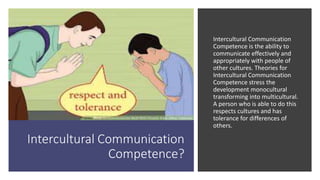
Intercultural Communication
Competence is the ability to
communicate effectively and
appropriately with people of
other cultures. Theories for
Intercultural Communication
Competence stress the
development monocultural
transforming into multicultural.
A person who is able to do this
respects cultures and has
tolerance for differences of
others.
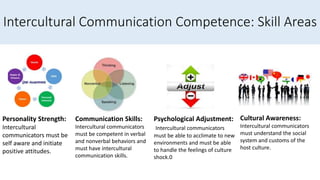
Intercultural Communication Competence: Skill Areas
Personality Strength:
Intercultural
communicators must be
self aware and initiate
positive attitudes.
Communication Skills:
Intercultural communicators
must be competent in verbal
and nonverbal behaviors and
must have intercultural
communication skills.
Psychological Adjustment:
Intercultural communicators
must be able to acclimate to new
environments and must be able
to handle the feelings of culture
shock.0
Cultural Awareness:
Intercultural communicators
must understand the social
system and customs of the
host culture.
Multiple Identities
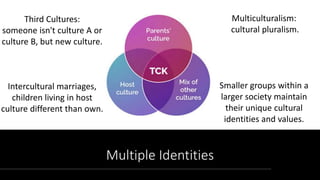
Third Cultures:
someone isn't culture A or
culture B, but new culture.
Intercultural marriages,
children living in host
culture different than own.
Multiculturalism:
cultural pluralism.
Smaller groups within a
larger society maintain
their unique cultural
identities and values.
Multiple Identities
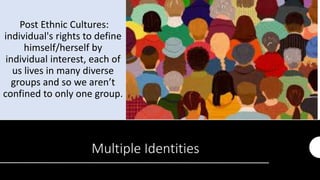
Post Ethnic Cultures:
individual's rights to define
himself/herself by
individual interest, each of
us lives in many diverse
groups and so we aren’t
confined to only one group.
Intercultural
Communication Ethics
What are Ethics? They are
questions of how we ought to
lead our lives. Ethical theories
reflect the culture in which
they were produced.
Challenges may arise when it
comes to intercultural
communication.
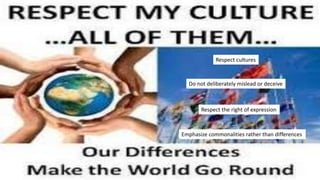
Respect cultures
Do not deliberately mislead or deceive
Respect the right of expression
Emphasize commonalities rather than differences
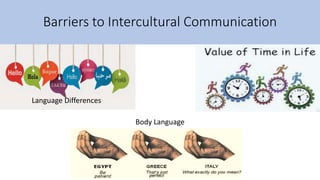
Barriers to Intercultural Communication
Language Differences
Body Language
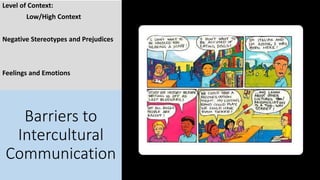
Barriers to
Intercultural
Communication
Level of Context:
Low/High Context
Negative Stereotypes and Prejudices
Feelings and Emotions

Intercultural Communication Competence (Ch2)

  • 1.
  • 2.
    Intercultural Communication Competence? Intercultural Communication Competenceis the ability to communicate effectively and appropriately with people of other cultures. Theories for Intercultural Communication Competence stress the development monocultural transforming into multicultural. A person who is able to do this respects cultures and has tolerance for differences of others.
  • 3.
    Intercultural Communication Competence:Skill Areas Personality Strength: Intercultural communicators must be self aware and initiate positive attitudes. Communication Skills: Intercultural communicators must be competent in verbal and nonverbal behaviors and must have intercultural communication skills. Psychological Adjustment: Intercultural communicators must be able to acclimate to new environments and must be able to handle the feelings of culture shock.0 Cultural Awareness: Intercultural communicators must understand the social system and customs of the host culture.
  • 4.
    Multiple Identities Third Cultures: someoneisn't culture A or culture B, but new culture. Intercultural marriages, children living in host culture different than own. Multiculturalism: cultural pluralism. Smaller groups within a larger society maintain their unique cultural identities and values.
  • 5.
    Multiple Identities Post EthnicCultures: individual's rights to define himself/herself by individual interest, each of us lives in many diverse groups and so we aren’t confined to only one group.
  • 6.
    Intercultural Communication Ethics What areEthics? They are questions of how we ought to lead our lives. Ethical theories reflect the culture in which they were produced. Challenges may arise when it comes to intercultural communication.
  • 7.
    Respect cultures Do notdeliberately mislead or deceive Respect the right of expression Emphasize commonalities rather than differences
  • 8.
    Barriers to InterculturalCommunication Language Differences Body Language
  • 9.
    Barriers to Intercultural Communication Level ofContext: Low/High Context Negative Stereotypes and Prejudices Feelings and Emotions