*
    Of the top 25 Entrepreneurship schools; a
    Rhetorical Perspective
*
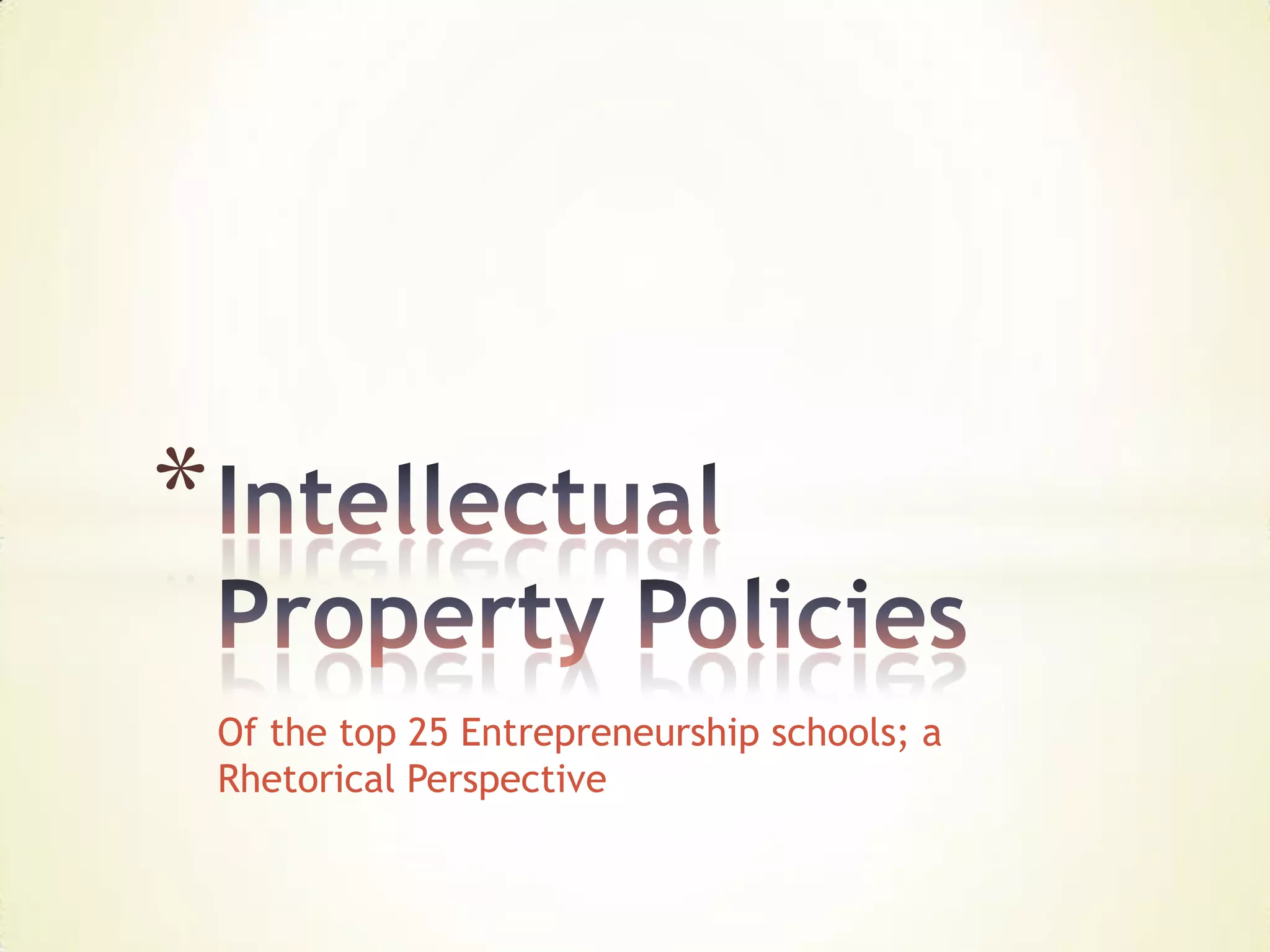
I’m a serial entrepreneur, sensei, consultant, coach, Phd student, and
Mom. I admit, this paper is a draft, a pilot study of my dissertation
and I was still editing this last night.
* Since the advent of the Bayh-Dole Act, universities
  have sought to capitalize on potential intellectual
  property.
* “Universities are increasingly considered to be
  important contributors to the knowledge economy and
  to national competitiveness” – Anderson & Rossi (2011)
* “Although the genealogy of the term intellectual
  property is a matter of some controversy, most
  commentators agree that the term has only recently
  been used as a way of grouping together the four most
  commonly discussed intellectual property rights –
  copyrights, patents, trademark, and trade secrets –
  under one label.” –Biron (2010)


        *
* “Policy rhetoric may be powerful since it affects
  how individuals understand the world and aims to
  move audiences to action. This action may include
  persuading audiences to accepts constructions of
  reality and truth as well as causes of action that
  perpetuate inequity.” – Winton (2013)
* “In the rush to establish innovation competitions,
  place industry projects in the classroom, and create
  incentives for students to develop and
  commercialize their own ideas, universities may
  overlook the impact of their intellectual property
  policies.” – Evans (2011)


        *
* How many of the 25 institutions claim IP and to
 what extent? What categories emerge?
* How does the context and wording of the
 policies differ and what might be inferred by
 the language?


                               *
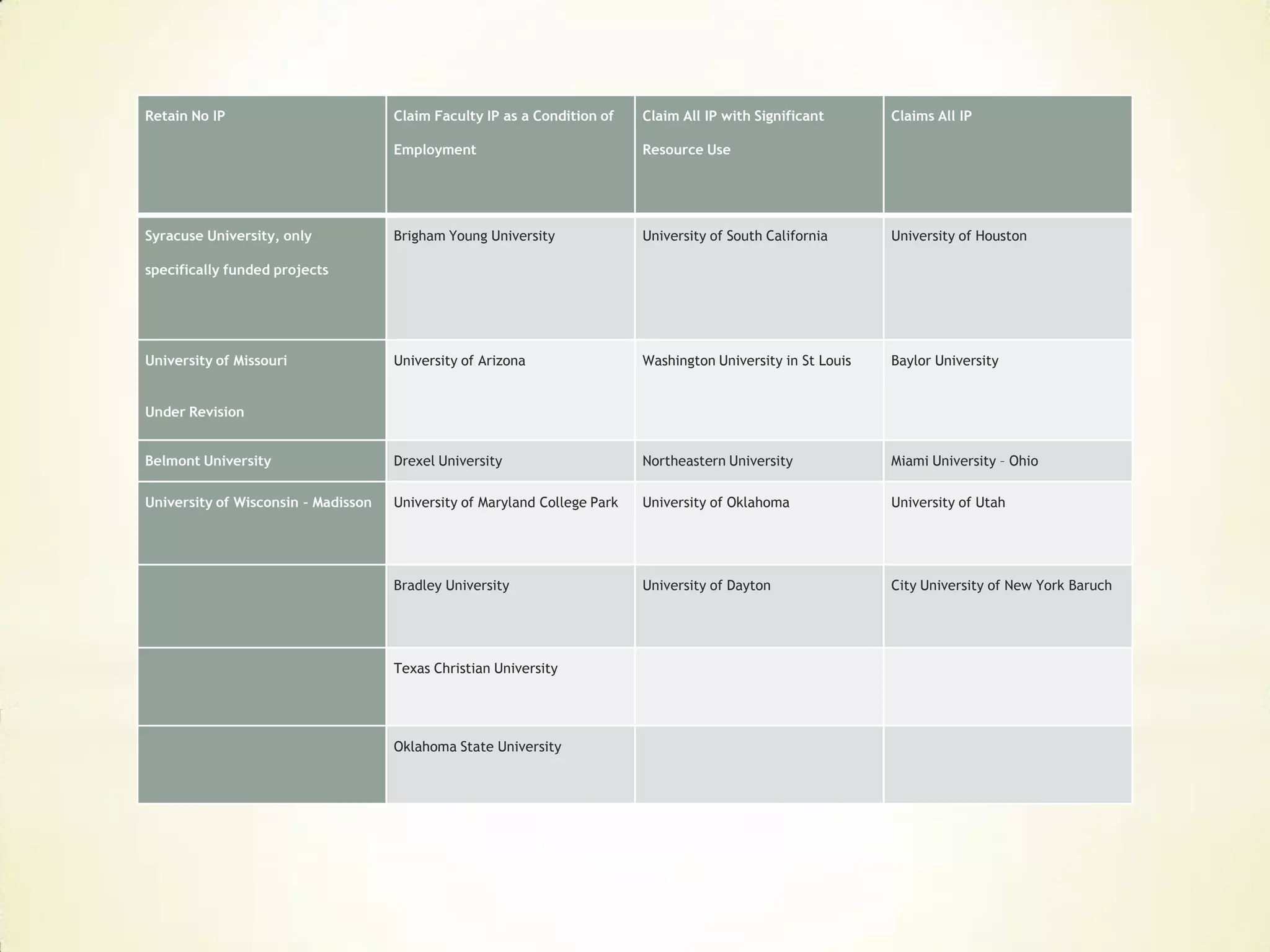
Retain No IP                         Claim Faculty IP as a Condition of    Claim All IP with Significant       Claims All IP

                                     Employment                            Resource Use


Syracuse University, only            Brigham Young University              University of South California      University of Houston

specifically funded projects


University of Missouri               University of Arizona                 Washington University in St Louis   Baylor University


Under Revision


Belmont University                   Drexel University                     Northeastern University             Miami University – Ohio

University of Wisconsin - Madisson   University of Maryland College Park   University of Oklahoma              University of Utah


                                     Bradley University                    University of Dayton                City University of New York Baruch


                                     Texas Christian University


                                     Oklahoma State University
* Invention: Arguments that support the position
* Disposition: Manner in which the document is
 organized
* Style: Word choice, arrangement, figurative
 language, conventions of writing
* Memory: Shared cultural memory
* Delivery: The manner of dissemination


      *
* The policies establish a rank and order; a
 hierarchy.
* The policies also create very rigid restrictions;
 a reality of employment and education that
 rests within the functional culture validated
 through the casual cousins of law; policies.


                                *

Open 2013: Intellectual Property Policies: What are universities saying?

  • 1.
    * Of the top 25 Entrepreneurship schools; a Rhetorical Perspective
  • 2.
    * I’m a serialentrepreneur, sensei, consultant, coach, Phd student, and Mom. I admit, this paper is a draft, a pilot study of my dissertation and I was still editing this last night.
  • 3.
    * Since theadvent of the Bayh-Dole Act, universities have sought to capitalize on potential intellectual property. * “Universities are increasingly considered to be important contributors to the knowledge economy and to national competitiveness” – Anderson & Rossi (2011) * “Although the genealogy of the term intellectual property is a matter of some controversy, most commentators agree that the term has only recently been used as a way of grouping together the four most commonly discussed intellectual property rights – copyrights, patents, trademark, and trade secrets – under one label.” –Biron (2010) *
  • 4.
    * “Policy rhetoricmay be powerful since it affects how individuals understand the world and aims to move audiences to action. This action may include persuading audiences to accepts constructions of reality and truth as well as causes of action that perpetuate inequity.” – Winton (2013) * “In the rush to establish innovation competitions, place industry projects in the classroom, and create incentives for students to develop and commercialize their own ideas, universities may overlook the impact of their intellectual property policies.” – Evans (2011) *
  • 5.
    * How manyof the 25 institutions claim IP and to what extent? What categories emerge? * How does the context and wording of the policies differ and what might be inferred by the language? *
  • 6.
    Retain No IP Claim Faculty IP as a Condition of Claim All IP with Significant Claims All IP Employment Resource Use Syracuse University, only Brigham Young University University of South California University of Houston specifically funded projects University of Missouri University of Arizona Washington University in St Louis Baylor University Under Revision Belmont University Drexel University Northeastern University Miami University – Ohio University of Wisconsin - Madisson University of Maryland College Park University of Oklahoma University of Utah Bradley University University of Dayton City University of New York Baruch Texas Christian University Oklahoma State University
  • 7.
    * Invention: Argumentsthat support the position * Disposition: Manner in which the document is organized * Style: Word choice, arrangement, figurative language, conventions of writing * Memory: Shared cultural memory * Delivery: The manner of dissemination *
  • 8.
    * The policiesestablish a rank and order; a hierarchy. * The policies also create very rigid restrictions; a reality of employment and education that rests within the functional culture validated through the casual cousins of law; policies. *