ENTREPRENEURSHIP AND
  HIGH TECHNOLOGY
      BUSINESS
 An entrepreneurship class for
science and technology students
             La Salle University
        Marsha Wender Timmerman
Integrated Science Business and Technology
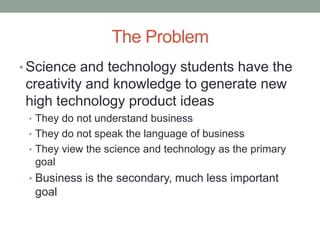
The Problem
• Science and technology students have the
creativity and knowledge to generate new
high technology product ideas
 • They do not understand business
 • They do not speak the language of business
 • They view the science and technology as the primary
  goal
 • Business is the secondary, much less important
  goal
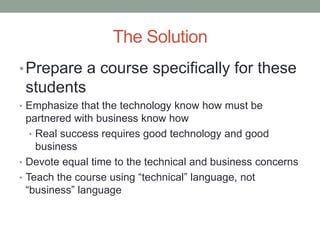
The Solution
• Prepare a course specifically for these
 students
• Emphasize that the technology know how must be
  partnered with business know how
   • Real success requires good technology and good
     business
• Devote equal time to the technical and business concerns
• Teach the course using “technical” language, not
  “business” language
Specific Goals of the Course
• To guide students through the process from idea
    recognition to reduction to practice.
•   To inform students about what intellectual property is and
    the best ways to protect it.
•   To teach students basic business concepts that will
    enable them to make good business decisions.
•   To help students understand organizational structures that
    will allow them to be the leaders of their ventures while
    surrounding themselves with individuals whose strengths
    complement their weaknesses.
•   To provide students with a road map that enables them to
    start their own ventures.
Class Discussion Topics
•   Introduction to Entrepreneurship
•   Confidentiality Agreements
•   Entrepreneur Profiles
•   Idea Recognition
•   Idea Feasibility
•   Corporate Entities
•   Business Plans
•   Marketing
•   Competition
•   The Team
•   Intellectual Property
•   Financial Management
•   Cash Flow Statements
•   Profit and Loss Statements
•   Balance Sheets
•   Ethics
•   Financing the Startup Venture
•   Operations
•   Managing Growth
Confidentiality Agreement
• Most students are very concerned about
  someone “stealing” their idea
• Make students comfortable sharing their thoughts
  and ideas
• Improve their understanding of what is
  confidential information and what is not
• Learn to read and understand legal agreements
• Understand the enforceability of confidentiality
  agreements
Entrepreneur Profiles
• Bring in practicing entrepreneurs to tell their
 own stories
 • University professor creating a cancer diagnostic test
 • Software engineer who created a consulting company
   which helped pharmaceutical companies be more
   efficient
 • Electrical engineer making home automation products
 • Biologist making enzyme based diagnostic products
 • Serial entrepreneur in computer hardware
• Students interview and report on entrepreneurs
 that they personally know
Idea Recognition
• Ideas are the heart of the high technology
 enterprise
 • Encourage creativity
 • Encourage thinking outside the box
 • Need to be open minded to all new ideas
 • Keep a record of all ideas
Idea Feasibility
• Requires all of their technical skills to make
 the idea a reality
 • This is what the technical entrepreneur worries
  about most
• Ideas need to be more than technically
 feasible
 • There needs to be a customer
 • There must to be a need
 • There must be a way to get the product to the
  customer
Marketing
• MARKETING IS THE KEY TO THE
  SUCCESS OF THE VENTURE
• Technology students do not appreciate or
  respect the value of good marketing
 • What is marketing
 • Why is it important
 • Who is the customer
 • How do you reach the customer
The Team
• SUCCESS OF THE VENTURE DEPENDS
 ON MORE THAN THE TECHNOLOGY
• Students must understand that they cannot
  create and build the entity by themselves
• The Entrepreneur must surround themselves with
  people who have expertise in those areas where
  they are weak
 • Know their strengths and weaknesses
• Creative approaches to compensating team
 members
Intellectual Property
• A local intellectual property attorney leads
 this discussion
• Discuss the pros and cons of intellectual property
• What can be protected and what cannot
• What does it cost
• Is it worth the money
• Enforcement
Financing the Venture
• Most technology ventures require research
 and development
  • No revenue during this period
  • Large outflow of cash
• Need to raise substantial money
  • Where does the money come from
  • How does one go about raising money
  • What are the risks to the entrepreneurs
  • What are the risks to the investors
  • What is an exit strategy and which are relevant to their
    type of business
Results
• 125 Students have taken the class
• Most have received a B or better
• Students evaluations
  • Like the class
  • Willing to recommend it to their friends
  • Learned a lot
• Types of ideas
   • Biotechnology and healthcare ideas
   • Computer hardware
   • Software
What is an Appropriate Assessment
• Current Assessment
  • Class discussion and participation
  • Mid-term
    • Have students read and critique a business plan
  • Business Plan
• Other Forms of Assessment
  • Creation of new business
    • Now
    • In the future
  • Filing of patents
  • Working for an entrepreneurial venture
ACKNOWLEDGEMENT
Special thank you to all the students who
have taken this course during the past 8
years. I have thoroughly enjoyed their ideas
and hope that one day I will see some of
these potential products available for sale

Open 2013: High Technology Entrepreneurship

  • 1.
    ENTREPRENEURSHIP AND HIGH TECHNOLOGY BUSINESS An entrepreneurship class for science and technology students La Salle University Marsha Wender Timmerman Integrated Science Business and Technology
  • 2.
    The Problem • Scienceand technology students have the creativity and knowledge to generate new high technology product ideas • They do not understand business • They do not speak the language of business • They view the science and technology as the primary goal • Business is the secondary, much less important goal
  • 3.
    The Solution • Preparea course specifically for these students • Emphasize that the technology know how must be partnered with business know how • Real success requires good technology and good business • Devote equal time to the technical and business concerns • Teach the course using “technical” language, not “business” language
  • 4.
    Specific Goals ofthe Course • To guide students through the process from idea recognition to reduction to practice. • To inform students about what intellectual property is and the best ways to protect it. • To teach students basic business concepts that will enable them to make good business decisions. • To help students understand organizational structures that will allow them to be the leaders of their ventures while surrounding themselves with individuals whose strengths complement their weaknesses. • To provide students with a road map that enables them to start their own ventures.
  • 5.
    Class Discussion Topics • Introduction to Entrepreneurship • Confidentiality Agreements • Entrepreneur Profiles • Idea Recognition • Idea Feasibility • Corporate Entities • Business Plans • Marketing • Competition • The Team • Intellectual Property • Financial Management • Cash Flow Statements • Profit and Loss Statements • Balance Sheets • Ethics • Financing the Startup Venture • Operations • Managing Growth
  • 6.
    Confidentiality Agreement • Moststudents are very concerned about someone “stealing” their idea • Make students comfortable sharing their thoughts and ideas • Improve their understanding of what is confidential information and what is not • Learn to read and understand legal agreements • Understand the enforceability of confidentiality agreements
  • 7.
    Entrepreneur Profiles • Bringin practicing entrepreneurs to tell their own stories • University professor creating a cancer diagnostic test • Software engineer who created a consulting company which helped pharmaceutical companies be more efficient • Electrical engineer making home automation products • Biologist making enzyme based diagnostic products • Serial entrepreneur in computer hardware • Students interview and report on entrepreneurs that they personally know
  • 8.
    Idea Recognition • Ideasare the heart of the high technology enterprise • Encourage creativity • Encourage thinking outside the box • Need to be open minded to all new ideas • Keep a record of all ideas
  • 9.
    Idea Feasibility • Requiresall of their technical skills to make the idea a reality • This is what the technical entrepreneur worries about most • Ideas need to be more than technically feasible • There needs to be a customer • There must to be a need • There must be a way to get the product to the customer
  • 10.
    Marketing • MARKETING ISTHE KEY TO THE SUCCESS OF THE VENTURE • Technology students do not appreciate or respect the value of good marketing • What is marketing • Why is it important • Who is the customer • How do you reach the customer
  • 11.
    The Team • SUCCESSOF THE VENTURE DEPENDS ON MORE THAN THE TECHNOLOGY • Students must understand that they cannot create and build the entity by themselves • The Entrepreneur must surround themselves with people who have expertise in those areas where they are weak • Know their strengths and weaknesses • Creative approaches to compensating team members
  • 12.
    Intellectual Property • Alocal intellectual property attorney leads this discussion • Discuss the pros and cons of intellectual property • What can be protected and what cannot • What does it cost • Is it worth the money • Enforcement
  • 13.
    Financing the Venture •Most technology ventures require research and development • No revenue during this period • Large outflow of cash • Need to raise substantial money • Where does the money come from • How does one go about raising money • What are the risks to the entrepreneurs • What are the risks to the investors • What is an exit strategy and which are relevant to their type of business
  • 14.
    Results • 125 Studentshave taken the class • Most have received a B or better • Students evaluations • Like the class • Willing to recommend it to their friends • Learned a lot • Types of ideas • Biotechnology and healthcare ideas • Computer hardware • Software
  • 15.
    What is anAppropriate Assessment • Current Assessment • Class discussion and participation • Mid-term • Have students read and critique a business plan • Business Plan • Other Forms of Assessment • Creation of new business • Now • In the future • Filing of patents • Working for an entrepreneurial venture
  • 16.
    ACKNOWLEDGEMENT Special thank youto all the students who have taken this course during the past 8 years. I have thoroughly enjoyed their ideas and hope that one day I will see some of these potential products available for sale