INTEGUMENTARY INTEGRITY
TESTS AND MEASURES
DR. QURATULAIN MUGHAL
IIRS
BATCH IV
DOCTOR OF PHYSICAL THERAPY
1
CONTENT
Including:
A. Activities, positioning, and postures that produce or relieve trauma
to the skin.
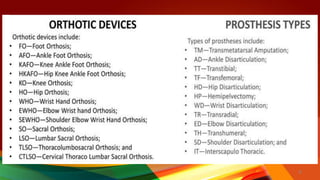
B. Assistive, adaptive, orthotic, protective, supportive, or prosthetic
devices and equipment that may produce or relieve trauma to the skin.
C. Skin characteristics, including blistering, continuity of skin color,
dermatitis, hair growth, mobility, nail growth, sensation, temperature,
texture and turgor.
D. Activities, positioning, and postures that aggravate the wound or scar
or that produce or relieve trauma.
2
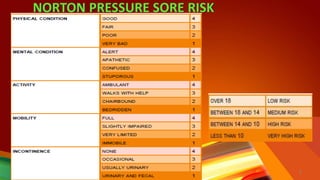
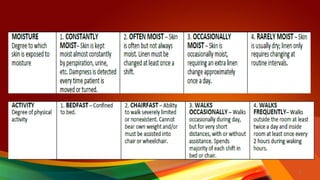
NORTON PRESSURE SORE RISK
ASSESSMENT SCALE
3
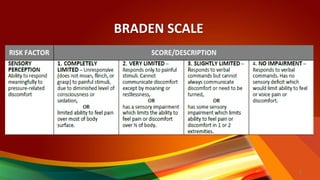
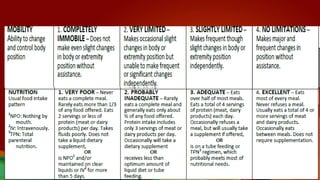
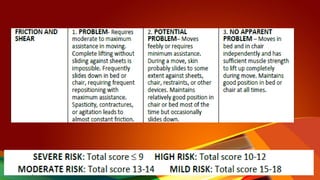
BRADEN SCALE
4
5
6
7
8
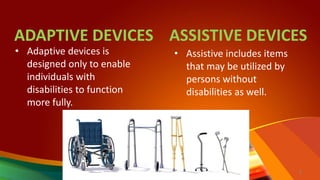
ADAPTIVE DEVICES ASSISTIVE DEVICES
• Adaptive devices is
designed only to enable
individuals with
disabilities to function
more fully.
• Assistive includes items
that may be utilized by
persons without
disabilities as well.
9
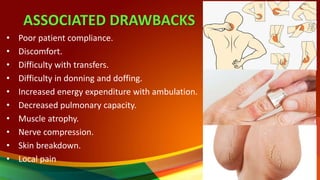
ASSOCIATED DRAWBACKS
• Poor patient compliance.
• Discomfort.
• Difficulty with transfers.
• Difficulty in donning and doffing.
• Increased energy expenditure with ambulation.
• Decreased pulmonary capacity.
• Muscle atrophy.
• Nerve compression.
• Skin breakdown.
• Local pain
10
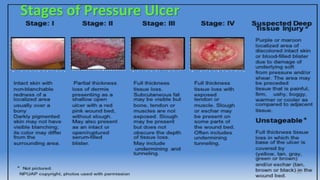
Stages of Pressure Ulcer
11
12
13
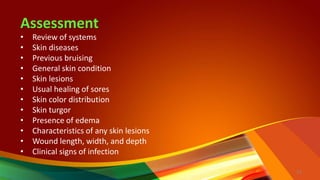
Assessment
• Review of systems
• Skin diseases
• Previous bruising
• General skin condition
• Skin lesions
• Usual healing of sores
• Skin color distribution
• Skin turgor
• Presence of edema
• Characteristics of any skin lesions
• Wound length, width, and depth
• Clinical signs of infection
14
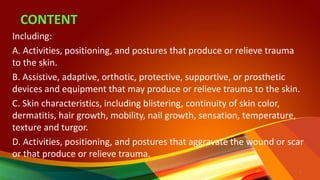
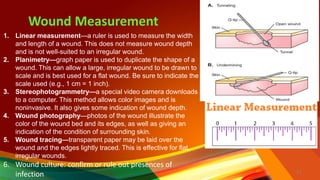
Wound Measurement
15
1. Linear measurement—a ruler is used to measure the width
and length of a wound. This does not measure wound depth
and is not well-suited to an irregular wound.
2. Planimetry—graph paper is used to duplicate the shape of a
wound. This can allow a large, irregular wound to be drawn to
scale and is best used for a flat wound. Be sure to indicate the
scale used (e.g., 1 cm = 1 inch).
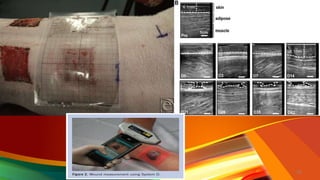
3. Stereophotogrammetry—a special video camera downloads
to a computer. This method allows color images and is
noninvasive. It also gives some indication of wound depth.
4. Wound photography—photos of the wound illustrate the
color of the wound bed and its edges, as well as giving an
indication of the condition of surrounding skin.
5. Wound tracing—transparent paper may be laid over the
wound and the edges lightly traced. This is effective for flat,
irregular wounds.
6. Wound culture: confirm or rule out presences of
infection
16
Risks
• For Impaired Skin Integrity: applies to pressure ulcers and
wounds extending through the epidermis but not
through the dermis.
• Impaired Skin Integrity: altered epiderms and/or dermis
• Impaired Tissue Integrity: applies to pressure ulcers and
wounds extending into SC tissues, muscles, or bones.
• For Infection: with severe skin impairment, pt is
immunosuppressed
17
Goals in Planning
• Supporting wound healing : maintain moist wound
healing, nutrition and fluid, preventing infection and
positioning
• Preventing pressure ulcer
• Treating pressure ulcer :RYB (Protect (cover) red,
cleanse yellow, and debride black)
• Dressing wound
• Cleaning wound
18
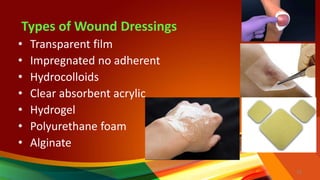
Types of Wound Dressings
• Transparent film
• Impregnated no adherent
• Hydrocolloids
• Clear absorbent acrylic
• Hydrogel
• Polyurethane foam
• Alginate
19
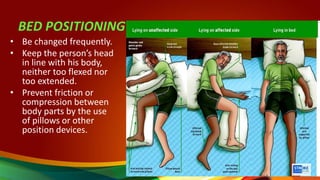
BED POSITIONING
• Be changed frequently.
• Keep the person’s head
in line with his body,
neither too flexed nor
too extended.
• Prevent friction or
compression between
body parts by the use
of pillows or other
position devices.
20
21

Integumentary integrity tests and measures

  • 1.
    INTEGUMENTARY INTEGRITY TESTS ANDMEASURES DR. QURATULAIN MUGHAL IIRS BATCH IV DOCTOR OF PHYSICAL THERAPY 1
  • 2.
    CONTENT Including: A. Activities, positioning,and postures that produce or relieve trauma to the skin. B. Assistive, adaptive, orthotic, protective, supportive, or prosthetic devices and equipment that may produce or relieve trauma to the skin. C. Skin characteristics, including blistering, continuity of skin color, dermatitis, hair growth, mobility, nail growth, sensation, temperature, texture and turgor. D. Activities, positioning, and postures that aggravate the wound or scar or that produce or relieve trauma. 2
  • 3.
    NORTON PRESSURE SORERISK ASSESSMENT SCALE 3
  • 4.
  • 5.
  • 6.
  • 7.
  • 8.
  • 9.
    ADAPTIVE DEVICES ASSISTIVEDEVICES • Adaptive devices is designed only to enable individuals with disabilities to function more fully. • Assistive includes items that may be utilized by persons without disabilities as well. 9
  • 10.
    ASSOCIATED DRAWBACKS • Poorpatient compliance. • Discomfort. • Difficulty with transfers. • Difficulty in donning and doffing. • Increased energy expenditure with ambulation. • Decreased pulmonary capacity. • Muscle atrophy. • Nerve compression. • Skin breakdown. • Local pain 10
  • 11.
  • 12.
  • 13.
  • 14.
    Assessment • Review ofsystems • Skin diseases • Previous bruising • General skin condition • Skin lesions • Usual healing of sores • Skin color distribution • Skin turgor • Presence of edema • Characteristics of any skin lesions • Wound length, width, and depth • Clinical signs of infection 14
  • 15.
    Wound Measurement 15 1. Linearmeasurement—a ruler is used to measure the width and length of a wound. This does not measure wound depth and is not well-suited to an irregular wound. 2. Planimetry—graph paper is used to duplicate the shape of a wound. This can allow a large, irregular wound to be drawn to scale and is best used for a flat wound. Be sure to indicate the scale used (e.g., 1 cm = 1 inch). 3. Stereophotogrammetry—a special video camera downloads to a computer. This method allows color images and is noninvasive. It also gives some indication of wound depth. 4. Wound photography—photos of the wound illustrate the color of the wound bed and its edges, as well as giving an indication of the condition of surrounding skin. 5. Wound tracing—transparent paper may be laid over the wound and the edges lightly traced. This is effective for flat, irregular wounds. 6. Wound culture: confirm or rule out presences of infection
  • 16.
  • 17.
    Risks • For ImpairedSkin Integrity: applies to pressure ulcers and wounds extending through the epidermis but not through the dermis. • Impaired Skin Integrity: altered epiderms and/or dermis • Impaired Tissue Integrity: applies to pressure ulcers and wounds extending into SC tissues, muscles, or bones. • For Infection: with severe skin impairment, pt is immunosuppressed 17
  • 18.
    Goals in Planning •Supporting wound healing : maintain moist wound healing, nutrition and fluid, preventing infection and positioning • Preventing pressure ulcer • Treating pressure ulcer :RYB (Protect (cover) red, cleanse yellow, and debride black) • Dressing wound • Cleaning wound 18
  • 19.
    Types of WoundDressings • Transparent film • Impregnated no adherent • Hydrocolloids • Clear absorbent acrylic • Hydrogel • Polyurethane foam • Alginate 19
  • 20.
    BED POSITIONING • Bechanged frequently. • Keep the person’s head in line with his body, neither too flexed nor too extended. • Prevent friction or compression between body parts by the use of pillows or other position devices. 20
  • 21.