 Information provides the
base for our knowledge.
 Information remains
incomplete without the
involvement of the art of
communication.
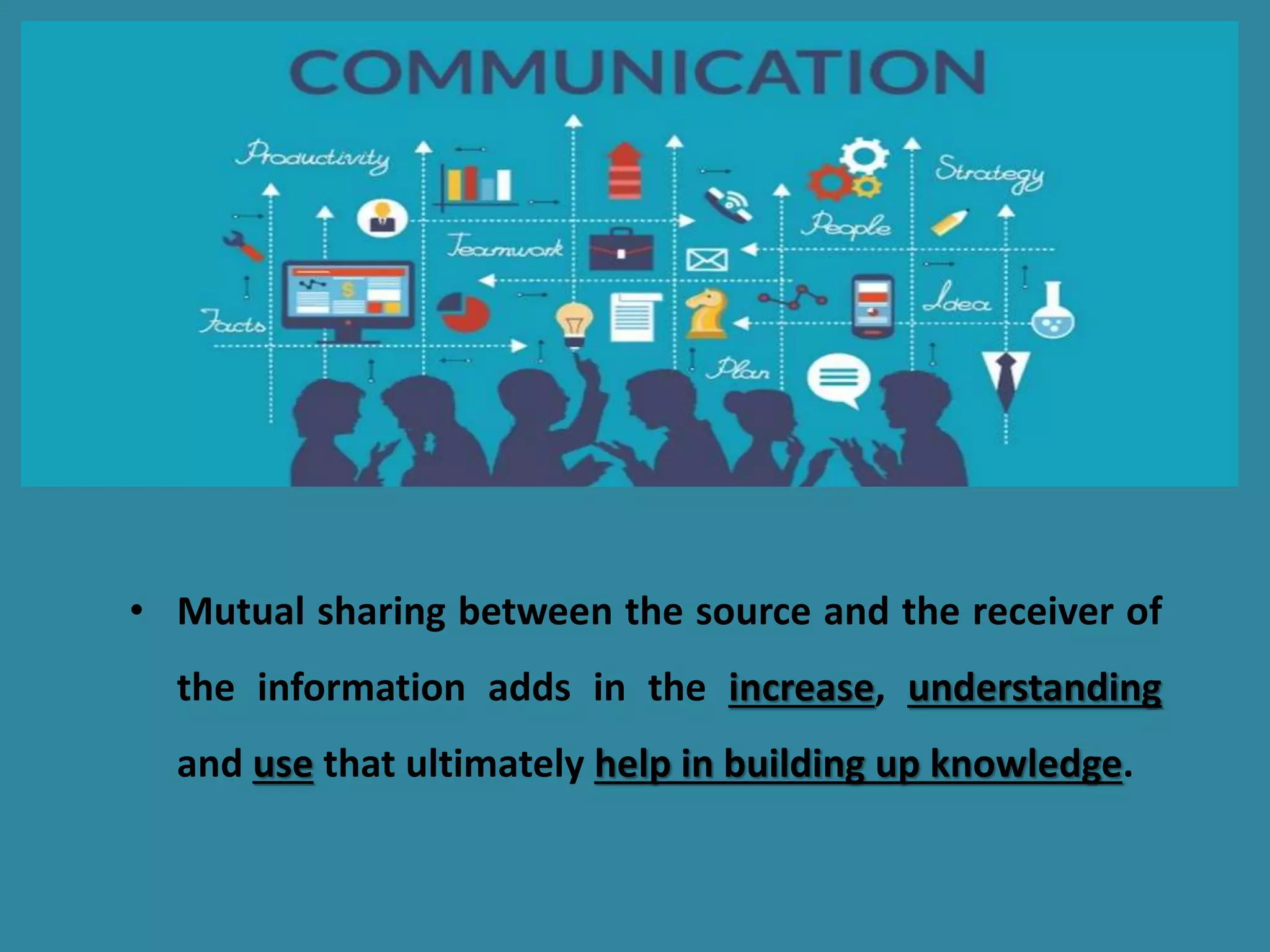
• Mutual sharing between the source and the receiver of
the information adds in the increase, understanding
and use that ultimately help in building up knowledge.
Technology employed in the shape of tools, equipment and
application support which helps in the collection, storage,
retrieval, use, transmission, manipulation, and dissemination
of information as accurately and efficiently as possible.
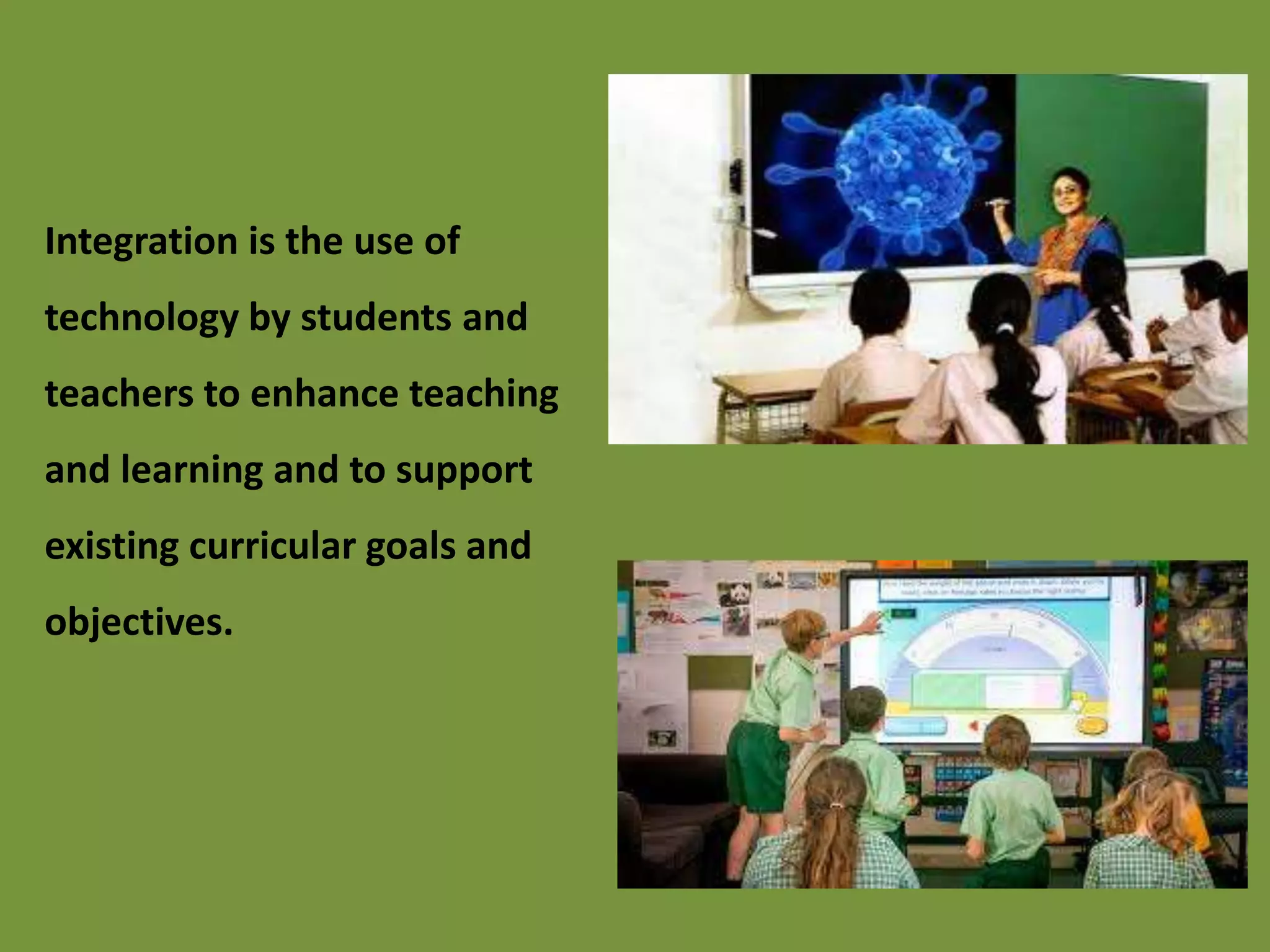
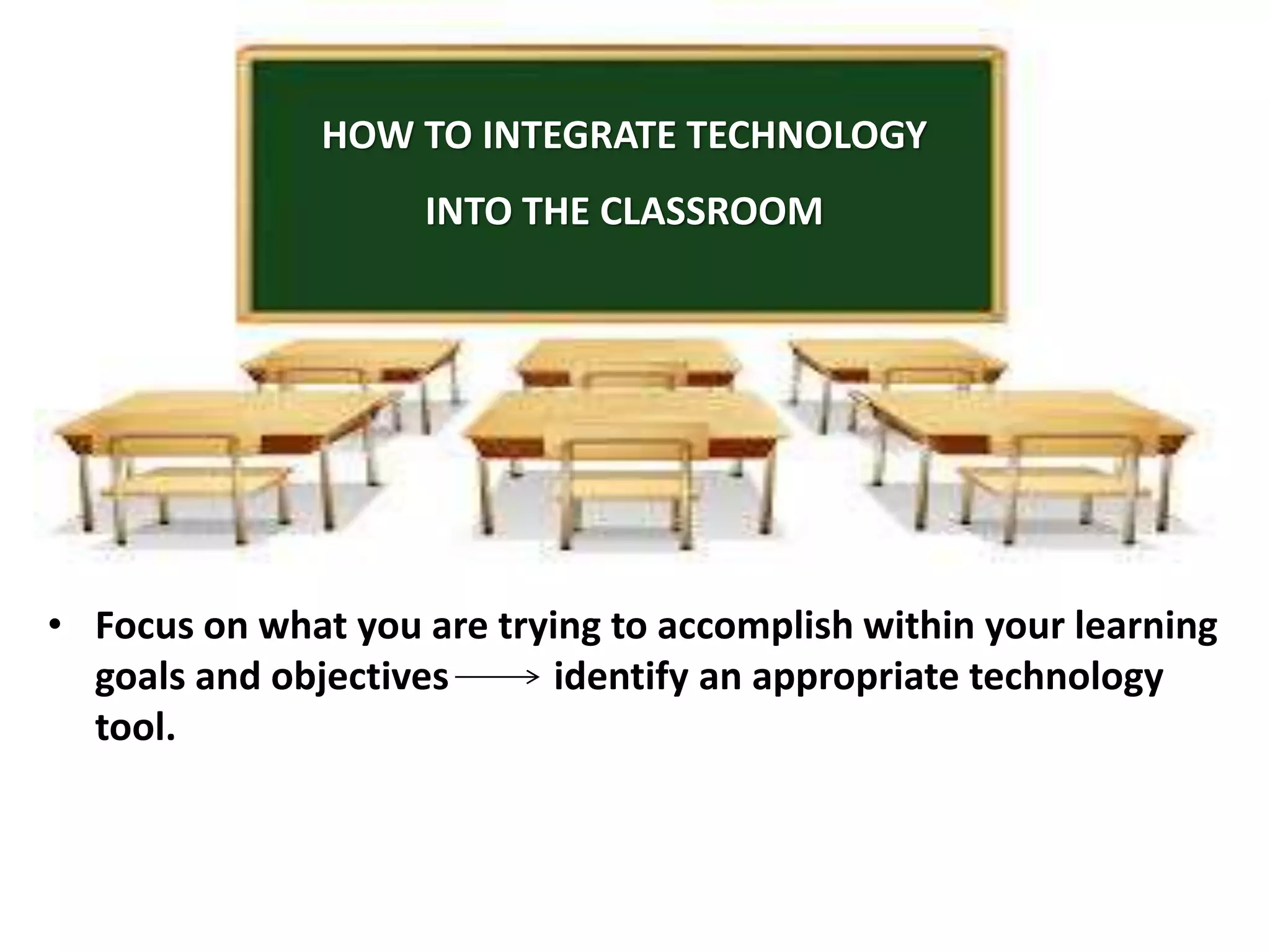
Integration is the use of
technology by students and
teachers to enhance teaching
and learning and to support
existing curricular goals and
objectives.
HOW TO INTEGRATE TECHNOLOGY
INTO THE CLASSROOM
• Focus on what you are trying to accomplish within your learning
goals and objectives identify an appropriate technology
tool.
• Barbara Means - Sorting educational technology by
category of use.
1. Tutorial Uses of Technology
2. Application Uses of Technology
3. Exploratory Uses of Technology
4. Communication Uses of Technology
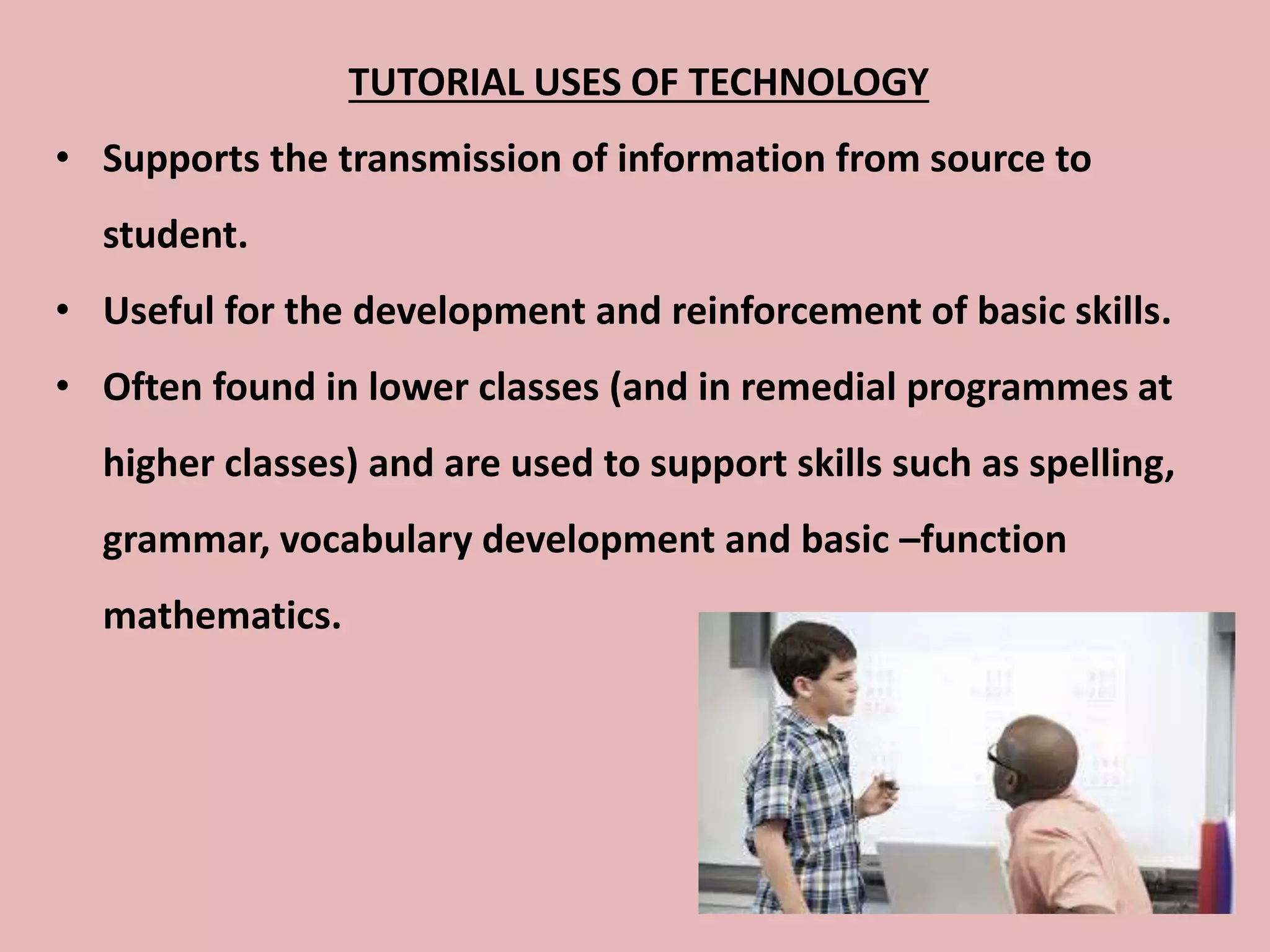
TUTORIAL USES OF TECHNOLOGY
• Supports the transmission of information from source to
student.
• Useful for the development and reinforcement of basic skills.
• Often found in lower classes (and in remedial programmes at
higher classes) and are used to support skills such as spelling,
grammar, vocabulary development and basic –function
mathematics.
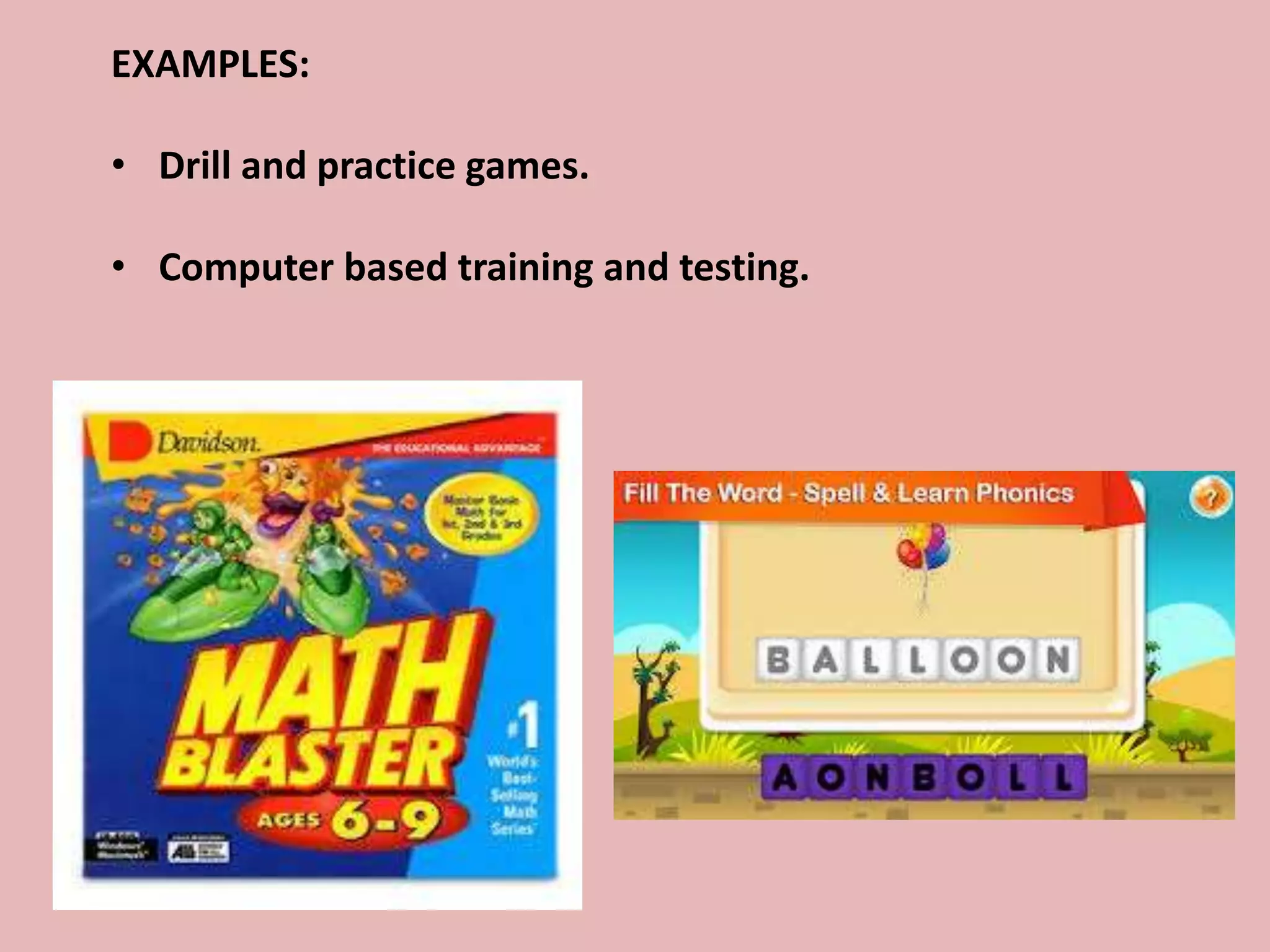
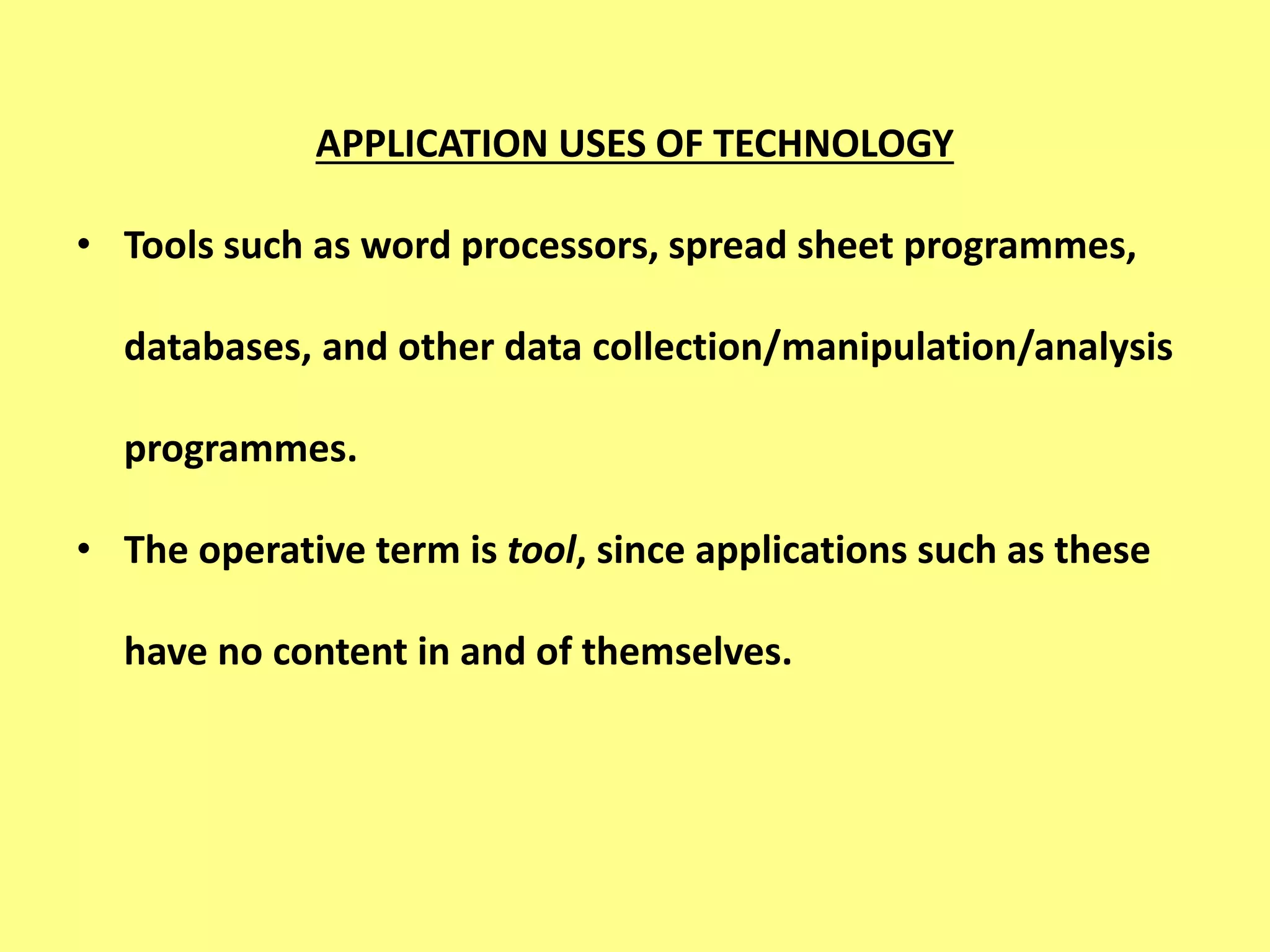
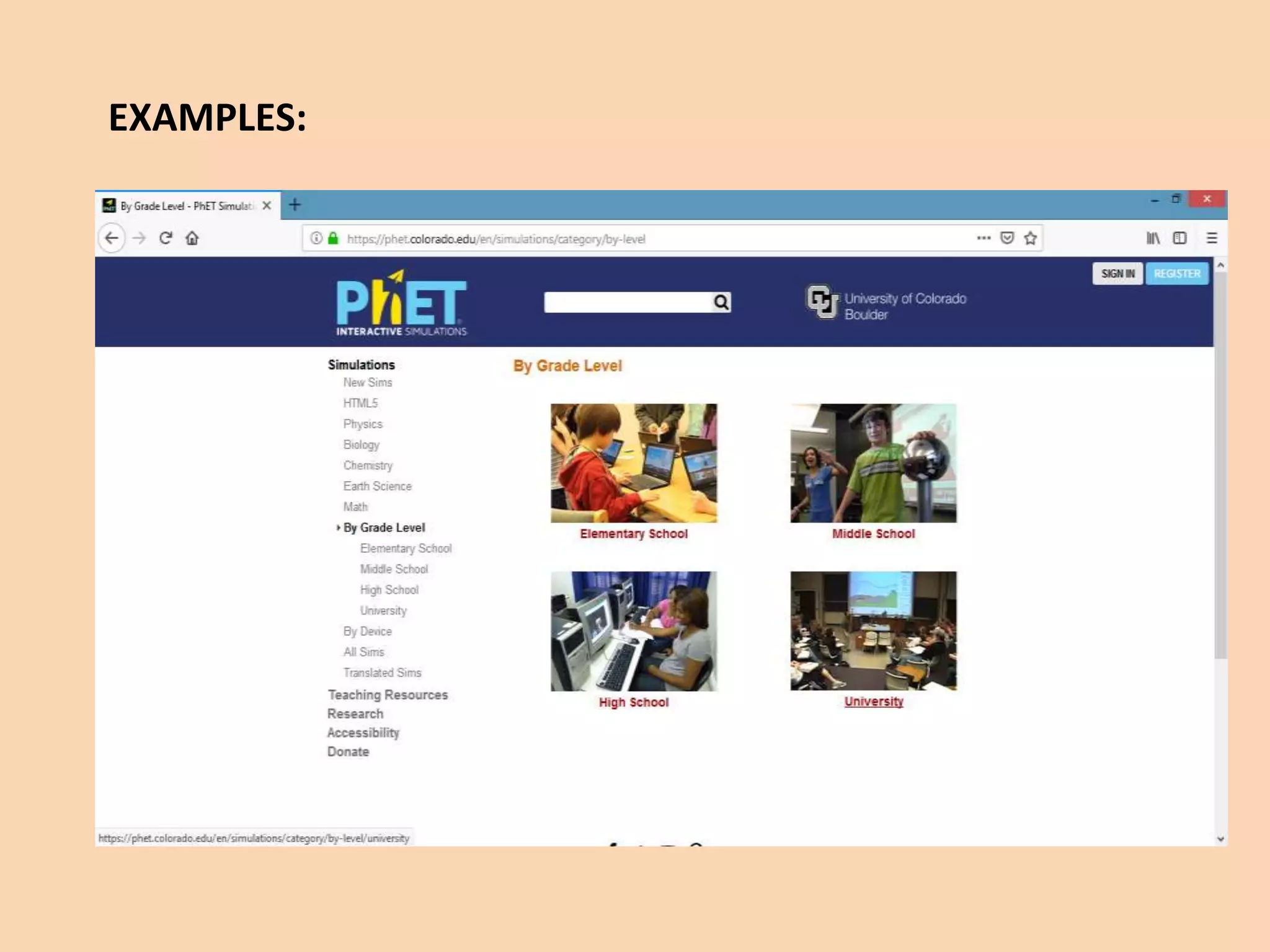
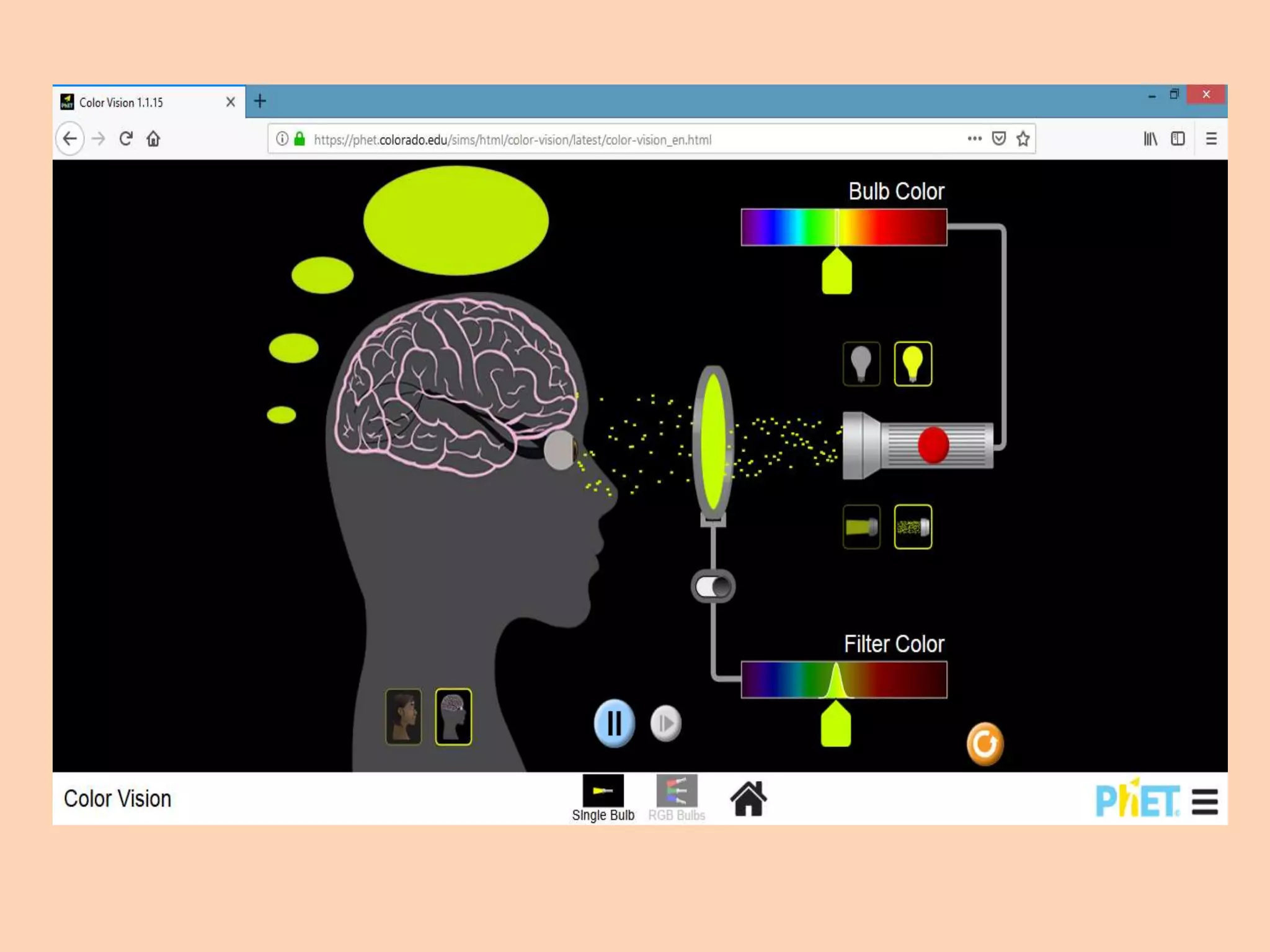
EXAMPLES:
• Drill and practice games.
• Computer based training and testing.
APPLICATION USES OF TECHNOLOGY
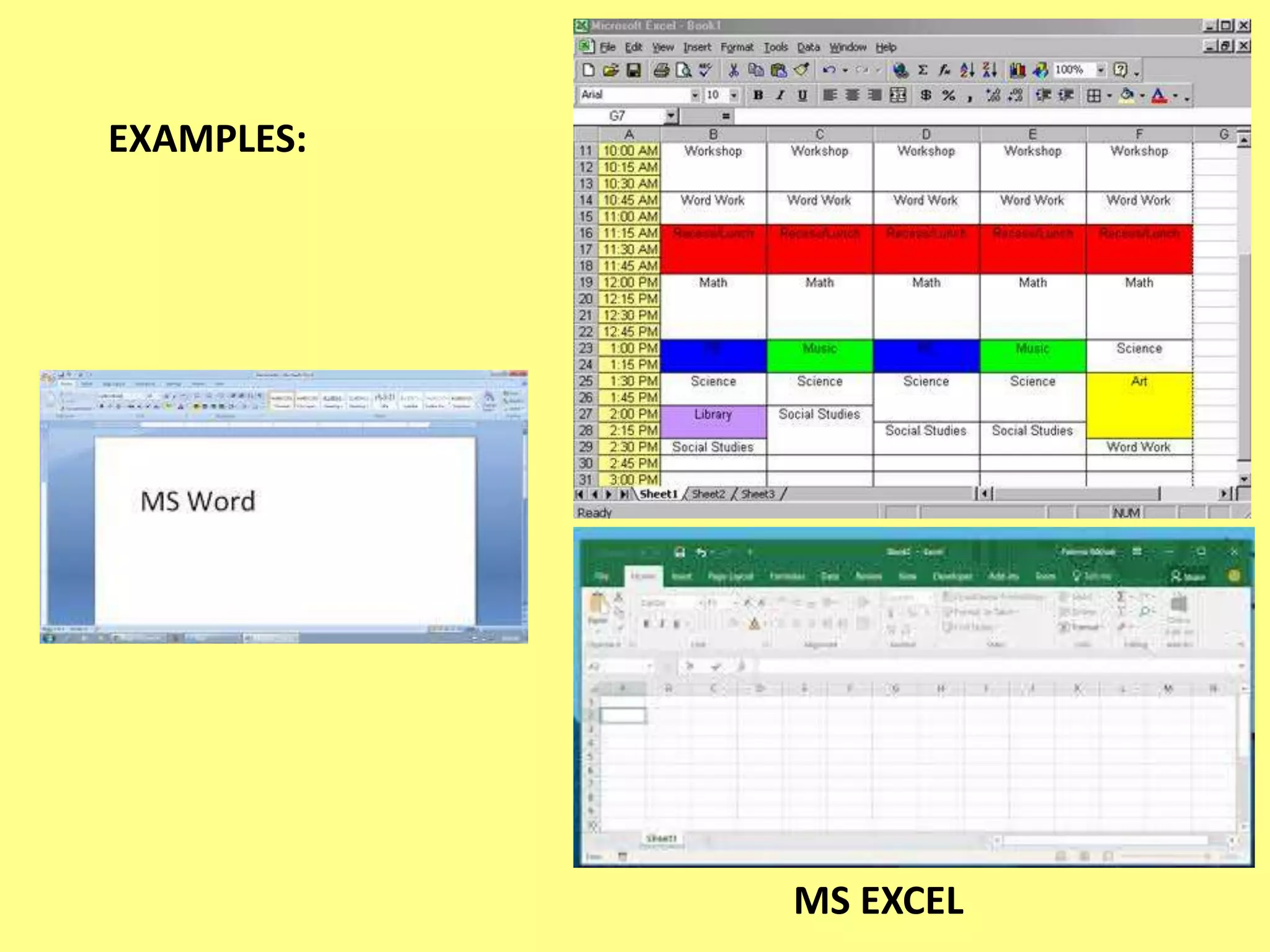
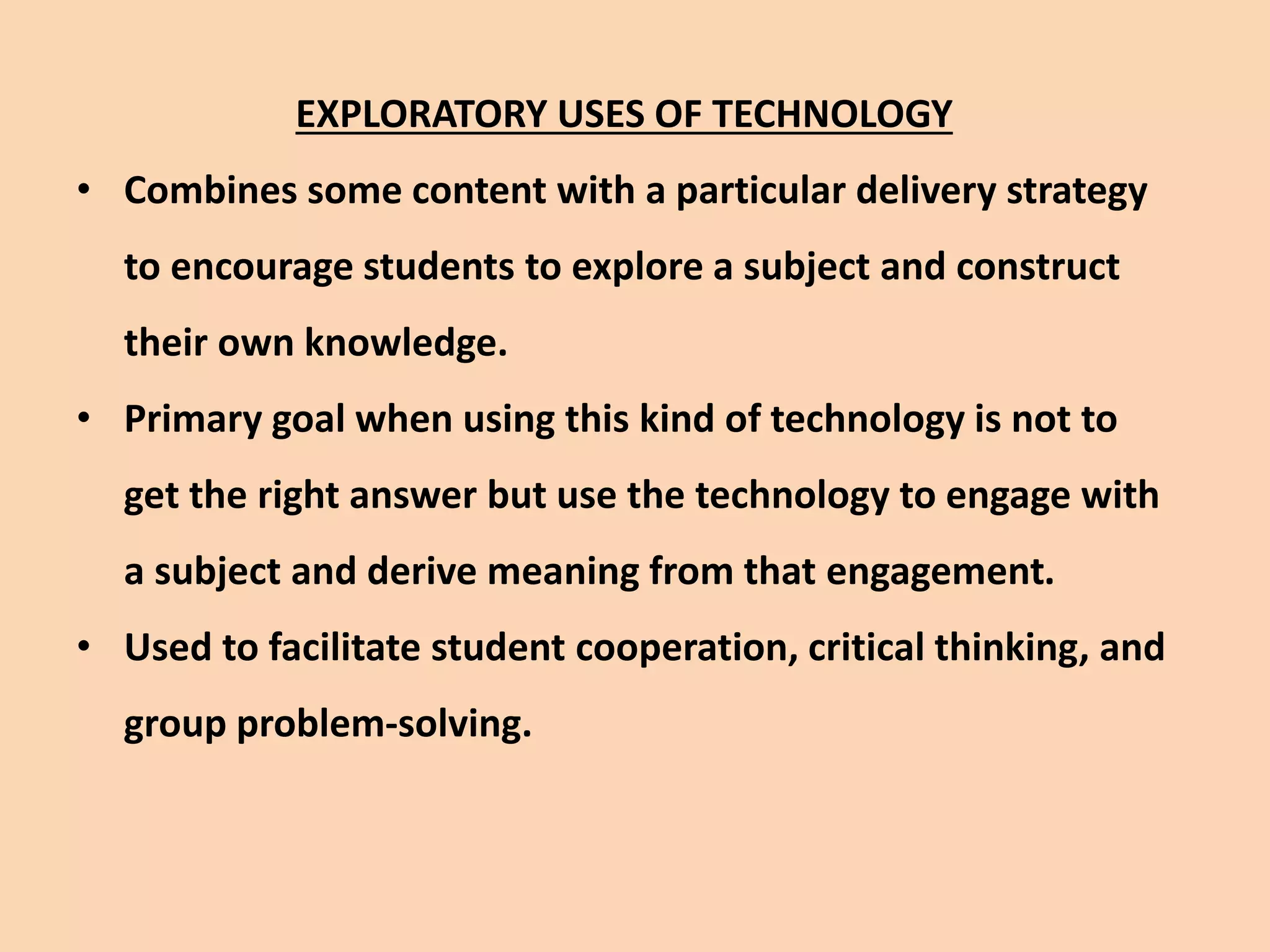
• Tools such as word processors, spread sheet programmes,
databases, and other data collection/manipulation/analysis
programmes.
• The operative term is tool, since applications such as these
have no content in and of themselves.
EXAMPLES:
MS EXCEL
EXPLORATORY USES OF TECHNOLOGY
• Combines some content with a particular delivery strategy
to encourage students to explore a subject and construct
their own knowledge.
• Primary goal when using this kind of technology is not to
get the right answer but use the technology to engage with
a subject and derive meaning from that engagement.
• Used to facilitate student cooperation, critical thinking, and
group problem-solving.
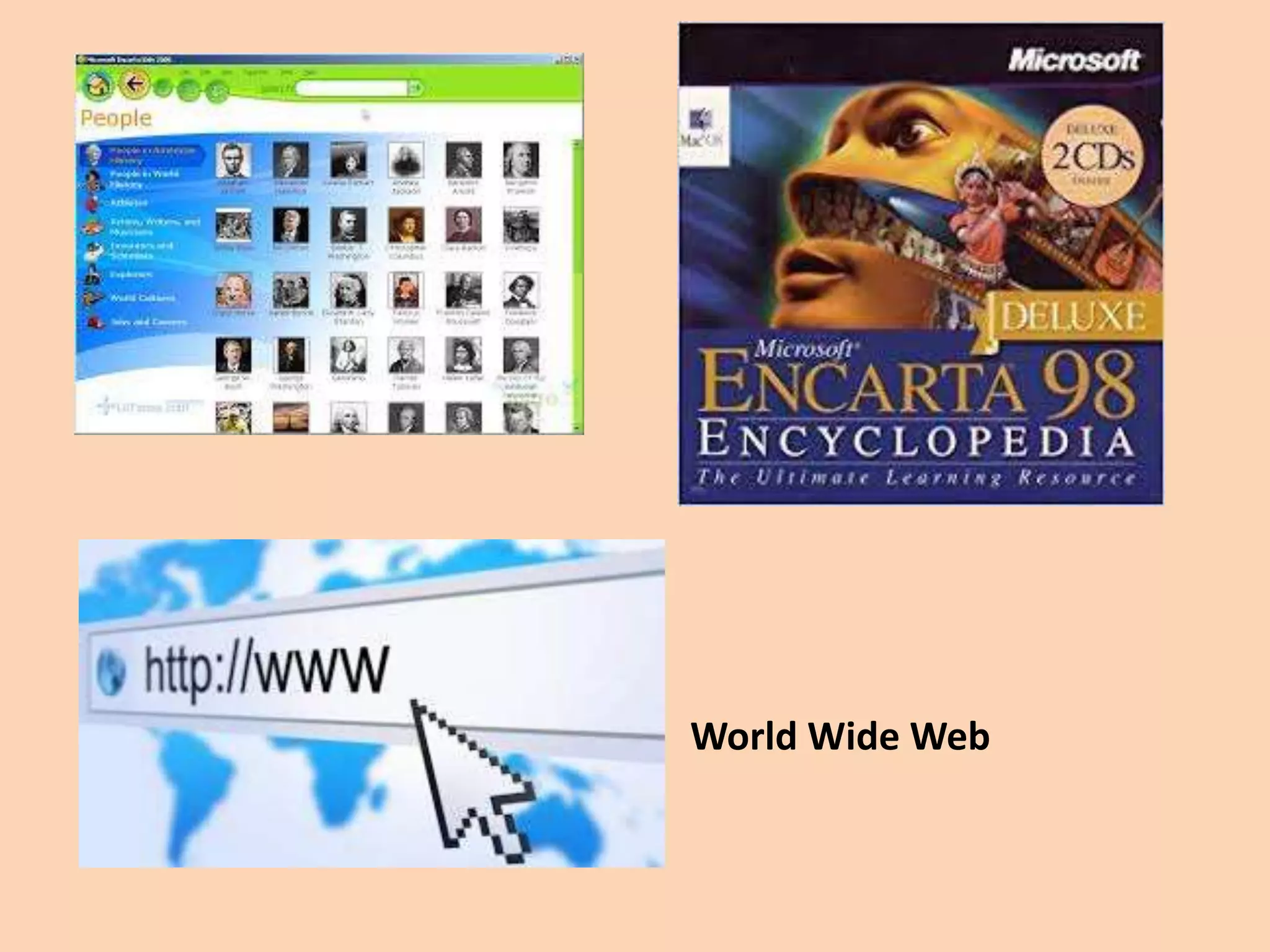
EXAMPLES:
World Wide Web
COMMUNICATION USES OF TECHNOLOGY
• Communications technology can be used in any of the three
modes/categories (tutorials, application and exploratory).
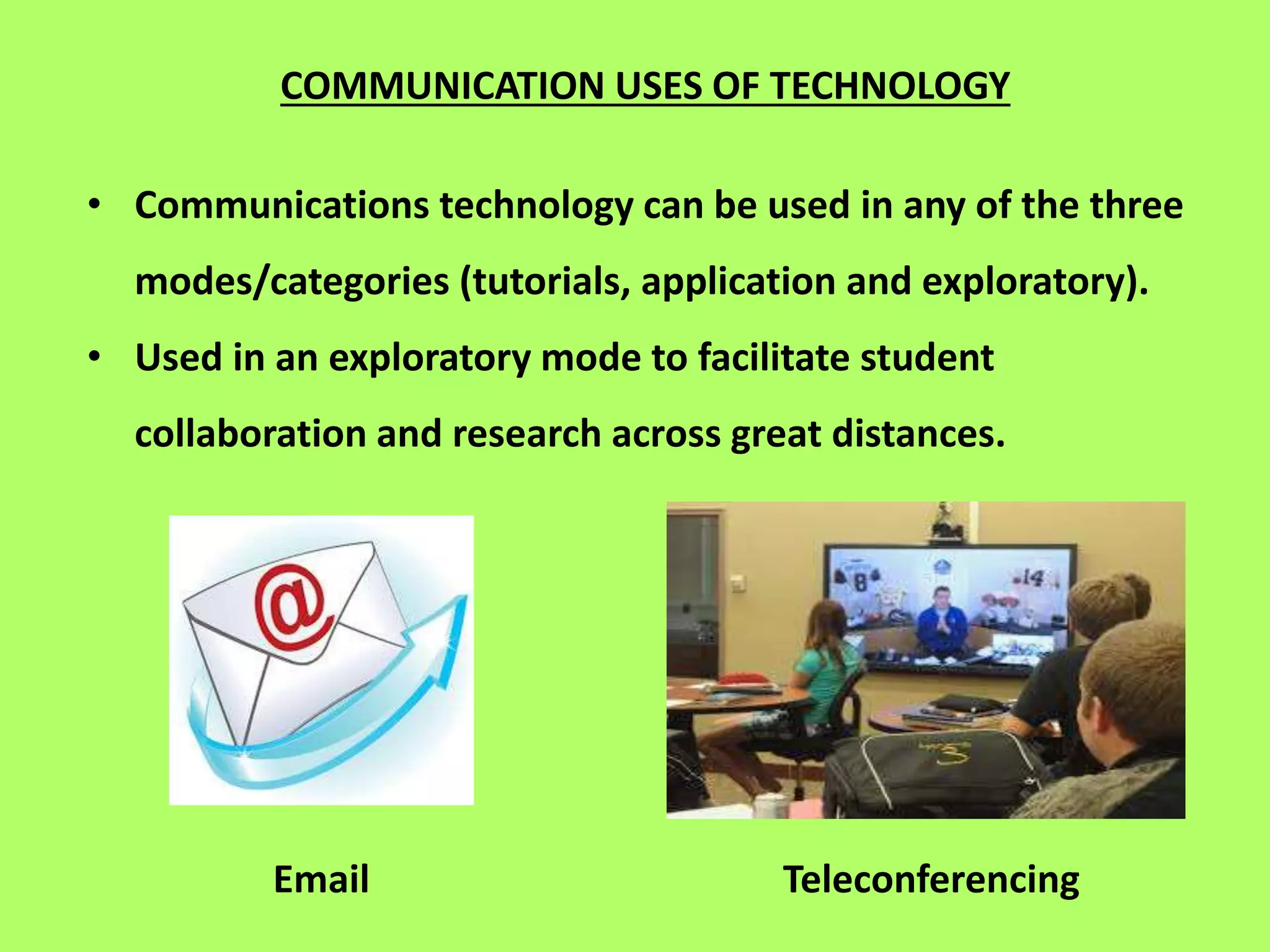
• Used in an exploratory mode to facilitate student
collaboration and research across great distances.
Email Teleconferencing
The role of the teacher in ICT
enabled education
• Teachers remain central to the learning
process.
• Lesson planning is crucial when using
ICTs
• 1.Pedagogy
• 2.Teacher technical abilities and
knowledge of ICTs
• 3.Use of ICTs by Teachers
• 4.Teacher confidence and motivation
• 5.Subject knowledge
• 6.Teacher professional development
1.Pedagogy
• Introducing technology alone will not change
the teaching and learning process
• ICTs seen as tools to help teachers create more
'learner-centric' learning environments
• ICTs can be used to support change and to
support/extend existing teaching practices
• Using ICTs as tools for information
presentation is of mixed effectiveness
2.Teacher technical abilities and
knowledge of ICTs
One-off training' is not sufficient
Few teachers have broad 'expertise' in using
ICTs in their teaching
The use of ICTs to promote 'computer literacy
is seen as less important than in using ICTs as
teaching and learning tools
Students are more sophisticated in their use of
technology than teachers
Preparing teachers to benefit from ICT use is
about more than just technical skills
3.Use of ICTs by Teachers
• Teachers most commonly use ICTs for
administrative tasks
• More knowledgeable teachers rely less on
‘computer assisted instruction’
• How teachers use ICTs is dependent on their
general teaching styles
• Teaching with ICTs takes more time
4.Teacher confidence and motivation
• Few teachers are confident users of ICTs
• Fear prevents many teachers from using
ICTs
• ICTs motivate (some) teachers, at least at the
start
• Incentives must be developed to promote
effective teacher participation in continuing
professional development
• Access to ICTs is the most significant factor
in whether teachers use them
5.Subject knowledge
• Teachers' subject knowledge influences how
ICTs are used
• Teacher content mastery and understanding
of student comprehension make ICT use
more effective
• Exposure to new/additional information via
ICTs is not enough
• ICTs can aid teacher self-learning in subject
matter
6.Teacher professional development
• On-going teacher training and support is
critical to the successful utilization of ICTs in
education
• Teacher professional development is a
process, not an event
• Introducing ICTs expands the needs for on-
going professional development of teachers
THANK YOU

Integrating ICT in Classrooms

  • 2.
     Information providesthe base for our knowledge.  Information remains incomplete without the involvement of the art of communication.
  • 3.
    • Mutual sharingbetween the source and the receiver of the information adds in the increase, understanding and use that ultimately help in building up knowledge.
  • 4.
    Technology employed inthe shape of tools, equipment and application support which helps in the collection, storage, retrieval, use, transmission, manipulation, and dissemination of information as accurately and efficiently as possible.
  • 6.
    Integration is theuse of technology by students and teachers to enhance teaching and learning and to support existing curricular goals and objectives.
  • 7.
    HOW TO INTEGRATETECHNOLOGY INTO THE CLASSROOM • Focus on what you are trying to accomplish within your learning goals and objectives identify an appropriate technology tool.
  • 8.
    • Barbara Means- Sorting educational technology by category of use. 1. Tutorial Uses of Technology 2. Application Uses of Technology 3. Exploratory Uses of Technology 4. Communication Uses of Technology
  • 9.
    TUTORIAL USES OFTECHNOLOGY • Supports the transmission of information from source to student. • Useful for the development and reinforcement of basic skills. • Often found in lower classes (and in remedial programmes at higher classes) and are used to support skills such as spelling, grammar, vocabulary development and basic –function mathematics.
  • 10.
    EXAMPLES: • Drill andpractice games. • Computer based training and testing.
  • 11.
    APPLICATION USES OFTECHNOLOGY • Tools such as word processors, spread sheet programmes, databases, and other data collection/manipulation/analysis programmes. • The operative term is tool, since applications such as these have no content in and of themselves.
  • 12.
  • 13.
    EXPLORATORY USES OFTECHNOLOGY • Combines some content with a particular delivery strategy to encourage students to explore a subject and construct their own knowledge. • Primary goal when using this kind of technology is not to get the right answer but use the technology to engage with a subject and derive meaning from that engagement. • Used to facilitate student cooperation, critical thinking, and group problem-solving.
  • 14.
  • 16.
  • 17.
    COMMUNICATION USES OFTECHNOLOGY • Communications technology can be used in any of the three modes/categories (tutorials, application and exploratory). • Used in an exploratory mode to facilitate student collaboration and research across great distances. Email Teleconferencing
  • 18.
    The role ofthe teacher in ICT enabled education
  • 19.
    • Teachers remaincentral to the learning process. • Lesson planning is crucial when using ICTs
  • 20.
    • 1.Pedagogy • 2.Teachertechnical abilities and knowledge of ICTs • 3.Use of ICTs by Teachers • 4.Teacher confidence and motivation • 5.Subject knowledge • 6.Teacher professional development
  • 21.
    1.Pedagogy • Introducing technologyalone will not change the teaching and learning process • ICTs seen as tools to help teachers create more 'learner-centric' learning environments • ICTs can be used to support change and to support/extend existing teaching practices • Using ICTs as tools for information presentation is of mixed effectiveness
  • 22.
    2.Teacher technical abilitiesand knowledge of ICTs One-off training' is not sufficient Few teachers have broad 'expertise' in using ICTs in their teaching The use of ICTs to promote 'computer literacy is seen as less important than in using ICTs as teaching and learning tools Students are more sophisticated in their use of technology than teachers Preparing teachers to benefit from ICT use is about more than just technical skills
  • 23.
    3.Use of ICTsby Teachers • Teachers most commonly use ICTs for administrative tasks • More knowledgeable teachers rely less on ‘computer assisted instruction’ • How teachers use ICTs is dependent on their general teaching styles • Teaching with ICTs takes more time
  • 24.
    4.Teacher confidence andmotivation • Few teachers are confident users of ICTs • Fear prevents many teachers from using ICTs • ICTs motivate (some) teachers, at least at the start • Incentives must be developed to promote effective teacher participation in continuing professional development • Access to ICTs is the most significant factor in whether teachers use them
  • 25.
    5.Subject knowledge • Teachers'subject knowledge influences how ICTs are used • Teacher content mastery and understanding of student comprehension make ICT use more effective • Exposure to new/additional information via ICTs is not enough • ICTs can aid teacher self-learning in subject matter
  • 26.
    6.Teacher professional development •On-going teacher training and support is critical to the successful utilization of ICTs in education • Teacher professional development is a process, not an event • Introducing ICTs expands the needs for on- going professional development of teachers
  • 27.