Information
Communication &
Technology Skills
Mr. Rahul Rajput
LEND-A-HAND-INDIA
 What qualities and skills are essential to ICT teacher?
 Which qualities and skills are require to an ICT teacher to improve the quality of
education system explain with example
 How ICT teachers can utilize their skills and qualities to overcome the challenges and
barriers of ICT integration in Indian school?
Skill and Quality
 Skill is an ability to perform a particular task.
Skills for ICT Teacher
 Handling of Hardware
 Operations of Software
 Connectivity of machines
 Observant of netiquettes
 Use of secondary storage devices
 Demonstration
 Fault finding and Problem solving
 Convincing power
 Quality is personality traits which reflects in behavior.
Cont.
Qualities of ICT teacher
 Techno savviness
 Update knowledge
 Lifelong learning
 Awareness about legal and
ethical issues
 Awareness of threats
 Commitment
 Patience
 Logical thinking
 Experimental
 Adaptive and adjustment
 Liberal
 Self control
ICT and Education
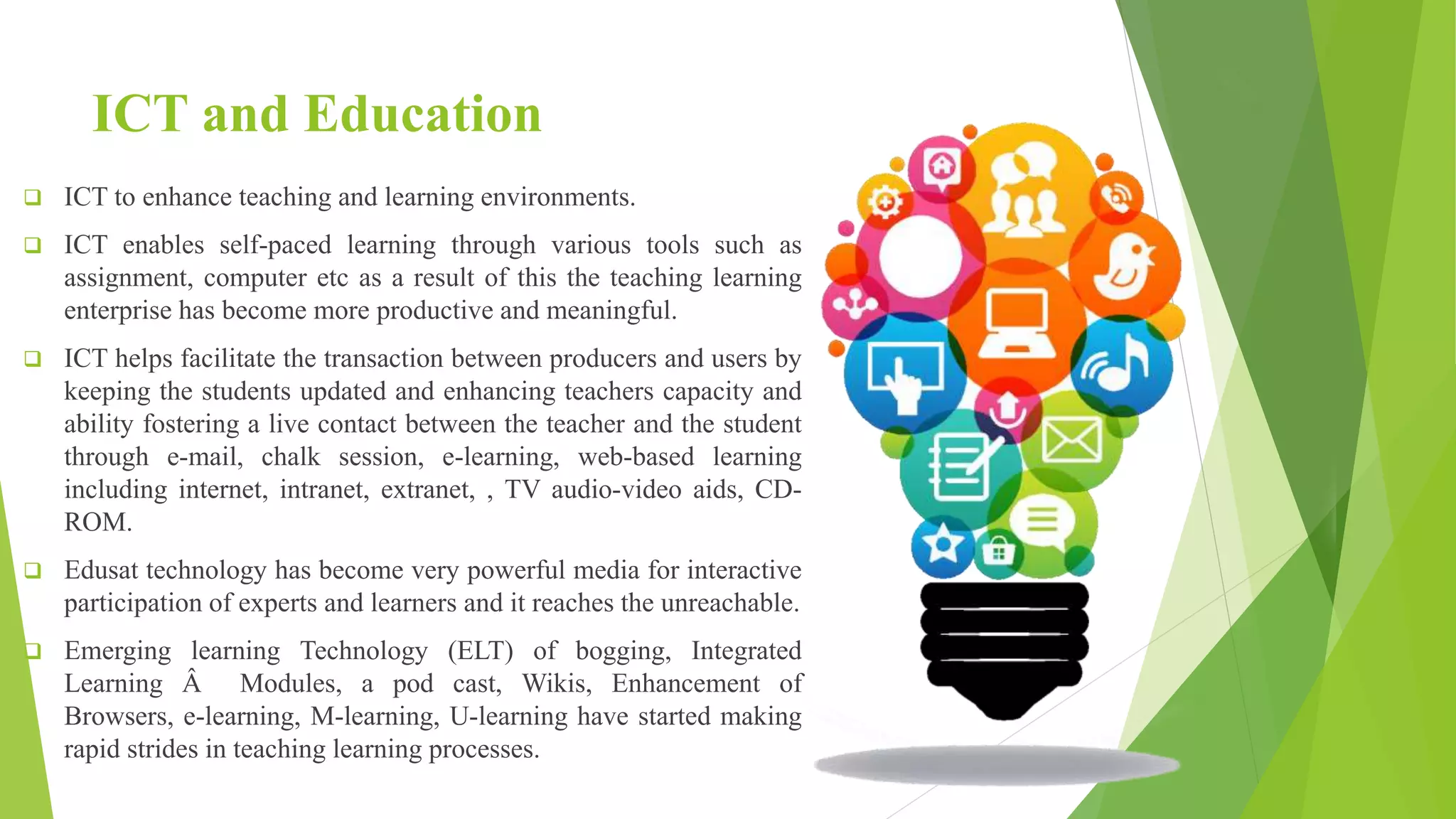
 ICT to enhance teaching and learning environments.
 ICT enables self-paced learning through various tools such as
assignment, computer etc as a result of this the teaching learning
enterprise has become more productive and meaningful.
 ICT helps facilitate the transaction between producers and users by
keeping the students updated and enhancing teachers capacity and
ability fostering a live contact between the teacher and the student
through e-mail, chalk session, e-learning, web-based learning
including internet, intranet, extranet, , TV audio-video aids, CD-
ROM.
 Edusat technology has become very powerful media for interactive
participation of experts and learners and it reaches the unreachable.
 Emerging learning Technology (ELT) of bogging, Integrated
Learning  Modules, a pod cast, Wikis, Enhancement of
Browsers, e-learning, M-learning, U-learning have started making
rapid strides in teaching learning processes.
How ICT is being used very effectively
 Broadening horizons with more opportunities for creative expression
 Flexibility to study where, when and how best suits individual needs and preferences
 Increased motivation through learning that stimulates and stretches
 Wider access to learning and participation
 Sensible choices about when, when not and how to use new technology to enhance,
enrich and extend learning
Advantages of using ICT in lessons
 Increased commitment to learning
works
 Enhanced enjoyment and interest in
learning and the subject
 Enhanced sense of achievement in
learning and pride in the work
 Increase in self-directed learning
and independence
 Enhanced self-esteem leading to
expectations of achieving goals.
 Getting a lot of information and
ideas
 Learning computer skills
 Analysing information
 ICT can have on learners learning,
including
 Increased motivation to stay on-
work, behave better and produce
higher
 Quality output
 Produce higher quality work
 Learn more independently and at
their own pace
 Do things they cannot do using
traditional methods and resources
 Do more work and work more
quickly
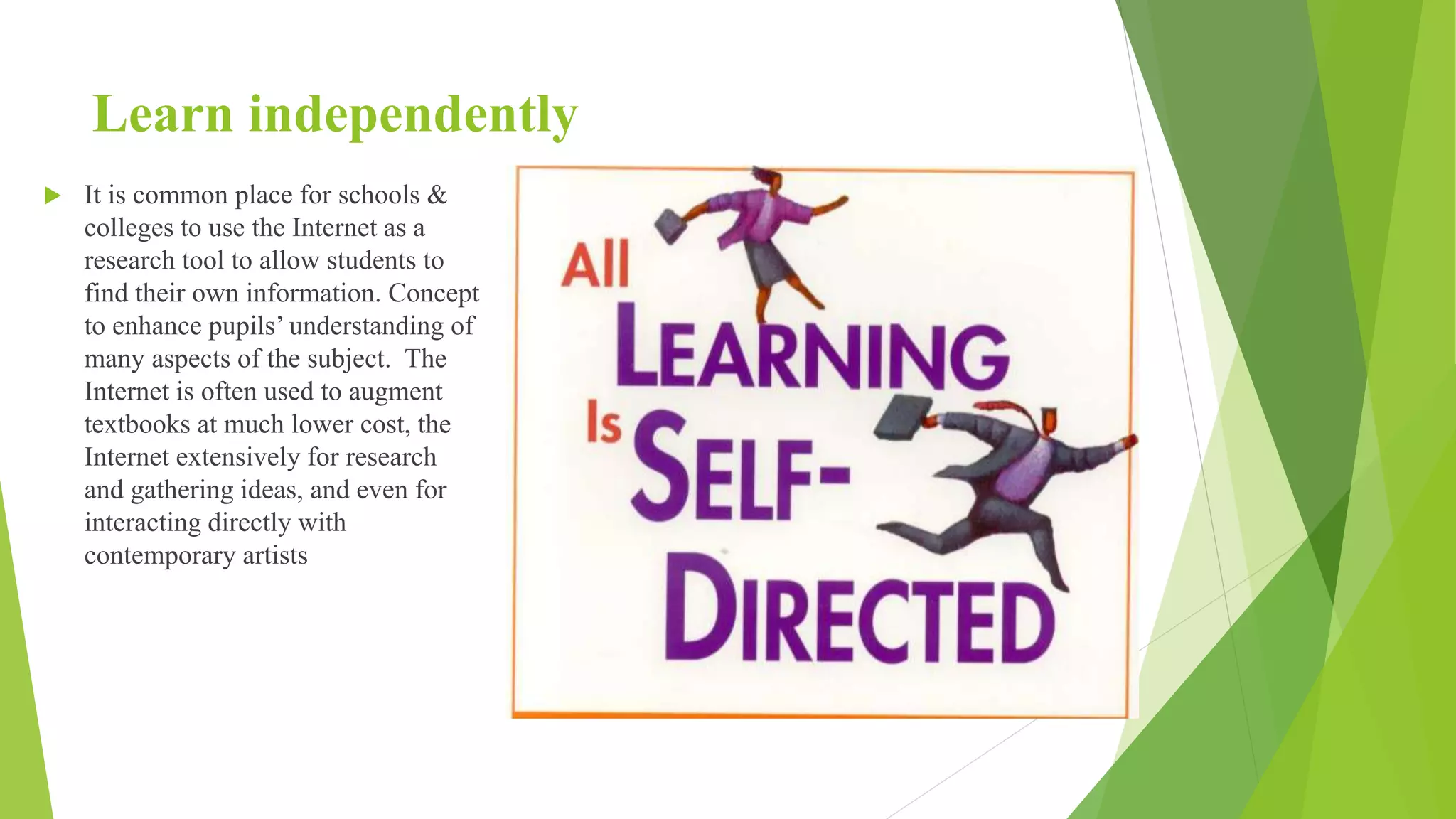
Learn independently
 It is common place for schools &
colleges to use the Internet as a
research tool to allow students to
find their own information. Concept
to enhance pupils’ understanding of
many aspects of the subject. The
Internet is often used to augment
textbooks at much lower cost, the
Internet extensively for research
and gathering ideas, and even for
interacting directly with
contemporary artists
Can more work with use of ICT
 ICT enables high quality output to be produced at a speed that cannot be matched using
traditional methods and resources. Teaching applications such as graphing packages in
Mathematics, multimedia authoring software and data analysis packages in Geography
and Science all allow students to work much faster than if they had to do the tasks
manually. ICT as a tool to increase the breadth and speed of learning, increasing the
efficiency of both teacher and students. ICT was used to gather, analyze and present
information and the teacher described her use as great for cutting down time where you
want to analyze information.
Integrate in more subjects
 The work done in all lessons is set in a context that encourages cross-fertilisation of
skills across subjects
 Teachers plan and work collaboratively, facilitating skills transfer across subjects
 What are the difficulties of successfully using ICT in other subjects?
 Lack of confidence of teachers in using ict
 Lack of detailed planned into how ict can be used to enhance the teaching and learning
 Technical problems and shortage of computers in classrooms
 More opportunities for pupils to get off-task
 The wealth of facilities in many applications can be confusing and cause pupils to lose
sight of the primary learning objective
 Timetabling difficulties
 The need for teachers to change their pedagogy.
Time saving and less expensive Incorporating ICT across the curriculum requires careful timetabling and
cooperation among departments. Generally we point out that in science in
particular, it may not be possible to move practical classes to ICT suites because of
health and safety considerations or to site computers in science Laboratories
because of space constraints. In other subjects, the times when the ICT suites are
available may not suit the schemes of work planned by the teachers. Consequently,
much more cross-curricular and departmental planning is required than most
schools & colleges have been used to in the past.
Changing pedagogy Teachers have to accept that the widespread use of ICT in schools & colleges is having
an impact on teaching pedagogy and requires a significant rethinking of approach. Two
main teaching methods and their effect on the way in which ICT is used in lessons:
 traditional transmission instruction assumes that pupils will learn through teacher
explanation or reading from texts. Skills are learnt through Practicing each skill in a
sequence prescribed by the teacher.
 Constructivist instruction assumes that understanding comes from relating new ideas to
the learner’s prior beliefs. Skills acquisition comes in an unstructured way as new skills
are used as required to solve practical problems.
 we concludes that when ICT is used in lessons, the constructivist approach is more
likely to lead to successful outcomes. Furthermore, his study showed that teachers with
the most constructivist philosophies tend to use computers more often and in a more
challenging way both in their classrooms and as users themselves
Some negative effects of ICT
 Excess use of ICT harmful for health.
 Teacher s prefer already prepared material than hand
written.
 Eye sights become weak of the learners.
 Learners can be learnt a lot of bad things like unuseful
chating, bad literature.
 Students going out of content; download absirdity and
silly songs, pictures, dialogues and videos.
 Foreign technology and culture is going heavy on our
culture.
 The overall conclusion who rightly challenges ICT is largely incompatible with
the requirements of teaching. Under the right conditions – where teachers are
personally comfortable and at least moderately skilled in using computers
themselves, where the school’s daily class schedule permits allocating time for
students to use computers as part of class assignments, where enough
equipment is available and convenient to permit computer activities to flow
seamlessly alongside other learning tasks and where the teacher’s personal
philosophies support a student- centered, constructivist pedagogy that
incorporates collaborative projects partly defined by student interest –
computers are clearly becoming a valuable and well-functioning instructional
tool

Information communication & technology skills

  • 1.
  • 2.
     What qualitiesand skills are essential to ICT teacher?  Which qualities and skills are require to an ICT teacher to improve the quality of education system explain with example  How ICT teachers can utilize their skills and qualities to overcome the challenges and barriers of ICT integration in Indian school?
  • 3.
    Skill and Quality Skill is an ability to perform a particular task. Skills for ICT Teacher  Handling of Hardware  Operations of Software  Connectivity of machines  Observant of netiquettes  Use of secondary storage devices  Demonstration  Fault finding and Problem solving  Convincing power  Quality is personality traits which reflects in behavior.
  • 4.
    Cont. Qualities of ICTteacher  Techno savviness  Update knowledge  Lifelong learning  Awareness about legal and ethical issues  Awareness of threats  Commitment  Patience  Logical thinking  Experimental  Adaptive and adjustment  Liberal  Self control
  • 5.
    ICT and Education ICT to enhance teaching and learning environments.  ICT enables self-paced learning through various tools such as assignment, computer etc as a result of this the teaching learning enterprise has become more productive and meaningful.  ICT helps facilitate the transaction between producers and users by keeping the students updated and enhancing teachers capacity and ability fostering a live contact between the teacher and the student through e-mail, chalk session, e-learning, web-based learning including internet, intranet, extranet, , TV audio-video aids, CD- ROM.  Edusat technology has become very powerful media for interactive participation of experts and learners and it reaches the unreachable.  Emerging learning Technology (ELT) of bogging, Integrated Learning  Modules, a pod cast, Wikis, Enhancement of Browsers, e-learning, M-learning, U-learning have started making rapid strides in teaching learning processes.
  • 6.
    How ICT isbeing used very effectively  Broadening horizons with more opportunities for creative expression  Flexibility to study where, when and how best suits individual needs and preferences  Increased motivation through learning that stimulates and stretches  Wider access to learning and participation  Sensible choices about when, when not and how to use new technology to enhance, enrich and extend learning
  • 7.
    Advantages of usingICT in lessons  Increased commitment to learning works  Enhanced enjoyment and interest in learning and the subject  Enhanced sense of achievement in learning and pride in the work  Increase in self-directed learning and independence  Enhanced self-esteem leading to expectations of achieving goals.  Getting a lot of information and ideas  Learning computer skills  Analysing information  ICT can have on learners learning, including  Increased motivation to stay on- work, behave better and produce higher  Quality output  Produce higher quality work  Learn more independently and at their own pace  Do things they cannot do using traditional methods and resources  Do more work and work more quickly
  • 8.
    Learn independently  Itis common place for schools & colleges to use the Internet as a research tool to allow students to find their own information. Concept to enhance pupils’ understanding of many aspects of the subject. The Internet is often used to augment textbooks at much lower cost, the Internet extensively for research and gathering ideas, and even for interacting directly with contemporary artists
  • 9.
    Can more workwith use of ICT  ICT enables high quality output to be produced at a speed that cannot be matched using traditional methods and resources. Teaching applications such as graphing packages in Mathematics, multimedia authoring software and data analysis packages in Geography and Science all allow students to work much faster than if they had to do the tasks manually. ICT as a tool to increase the breadth and speed of learning, increasing the efficiency of both teacher and students. ICT was used to gather, analyze and present information and the teacher described her use as great for cutting down time where you want to analyze information.
  • 10.
    Integrate in moresubjects  The work done in all lessons is set in a context that encourages cross-fertilisation of skills across subjects  Teachers plan and work collaboratively, facilitating skills transfer across subjects  What are the difficulties of successfully using ICT in other subjects?  Lack of confidence of teachers in using ict  Lack of detailed planned into how ict can be used to enhance the teaching and learning  Technical problems and shortage of computers in classrooms  More opportunities for pupils to get off-task  The wealth of facilities in many applications can be confusing and cause pupils to lose sight of the primary learning objective  Timetabling difficulties  The need for teachers to change their pedagogy.
  • 11.
    Time saving andless expensive Incorporating ICT across the curriculum requires careful timetabling and cooperation among departments. Generally we point out that in science in particular, it may not be possible to move practical classes to ICT suites because of health and safety considerations or to site computers in science Laboratories because of space constraints. In other subjects, the times when the ICT suites are available may not suit the schemes of work planned by the teachers. Consequently, much more cross-curricular and departmental planning is required than most schools & colleges have been used to in the past.
  • 12.
    Changing pedagogy Teachershave to accept that the widespread use of ICT in schools & colleges is having an impact on teaching pedagogy and requires a significant rethinking of approach. Two main teaching methods and their effect on the way in which ICT is used in lessons:  traditional transmission instruction assumes that pupils will learn through teacher explanation or reading from texts. Skills are learnt through Practicing each skill in a sequence prescribed by the teacher.  Constructivist instruction assumes that understanding comes from relating new ideas to the learner’s prior beliefs. Skills acquisition comes in an unstructured way as new skills are used as required to solve practical problems.  we concludes that when ICT is used in lessons, the constructivist approach is more likely to lead to successful outcomes. Furthermore, his study showed that teachers with the most constructivist philosophies tend to use computers more often and in a more challenging way both in their classrooms and as users themselves
  • 13.
    Some negative effectsof ICT  Excess use of ICT harmful for health.  Teacher s prefer already prepared material than hand written.  Eye sights become weak of the learners.  Learners can be learnt a lot of bad things like unuseful chating, bad literature.  Students going out of content; download absirdity and silly songs, pictures, dialogues and videos.  Foreign technology and culture is going heavy on our culture.
  • 14.
     The overallconclusion who rightly challenges ICT is largely incompatible with the requirements of teaching. Under the right conditions – where teachers are personally comfortable and at least moderately skilled in using computers themselves, where the school’s daily class schedule permits allocating time for students to use computers as part of class assignments, where enough equipment is available and convenient to permit computer activities to flow seamlessly alongside other learning tasks and where the teacher’s personal philosophies support a student- centered, constructivist pedagogy that incorporates collaborative projects partly defined by student interest – computers are clearly becoming a valuable and well-functioning instructional tool