
What is IFM -
How is it Different From FM
INTEGRATED FACILITIES MANAGEMENT
UNLEASHING A NEW ERA IN FACILITY MANAGEMENT
THE GOAL IS TO CREATE A UNIFIED AND SEAMLESS
ENVIRONMENT THAT OPTIMIZES OPERATIONS, ENHANCES
EFFICIENCY, AND IMPROVES THE OVERALL WORKPLACE
EXPERIENCE.
DEFINITION AND CONCEPT
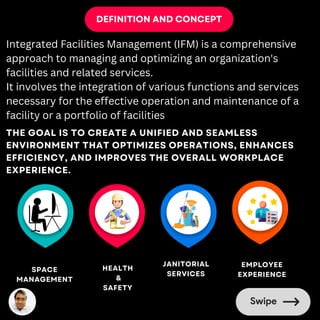
SPACE
MANAGEMENT
JANITORIAL
SERVICES
HEALTH
&
SAFETY
EMPLOYEE
EXPERIENCE
Integrated Facilities Management (IFM) is a comprehensive
approach to managing and optimizing an organization's
facilities and related services.
It involves the integration of various functions and services
necessary for the effective operation and maintenance of a
facility or a portfolio of facilities
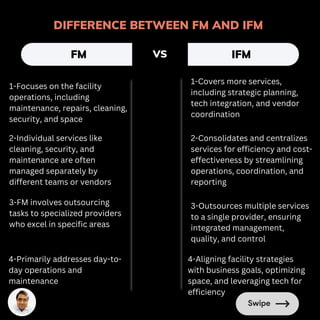
DIFFERENCE BETWEEN FM AND IFM
FM IFM
VS
1-Focuses on the facility
operations, including
maintenance, repairs, cleaning,
security, and space
1-Covers more services,
including strategic planning,
tech integration, and vendor
coordination
2-Individual services like
cleaning, security, and
maintenance are often
managed separately by
different teams or vendors
2-Consolidates and centralizes
services for efficiency and cost-
effectiveness by streamlining
operations, coordination, and
reporting
3-FM involves outsourcing
tasks to specialized providers
who excel in specific areas
3-Outsources multiple services
to a single provider, ensuring
integrated management,
quality, and control
4-Primarily addresses day-to-
day operations and
maintenance
4-Aligning facility strategies
with business goals, optimizing
space, and leveraging tech for
efficiency
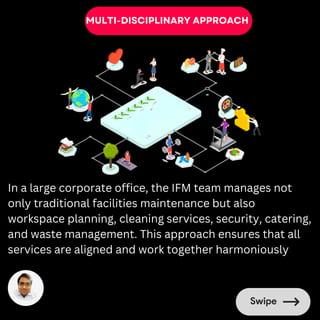
MULTI-DISCIPLINARY APPROACH
In a large corporate office, the IFM team manages not
only traditional facilities maintenance but also
workspace planning, cleaning services, security, catering,
and waste management. This approach ensures that all
services are aligned and work together harmoniously
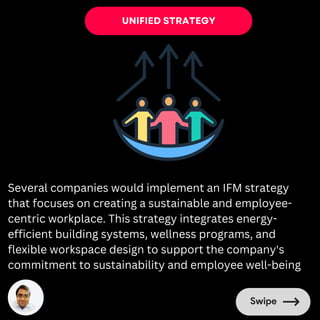
UNIFIED STRATEGY
Several companies would implement an IFM strategy
that focuses on creating a sustainable and employee-
centric workplace. This strategy integrates energy-
efficient building systems, wellness programs, and
flexible workspace design to support the company's
commitment to sustainability and employee well-being
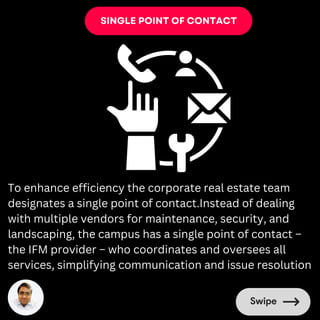
SINGLE POINT OF CONTACT
To enhance efficiency the corporate real estate team
designates a single point of contact.Instead of dealing
with multiple vendors for maintenance, security, and
landscaping, the campus has a single point of contact –
the IFM provider – who coordinates and oversees all
services, simplifying communication and issue resolution
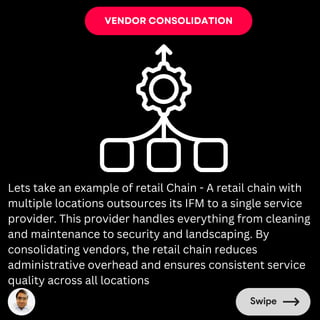
VENDOR CONSOLIDATION
Lets take an example of retail Chain - A retail chain with
multiple locations outsources its IFM to a single service
provider. This provider handles everything from cleaning
and maintenance to security and landscaping. By
consolidating vendors, the retail chain reduces
administrative overhead and ensures consistent service
quality across all locations
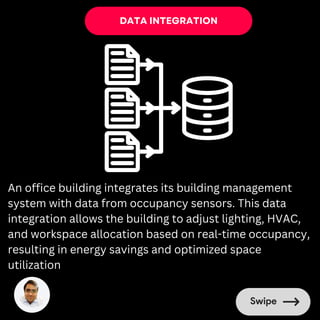
DATA INTEGRATION
An office building integrates its building management
system with data from occupancy sensors. This data
integration allows the building to adjust lighting, HVAC,
and workspace allocation based on real-time occupancy,
resulting in energy savings and optimized space
utilization
SEAMLESS OPERATIONS
In a healthcare facility, the IFM team coordinates
maintenance schedules with patient care hours to
minimize disruptions. By seamlessly integrating
maintenance activities with the facility's operations,
patient care remains uninterrupted, and the overall
patient experience is enhanced
EFFICIENCY GAINS
A manufacturing plant implements IFM practices that
streamline maintenance schedules, reducing equipment
downtime. This leads to improved operational efficiency,
increased production output, and ultimately, cost
savings.
SCALABILITY
A startup with plans for rapid growth partners with an
IFM provider. As the company expands its operations
and opens new locations, the IFM strategy is easily
scalable, allowing the startup to maintain consistent
service quality and operational standards
RISK MANAGEMENT
An organisation with IFM Structure will integrate its
facility management with disaster preparedness
protocols. The IFM team ensures that emergency
response plans are seamlessly integrated with facility
operations to mitigate risks and enhance employee
safety
EMPLOYEE EXPERIENCE
IFM enhances the employee experience by ensuring that
office spaces are designed for comfort, functionality,
and well-being. Corporate real estate applies IFM
principles by creating collaborative work environments,
incorporating wellness amenities, and optimizing space
layouts to promote productivity and employee
satisfaction
Lets embrace this holistic approach which aims to
optimize operations, enhance efficiency, and create a
seamless and unified environment that supports the
overall goals and well-being of the organization
Thank You
and
Stay Connected

Integrated Facilities Management

  • 1.
    What is IFM- How is it Different From FM INTEGRATED FACILITIES MANAGEMENT UNLEASHING A NEW ERA IN FACILITY MANAGEMENT
  • 2.
    THE GOAL ISTO CREATE A UNIFIED AND SEAMLESS ENVIRONMENT THAT OPTIMIZES OPERATIONS, ENHANCES EFFICIENCY, AND IMPROVES THE OVERALL WORKPLACE EXPERIENCE. DEFINITION AND CONCEPT SPACE MANAGEMENT JANITORIAL SERVICES HEALTH & SAFETY EMPLOYEE EXPERIENCE Integrated Facilities Management (IFM) is a comprehensive approach to managing and optimizing an organization's facilities and related services. It involves the integration of various functions and services necessary for the effective operation and maintenance of a facility or a portfolio of facilities
  • 3.
    DIFFERENCE BETWEEN FMAND IFM FM IFM VS 1-Focuses on the facility operations, including maintenance, repairs, cleaning, security, and space 1-Covers more services, including strategic planning, tech integration, and vendor coordination 2-Individual services like cleaning, security, and maintenance are often managed separately by different teams or vendors 2-Consolidates and centralizes services for efficiency and cost- effectiveness by streamlining operations, coordination, and reporting 3-FM involves outsourcing tasks to specialized providers who excel in specific areas 3-Outsources multiple services to a single provider, ensuring integrated management, quality, and control 4-Primarily addresses day-to- day operations and maintenance 4-Aligning facility strategies with business goals, optimizing space, and leveraging tech for efficiency
  • 4.
    MULTI-DISCIPLINARY APPROACH In alarge corporate office, the IFM team manages not only traditional facilities maintenance but also workspace planning, cleaning services, security, catering, and waste management. This approach ensures that all services are aligned and work together harmoniously
  • 5.
    UNIFIED STRATEGY Several companieswould implement an IFM strategy that focuses on creating a sustainable and employee- centric workplace. This strategy integrates energy- efficient building systems, wellness programs, and flexible workspace design to support the company's commitment to sustainability and employee well-being
  • 6.
    SINGLE POINT OFCONTACT To enhance efficiency the corporate real estate team designates a single point of contact.Instead of dealing with multiple vendors for maintenance, security, and landscaping, the campus has a single point of contact – the IFM provider – who coordinates and oversees all services, simplifying communication and issue resolution
  • 7.
    VENDOR CONSOLIDATION Lets takean example of retail Chain - A retail chain with multiple locations outsources its IFM to a single service provider. This provider handles everything from cleaning and maintenance to security and landscaping. By consolidating vendors, the retail chain reduces administrative overhead and ensures consistent service quality across all locations
  • 8.
    DATA INTEGRATION An officebuilding integrates its building management system with data from occupancy sensors. This data integration allows the building to adjust lighting, HVAC, and workspace allocation based on real-time occupancy, resulting in energy savings and optimized space utilization
  • 9.
    SEAMLESS OPERATIONS In ahealthcare facility, the IFM team coordinates maintenance schedules with patient care hours to minimize disruptions. By seamlessly integrating maintenance activities with the facility's operations, patient care remains uninterrupted, and the overall patient experience is enhanced
  • 10.
    EFFICIENCY GAINS A manufacturingplant implements IFM practices that streamline maintenance schedules, reducing equipment downtime. This leads to improved operational efficiency, increased production output, and ultimately, cost savings.
  • 11.
    SCALABILITY A startup withplans for rapid growth partners with an IFM provider. As the company expands its operations and opens new locations, the IFM strategy is easily scalable, allowing the startup to maintain consistent service quality and operational standards
  • 12.
    RISK MANAGEMENT An organisationwith IFM Structure will integrate its facility management with disaster preparedness protocols. The IFM team ensures that emergency response plans are seamlessly integrated with facility operations to mitigate risks and enhance employee safety
  • 13.
    EMPLOYEE EXPERIENCE IFM enhancesthe employee experience by ensuring that office spaces are designed for comfort, functionality, and well-being. Corporate real estate applies IFM principles by creating collaborative work environments, incorporating wellness amenities, and optimizing space layouts to promote productivity and employee satisfaction
  • 14.
    Lets embrace thisholistic approach which aims to optimize operations, enhance efficiency, and create a seamless and unified environment that supports the overall goals and well-being of the organization Thank You and Stay Connected