MONITORINGPulse OximeterECGBlood PressureArterial Pressure
PULSE OXIMETER
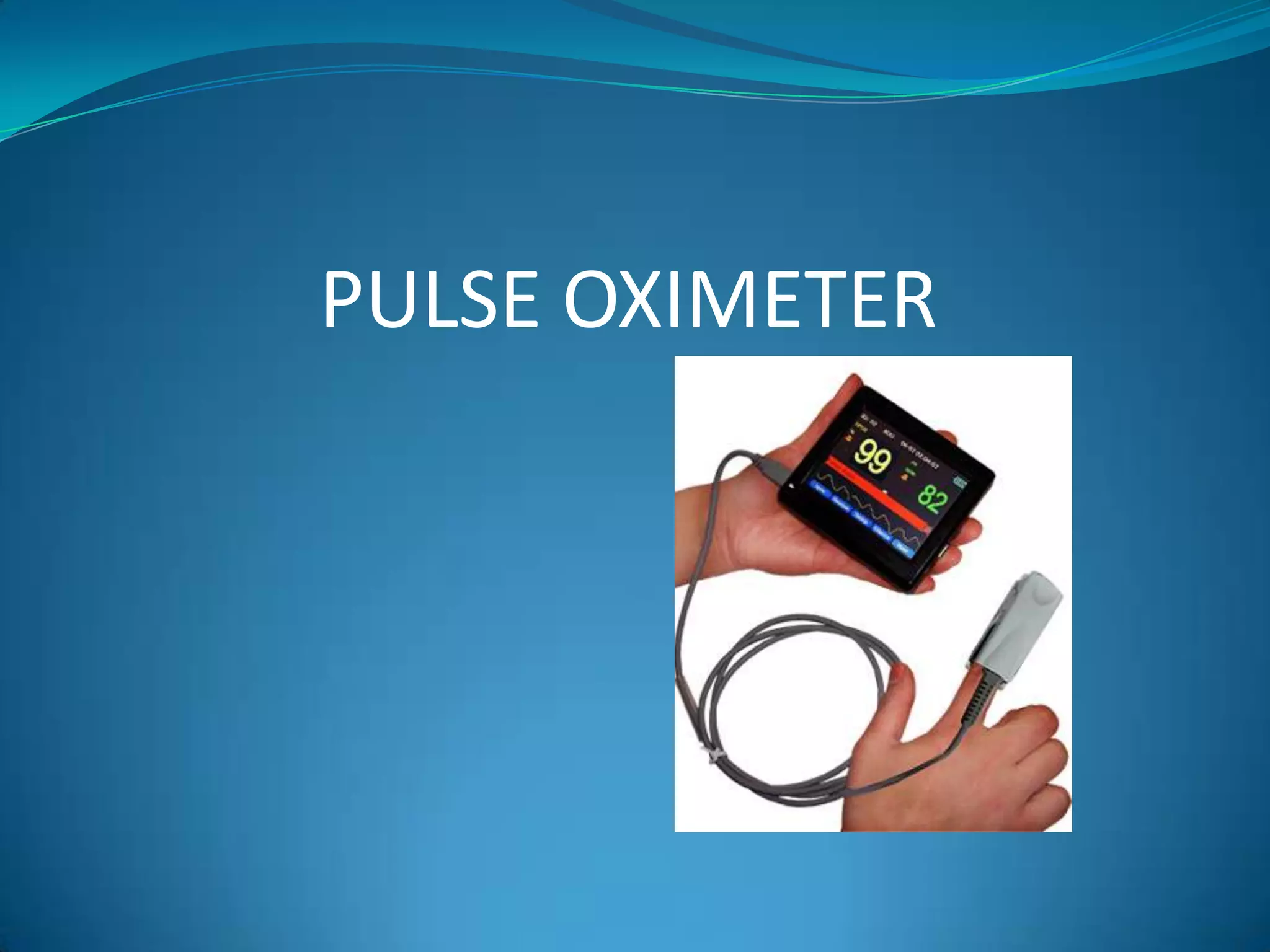
Pulse OximeterPulse Oximeter’s have created economical, compact, non-invasive and efficient methods of monitoring both pulse rate and oxygen saturation in the patient.How is it Used?Connected to the patient via a small lead, attaching to a probe usually to the index finger or ear lobe.How does it work?Oxygenated haemoglobin and deoxygenated haemoglobin have different absorbable colours at different light wavelength.
Comparison of absorbencies at different wavelengths leads to an estimation of relative concentrations of oxygenated and oxygenated haemoglobin
Non-invasive and work regardless of skin pigmentation
Provides an overall assessment of the oxygen being delivered to the patients internal and external respiration mechanisms throughout proceduresProblems?Been reports of burns, particularly with the prolonged use of finger probes on children
The readings can be inaccurate. Inaccurate readings may result due to nail varnish or colouring is present, and if venous congestion occurs ECG Monitoring
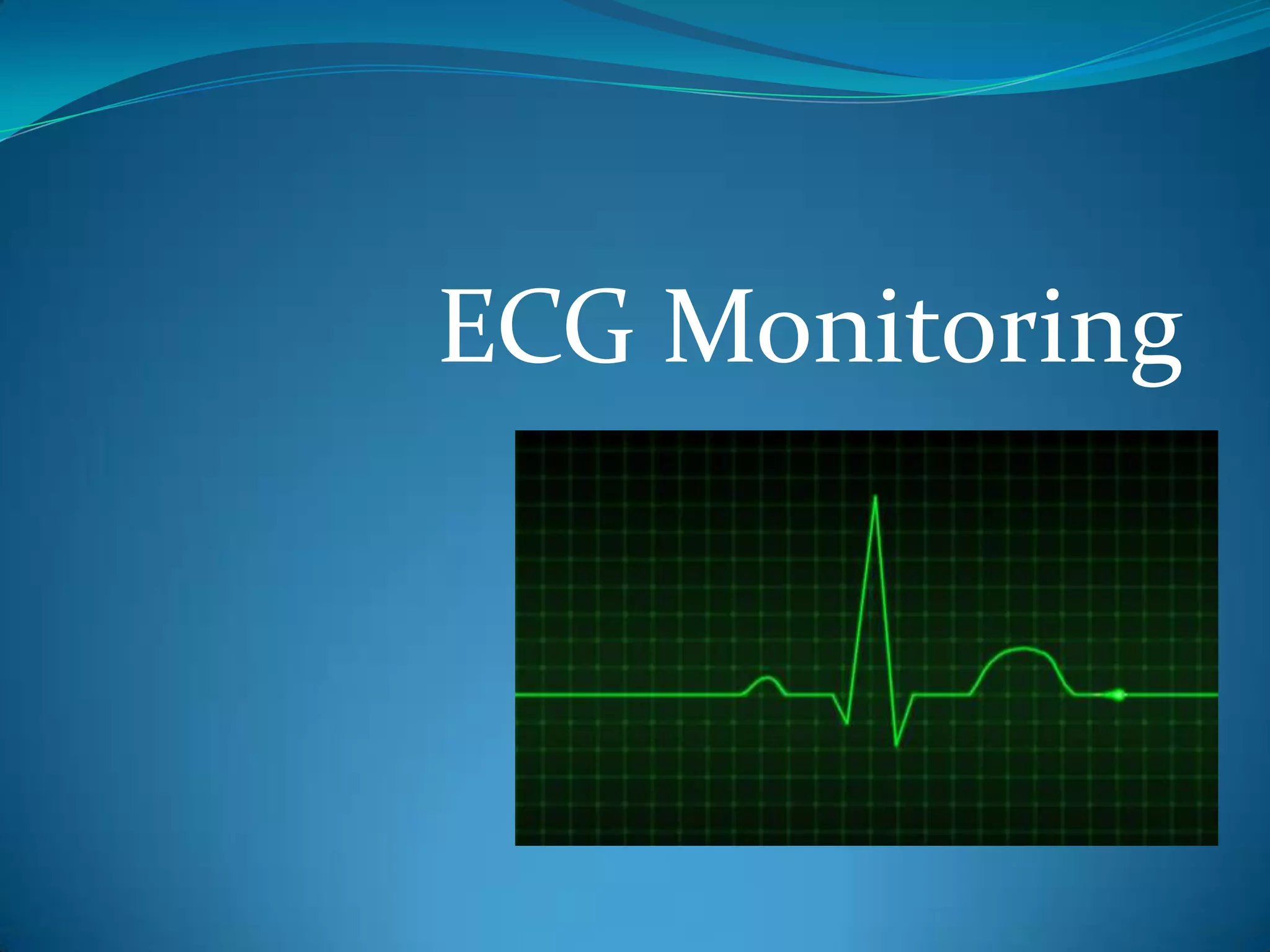
What is it used for?Shows the heart rhythm Enables us to read the electrical impulses of the heartGives Heart rateCan indicate myocardial Ischaemia (Shields & Werder, 2002)
How is it done?Usually performed when patient at restUpto 10 ECG sticky pads/self adhesive electrodes are attached on the skin of the arms leg and chest.  Three lead ECG is most common and the 12 lead ECG gives 12 points of view so heart activity can be accurately analysed.     (chest may need to be shaved)
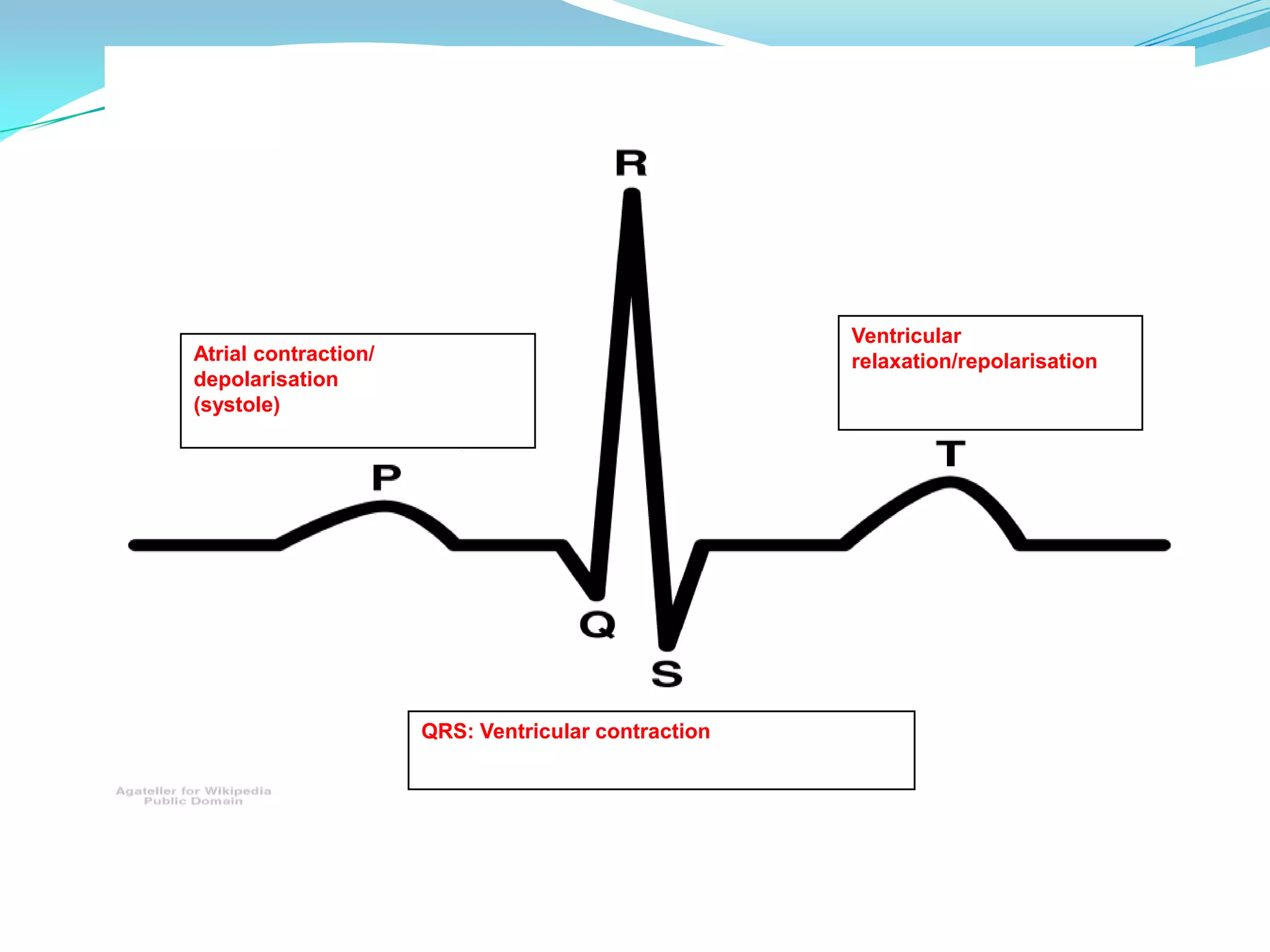
Normal Sinus Rhythm (NSR)According to Wicker & O neil (2006)-The sinus node produces an electrical impulse launching a normal heart rhythmSignal radiates through right and left atrial muscles producing electrical changes         stimulating atria causing atrial contraction (P wave)Impulse continues through AV node conducting electricity at slower pace (PR interval) Pause between atrial and ventricular systole-blood empties from atria into ventriclesVentricular contraction (QRS) –blood propels towards aorta and pulmonary arteryT wave- ventricles relaxing
Ventricular relaxation/repolarisationAtrial contraction/ depolarisation(systole)QRS: Ventricular contraction
This cardiac cycle repeats to create a rhythmNormal Heart rates: ADULT  60-80 BPMCHILD   100BPMINFANT 150BPM*Depends on health, mental state and BMI
Sinus BradycardiaSlow heart rate with normal sinus rhythmCan be benign but can be caused by beta blockers, hypothermia, stimulation of the vagus nerve, hypothyroidism etcSinus TachycardiaFast heart rate at normal rhythmCaused by shock, drug actions (e.g. Atropine), anxiety, hypovolaemia etc
Other Abnormal heart rhythms:Supraventricular tachycardia (SVT)  impulse stimulating heart not coming from Sinus node, instead comes from tissue around AV node. HR up to 280 BPMVentricular tachycardia tisues in ventricles casuing rapid irregular Heart rhythmAtrial FlutterRapid heart rhythm. Abnormal. Impulse bypasses AV node
Other Abnormal heart rhythms:Atrioventricular block (AVB)Block in conduction between Sinus node and AV node. 2nd degree heart block- some signals from atria don’t reach ventricles= dropped beats3rd degree= AV block means no impulses passing through AV node so ventricles create own rhythmPremature atrial contraction (PAC)Sinoatrial node fires early= early atrial contractionPremature ventricular contraction (PVC)Av node fires early- ventricles contract early
Other Abnormal heart rhythms:Atrial FibrillationElectrical impulses fired irregularly from many sites in atriaAsystoleEnd of heartbeats, lack of electrical activity but not straight line so still some continuing residual activity
Blood pressure monitoring
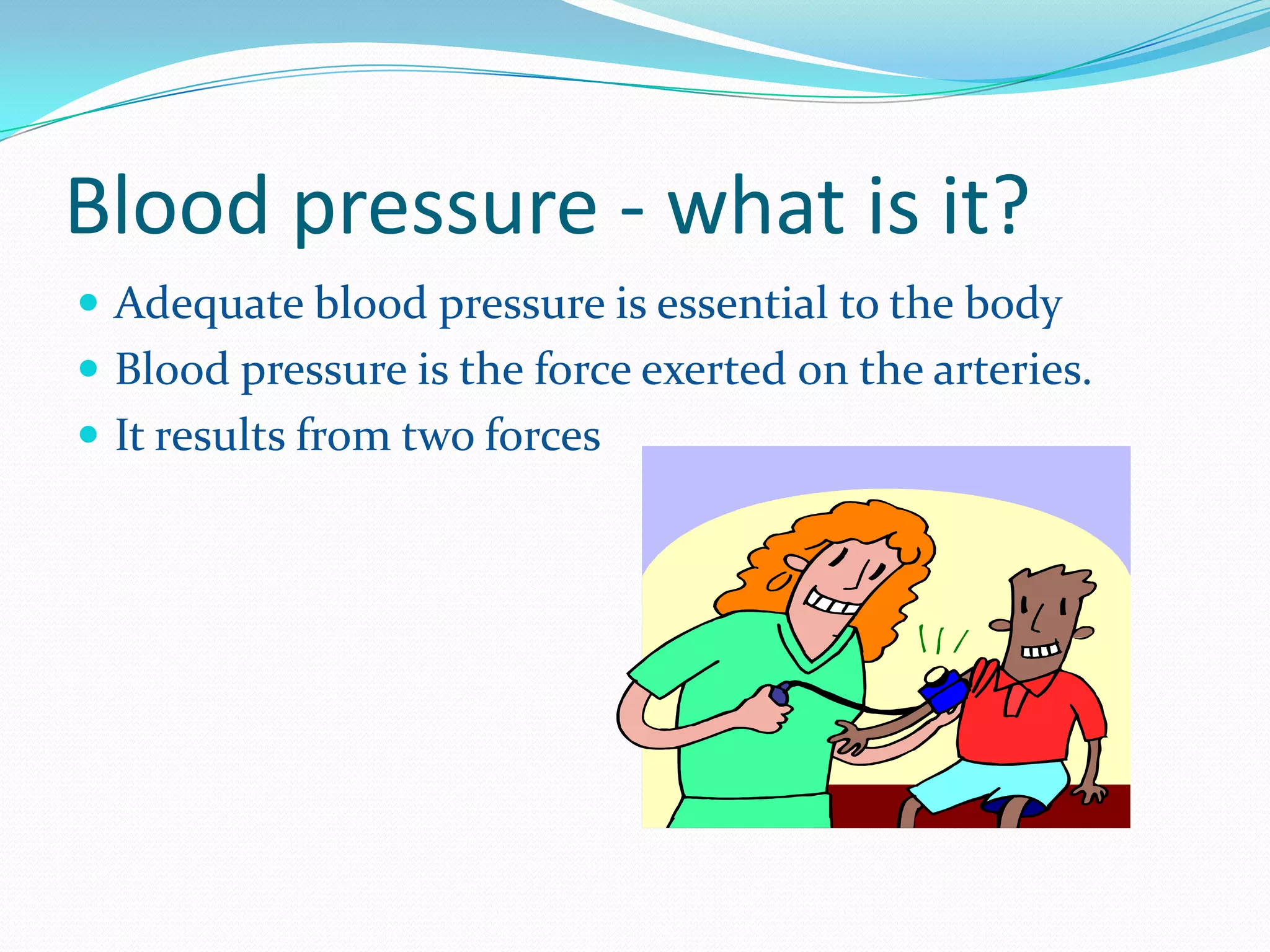
Blood pressure - what is it?Adequate blood pressure is essential to the body
Blood pressure is the force exerted on the arteries.
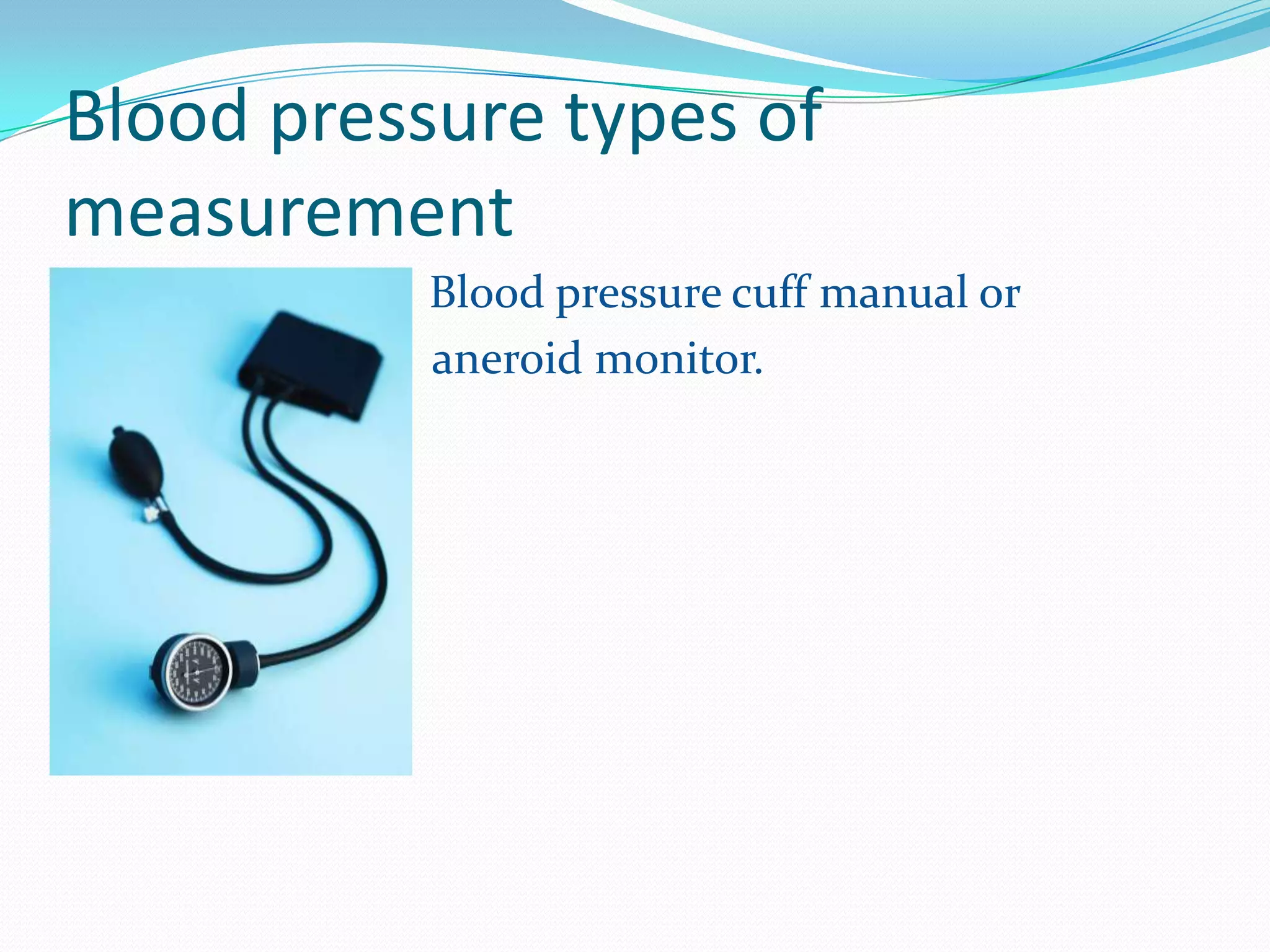
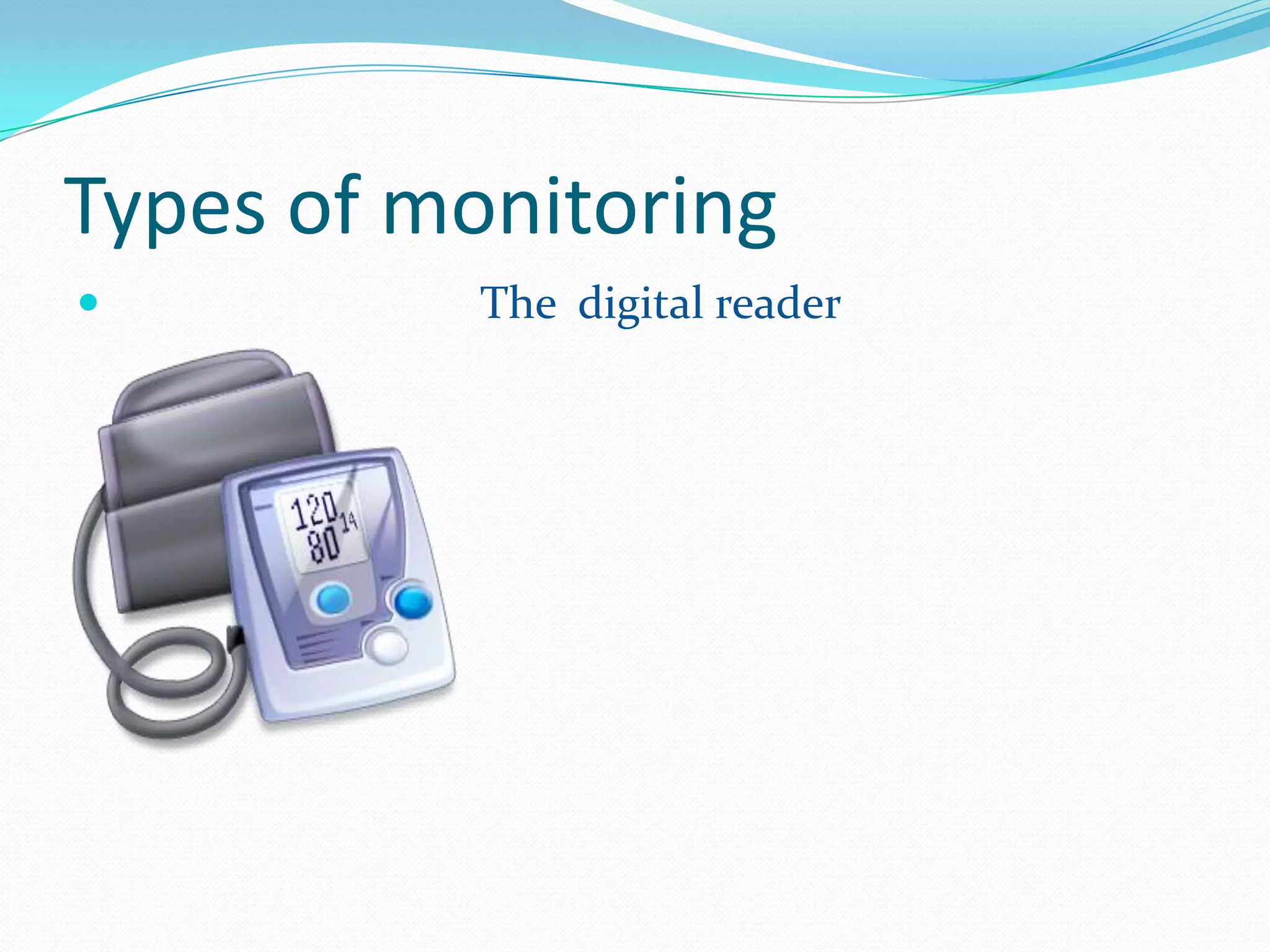
It results from two forcesBlood pressure types of measurementBlood pressure cuff manual or                             aneroid monitor.Types of monitoring The  digital readerhttp://www.nhlbi.nih.gov/health/dci/Diseases/Hbp/HBP_WhatIs.htmlhttp://www.mayoclinic.com/health/low-blood-pressure/DS00590http://www.essortment.com/lifestyle/useprofessional_sine.htmlhttp://www.davidgregory.org/measuring_bp.htmGood articlehttp://www.medind.nic.inmaa/to3/il/maato3i1psi/polf
Arterial pressure monitoring
Why is it needed?To show beat to beat variation in the arterial trace.Other parameters that can be measured.Myocardial contractility.Vascular tone.
When would it be needed?Constantly changing clinical parameters in sick patients.Blood sampling- helpful multiple samples are needed.Acute interventions-major surgery.
Where is it used?Arm- radial, brachial and axillary arteries.Leg- dorsalis pedis, posterior tibialis and femoral.Transducer should be positioned level with heart to give accurate reading.
How is it measured?Transducer energy one form to another.Pressure change causes movement  within transducer.This creates electrical current to be displayed on oscilloscope.
Placing the lineDecide the anatomical sitePalpate the artery.Clean area thoroughly-local anaesthetic?Seldinger technique- guidewires can be used to assist in insertion of the cannula up the lumen of the artery.Remove the needle, thread a cannula over the wire and up the artery before removing the wire.
   Mark the arterial line to indicate it presenceSo as not to be mistaken for a venous lineEnsure there is no air within the line Use heparinised saline to flush
Complications!!Disconnection causing bleedingIncorrect injection of drugsArterial occlusionHaematomaNerve damageEmbolisAneurysm formation

Insight into Monitoring of the surgical patient

  • 1.
  • 2.
  • 3.
    Pulse OximeterPulse Oximeter’shave created economical, compact, non-invasive and efficient methods of monitoring both pulse rate and oxygen saturation in the patient.How is it Used?Connected to the patient via a small lead, attaching to a probe usually to the index finger or ear lobe.How does it work?Oxygenated haemoglobin and deoxygenated haemoglobin have different absorbable colours at different light wavelength.
  • 4.
    Comparison of absorbenciesat different wavelengths leads to an estimation of relative concentrations of oxygenated and oxygenated haemoglobin
  • 5.
    Non-invasive and workregardless of skin pigmentation
  • 6.
    Provides an overallassessment of the oxygen being delivered to the patients internal and external respiration mechanisms throughout proceduresProblems?Been reports of burns, particularly with the prolonged use of finger probes on children
  • 7.
    The readings canbe inaccurate. Inaccurate readings may result due to nail varnish or colouring is present, and if venous congestion occurs ECG Monitoring
  • 8.
    What is itused for?Shows the heart rhythm Enables us to read the electrical impulses of the heartGives Heart rateCan indicate myocardial Ischaemia (Shields & Werder, 2002)
  • 9.
    How is itdone?Usually performed when patient at restUpto 10 ECG sticky pads/self adhesive electrodes are attached on the skin of the arms leg and chest. Three lead ECG is most common and the 12 lead ECG gives 12 points of view so heart activity can be accurately analysed. (chest may need to be shaved)
  • 10.
    Normal Sinus Rhythm(NSR)According to Wicker & O neil (2006)-The sinus node produces an electrical impulse launching a normal heart rhythmSignal radiates through right and left atrial muscles producing electrical changes stimulating atria causing atrial contraction (P wave)Impulse continues through AV node conducting electricity at slower pace (PR interval) Pause between atrial and ventricular systole-blood empties from atria into ventriclesVentricular contraction (QRS) –blood propels towards aorta and pulmonary arteryT wave- ventricles relaxing
  • 11.
    Ventricular relaxation/repolarisationAtrial contraction/depolarisation(systole)QRS: Ventricular contraction
  • 12.
    This cardiac cyclerepeats to create a rhythmNormal Heart rates: ADULT 60-80 BPMCHILD 100BPMINFANT 150BPM*Depends on health, mental state and BMI
  • 13.
    Sinus BradycardiaSlow heartrate with normal sinus rhythmCan be benign but can be caused by beta blockers, hypothermia, stimulation of the vagus nerve, hypothyroidism etcSinus TachycardiaFast heart rate at normal rhythmCaused by shock, drug actions (e.g. Atropine), anxiety, hypovolaemia etc
  • 14.
    Other Abnormal heartrhythms:Supraventricular tachycardia (SVT) impulse stimulating heart not coming from Sinus node, instead comes from tissue around AV node. HR up to 280 BPMVentricular tachycardia tisues in ventricles casuing rapid irregular Heart rhythmAtrial FlutterRapid heart rhythm. Abnormal. Impulse bypasses AV node
  • 15.
    Other Abnormal heartrhythms:Atrioventricular block (AVB)Block in conduction between Sinus node and AV node. 2nd degree heart block- some signals from atria don’t reach ventricles= dropped beats3rd degree= AV block means no impulses passing through AV node so ventricles create own rhythmPremature atrial contraction (PAC)Sinoatrial node fires early= early atrial contractionPremature ventricular contraction (PVC)Av node fires early- ventricles contract early
  • 16.
    Other Abnormal heartrhythms:Atrial FibrillationElectrical impulses fired irregularly from many sites in atriaAsystoleEnd of heartbeats, lack of electrical activity but not straight line so still some continuing residual activity
  • 17.
  • 18.
    Blood pressure -what is it?Adequate blood pressure is essential to the body
  • 19.
    Blood pressure isthe force exerted on the arteries.
  • 20.
    It results fromtwo forcesBlood pressure types of measurementBlood pressure cuff manual or aneroid monitor.Types of monitoring The digital readerhttp://www.nhlbi.nih.gov/health/dci/Diseases/Hbp/HBP_WhatIs.htmlhttp://www.mayoclinic.com/health/low-blood-pressure/DS00590http://www.essortment.com/lifestyle/useprofessional_sine.htmlhttp://www.davidgregory.org/measuring_bp.htmGood articlehttp://www.medind.nic.inmaa/to3/il/maato3i1psi/polf
  • 21.
  • 22.
    Why is itneeded?To show beat to beat variation in the arterial trace.Other parameters that can be measured.Myocardial contractility.Vascular tone.
  • 23.
    When would itbe needed?Constantly changing clinical parameters in sick patients.Blood sampling- helpful multiple samples are needed.Acute interventions-major surgery.
  • 24.
    Where is itused?Arm- radial, brachial and axillary arteries.Leg- dorsalis pedis, posterior tibialis and femoral.Transducer should be positioned level with heart to give accurate reading.
  • 25.
    How is itmeasured?Transducer energy one form to another.Pressure change causes movement within transducer.This creates electrical current to be displayed on oscilloscope.
  • 26.
    Placing the lineDecidethe anatomical sitePalpate the artery.Clean area thoroughly-local anaesthetic?Seldinger technique- guidewires can be used to assist in insertion of the cannula up the lumen of the artery.Remove the needle, thread a cannula over the wire and up the artery before removing the wire.
  • 27.
    Mark the arterial line to indicate it presenceSo as not to be mistaken for a venous lineEnsure there is no air within the line Use heparinised saline to flush
  • 28.
    Complications!!Disconnection causing bleedingIncorrectinjection of drugsArterial occlusionHaematomaNerve damageEmbolisAneurysm formation

Editor's Notes

  • #18 It is essential to maintain the blood supply and the function of vital organsHigh blood pressure (hypertension) may indicate coronary heart disease, heart failure, stroke, kidney failure and many other health problemsLow bl pre hypotension my indicate heart problems endocrine or neurological disorders. Or may be an indication of dehydration It can vary with age typically the new born will have a reading of 80/50 while a constant rise will see a young adult have a blood pressure of 120/80, blood pressure as a rule will rise with ageForces. 1 is created by the heart as it pumps blood into the arteries 2 is the force of the arteries as they resist the blood flow
  • #19 Arm is slightly flexed and the cuff placed around the bicep area, most cuffs have arrows pointing showing which where to place the cuff. Place a stethoscope just under the crease of the elbow. Ensuring the screw cap is tight you can inflate the cuff.Inflate the cuff until the radial pulse disappears Slowly unscrew the cap and let the air seep out slowly Listen for when blood passing through the arteris can be heard again and make a note of the number the pressure gauge is at this is the systolic or top number.When the blood can not be heard any more through the stethoscope this is the diastolic reading/ the bottom number
  • #20 The cuff of this meter is placed in the same place as the others, but it digitally inflate and take the appropriate measurements it’s self