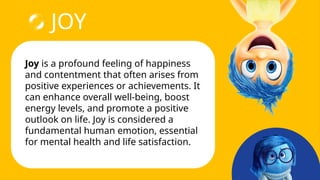
JOY
Joy is aprofound feeling of happiness
and contentment that often arises from
positive experiences or achievements. It
can enhance overall well-being, boost
energy levels, and promote a positive
outlook on life. Joy is considered a
fundamental human emotion, essential
for mental health and life satisfaction.
5.
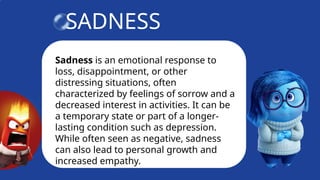
SADNESS
Sadness is anemotional response to
loss, disappointment, or other
distressing situations, often
characterized by feelings of sorrow and a
decreased interest in activities. It can be
a temporary state or part of a longer-
lasting condition such as depression.
While often seen as negative, sadness
can also lead to personal growth and
increased empathy.
6.
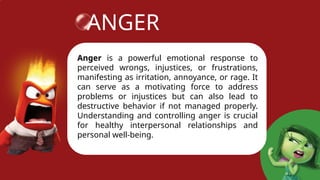
ANGER
Anger is apowerful emotional response to
perceived wrongs, injustices, or frustrations,
manifesting as irritation, annoyance, or rage. It
can serve as a motivating force to address
problems or injustices but can also lead to
destructive behavior if not managed properly.
Understanding and controlling anger is crucial
for healthy interpersonal relationships and
personal well-being.
7.
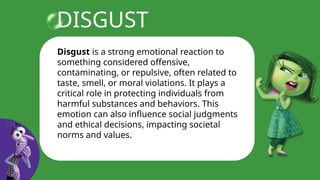
DISGUST
Disgust is astrong emotional reaction to
something considered offensive,
contaminating, or repulsive, often related to
taste, smell, or moral violations. It plays a
critical role in protecting individuals from
harmful substances and behaviors. This
emotion can also influence social judgments
and ethical decisions, impacting societal
norms and values.
8.
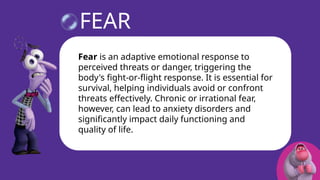
Fear is anadaptive emotional response to perceived threats or danger,
triggering the body's fight-or-flight response. It is essential for survival,
helping individuals avoid or confront threats effectively. Chronic or irrational
fear, however, can lead to anxiety disorders and significantly impact daily
functioning and quality of life.
FEAR
Fear is an adaptive emotional response to
perceived threats or danger, triggering the
body's fight-or-flight response. It is essential for
survival, helping individuals avoid or confront
threats effectively. Chronic or irrational fear,
however, can lead to anxiety disorders and
significantly impact daily functioning and
quality of life.
9.
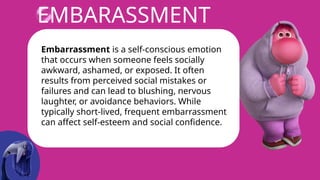
EMBARASSMENT
Embarrassment is aself-conscious emotion
that occurs when someone feels socially
awkward, ashamed, or exposed. It often
results from perceived social mistakes or
failures and can lead to blushing, nervous
laughter, or avoidance behaviors. While
typically short-lived, frequent embarrassment
can affect self-esteem and social confidence.
10.
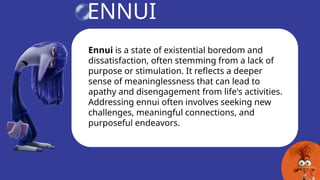
ENNUI
Ennui is astate of existential boredom and
dissatisfaction, often stemming from a lack of
purpose or stimulation. It reflects a deeper
sense of meaninglessness that can lead to
apathy and disengagement from life's activities.
Addressing ennui often involves seeking new
challenges, meaningful connections, and
purposeful endeavors.
11.
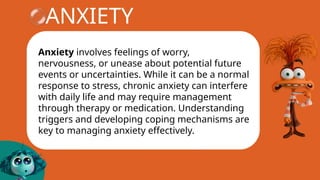
ANXIETY
Anxiety involves feelingsof worry,
nervousness, or unease about potential future
events or uncertainties. While it can be a normal
response to stress, chronic anxiety can interfere
with daily life and may require management
through therapy or medication. Understanding
triggers and developing coping mechanisms are
key to managing anxiety effectively.
12.
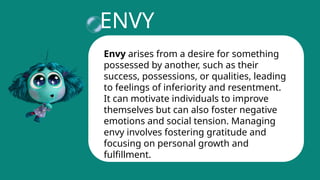
ENVY
Envy arises froma desire for something
possessed by another, such as their
success, possessions, or qualities, leading
to feelings of inferiority and resentment.
It can motivate individuals to improve
themselves but can also foster negative
emotions and social tension. Managing
envy involves fostering gratitude and
focusing on personal growth and
fulfillment.
13.
Thank you!
This digitalproduct is the copyright of Slidewiseph. You cannot
share or sell the templates or elements included, in any shape
or form. For personal use only.