DIABETES IN PREGNANCY
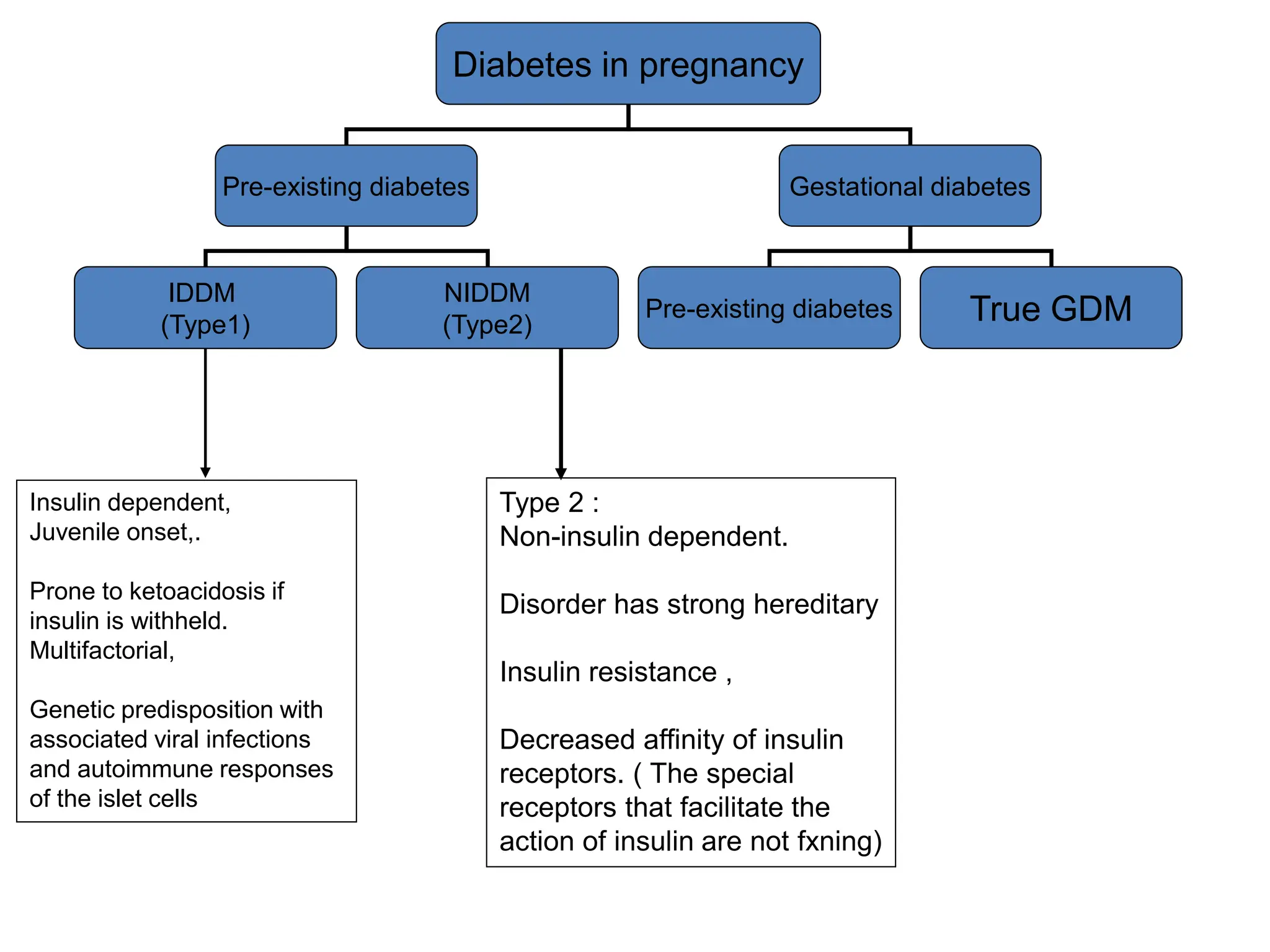
Diabetes in pregnancy
Pre-existing diabetes Gestational diabetes
Pre-existing diabetes
IDDM
(Type1)
NIDDM
(Type2) True GDM
Insulin dependent,
Juvenile onset,.
Prone to ketoacidosis if
insulin is withheld.
Multifactorial,
Genetic predisposition with
associated viral infections
and autoimmune responses
of the islet cells
Type 2 :
Non-insulin dependent.
Disorder has strong hereditary
Insulin resistance ,
Decreased affinity of insulin
receptors. ( The special
receptors that facilitate the
action of insulin are not fxning)
METABOLIC EFFECTS
CARBOHYDRATE
Undertilisation of glucose by skeletal
muscle, adipose tissue and the liver
resulting in postprandial (after eating)
hyperglycemia
Low insulin predisposes to glycogenolysis
( breakdown of glycogen into glucose)
and gluconeogenesis ( Synthesis of
glucose from non-carbohydrate sources
when glucose levels are low)
Renal threshold is exceeded and there is
glycosuria , osmotic diuresis(polyuria)
and total body water and electrolyte
LIPIDS
Excessive lipolysis and enhanced
ketogenesis.
Increased mobilization of free fatty
acids from adipose tissue leads to
increased plasma levels of free fatty
acids
Fats are oxidised to ketoacids beta-
hydroxybutyrate, acetoacetate.
Metabolic acidosis occurs. ( The
kidneys are not able to remove the
acids from the body)
Increased hepatic production and
reduced peripheral clearance of VLDL
EFFECT ON AMINO ACIDS
• decreased uptake of amino acids by skeletal
muscles, decreased protein synthesis and
proteolysis. (the breakdown of proteins or
peptides into amino acids by the action of
enzymes.)
• increased urinary excretion of nitrogen
• blood levels of branched-chain amino acids
leucine, isoleucine, and valine increase.
• alanine and glycine are released by muscle to
contribute to gluconeogenesis
Normal Glucose Regulation in Pregnancy
• The pregnant patient has a tendency to
develop HYPOGLYCEMIA between meals
– Related to fetal demand
• Placental steroids cause increased tissue
insulin resistance ( to mobilize enough glucose
for fetal growth)
– They are “DIABETOGENIC”
• Insulin production INCREASES in normal
pregnancy
RECALL:
PATHOLOGIC CHANGES IN GDM
Insulin Resistance
Insulin Deficiency
Preexisting DM in pregnancy
Effect of pregnancy on pre-existing DM
• Increase requirement for insulin doses
• Nephropathy , autonomic neuropathy may
deteriorate ( reduction in kidney fxn leading
to oligouria and anuria, also nerve damage)
• Progress in diabetic retinopathy
• Hypoglycemia
• Diabetic ketoacidosis
Preexisting DM In Pregnancy
Effect of preexisting DM on pregnancy
(1) Maternal
1. increased risk of miscarriage
2. increased risk of preclampsia
3. increased risk of infection eg vaginal
candidiasis, UTI, endometrial or wound
infection
4. increased LSCS ( lower segment caesarean
section ) rate
Preexisting DM in Pregnancy
(2) Fetal
1. increased risk of congenital abnormalities
sacral agenesis, congenital heart disease,
neural tube defects
Hba1c level Risk
normal not increased
<8% 5%
>10% 25 %
. Perinatal mortality (excluding congenital abnormality ) 2
fold increased
3. Increased risk of sudden unexplained intrauterine fetal
death.
Complications of pregnancy in pre-existing DM
Maternal:
Increased insulin requirement’
Hypoglycemia
Infection
Ketoacidosis
Deterioration in retinopathy’
Increased proteinuria+edema
Miscarriage
Polyhydramnios
Shoulder dystocia
Preeclampsia
Increased caesarean rate
Fetal:
Congenital abnormalities
Increased neonatal and perinatal mortality
Macrosomia
Late stillbirth
Neonatal hypoglycemia
Polycythemia
jaundice
Effects of Hyperglycemia in GDM
Fetal Hyperinsulinemia
• Promotes storage of excess nutrients
– Net Effect: macrosomia
• Increased catabolism of excess nutrients and increased energy
usage
– Net Effect: Decreased fetal oxygen storage and episodic fetal
hypoxia
• Episodic fetal hypoxia leads to increased catecholamines causing:
– Fetal hypertension
– Cardiac remodelling and hypertrophy
– Increased erythropoietin, RBC’s, hematocrit
– Poor fetal circulation and hyperbilirubinemia
– Stillbirth (?)
The Impact of Fetal
Macrosomnia
• Increased hyperbilirubinemia
• Increased hypoglycemia
• Increased acidosis
• Increased birth trauma
• Macrosomic children are more likely to
develop glucose intolerance in adulthood
Gestational diabetes
Definition
Carbohydate intolerance of variable severity
first recognised during the present pregnancy.
This includes women with preexisting but
previously unrecognised diabetes
Gestational diabetes –
No consensus for the past 4 decades!
• Should all pregnant women be screened or only those with risk
factors?
• Is it safe to screen all?
• Which screening test and which diagnostic test are the most
reliable?
• Which cut-off values should we use?
• What are the risk for mothers and babies and can treatment improve
outcome?
• What are the connection between gestational diabetes and type 2
DM?
• Is it physiological or pathological ?
Gestational diabetes
Screening and diagnosis
In general, the test is performed btn 24-28 wk
because at this point in gestation the
diabetogenic effect of pregnancy is manifest
and there is sufficient time remaining in
pregnancy for therapy to exert its effect
Gestational diabetes
• Screening and diagnosis
In general, risk factors includes:
1. age>25yrs
2. BMI > 25
3. previous GDM
4. Family hx of DM in 1st degree relative
5. previous macrosomic baby (<4 kg)
6. polyhydramnios
7. large for date baby in current pregnancy
8. previous unexplained stillbirth
Gestational diabetes
Screening
Fasting / random glucose/ glucose challenge
test(50g)
Diagnosis
Glucose challenge test
(75g/100g ?) You’ll take a food containing
glucose with the above gram before the test
Gestational diabetes
• Diagnosis
WHO criteria 1999, 75 gm glucose
fasting 2 hr (mmol/L)
Impaired fasting glucose 6.1- 6.9 mmol/l
IGT <or =7 and 7.8-11
DM >or = 7 or > or=11.1
• Gestational diabetes mellitus should be diagnosed
at any time in pregnancy if one or more of the
following criteria are met: WHO-2013
- Fasting plasma glucose 5.1-6.9 mmol/l
- 1-hour plasma glucose ≥ 10.0 mmol/l
following a 75g oral glucose load*
- 2-hour plasma glucose 8.5-11.0 mmol/l
following a 75g oral glucose load
Gestational diabetes
• Incidence -- 2-9%
more common in Asian and Indian women
• In developed countries, increasing trend
because of epidemic of obesity
Clinical significance of GDM
1. High incidence of macrosomia, and adverse
pregnancy outcomes
2. A significant proportion(30%) identified as GDM
in fact have DM before pregnancy
3. Women with glucose intolerance just above
normal range are at low risk for pregnancy
complications, those with more severe glucose
intolerance approaching the criteria of diabetes
are at risk of neonatal complications
Management
Aim
Achieve maternal near normoglycemic level to
prevent adverse perinatal outcomes
Management
• Pre-pregnancy counselling
• Early booking
• Multidisciplinary approach to management
• Prenatal diagnosis necessary
• Control of blood sugars
• Frequent visits
• Rule out infections
• Rule out other complications in mother and
foetus
• Early referral to a specialist is essential
• Collaborative effort among obstetrician/ midwife,
endocrinologist, ophthalmologist, registered dietitian, and nurse
educator
– All team members should be engaged in patient education/care prior to
and throughout pregnancy
• Individualized treatment plans, involving a combination of:
– Glucose monitoring
– Medical nutrition therapy (MNT)
– Pharmacotherapy
– Exercise
– Weight management strategies
– Psychological support
Diabetes in Pregnancy:
Management Approaches
Management Goals
• Provide preconception care for women with
preexisting T1DM or T2DM or a history of GDM
– Educate patients to maintain adequate nutrition and
glucose control before conception, during pregnancy, and
postpartum
• Close to normal glycemic control prior to and
throughout pregnancy offers substantial benefit for
both mother and child
– Maintenance of normoglycemia prior to and through the
first trimester results in low risk close to that of women
without diabetes
Glycemic Targets During Pregnancy:
AACE & ADA Guidelines1,2
Glucose
Increment
Patients with GDM
Patients with
Preexisting T1DM or
T2DM
Preprandial,
premeal
5.3 mmol/L Premeal, bedtime,
and overnight
glucose:
(3.4-5.5 mmol/L)
Postprandial,
post-meal
1-hour post-meal: 7.8
mmol/L or
2-hour post-meal: 6.7
mmol/L
Peak postprandial
glucose 5.5-7.1
mmol/L
A1C A1C ≤6.0%
1. AACE. Endocr Pract. 2011;17(2):1-53.
2. ADA. Diabetes Care. 2013;36(suppl 1):S11-66.
Why Is Glucose Control Essential
During Pregnancy?
• For both mothers with diabetes and their infants, risk for
adverse health outcomes correlates with maternal glucose
levels during the first trimester of pregnancy
• A large, randomized controlled trial of intensive diabetes
management versus standard care in patients with gestational
diabetes mellitus (GDM) showed:
– Rate of serious perinatal complications was reduced from 4% to 1%
with treatment of GDM
– Improvements in maternal health-related quality of life
1. ADA. Diabetes Care. 2013;36(suppl 1):S11-S66.
2. Crowther CA, et al. N Engl J Med. 2005;352(24):2477-86. Epub 2005 Jun 12.
Lab investigations
• Blood sugar profile
• Glycosylated HB
• Ultrasound for fetal growth and well being
• FBC
• Urine r/e and c/s
• BUE and creatinine.
Diabetes in Pregnancy
Management
Diet is the first line of management for gestational diabetes.
Objectives :
• 30 kcal/kg/day
• Usually 1800 kcal/day and 1600kcal for the obese
-50-60% carbohydrates (only high fibre types),
-30% fats, and
-20% proteins.
• Aim FBS 5.8 mmol/l and 2hr postprandial 6.7 mmol/l
Medical Nutrition Therapy (MNT)
Management of GDM
• Medical nutrition therapy (MNT) and lifestyle
changes can effectively manage 80% to 90% of
mild GDM cases
• MNT nutritional goals and recommendations:
–Choose healthy low-carbohydrate, high-fiber
sources of nutrition, with fresh vegetables as
the preferred carbohydrate sources
– Adjust intake of carbohydrates based on
fasting, premeal, and postprandial SMBG
measurements
continued
– Avoid sugars, simple carbohydrates, highly
processed foods, dairy, juices, and most sweet
fruits
– Eat frequent small meals to reduce risk of
postprandial hyperglycemia and preprandial
starvation ketosis
• As pregnancy progresses, glucose intolerance
typically worsens; patients may ultimately require
insulin therapy
Diabetes in Pregnancy: Pharmacologic Therapy
• When MNT alone fails, pharmacologic therapy is indicated
– AACE guidelines recommend insulin as the optimal approach
– Insulin therapy is required for the treatment of T1DM during pregnancy
• Metformin and the sulfonylurea glyburide are the 2 most
commonly prescribed oral antihyperglycemic agents during
pregnancy
Medication Crosses
Placenta
Classification Notes
Metformin Yes Category B Metformin and glyburide may be insufficient
to maintain normoglycemia at all times,
particularly during postprandial periods
Glyburide Minimal
transfer
Some formulations
category B, others
category C
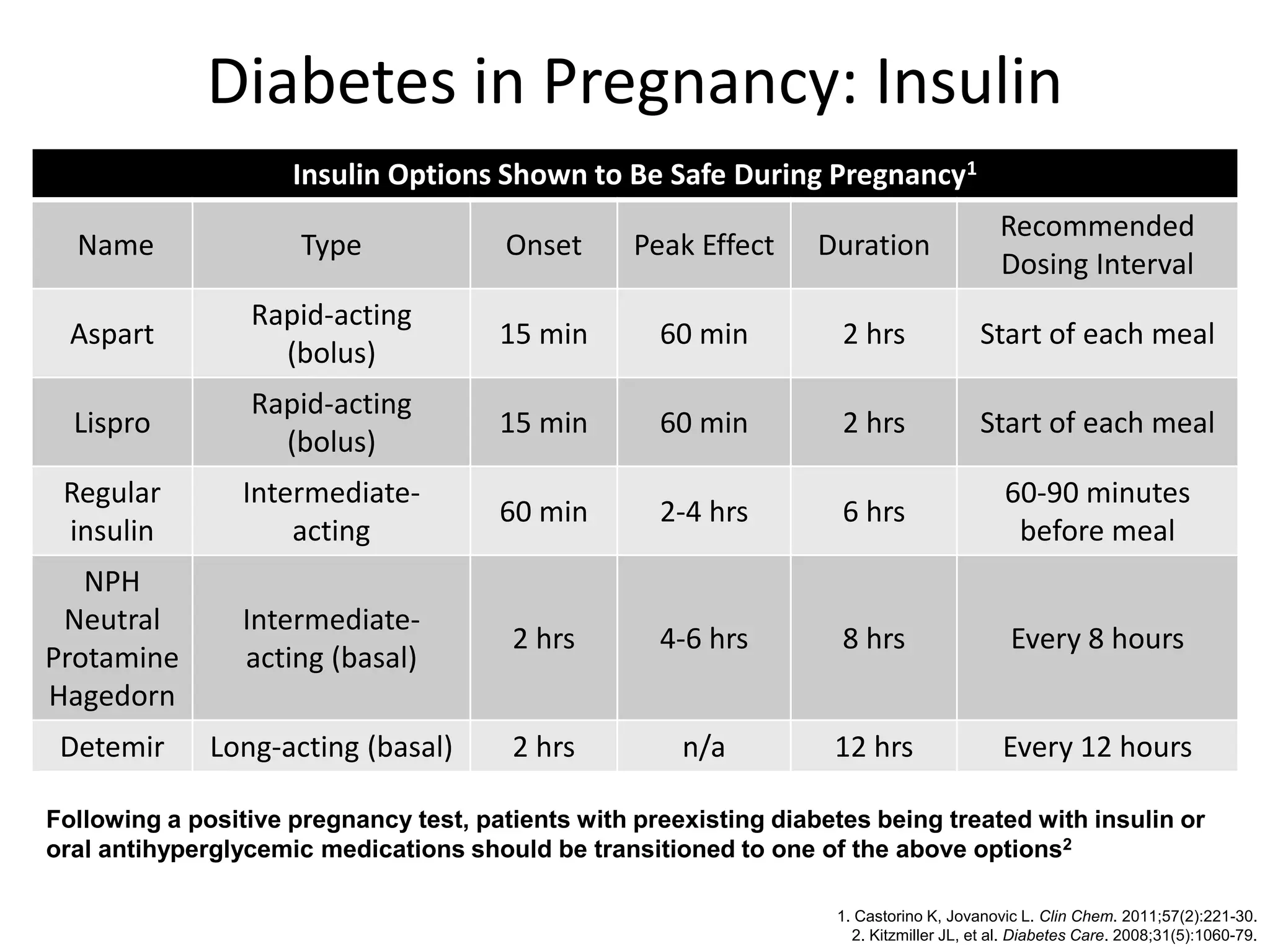
Diabetes in Pregnancy: Insulin
Insulin Options Shown to Be Safe During Pregnancy1
Name Type Onset Peak Effect Duration
Recommended
Dosing Interval
Aspart
Rapid-acting
(bolus)
15 min 60 min 2 hrs Start of each meal
Lispro
Rapid-acting
(bolus)
15 min 60 min 2 hrs Start of each meal
Regular
insulin
Intermediate-
acting
60 min 2-4 hrs 6 hrs
60-90 minutes
before meal
NPH
Neutral
Protamine
Hagedorn
Intermediate-
acting (basal)
2 hrs 4-6 hrs 8 hrs Every 8 hours
Detemir Long-acting (basal) 2 hrs n/a 12 hrs Every 12 hours
1. Castorino K, Jovanovic L. Clin Chem. 2011;57(2):221-30.
2. Kitzmiller JL, et al. Diabetes Care. 2008;31(5):1060-79.
Following a positive pregnancy test, patients with preexisting diabetes being treated with insulin or
oral antihyperglycemic medications should be transitioned to one of the above options2
Diabetes in Pregnancy: Insulin Dosing
Insulin Dosing Guidelines During Pregnancy and Postpartum1
Weeks gestation Total daily dose (TDD) of insulin†
1-13 weeks (0.7 x weight in kg)
14-26 weeks (0.8 x weight in kg)
27-37 weeks (0.9 x weight in kg)
38 weeks to delivery (1.0 x weight in kg)
Postpartum (and lactation)‡ (0.55 x weight in kg)
† The total daily dose (TDD) of insulin should be split, so that 50% is used for basal insulin and 50% is used for premeal
rapid-acting insulin boluses
‡ Nighttime basal insulin should be decreased by 50% in lactating women (to prevent severe hypoglycemia)
• Special notes for T1DM:
• Between 10 and 14 weeks gestation, patients with T1DM undergo a period of increased insulin sensitivity;
insulin dosage may need to be reduced accordingly during this time frame
• From weeks 14 through 35 of gestation, insulin requirements typically increase steadily
• After 35 weeks gestation, insulin requirements may level off or even decline2
• Obese patients may require higher insulin dosages than non-obese individuals2
1. Castorino K, Jovanovic L. Clin Chem. 2011;57(2):221-30.
2. Kitzmiller JL, et al. Diabetes Care. 2008;31(5):1060-79.
Diabetes in Pregnancy: Physical Activity
• Unless contraindicated, physical activity should be included in a
pregnant woman’s daily regimen
• Regular moderate-intensity physical activity (eg, walking) can
help to reduce glucose levels in patients with GDM
• Other appropriate forms of exercise during pregnancy:
– Cardiovascular training with weight-bearing, limited to the upper body to
avoid mechanical stress on the abdominal region3
1. Castorino K, Jovanovic L. Clin Chem. 2011;57(2):221-30. 2. ADA. Diabetes Care. 2004;27(suppl 1):S88-90.
3. Jovanovic L, et al. Mt Sinai J Med. 2009;76(3):269-80.
Diabetes in Pregnancy:
Weight Gain
• Patient’s prepregnancy BMI is used to determine goals for healthy
weight gain
• Independent of maternal glucose levels, higher maternal BMI has been
associated with increased risk of:
– Caesarean delivery
– Infant birth weight >90th percentile
– Cord-blood serum C-peptide >90th percentile2
• Evidence supports a goal of minimal weight gain during pregnancy for
obese women
• Patients should be advised to achieve weight objectives by maintaining
a balanced diet and exercising regularly
Labor and Delivery
• Counsel women on diabetes management during labor and delivery
• During the 4-6 hours prior to delivery, there is increased risk of
transient neonatal hypoglycemia
• Labor and delivery in women with insulin-dependent type 1 diabetes
should be managed with a diabetes specialist
• Blood glucose levels should be monitored closely during labor to
determine patient’s insulin requirements
– Most women with gestational diabetes mellitus who are receiving insulin therapy
will not require insulin once labor begins
• Delivery between 38- 40 weeks
• Aim at vaginal delivery unless there are contraindications
• If elective delivery is necessary confirm pulmonary maturity.
Steroids may be given to mature the lungs
Preparing for delivery
• GKI may be necessary GKI- glucose,
potassium, insulin
• Regular fetal monitoring with CTG if possible
• Paediatric team should be involved in
resuscitating the neonate
• Obstetric team should be conversant with
managing shoulder dystocia
Elective c/s
• Ensure gestational age is at least 39 weeks
• Check the FBS
• First delivery in the morning
• Glucometer should be available for hourly
estimation of blood sugar levels
• Anaesthetist and paediatrician should be
consulted before.
puerperium
• The blood sugar level should be checked
before the next insulin dose is given if
necessary
• Breastfeeding is encouraged
• Avoid infections
• Avoid DVT
• Counsel for family planning
• Counsel for Paps smear
Diabetes in Pregnancy: Postpartum
and Lactation
• Metformin and glyburide are secreted into breast milk and are therefore
contraindicated during lactation1
• Breastfeeding plus insulin therapy may lead to severe hypoglycemia1
– Greatest risk is in women with T1DM
– Preventive measures are: reduce basal insulin dosage and/or
carbohydrate intake prior to breastfeeding
• Bovine-based infant formulas are linked to increased risk of T1DM1
– Avoid in offspring of women with a genetic predisposition for diabetes
– Soy-based products are a potential substitute
1. Castorino K, Jovanovic L. Clin Chem. 2011;57(2):221-30.
DIABETES IN PREGNANCY FOR MIDWIVES_ .pptx

DIABETES IN PREGNANCY FOR MIDWIVES_ .pptx

  • 1.
  • 2.
    Diabetes in pregnancy Pre-existingdiabetes Gestational diabetes Pre-existing diabetes IDDM (Type1) NIDDM (Type2) True GDM Insulin dependent, Juvenile onset,. Prone to ketoacidosis if insulin is withheld. Multifactorial, Genetic predisposition with associated viral infections and autoimmune responses of the islet cells Type 2 : Non-insulin dependent. Disorder has strong hereditary Insulin resistance , Decreased affinity of insulin receptors. ( The special receptors that facilitate the action of insulin are not fxning)
  • 3.
    METABOLIC EFFECTS CARBOHYDRATE Undertilisation ofglucose by skeletal muscle, adipose tissue and the liver resulting in postprandial (after eating) hyperglycemia Low insulin predisposes to glycogenolysis ( breakdown of glycogen into glucose) and gluconeogenesis ( Synthesis of glucose from non-carbohydrate sources when glucose levels are low) Renal threshold is exceeded and there is glycosuria , osmotic diuresis(polyuria) and total body water and electrolyte LIPIDS Excessive lipolysis and enhanced ketogenesis. Increased mobilization of free fatty acids from adipose tissue leads to increased plasma levels of free fatty acids Fats are oxidised to ketoacids beta- hydroxybutyrate, acetoacetate. Metabolic acidosis occurs. ( The kidneys are not able to remove the acids from the body) Increased hepatic production and reduced peripheral clearance of VLDL
  • 4.
    EFFECT ON AMINOACIDS • decreased uptake of amino acids by skeletal muscles, decreased protein synthesis and proteolysis. (the breakdown of proteins or peptides into amino acids by the action of enzymes.) • increased urinary excretion of nitrogen • blood levels of branched-chain amino acids leucine, isoleucine, and valine increase. • alanine and glycine are released by muscle to contribute to gluconeogenesis
  • 5.
    Normal Glucose Regulationin Pregnancy • The pregnant patient has a tendency to develop HYPOGLYCEMIA between meals – Related to fetal demand • Placental steroids cause increased tissue insulin resistance ( to mobilize enough glucose for fetal growth) – They are “DIABETOGENIC” • Insulin production INCREASES in normal pregnancy
  • 6.
    RECALL: PATHOLOGIC CHANGES INGDM Insulin Resistance Insulin Deficiency
  • 7.
    Preexisting DM inpregnancy Effect of pregnancy on pre-existing DM • Increase requirement for insulin doses • Nephropathy , autonomic neuropathy may deteriorate ( reduction in kidney fxn leading to oligouria and anuria, also nerve damage) • Progress in diabetic retinopathy • Hypoglycemia • Diabetic ketoacidosis
  • 8.
    Preexisting DM InPregnancy Effect of preexisting DM on pregnancy (1) Maternal 1. increased risk of miscarriage 2. increased risk of preclampsia 3. increased risk of infection eg vaginal candidiasis, UTI, endometrial or wound infection 4. increased LSCS ( lower segment caesarean section ) rate
  • 9.
    Preexisting DM inPregnancy (2) Fetal 1. increased risk of congenital abnormalities sacral agenesis, congenital heart disease, neural tube defects Hba1c level Risk normal not increased <8% 5% >10% 25 % . Perinatal mortality (excluding congenital abnormality ) 2 fold increased 3. Increased risk of sudden unexplained intrauterine fetal death.
  • 10.
    Complications of pregnancyin pre-existing DM Maternal: Increased insulin requirement’ Hypoglycemia Infection Ketoacidosis Deterioration in retinopathy’ Increased proteinuria+edema Miscarriage Polyhydramnios Shoulder dystocia Preeclampsia Increased caesarean rate Fetal: Congenital abnormalities Increased neonatal and perinatal mortality Macrosomia Late stillbirth Neonatal hypoglycemia Polycythemia jaundice
  • 11.
  • 12.
    Fetal Hyperinsulinemia • Promotesstorage of excess nutrients – Net Effect: macrosomia • Increased catabolism of excess nutrients and increased energy usage – Net Effect: Decreased fetal oxygen storage and episodic fetal hypoxia • Episodic fetal hypoxia leads to increased catecholamines causing: – Fetal hypertension – Cardiac remodelling and hypertrophy – Increased erythropoietin, RBC’s, hematocrit – Poor fetal circulation and hyperbilirubinemia – Stillbirth (?)
  • 13.
    The Impact ofFetal Macrosomnia • Increased hyperbilirubinemia • Increased hypoglycemia • Increased acidosis • Increased birth trauma • Macrosomic children are more likely to develop glucose intolerance in adulthood
  • 14.
    Gestational diabetes Definition Carbohydate intoleranceof variable severity first recognised during the present pregnancy. This includes women with preexisting but previously unrecognised diabetes
  • 15.
    Gestational diabetes – Noconsensus for the past 4 decades! • Should all pregnant women be screened or only those with risk factors? • Is it safe to screen all? • Which screening test and which diagnostic test are the most reliable? • Which cut-off values should we use? • What are the risk for mothers and babies and can treatment improve outcome? • What are the connection between gestational diabetes and type 2 DM? • Is it physiological or pathological ?
  • 16.
    Gestational diabetes Screening anddiagnosis In general, the test is performed btn 24-28 wk because at this point in gestation the diabetogenic effect of pregnancy is manifest and there is sufficient time remaining in pregnancy for therapy to exert its effect
  • 17.
    Gestational diabetes • Screeningand diagnosis In general, risk factors includes: 1. age>25yrs 2. BMI > 25 3. previous GDM 4. Family hx of DM in 1st degree relative 5. previous macrosomic baby (<4 kg) 6. polyhydramnios 7. large for date baby in current pregnancy 8. previous unexplained stillbirth
  • 18.
    Gestational diabetes Screening Fasting /random glucose/ glucose challenge test(50g) Diagnosis Glucose challenge test (75g/100g ?) You’ll take a food containing glucose with the above gram before the test
  • 19.
    Gestational diabetes • Diagnosis WHOcriteria 1999, 75 gm glucose fasting 2 hr (mmol/L) Impaired fasting glucose 6.1- 6.9 mmol/l IGT <or =7 and 7.8-11 DM >or = 7 or > or=11.1
  • 20.
    • Gestational diabetesmellitus should be diagnosed at any time in pregnancy if one or more of the following criteria are met: WHO-2013 - Fasting plasma glucose 5.1-6.9 mmol/l - 1-hour plasma glucose ≥ 10.0 mmol/l following a 75g oral glucose load* - 2-hour plasma glucose 8.5-11.0 mmol/l following a 75g oral glucose load
  • 21.
    Gestational diabetes • Incidence-- 2-9% more common in Asian and Indian women • In developed countries, increasing trend because of epidemic of obesity
  • 23.
    Clinical significance ofGDM 1. High incidence of macrosomia, and adverse pregnancy outcomes 2. A significant proportion(30%) identified as GDM in fact have DM before pregnancy 3. Women with glucose intolerance just above normal range are at low risk for pregnancy complications, those with more severe glucose intolerance approaching the criteria of diabetes are at risk of neonatal complications
  • 24.
    Management Aim Achieve maternal nearnormoglycemic level to prevent adverse perinatal outcomes
  • 25.
    Management • Pre-pregnancy counselling •Early booking • Multidisciplinary approach to management • Prenatal diagnosis necessary • Control of blood sugars • Frequent visits • Rule out infections • Rule out other complications in mother and foetus
  • 26.
    • Early referralto a specialist is essential • Collaborative effort among obstetrician/ midwife, endocrinologist, ophthalmologist, registered dietitian, and nurse educator – All team members should be engaged in patient education/care prior to and throughout pregnancy • Individualized treatment plans, involving a combination of: – Glucose monitoring – Medical nutrition therapy (MNT) – Pharmacotherapy – Exercise – Weight management strategies – Psychological support Diabetes in Pregnancy: Management Approaches
  • 27.
    Management Goals • Providepreconception care for women with preexisting T1DM or T2DM or a history of GDM – Educate patients to maintain adequate nutrition and glucose control before conception, during pregnancy, and postpartum • Close to normal glycemic control prior to and throughout pregnancy offers substantial benefit for both mother and child – Maintenance of normoglycemia prior to and through the first trimester results in low risk close to that of women without diabetes
  • 28.
    Glycemic Targets DuringPregnancy: AACE & ADA Guidelines1,2 Glucose Increment Patients with GDM Patients with Preexisting T1DM or T2DM Preprandial, premeal 5.3 mmol/L Premeal, bedtime, and overnight glucose: (3.4-5.5 mmol/L) Postprandial, post-meal 1-hour post-meal: 7.8 mmol/L or 2-hour post-meal: 6.7 mmol/L Peak postprandial glucose 5.5-7.1 mmol/L A1C A1C ≤6.0% 1. AACE. Endocr Pract. 2011;17(2):1-53. 2. ADA. Diabetes Care. 2013;36(suppl 1):S11-66.
  • 29.
    Why Is GlucoseControl Essential During Pregnancy? • For both mothers with diabetes and their infants, risk for adverse health outcomes correlates with maternal glucose levels during the first trimester of pregnancy • A large, randomized controlled trial of intensive diabetes management versus standard care in patients with gestational diabetes mellitus (GDM) showed: – Rate of serious perinatal complications was reduced from 4% to 1% with treatment of GDM – Improvements in maternal health-related quality of life 1. ADA. Diabetes Care. 2013;36(suppl 1):S11-S66. 2. Crowther CA, et al. N Engl J Med. 2005;352(24):2477-86. Epub 2005 Jun 12.
  • 30.
    Lab investigations • Bloodsugar profile • Glycosylated HB • Ultrasound for fetal growth and well being • FBC • Urine r/e and c/s • BUE and creatinine.
  • 31.
  • 32.
    Diet is thefirst line of management for gestational diabetes. Objectives : • 30 kcal/kg/day • Usually 1800 kcal/day and 1600kcal for the obese -50-60% carbohydrates (only high fibre types), -30% fats, and -20% proteins. • Aim FBS 5.8 mmol/l and 2hr postprandial 6.7 mmol/l Medical Nutrition Therapy (MNT)
  • 33.
    Management of GDM •Medical nutrition therapy (MNT) and lifestyle changes can effectively manage 80% to 90% of mild GDM cases • MNT nutritional goals and recommendations: –Choose healthy low-carbohydrate, high-fiber sources of nutrition, with fresh vegetables as the preferred carbohydrate sources – Adjust intake of carbohydrates based on fasting, premeal, and postprandial SMBG measurements
  • 34.
    continued – Avoid sugars,simple carbohydrates, highly processed foods, dairy, juices, and most sweet fruits – Eat frequent small meals to reduce risk of postprandial hyperglycemia and preprandial starvation ketosis • As pregnancy progresses, glucose intolerance typically worsens; patients may ultimately require insulin therapy
  • 35.
    Diabetes in Pregnancy:Pharmacologic Therapy • When MNT alone fails, pharmacologic therapy is indicated – AACE guidelines recommend insulin as the optimal approach – Insulin therapy is required for the treatment of T1DM during pregnancy • Metformin and the sulfonylurea glyburide are the 2 most commonly prescribed oral antihyperglycemic agents during pregnancy Medication Crosses Placenta Classification Notes Metformin Yes Category B Metformin and glyburide may be insufficient to maintain normoglycemia at all times, particularly during postprandial periods Glyburide Minimal transfer Some formulations category B, others category C
  • 36.
    Diabetes in Pregnancy:Insulin Insulin Options Shown to Be Safe During Pregnancy1 Name Type Onset Peak Effect Duration Recommended Dosing Interval Aspart Rapid-acting (bolus) 15 min 60 min 2 hrs Start of each meal Lispro Rapid-acting (bolus) 15 min 60 min 2 hrs Start of each meal Regular insulin Intermediate- acting 60 min 2-4 hrs 6 hrs 60-90 minutes before meal NPH Neutral Protamine Hagedorn Intermediate- acting (basal) 2 hrs 4-6 hrs 8 hrs Every 8 hours Detemir Long-acting (basal) 2 hrs n/a 12 hrs Every 12 hours 1. Castorino K, Jovanovic L. Clin Chem. 2011;57(2):221-30. 2. Kitzmiller JL, et al. Diabetes Care. 2008;31(5):1060-79. Following a positive pregnancy test, patients with preexisting diabetes being treated with insulin or oral antihyperglycemic medications should be transitioned to one of the above options2
  • 37.
    Diabetes in Pregnancy:Insulin Dosing Insulin Dosing Guidelines During Pregnancy and Postpartum1 Weeks gestation Total daily dose (TDD) of insulin† 1-13 weeks (0.7 x weight in kg) 14-26 weeks (0.8 x weight in kg) 27-37 weeks (0.9 x weight in kg) 38 weeks to delivery (1.0 x weight in kg) Postpartum (and lactation)‡ (0.55 x weight in kg) † The total daily dose (TDD) of insulin should be split, so that 50% is used for basal insulin and 50% is used for premeal rapid-acting insulin boluses ‡ Nighttime basal insulin should be decreased by 50% in lactating women (to prevent severe hypoglycemia) • Special notes for T1DM: • Between 10 and 14 weeks gestation, patients with T1DM undergo a period of increased insulin sensitivity; insulin dosage may need to be reduced accordingly during this time frame • From weeks 14 through 35 of gestation, insulin requirements typically increase steadily • After 35 weeks gestation, insulin requirements may level off or even decline2 • Obese patients may require higher insulin dosages than non-obese individuals2 1. Castorino K, Jovanovic L. Clin Chem. 2011;57(2):221-30. 2. Kitzmiller JL, et al. Diabetes Care. 2008;31(5):1060-79.
  • 38.
    Diabetes in Pregnancy:Physical Activity • Unless contraindicated, physical activity should be included in a pregnant woman’s daily regimen • Regular moderate-intensity physical activity (eg, walking) can help to reduce glucose levels in patients with GDM • Other appropriate forms of exercise during pregnancy: – Cardiovascular training with weight-bearing, limited to the upper body to avoid mechanical stress on the abdominal region3 1. Castorino K, Jovanovic L. Clin Chem. 2011;57(2):221-30. 2. ADA. Diabetes Care. 2004;27(suppl 1):S88-90. 3. Jovanovic L, et al. Mt Sinai J Med. 2009;76(3):269-80.
  • 39.
    Diabetes in Pregnancy: WeightGain • Patient’s prepregnancy BMI is used to determine goals for healthy weight gain • Independent of maternal glucose levels, higher maternal BMI has been associated with increased risk of: – Caesarean delivery – Infant birth weight >90th percentile – Cord-blood serum C-peptide >90th percentile2 • Evidence supports a goal of minimal weight gain during pregnancy for obese women • Patients should be advised to achieve weight objectives by maintaining a balanced diet and exercising regularly
  • 40.
    Labor and Delivery •Counsel women on diabetes management during labor and delivery • During the 4-6 hours prior to delivery, there is increased risk of transient neonatal hypoglycemia • Labor and delivery in women with insulin-dependent type 1 diabetes should be managed with a diabetes specialist • Blood glucose levels should be monitored closely during labor to determine patient’s insulin requirements – Most women with gestational diabetes mellitus who are receiving insulin therapy will not require insulin once labor begins • Delivery between 38- 40 weeks • Aim at vaginal delivery unless there are contraindications • If elective delivery is necessary confirm pulmonary maturity. Steroids may be given to mature the lungs
  • 41.
    Preparing for delivery •GKI may be necessary GKI- glucose, potassium, insulin • Regular fetal monitoring with CTG if possible • Paediatric team should be involved in resuscitating the neonate • Obstetric team should be conversant with managing shoulder dystocia
  • 42.
    Elective c/s • Ensuregestational age is at least 39 weeks • Check the FBS • First delivery in the morning • Glucometer should be available for hourly estimation of blood sugar levels • Anaesthetist and paediatrician should be consulted before.
  • 43.
    puerperium • The bloodsugar level should be checked before the next insulin dose is given if necessary • Breastfeeding is encouraged • Avoid infections • Avoid DVT • Counsel for family planning • Counsel for Paps smear
  • 44.
    Diabetes in Pregnancy:Postpartum and Lactation • Metformin and glyburide are secreted into breast milk and are therefore contraindicated during lactation1 • Breastfeeding plus insulin therapy may lead to severe hypoglycemia1 – Greatest risk is in women with T1DM – Preventive measures are: reduce basal insulin dosage and/or carbohydrate intake prior to breastfeeding • Bovine-based infant formulas are linked to increased risk of T1DM1 – Avoid in offspring of women with a genetic predisposition for diabetes – Soy-based products are a potential substitute 1. Castorino K, Jovanovic L. Clin Chem. 2011;57(2):221-30.