INSECT WINGS AND THEIR
MODIFICATIONS
EDITED & CREATED BY:-
Dr. Sachin Kumar Jaiswal
WHAT ARE THE WINGS?
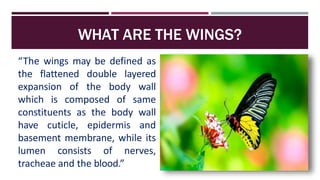
“The wings may be defined as
the flattened double layered
expansion of the body wall
which is composed of same
constituents as the body wall
have cuticle, epidermis and
basement membrane, while its
lumen consists of nerves,
tracheae and the blood.”
STRUCTURE OF WINGS
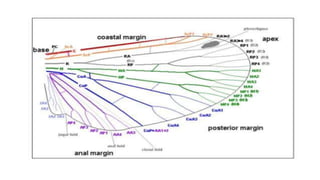
The archedictyon contained 6-8 longitudinal veins. These veins (and their
branches) are named according to a system devised by Jhon Comstock and
George Needham:-
Costa (C) – The leading edge of the wing.
Subcosta (Sc) – Second longitudinal vein (behind the costa), typically
unbranched.
Radius (R) - Third longitudinal vein, one to five branches reaches the wing
margin.
Medius (M) – Fourth longitudinal vein, one to four branches reaches the
wing margin.
Cubitus (Cu) – Fifth longitudinal vein, one to three branches reaches the
wing margin.
Anal veins (A1, A2, A3) – Unbranched veins behind the cubitus.
The insect wings are highly modified
into various forms according to their
habits and use. The distinct names
have been termed to those forms:-
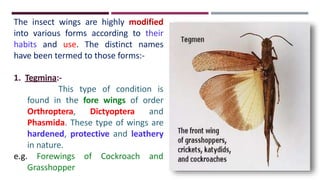
1. Tegmina:-
This type of condition is
found in the fore wings of order
Orthroptera, Dictyoptera and
Phasmida. These type of wings are
hardened, protective and leathery
in nature.
e.g. Forewings of Cockroach and
Grasshopper
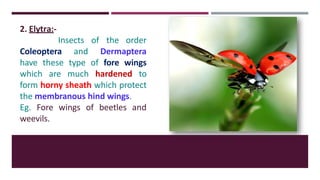
2. Elytra:-
Insects of
Coleoptera and
the order
Dermaptera
have these type of fore wings
which are much hardened to
form horny sheath which protect
the membranous hind wings.
Eg. Fore wings of beetles and
weevils.
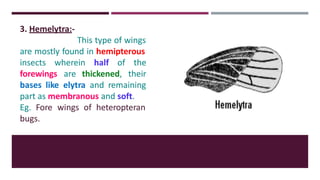
3. Hemelytra:-
This type of wings
are mostly found in hemipterous
insects wherein half of
forewings are thickened,
the
their
bases like elytra and remaining
part as membranous and soft.
Eg. Fore wings of heteropteran
bugs.
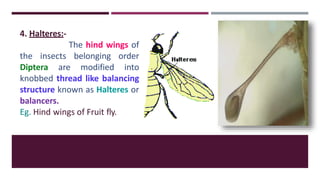
4. Halteres:-
The hind wings of
the insects belonging order
Diptera are modified into
knobbed thread like balancing
structure known as Halteres or
balancers.
Eg. Hind wings of Fruit fly.
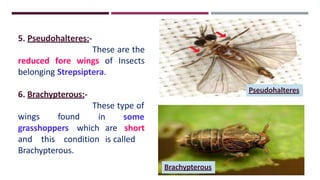
5. Pseudohalteres:-
These are the
reduced fore wings of Insects
belonging Strepsiptera.
These type of
6. Brachypterous:-
wings found in some
are short
is called
grasshoppers which
and this condition
Brachypterous.
Pseudohalteres
Brachypterous
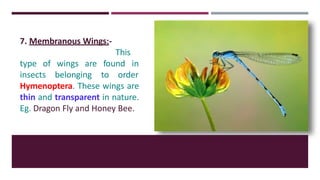
7. Membranous Wings:-
This
are found in
type of wings
insects belonging to order
Hymenoptera. These wings are
thin and transparent in nature.
Eg. Dragon Fly and Honey Bee.
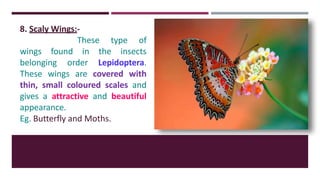
8. Scaly Wings:-
These type of
wings found in the insects
belonging order Lepidoptera.
These wings are covered with
thin, small coloured scales and
gives a attractive and beautiful
appearance.
Eg. Butterfly and Moths.
12
THANKS!

insect wing.pptx

  • 1.
    INSECT WINGS ANDTHEIR MODIFICATIONS EDITED & CREATED BY:- Dr. Sachin Kumar Jaiswal
  • 2.
    WHAT ARE THEWINGS? “The wings may be defined as the flattened double layered expansion of the body wall which is composed of same constituents as the body wall have cuticle, epidermis and basement membrane, while its lumen consists of nerves, tracheae and the blood.”
  • 4.
    STRUCTURE OF WINGS Thearchedictyon contained 6-8 longitudinal veins. These veins (and their branches) are named according to a system devised by Jhon Comstock and George Needham:- Costa (C) – The leading edge of the wing. Subcosta (Sc) – Second longitudinal vein (behind the costa), typically unbranched. Radius (R) - Third longitudinal vein, one to five branches reaches the wing margin. Medius (M) – Fourth longitudinal vein, one to four branches reaches the wing margin. Cubitus (Cu) – Fifth longitudinal vein, one to three branches reaches the wing margin. Anal veins (A1, A2, A3) – Unbranched veins behind the cubitus.
  • 6.
    The insect wingsare highly modified into various forms according to their habits and use. The distinct names have been termed to those forms:- 1. Tegmina:- This type of condition is found in the fore wings of order Orthroptera, Dictyoptera and Phasmida. These type of wings are hardened, protective and leathery in nature. e.g. Forewings of Cockroach and Grasshopper
  • 7.
    2. Elytra:- Insects of Coleopteraand the order Dermaptera have these type of fore wings which are much hardened to form horny sheath which protect the membranous hind wings. Eg. Fore wings of beetles and weevils.
  • 8.
    3. Hemelytra:- This typeof wings are mostly found in hemipterous insects wherein half of forewings are thickened, the their bases like elytra and remaining part as membranous and soft. Eg. Fore wings of heteropteran bugs.
  • 9.
    4. Halteres:- The hindwings of the insects belonging order Diptera are modified into knobbed thread like balancing structure known as Halteres or balancers. Eg. Hind wings of Fruit fly.
  • 10.
    5. Pseudohalteres:- These arethe reduced fore wings of Insects belonging Strepsiptera. These type of 6. Brachypterous:- wings found in some are short is called grasshoppers which and this condition Brachypterous. Pseudohalteres Brachypterous
  • 11.
    7. Membranous Wings:- This arefound in type of wings insects belonging to order Hymenoptera. These wings are thin and transparent in nature. Eg. Dragon Fly and Honey Bee.
  • 12.
    8. Scaly Wings:- Thesetype of wings found in the insects belonging order Lepidoptera. These wings are covered with thin, small coloured scales and gives a attractive and beautiful appearance. Eg. Butterfly and Moths.
  • 13.