Quick story...
We were trying to book a
restaurant table for a Velocity
trip a while back. Usual thing:
sent out emails to the places
that looked good.
Listed all our requirements.
(Separate room. Drinks first.
Some vegetarians.)
One woman’s reply stood out.
Not because she sold hard
but because she seemed
to be trying to un-sell us.
A few of the restaurants
ignored our email.
(I know: WTF?)
A few replied.
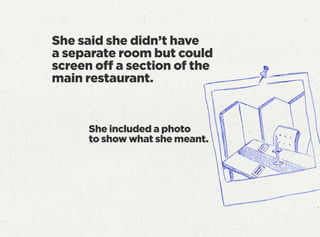
She said she didn’t have
a separate room but could
screen off a section of the
main restaurant.
She included a photo
to show what she meant.
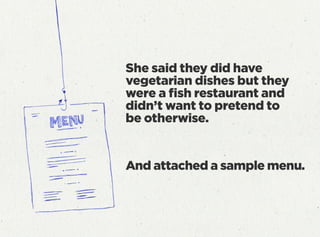
She said they did have
vegetarian dishes but they
were a fish restaurant and
didn’t want to pretend to
be otherwise.
And attached a sample menu.
As we corresponded
with the woman, this
pattern repeated itself
over and over again.
She kept telling us what
we might not like about
her restaurant and what
she could do about it.
In short, the woman
was 100% honest.
And it had a magic
effect on us.
Because she was so open about
the potential shortcomings of
her restaurant, we concluded
two things:
She really, really didn’t want us
to show up and be disappointed.
She cared about us
having a great time.
She was honest.
Because she was so open about potential
problems, we trusted everything she said
about the positives.
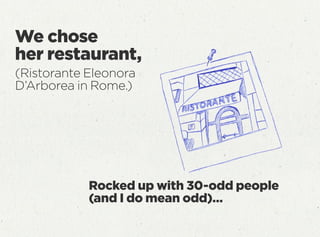
We chose
her restaurant,
(Ristorante Eleonora
D’Arborea in Rome.)
Rocked up with 30-odd people
(and I do mean odd)…
…and had a fantastic
evening from the very
first minute to the last.
And not a penny more than
they quoted (despite our
frankly excessive drinking).
Great, warm welcome.
Bubbly on arrival.
Fantastic food.
Friendly, attentive service.
The shortcomings
she pointed out?
They were true but unimportant
to us and utterly manageable.
If anything, they were overstated.
And because she had
managed our expectations,
we found ourselves actively
minimizing or completely
discounting these issues.
So what can marketers
learn from this little fable?
Just this…
Total honesty
is the best ruse*
ever invented.
*surely ‘policy’
They hide them.
They wheel out the
smoke and mirrors.
They lie, deny and vilify
anyone who draws attention
to the shortcomings.
Most marketers treat
their negative features
like weeping sores on
a blind date.
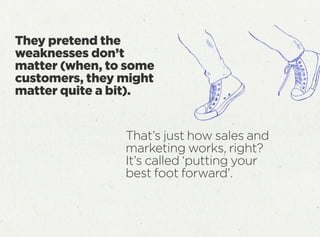
That’s just how sales and
marketing works, right?
It’s called ‘putting your
best foot forward’.
They pretend the
weaknesses don’t
matter (when, to some
customers, they might
matter quite a bit).
But every once in a while
you come across a brand
that takes another approach.
They expose any
potential downsides
openly and honestly.
They admit that their solution
is not for everybody – but for
the right people, it’s ideal.
They expose their soft spots
and show how they’re working
to fix them – or they share
strategies for minimizing
the impact.
Instead of inflating claims,
they’re conservative about
their performance data
even when the competition
is shamelessly puffing
up their numbers.
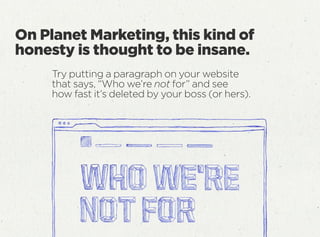
Try putting a paragraph on your website
that says, “Who we’re not for” and see
how fast it’s deleted by your boss (or hers).
On Planet Marketing, this kind of
honesty is thought to be insane.
The thing is, when your target
audience is any subset of homo
sapiens, anything less than total
honesty is the insane thing.
Why?
Because we like
people we trust.
We buy from
people we trust.
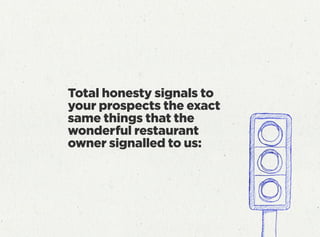
Total honesty signals to
your prospects the exact
same things that the
wonderful restaurant
owner signalled to us:
That you care about your
customer’s actual experience.
More than you care about your
short-term revenue
And that the positive things
you say about your products
are 100% true.
That you can be trusted.
Aren’t those fantastic
signals to send?
Don’t they make you
want to actively seek
out weaknesses that
you can share with
the world?
Go do that.
Because here’s a little secret:
the people you scare
away by exposing your
weaknesses are the ones
who do really care about
that little missing feature.
These are, by definition, the least
likely to buy from you – and, more
importantly, the least likely to be
happy if they do buy.
These are the people
you want to deter.
(At least until you fix the issue.)
And for every one of these,
there will be dozens or hundreds
or thousands of prospects who
appreciate your honesty, don’t
care about the downside and trust
you far more because you had
the balls to be truthful in public.
So here’s what
we urge you to do:
Practice insane honesty
in your marketing.
Expose your soft spots
and explain them.
Admit your shortcomings
and put them in context.
Tell the world who
should probably not
buy your products.
(Which clearly identifies
those who should.)
Try it.
Why insane
honesty works...
It surprises and delights.
Making your marketing
less like marketing.
It signals confidence.
The most powerful force
in marketing (as we argue
in ‘The Other ‘C’ Word’).
It builds trust.
Trust good. Suspicion bad.
It alienates less
likely buyers.
The mismatches and
the time-wasters.
It attracts your
ideal prospects.
The ones you need
to meet.
It focuses you on
battles you can win.
The only ones
worth fighting.
Want to see Insane
Honesty in action?
Read this admittedly
geeky blog post.
(With examples of classic ad campaigns
and some cool newer cases.)
Velocity is a B2B content
marketing agency.
We’re not for the timid,
the weak or the hide-bound.
We can be annoying
by sticking to our guns
when other agencies
might have surrendered.
Sometimes we disappear
en masse to places like Rome
(clients who want 24x7x365
service may not like that).
And we’re big on getting
our clients to take a stand.
(Brands with stronger legal
teams than marketing teams
may find us frustrating.)
Oh, and we publish
lots of content about
content marketing.
Which we hope you’ll
come and eat.

Insane Honesty in Content Marketing

  • 2.
  • 3.
    We were tryingto book a restaurant table for a Velocity trip a while back. Usual thing: sent out emails to the places that looked good. Listed all our requirements. (Separate room. Drinks first. Some vegetarians.)
  • 4.
    One woman’s replystood out. Not because she sold hard but because she seemed to be trying to un-sell us. A few of the restaurants ignored our email. (I know: WTF?) A few replied.
  • 5.
    She said shedidn’t have a separate room but could screen off a section of the main restaurant. She included a photo to show what she meant.
  • 6.
    She said theydid have vegetarian dishes but they were a fish restaurant and didn’t want to pretend to be otherwise. And attached a sample menu.
  • 7.
    As we corresponded withthe woman, this pattern repeated itself over and over again. She kept telling us what we might not like about her restaurant and what she could do about it.
  • 8.
    In short, thewoman was 100% honest. And it had a magic effect on us.
  • 9.
    Because she wasso open about the potential shortcomings of her restaurant, we concluded two things:
  • 10.
    She really, reallydidn’t want us to show up and be disappointed. She cared about us having a great time.
  • 11.
    She was honest. Becauseshe was so open about potential problems, we trusted everything she said about the positives.
  • 12.
    We chose her restaurant, (RistoranteEleonora D’Arborea in Rome.) Rocked up with 30-odd people (and I do mean odd)…
  • 13.
    …and had afantastic evening from the very first minute to the last. And not a penny more than they quoted (despite our frankly excessive drinking). Great, warm welcome. Bubbly on arrival. Fantastic food. Friendly, attentive service.
  • 14.
    The shortcomings she pointedout? They were true but unimportant to us and utterly manageable. If anything, they were overstated.
  • 15.
    And because shehad managed our expectations, we found ourselves actively minimizing or completely discounting these issues.
  • 16.
    So what canmarketers learn from this little fable? Just this…
  • 17.
    Total honesty is thebest ruse* ever invented. *surely ‘policy’
  • 18.
    They hide them. Theywheel out the smoke and mirrors. They lie, deny and vilify anyone who draws attention to the shortcomings. Most marketers treat their negative features like weeping sores on a blind date.
  • 19.
    That’s just howsales and marketing works, right? It’s called ‘putting your best foot forward’. They pretend the weaknesses don’t matter (when, to some customers, they might matter quite a bit).
  • 20.
    But every oncein a while you come across a brand that takes another approach.
  • 21.
    They expose any potentialdownsides openly and honestly. They admit that their solution is not for everybody – but for the right people, it’s ideal.
  • 22.
    They expose theirsoft spots and show how they’re working to fix them – or they share strategies for minimizing the impact.
  • 23.
    Instead of inflatingclaims, they’re conservative about their performance data even when the competition is shamelessly puffing up their numbers.
  • 24.
    Try putting aparagraph on your website that says, “Who we’re not for” and see how fast it’s deleted by your boss (or hers). On Planet Marketing, this kind of honesty is thought to be insane.
  • 25.
    The thing is,when your target audience is any subset of homo sapiens, anything less than total honesty is the insane thing.
  • 26.
  • 27.
  • 28.
    Total honesty signalsto your prospects the exact same things that the wonderful restaurant owner signalled to us:
  • 29.
    That you careabout your customer’s actual experience. More than you care about your short-term revenue
  • 30.
    And that thepositive things you say about your products are 100% true. That you can be trusted.
  • 31.
  • 32.
    Don’t they makeyou want to actively seek out weaknesses that you can share with the world?
  • 33.
  • 34.
    Because here’s alittle secret: the people you scare away by exposing your weaknesses are the ones who do really care about that little missing feature.
  • 35.
    These are, bydefinition, the least likely to buy from you – and, more importantly, the least likely to be happy if they do buy.
  • 36.
    These are thepeople you want to deter. (At least until you fix the issue.)
  • 37.
    And for everyone of these, there will be dozens or hundreds or thousands of prospects who appreciate your honesty, don’t care about the downside and trust you far more because you had the balls to be truthful in public.
  • 38.
    So here’s what weurge you to do:
  • 39.
  • 40.
    Expose your softspots and explain them.
  • 41.
    Admit your shortcomings andput them in context.
  • 42.
    Tell the worldwho should probably not buy your products. (Which clearly identifies those who should.)
  • 43.
  • 44.
  • 45.
    It surprises anddelights. Making your marketing less like marketing.
  • 46.
    It signals confidence. Themost powerful force in marketing (as we argue in ‘The Other ‘C’ Word’).
  • 47.
    It builds trust. Trustgood. Suspicion bad.
  • 48.
    It alienates less likelybuyers. The mismatches and the time-wasters.
  • 49.
    It attracts your idealprospects. The ones you need to meet.
  • 50.
    It focuses youon battles you can win. The only ones worth fighting.
  • 51.
    Want to seeInsane Honesty in action? Read this admittedly geeky blog post. (With examples of classic ad campaigns and some cool newer cases.)
  • 53.
    Velocity is aB2B content marketing agency. We’re not for the timid, the weak or the hide-bound. We can be annoying by sticking to our guns when other agencies might have surrendered.
  • 54.
    Sometimes we disappear enmasse to places like Rome (clients who want 24x7x365 service may not like that). And we’re big on getting our clients to take a stand. (Brands with stronger legal teams than marketing teams may find us frustrating.)
  • 55.
    Oh, and wepublish lots of content about content marketing. Which we hope you’ll come and eat.