Content include
Definition
What is informed consent
History
Basic principles
Eligibility for consent
Authoring the Informed Consent Form
Elements in Informed Consent Process
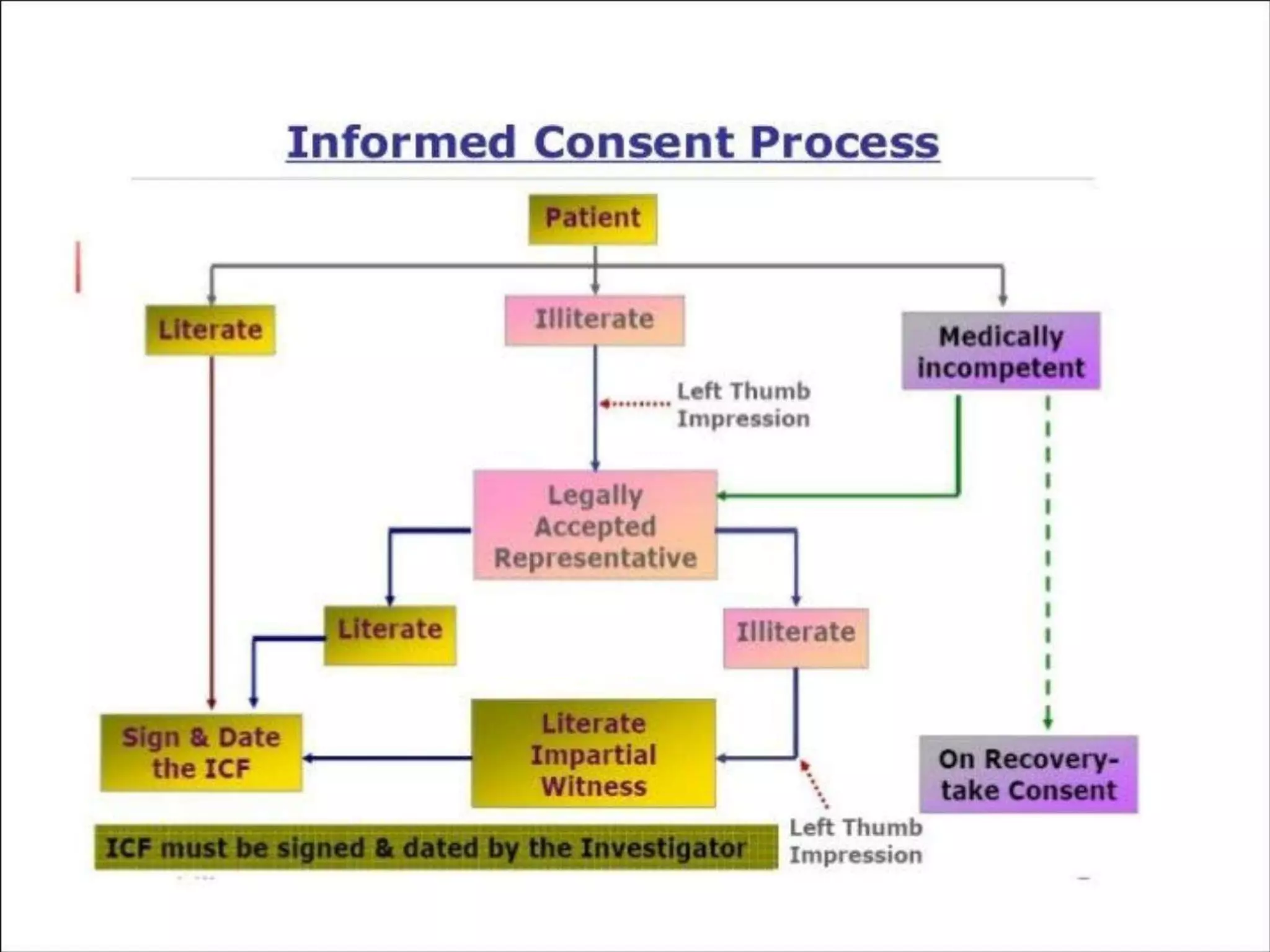
Informed Consent Process
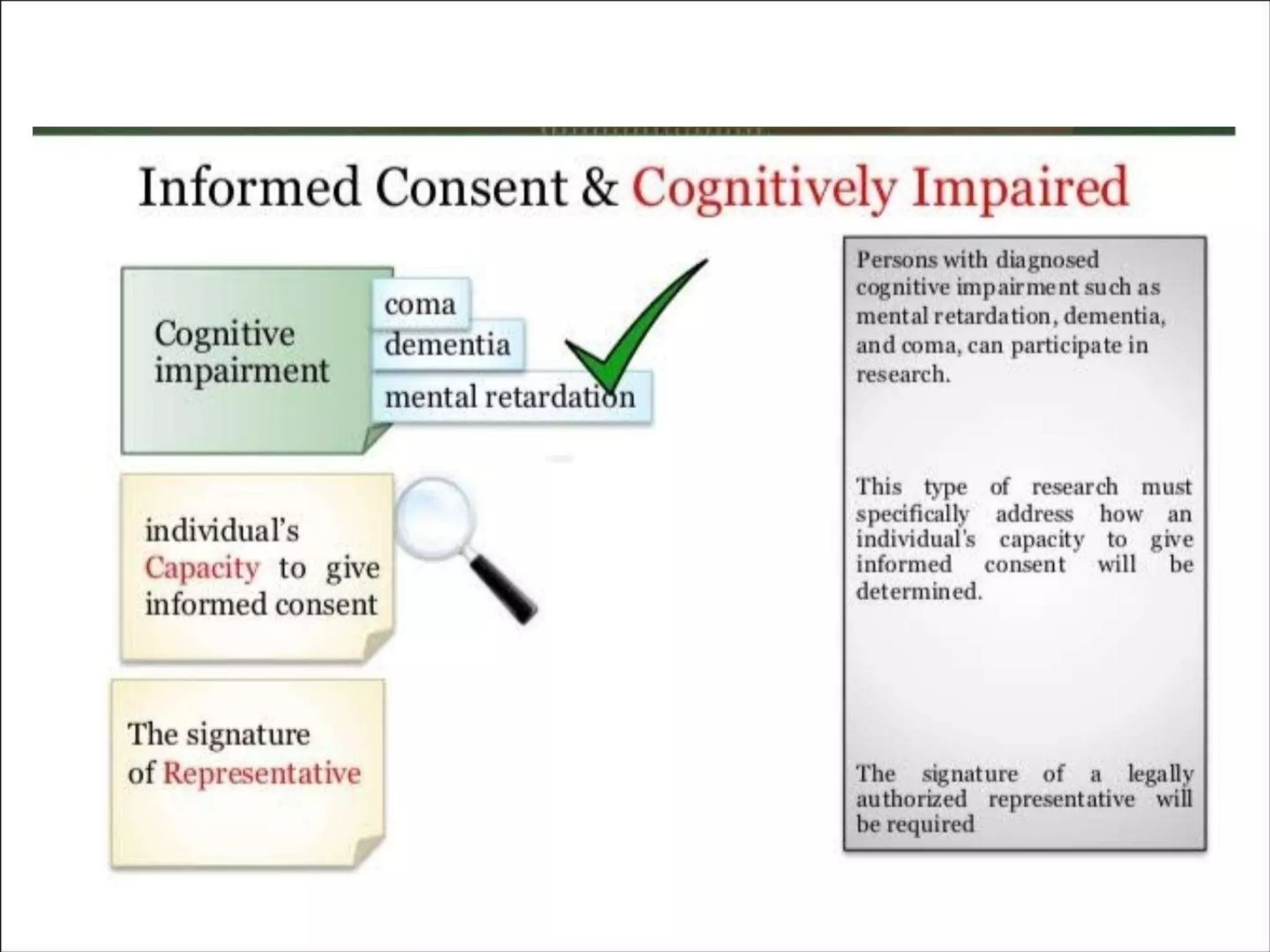
Consent in special situations
Revisions to informed consent
Definition:
Informed consent is defined by the ICH and GCP as,
•A process by which a subject voluntarily confirms his or her willingness to
participate in a particular trial, after having been informed of all aspects of the trail
that are revelent to the subjects decision to participate
•Informed consent is documented by means of a written , signed and dated informed
consent form
What Is Informed Consents ?
•Informed consent is a communication process between the researcher and the
participant.
•Start before the research and Continues throughout the duration of the study.
•Providing all relevant information to the volunteer/patient.
•The patient/ volunteer understanding the information provided voluntarily
agreeing to participate
HISTORY
The Tuskegee Syphilis Study
Research Done The Wrong Way
•The Tuskegee Syphilis Study is the longest non-therapeutic experiment on human
beings in medical history, the progress of untreated syphilis(1932-72).
•399 Poor African-American men were told they were being treated for “Bad
Blood”.
• Even after pencillin was discovered and found to be a miracle cure the men were
not treated or even told what they had.
•US government officials went to extreme lengths to insure that they received no
therapy from any source. Presidential apology, May 1997.
Nazi Prisoner Research During World War II:
Research Done The Wrong Way- Nazi Prisoner Research World War II
[1939-1945].
•World war II and unethical clinical trials done by US health services gave birth of bio-
ethics and creation of IRB and notion of informed consent
AUTONOMY
•Autonomy means that each person should be given the respect, time and opportunity
necessary to make his or her own decision.
BENEFICENCE
Beneficence obligates the investigator to secure the well being of all study subjects. It
is the responsibility of the investigator to protect subject from harm, as well as ensure
that they experience the possible benefits of investigator.
[ key: Maximize possible benefits and minimize possible harm.]
JUSTICE
•The principle of justice requires that the study subjects should not be selected on the
basis of class, socioeconomic status. The basis of including or not including a study
subject in a study should be explained and justified by the investigator.
•Fair distribution of the benefits and burdens of research.
Elgibility for consent:
•Age.
•Soundness of mind.
•Ability to understand.
•Remember the information given.
•Ability to deliberate and decide the treatment choices.
•Believes that the information applies to the said patient and specific purpose
AUTHORING THE ICF:
DO!
•Use small words
•Include details
•Describe time frames
•Use standardized language
•Define risks acronyms
DO NOT DO!
•Use complicated terms
•Put or leave unnecessary information in the form
•Forget “Respect” for subjects
Elements In Informed Consent Form
• Protocol number or name of study.
• Purpose of the study.
• Duration of study and subject involvement
• A statement that the protocol, and the informed consent were reviewed with the
participant, including the risks and benefits of the study
• Alternative treatment options discussed.
• Confidentially recorded.
• No of subjects
• Compensation for injury
• Time for questions to be asked and answered.
• Description of the participants decision.
• Contact details.
• Travel reabusment.
• Subject responsibilities
• Subject satisfaction
• Use understandable language.
• Copy of consent was given to the participant.
• Sign copy of ICF
How do IC apply to vulnerables:
Informed consent in illiterate person
An investigator may enroll individuals, who can speak and
understand English.
The potential subject must be able to place a written mark on the
consent form.
After that the subject must also be able to:
1. Comprehend the concepts of the study and understand the risks
and benefits of the study as it is explained verbally, and
2.Be able to indicate approval or disapproval for study enrollment
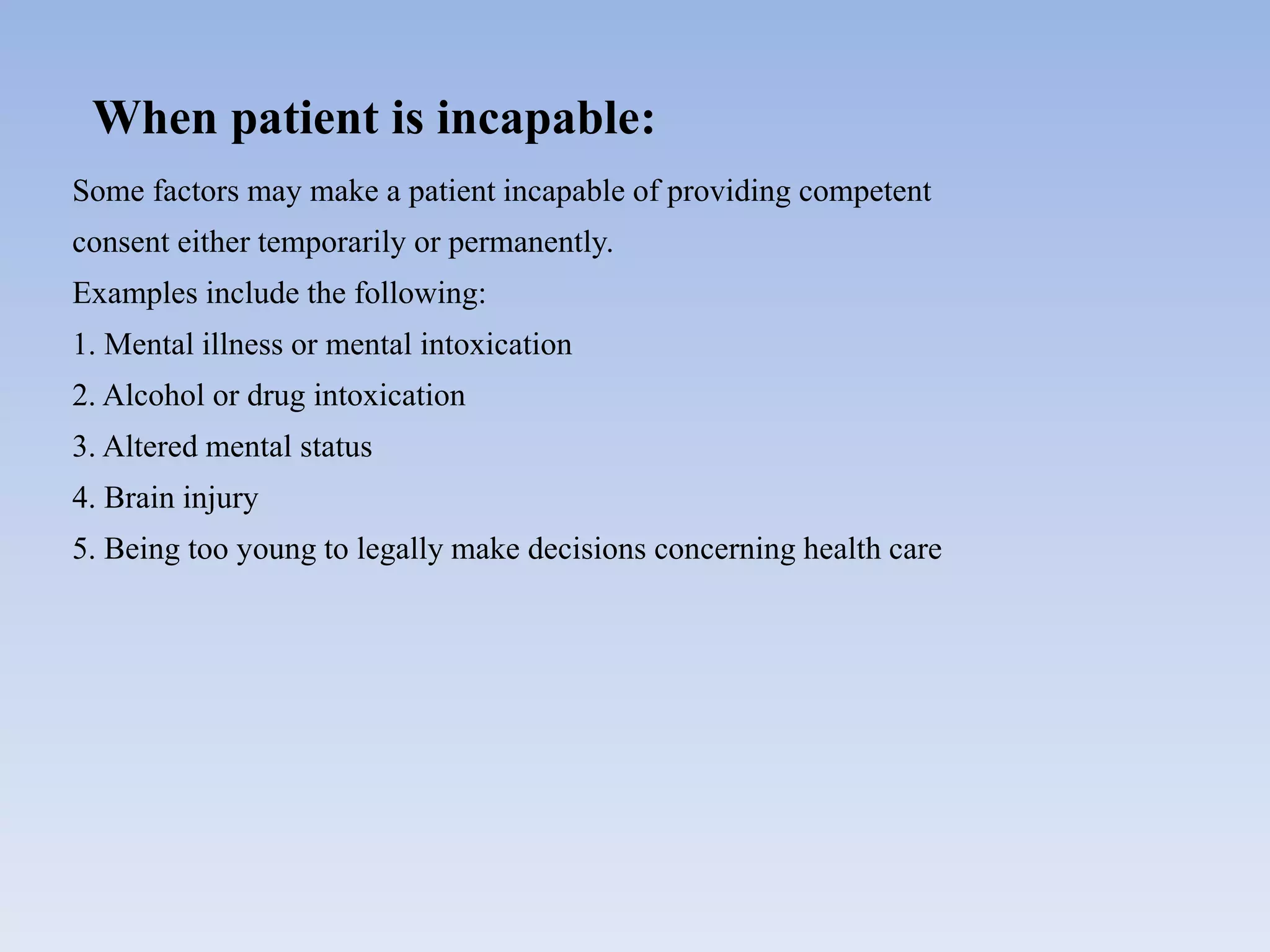
When patient is incapable:
Some factors may make a patient incapable of providing competent
consent either temporarily or permanently.
Examples include the following:
1. Mental illness or mental intoxication
2. Alcohol or drug intoxication
3. Altered mental status
4. Brain injury
5. Being too young to legally make decisions concerning health care
Informed consent in pregnant women:
Researchers should obtain informed consent from both the
pregnant women and the father.
Consent of the father is not necessary if
1. The purpose of the study is to meet the health needs of the
mother.
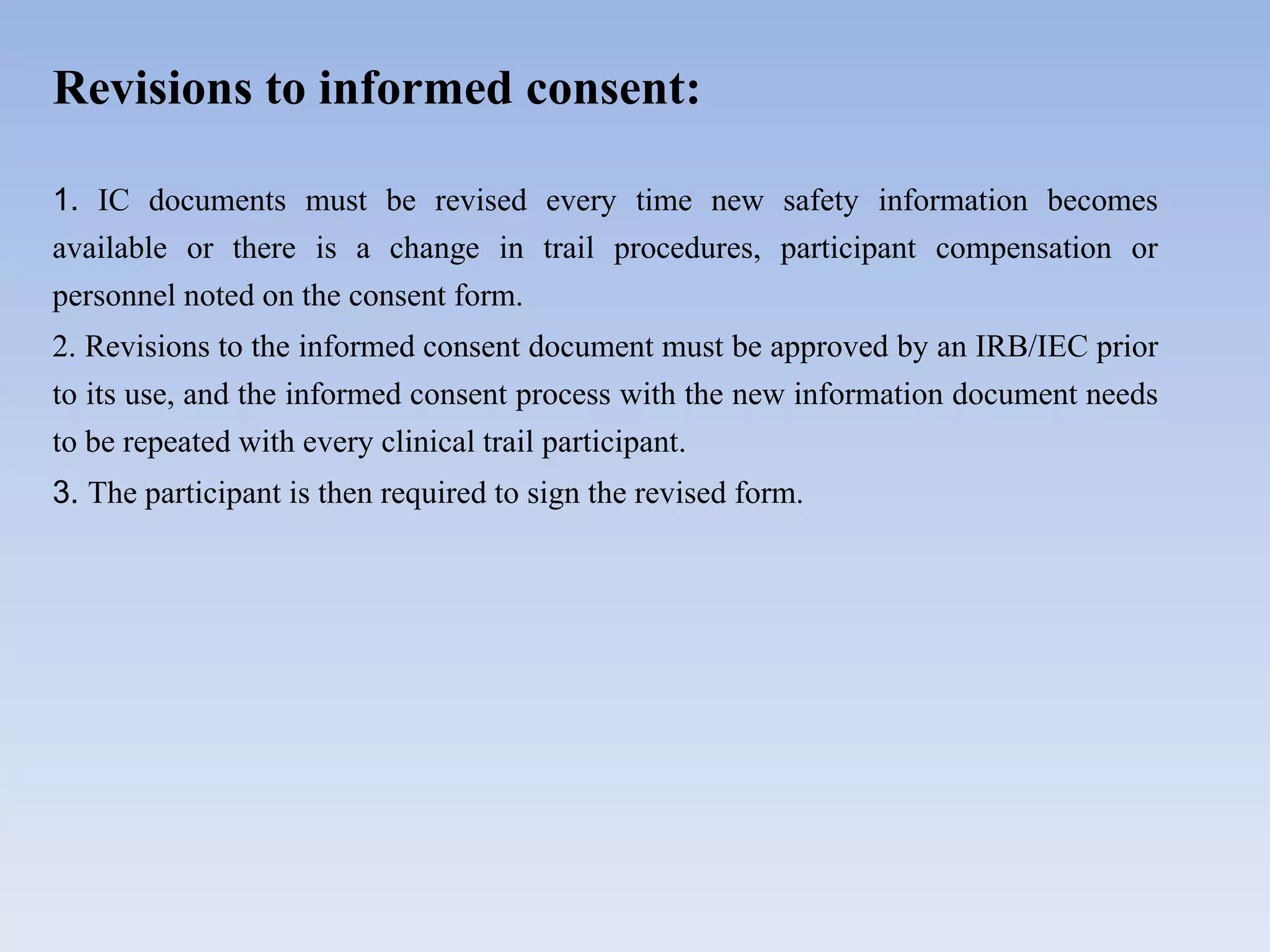
Revisions to informed consent:
1. IC documents must be revised every time new safety information becomes
available or there is a change in trail procedures, participant compensation or
personnel noted on the consent form.
2. Revisions to the informed consent document must be approved by an IRB/IEC prior
to its use, and the informed consent process with the new information document needs
to be repeated with every clinical trail participant.
3. The participant is then required to sign the revised form.
Informed consent form

Informed consent form

  • 2.
    Content include Definition What isinformed consent History Basic principles Eligibility for consent Authoring the Informed Consent Form Elements in Informed Consent Process Informed Consent Process Consent in special situations Revisions to informed consent
  • 3.
    Definition: Informed consent isdefined by the ICH and GCP as, •A process by which a subject voluntarily confirms his or her willingness to participate in a particular trial, after having been informed of all aspects of the trail that are revelent to the subjects decision to participate •Informed consent is documented by means of a written , signed and dated informed consent form
  • 4.
    What Is InformedConsents ? •Informed consent is a communication process between the researcher and the participant. •Start before the research and Continues throughout the duration of the study. •Providing all relevant information to the volunteer/patient. •The patient/ volunteer understanding the information provided voluntarily agreeing to participate
  • 5.
    HISTORY The Tuskegee SyphilisStudy Research Done The Wrong Way •The Tuskegee Syphilis Study is the longest non-therapeutic experiment on human beings in medical history, the progress of untreated syphilis(1932-72). •399 Poor African-American men were told they were being treated for “Bad Blood”. • Even after pencillin was discovered and found to be a miracle cure the men were not treated or even told what they had. •US government officials went to extreme lengths to insure that they received no therapy from any source. Presidential apology, May 1997.
  • 6.
    Nazi Prisoner ResearchDuring World War II: Research Done The Wrong Way- Nazi Prisoner Research World War II [1939-1945]. •World war II and unethical clinical trials done by US health services gave birth of bio- ethics and creation of IRB and notion of informed consent
  • 8.
    AUTONOMY •Autonomy means thateach person should be given the respect, time and opportunity necessary to make his or her own decision. BENEFICENCE Beneficence obligates the investigator to secure the well being of all study subjects. It is the responsibility of the investigator to protect subject from harm, as well as ensure that they experience the possible benefits of investigator. [ key: Maximize possible benefits and minimize possible harm.]
  • 9.
    JUSTICE •The principle ofjustice requires that the study subjects should not be selected on the basis of class, socioeconomic status. The basis of including or not including a study subject in a study should be explained and justified by the investigator. •Fair distribution of the benefits and burdens of research.
  • 10.
    Elgibility for consent: •Age. •Soundnessof mind. •Ability to understand. •Remember the information given. •Ability to deliberate and decide the treatment choices. •Believes that the information applies to the said patient and specific purpose
  • 11.
    AUTHORING THE ICF: DO! •Usesmall words •Include details •Describe time frames •Use standardized language •Define risks acronyms DO NOT DO! •Use complicated terms •Put or leave unnecessary information in the form •Forget “Respect” for subjects
  • 12.
    Elements In InformedConsent Form • Protocol number or name of study. • Purpose of the study. • Duration of study and subject involvement • A statement that the protocol, and the informed consent were reviewed with the participant, including the risks and benefits of the study • Alternative treatment options discussed. • Confidentially recorded. • No of subjects • Compensation for injury • Time for questions to be asked and answered. • Description of the participants decision. • Contact details. • Travel reabusment. • Subject responsibilities • Subject satisfaction • Use understandable language. • Copy of consent was given to the participant. • Sign copy of ICF
  • 16.
    How do ICapply to vulnerables:
  • 17.
    Informed consent inilliterate person An investigator may enroll individuals, who can speak and understand English. The potential subject must be able to place a written mark on the consent form. After that the subject must also be able to: 1. Comprehend the concepts of the study and understand the risks and benefits of the study as it is explained verbally, and 2.Be able to indicate approval or disapproval for study enrollment
  • 18.
    When patient isincapable: Some factors may make a patient incapable of providing competent consent either temporarily or permanently. Examples include the following: 1. Mental illness or mental intoxication 2. Alcohol or drug intoxication 3. Altered mental status 4. Brain injury 5. Being too young to legally make decisions concerning health care
  • 19.
    Informed consent inpregnant women: Researchers should obtain informed consent from both the pregnant women and the father. Consent of the father is not necessary if 1. The purpose of the study is to meet the health needs of the mother.
  • 23.
    Revisions to informedconsent: 1. IC documents must be revised every time new safety information becomes available or there is a change in trail procedures, participant compensation or personnel noted on the consent form. 2. Revisions to the informed consent document must be approved by an IRB/IEC prior to its use, and the informed consent process with the new information document needs to be repeated with every clinical trail participant. 3. The participant is then required to sign the revised form.