Engaging our Most Challenged Students:
The Academic Library's Role in
Developmental Education


Kristina Appelt- Prairie State College
Tish Hayes – Oakton C.C./Moraine Valley C.C.
Terra Jacobson - Moraine Valley C.C.
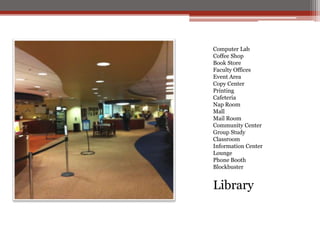
Computer Lab
Coffee Shop
Book Store
Faculty Offices
Event Area
Copy Center
Printing
Cafeteria
Nap Room
Mall
Mail Room
Community Center
Group Study
Classroom
Information Center
Lounge
Phone Booth
Blockbuster


Library
Who are our students?
• IEL/ELL/ESL

• Developmental Programs

• Literacy Tutoring Programs

• Adult Ed programs
Literacy Facts
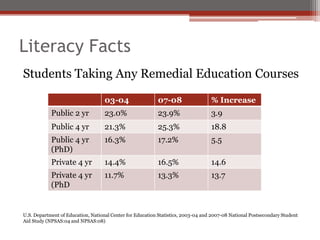
Students Taking Any Remedial Education Courses

                                    03-04                  07-08                   % Increase
            Public 2 yr             23.0%                  23.9%                   3.9
            Public 4 yr             21.3%                  25.3%                   18.8
            Public 4 yr             16.3%                  17.2%                   5.5
            (PhD)
            Private 4 yr            14.4%                  16.5%                   14.6
            Private 4 yr            11.7%                  13.3%                   13.7
            (PhD


U.S. Department of Education, National Center for Education Statistics, 2003-04 and 2007-08 National Postsecondary Student
Aid Study (NPSAS:04 and NPSAS:08)
Literacy Facts
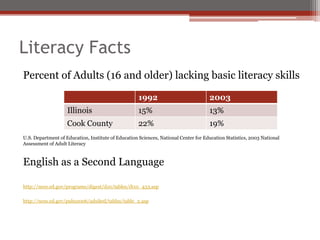
Percent of Adults (16 and older) lacking basic literacy skills

                                                     1992                            2003
                    Illinois                         15%                             13%
                    Cook County                      22%                             19%
U.S. Department of Education, Institute of Education Sciences, National Center for Education Statistics, 2003 National
Assessment of Adult Literacy


English as a Second Language

http://nces.ed.gov/programs/digest/d10/tables/dt10_433.asp

http://nces.ed.gov/pubs2006/adulted/tables/table_2.asp
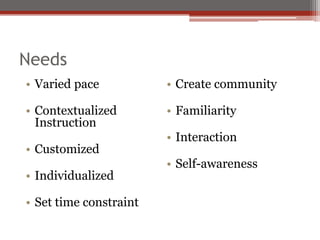
Needs
• Varied pace           • Create community

• Contextualized        • Familiarity
  Instruction
                        • Interaction
• Customized
                        • Self-awareness
• Individualized

• Set time constraint
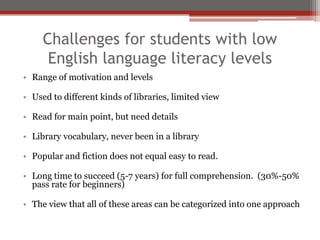
Challenges for students with low
      English language literacy levels
• Range of motivation and levels

• Used to different kinds of libraries, limited view

• Read for main point, but need details

• Library vocabulary, never been in a library

• Popular and fiction does not equal easy to read.

• Long time to succeed (5-7 years) for full comprehension. (30%-50%
  pass rate for beginners)

• The view that all of these areas can be categorized into one approach
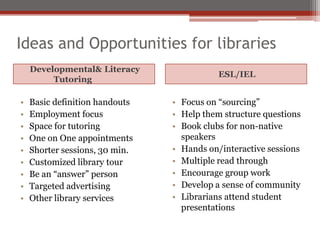
Ideas and Opportunities for libraries
    Developmental& Literacy
                                           ESL/IEL
         Tutoring

•   Basic definition handouts   • Focus on “sourcing”
•   Employment focus            • Help them structure questions
•   Space for tutoring          • Book clubs for non-native
•   One on One appointments       speakers
•   Shorter sessions, 30 min.   • Hands on/interactive sessions
•   Customized library tour     • Multiple read through
•   Be an “answer” person       • Encourage group work
•   Targeted advertising        • Develop a sense of community
•   Other library services      • Librarians attend student
                                  presentations
Collection Development

Instruction
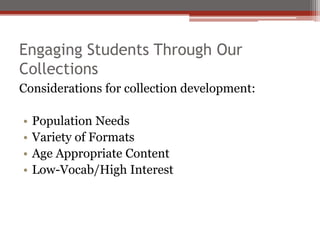
Engaging Students Through Our
Collections
Considerations for collection development:

•   Population Needs
•   Variety of Formats
•   Age Appropriate Content
•   Low-Vocab/High Interest
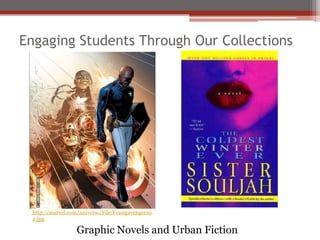
Engaging Students Through Our Collections


 http://marvel.com/universe/File:Youngavengers0
 2.jpg

                  Graphic Novels and Urban Fiction
Library Instruction: Making an Impact
• Reflections (or mistakes I made)


• Learning Objectives


• Identifying Opportunities


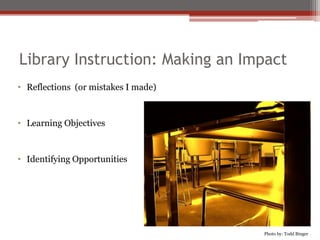
                                     Photo by: Todd Binger
Group Discussion 1
• How do we make it easy for students to feel like
  part of the library community?

• How can we cultivate a culture of reading on
  campus?
Group Discussion 2
• How can libraries be involved in curriculum
  development and support?

• What other opportunities are there for outreach?
Group Discussion 3
• What other departments can we develop
  relationships with outside of English/
  Communications departments?

• How can we meet the needs of developmental
  math classes?
Group Discussion 4
• How can the library curate collections that better
  meet the needs of students with literacy needs?

• What collections could be developed to focus
  reading assignments?
Group Discussion 5
• What learning objectives are appropriate for
  students in developmental or ESL classes?

• How can library instruction better engage
  students with lower literacy levels?

Engaging our Most Challenged Students: The Academic Library's Role in Developmental Education

  • 1.
    Engaging our MostChallenged Students: The Academic Library's Role in Developmental Education Kristina Appelt- Prairie State College Tish Hayes – Oakton C.C./Moraine Valley C.C. Terra Jacobson - Moraine Valley C.C.
  • 2.
    Computer Lab Coffee Shop BookStore Faculty Offices Event Area Copy Center Printing Cafeteria Nap Room Mall Mail Room Community Center Group Study Classroom Information Center Lounge Phone Booth Blockbuster Library
  • 3.
    Who are ourstudents? • IEL/ELL/ESL • Developmental Programs • Literacy Tutoring Programs • Adult Ed programs
  • 4.
    Literacy Facts Students TakingAny Remedial Education Courses 03-04 07-08 % Increase Public 2 yr 23.0% 23.9% 3.9 Public 4 yr 21.3% 25.3% 18.8 Public 4 yr 16.3% 17.2% 5.5 (PhD) Private 4 yr 14.4% 16.5% 14.6 Private 4 yr 11.7% 13.3% 13.7 (PhD U.S. Department of Education, National Center for Education Statistics, 2003-04 and 2007-08 National Postsecondary Student Aid Study (NPSAS:04 and NPSAS:08)
  • 5.
    Literacy Facts Percent ofAdults (16 and older) lacking basic literacy skills 1992 2003 Illinois 15% 13% Cook County 22% 19% U.S. Department of Education, Institute of Education Sciences, National Center for Education Statistics, 2003 National Assessment of Adult Literacy English as a Second Language http://nces.ed.gov/programs/digest/d10/tables/dt10_433.asp http://nces.ed.gov/pubs2006/adulted/tables/table_2.asp
  • 6.
    Needs • Varied pace • Create community • Contextualized • Familiarity Instruction • Interaction • Customized • Self-awareness • Individualized • Set time constraint
  • 7.
    Challenges for studentswith low English language literacy levels • Range of motivation and levels • Used to different kinds of libraries, limited view • Read for main point, but need details • Library vocabulary, never been in a library • Popular and fiction does not equal easy to read. • Long time to succeed (5-7 years) for full comprehension. (30%-50% pass rate for beginners) • The view that all of these areas can be categorized into one approach
  • 8.
    Ideas and Opportunitiesfor libraries Developmental& Literacy ESL/IEL Tutoring • Basic definition handouts • Focus on “sourcing” • Employment focus • Help them structure questions • Space for tutoring • Book clubs for non-native • One on One appointments speakers • Shorter sessions, 30 min. • Hands on/interactive sessions • Customized library tour • Multiple read through • Be an “answer” person • Encourage group work • Targeted advertising • Develop a sense of community • Other library services • Librarians attend student presentations
  • 9.
  • 11.
    Engaging Students ThroughOur Collections Considerations for collection development: • Population Needs • Variety of Formats • Age Appropriate Content • Low-Vocab/High Interest
  • 12.
    Engaging Students ThroughOur Collections http://marvel.com/universe/File:Youngavengers0 2.jpg Graphic Novels and Urban Fiction
  • 14.
    Library Instruction: Makingan Impact • Reflections (or mistakes I made) • Learning Objectives • Identifying Opportunities Photo by: Todd Binger
  • 15.
    Group Discussion 1 •How do we make it easy for students to feel like part of the library community? • How can we cultivate a culture of reading on campus?
  • 16.
    Group Discussion 2 •How can libraries be involved in curriculum development and support? • What other opportunities are there for outreach?
  • 17.
    Group Discussion 3 •What other departments can we develop relationships with outside of English/ Communications departments? • How can we meet the needs of developmental math classes?
  • 18.
    Group Discussion 4 •How can the library curate collections that better meet the needs of students with literacy needs? • What collections could be developed to focus reading assignments?
  • 19.
    Group Discussion 5 •What learning objectives are appropriate for students in developmental or ESL classes? • How can library instruction better engage students with lower literacy levels?