Indus Valley Civilization
Charles Grand John
WHAT WE WILL LEARN
• Introduction
• Origin
• Architecture
• Building
• Culture
• Key events in history
INTRODCUTION
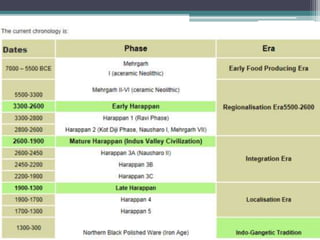
• Between 3250-3000bc
•It is the same period of
EGYPTIAN, BABYLONIAN,
MESOPTAMIAN CIVILIZATION.
•These are called as ANCIENT
WEST ASIAN CIVILIZATIONS
WHAT WE WILL LEARN
• Introduction
• Origin
• Key events in history
• Architecture
• Building
• Culture
INTRODCUTION
•What is Civilization?
A.The process by which a
society or place reaches an
advanced stage of social
and cultural development
and organization.
INTRODCUTION
•What is Civilization?
B. Civilization (or civilisation) comes
from the Latin word civis meaning
someone who lives in a town. ...
A civilization is generally an advanced
stage of organisation. That means it has
laws, culture, a regular way of getting food
and protecting the people.
INTRODCUTION
• Civilization brings people under one
place
• Civilization makes people move from
their thinking
• Else people will be living in a jungle,
forest.
INTRODCUTION
• Civilization brings people under one
place
• Civilization makes people move from
their thinking
• Else people will be living in a jungle,
forest.
INTRODCUTION
• DAYARAM SAHANI and other
archaeologist in the year 1920 in his
archaeological dig found the two ancient
sites of the Indus valley civilization. They
are
• HARAPPA, MOHENJODARO
• Mortimer wheeler, R.D Banerjee,
Sir.John Marshall, Alexander
Cunningham,
INTRODCUTION
•Due to this excavation, we
were able to find out the
civilization that was
flourishing around 3500BC on
the bank of the river INDUS.
ORIGIN- Settlement patterns
•Throughout the Indus River
area, evidences suggest that
almost 13lakh square
kilometres were occupied by
these settlers
ORIGIN
•The civilization extended to an
area bigger than present day
Pakistan. Majority of these are
located in Kashmir, Punjab,
Rajasthan.
ORIGIN
• The Harappan culture was spread
across many parts of India.
• SINDH, BALUCHISTAN, PUNJAB,
HARYANA, WESTERN UP,
JAMMU, NORTHERN
RAJASTHAN, GUJARAT and
NORTHERN MAHARASTRA.
ORIGIN
• Indus valley civilization is a bronze
age civilization.
• It was located in the north west
region of India.
• Most of the Harappan settlements
were found near River Saraswati-
it was called as Indus-Saraswati
civilization.
ARCHITECTURE
• The cities that were built during this
civilization reflects exemplary
construction skills.
• The cities were divided into upper
and lower parts.
• The upper part was built on raised
platforms which is called citadel.
ARCHITECTURE
• Citadel is a fortified structure,
designed to provide protection during
a battle.
• This part includes, public building,
granary, the great bath, workshops
and religious building, s
ARCHITECTURE
• In the Lower part – People loved and
carried a professional work,
• Whenever the city is attacked,
flooded, threatened, the people of the
lower city found shelter in the citadel.
• Below the granary were the big
loading base to get all food to the top.
ARCHITECTURE
• In the Lower part – People loved and
carried a professional work,
• Whenever the city is attacked,
flooded, threatened, the people of the
lower city found shelter in the citadel.
• Below the granary were the big
loading base to get all food to the top.
Architecture
• One of the most Popular features of the
Harapan civilization is the GREAT
BATH.
• The structure of the swimming pool is
the example of their great engineering.
• The size is 7mtr wide and 12mtr long and
3mtr deep. It is boarded by steps to
enter and exit.
Architecture
• One of the most Popular features of the
Harapan civilization is the GREAT
BATH.
• The structure of the swimming pool is
the example of their great engineering.
• The size is 7mtr wide and 12mtr long
and 3mtr deep. It is boarded by steps
to enter and exit.
Architecture
• The bath was set around by porticos
and rooms.
• There was also an arrangement made
to sent hot water to the pool.
• Water was sent from a large well near
the adjacent room.
• There was a CORBELLED drain to
discard water.
Architecture
• The lower city of the Mohenjo-Daro
was properly planned.
• The streets ran straight with building
on either side.
• The streets were 10mtrs wide.
• Houses were built on both sides of the
streets.
Architecture
• Some houses had two story building.
• Windows and plasters were done for
housing with painting.
• Drains connected to the street drains.
• Some houses had their own wells.
• These kind of houes were belonged to
rich merchants and high class people.
GEOGRAPHY of INDUS VALLEY
• Archaeological evidences of such urban
centres have been found plenty in
Harappa, Mohenjo-daro and Lothal
(Gujarat)
• Amri, Kot Diji (Pakistan),
Kalibangan(Rajasthan) Ropar (Punjab)
and Banawali (Haryana) cradled
Harappan civilisation and nurtured it.
Civilization
1. These civilizations took place
near the rivers of the world. Main
reason were availability of water,
fertile soil, ideal climate and easy
movement. These were called
River valley civilization.
Civilization
2. Archaeologist have identified,
Indus valley near River INDUS,
Mesopotamian Sea civilization
near Iraq, Nile river for Egypt,
Hwang Ho river civilization in
China.
Civilization
• Indus valley civilization is the oldest
and largest civilization that has
happened in the history of mankind.
• This civilization has existed from
2750BC -1750BC.
• This is also Harappan Civilization, as
the excavations done at Harappa
were among the first.
ART and CRAFT
• Ancient People belonging to Hrapan
civilzation used Copper, Bronze and
improvised stone tools
• They melted these metals and made
several toys and statues
• Crafts were made of bronze metal in
large number.
ART and CRAFT
• They comprised of Dancing girls,
chariots, carts and animals.
• Terrocota figures (made of burnt clay)
were generally made for goddesses and
gods
• Toys made of Terrocotta comprising
animals, and carts were plenty
• Seals having images of gods like Shiva,
Pashupati, birds & animals were also
found
THANK YOU
SHALOM

Indus valley civilization

  • 1.
  • 2.
    WHAT WE WILLLEARN • Introduction • Origin • Architecture • Building • Culture • Key events in history
  • 3.
    INTRODCUTION • Between 3250-3000bc •Itis the same period of EGYPTIAN, BABYLONIAN, MESOPTAMIAN CIVILIZATION. •These are called as ANCIENT WEST ASIAN CIVILIZATIONS
  • 4.
    WHAT WE WILLLEARN • Introduction • Origin • Key events in history • Architecture • Building • Culture
  • 5.
    INTRODCUTION •What is Civilization? A.Theprocess by which a society or place reaches an advanced stage of social and cultural development and organization.
  • 6.
    INTRODCUTION •What is Civilization? B.Civilization (or civilisation) comes from the Latin word civis meaning someone who lives in a town. ... A civilization is generally an advanced stage of organisation. That means it has laws, culture, a regular way of getting food and protecting the people.
  • 7.
    INTRODCUTION • Civilization bringspeople under one place • Civilization makes people move from their thinking • Else people will be living in a jungle, forest.
  • 8.
    INTRODCUTION • Civilization bringspeople under one place • Civilization makes people move from their thinking • Else people will be living in a jungle, forest.
  • 9.
    INTRODCUTION • DAYARAM SAHANIand other archaeologist in the year 1920 in his archaeological dig found the two ancient sites of the Indus valley civilization. They are • HARAPPA, MOHENJODARO • Mortimer wheeler, R.D Banerjee, Sir.John Marshall, Alexander Cunningham,
  • 10.
    INTRODCUTION •Due to thisexcavation, we were able to find out the civilization that was flourishing around 3500BC on the bank of the river INDUS.
  • 11.
    ORIGIN- Settlement patterns •Throughoutthe Indus River area, evidences suggest that almost 13lakh square kilometres were occupied by these settlers
  • 12.
    ORIGIN •The civilization extendedto an area bigger than present day Pakistan. Majority of these are located in Kashmir, Punjab, Rajasthan.
  • 13.
    ORIGIN • The Harappanculture was spread across many parts of India. • SINDH, BALUCHISTAN, PUNJAB, HARYANA, WESTERN UP, JAMMU, NORTHERN RAJASTHAN, GUJARAT and NORTHERN MAHARASTRA.
  • 14.
    ORIGIN • Indus valleycivilization is a bronze age civilization. • It was located in the north west region of India. • Most of the Harappan settlements were found near River Saraswati- it was called as Indus-Saraswati civilization.
  • 15.
    ARCHITECTURE • The citiesthat were built during this civilization reflects exemplary construction skills. • The cities were divided into upper and lower parts. • The upper part was built on raised platforms which is called citadel.
  • 16.
    ARCHITECTURE • Citadel isa fortified structure, designed to provide protection during a battle. • This part includes, public building, granary, the great bath, workshops and religious building, s
  • 17.
    ARCHITECTURE • In theLower part – People loved and carried a professional work, • Whenever the city is attacked, flooded, threatened, the people of the lower city found shelter in the citadel. • Below the granary were the big loading base to get all food to the top.
  • 18.
    ARCHITECTURE • In theLower part – People loved and carried a professional work, • Whenever the city is attacked, flooded, threatened, the people of the lower city found shelter in the citadel. • Below the granary were the big loading base to get all food to the top.
  • 19.
    Architecture • One ofthe most Popular features of the Harapan civilization is the GREAT BATH. • The structure of the swimming pool is the example of their great engineering. • The size is 7mtr wide and 12mtr long and 3mtr deep. It is boarded by steps to enter and exit.
  • 20.
    Architecture • One ofthe most Popular features of the Harapan civilization is the GREAT BATH. • The structure of the swimming pool is the example of their great engineering. • The size is 7mtr wide and 12mtr long and 3mtr deep. It is boarded by steps to enter and exit.
  • 21.
    Architecture • The bathwas set around by porticos and rooms. • There was also an arrangement made to sent hot water to the pool. • Water was sent from a large well near the adjacent room. • There was a CORBELLED drain to discard water.
  • 22.
    Architecture • The lowercity of the Mohenjo-Daro was properly planned. • The streets ran straight with building on either side. • The streets were 10mtrs wide. • Houses were built on both sides of the streets.
  • 23.
    Architecture • Some houseshad two story building. • Windows and plasters were done for housing with painting. • Drains connected to the street drains. • Some houses had their own wells. • These kind of houes were belonged to rich merchants and high class people.
  • 24.
    GEOGRAPHY of INDUSVALLEY • Archaeological evidences of such urban centres have been found plenty in Harappa, Mohenjo-daro and Lothal (Gujarat) • Amri, Kot Diji (Pakistan), Kalibangan(Rajasthan) Ropar (Punjab) and Banawali (Haryana) cradled Harappan civilisation and nurtured it.
  • 25.
    Civilization 1. These civilizationstook place near the rivers of the world. Main reason were availability of water, fertile soil, ideal climate and easy movement. These were called River valley civilization.
  • 26.
    Civilization 2. Archaeologist haveidentified, Indus valley near River INDUS, Mesopotamian Sea civilization near Iraq, Nile river for Egypt, Hwang Ho river civilization in China.
  • 27.
    Civilization • Indus valleycivilization is the oldest and largest civilization that has happened in the history of mankind. • This civilization has existed from 2750BC -1750BC. • This is also Harappan Civilization, as the excavations done at Harappa were among the first.
  • 28.
    ART and CRAFT •Ancient People belonging to Hrapan civilzation used Copper, Bronze and improvised stone tools • They melted these metals and made several toys and statues • Crafts were made of bronze metal in large number.
  • 29.
    ART and CRAFT •They comprised of Dancing girls, chariots, carts and animals. • Terrocota figures (made of burnt clay) were generally made for goddesses and gods • Toys made of Terrocotta comprising animals, and carts were plenty • Seals having images of gods like Shiva, Pashupati, birds & animals were also found
  • 30.