www.indiandentalacademy.com
Indirect bonding is a technique in which orthodontic
brackets or other attachments are transferred from dental
casts & bonded to the dentition using a transfer device.
It was first described in detail as a concept in 1972 by
Silverman & Cohen;
some of the initial trials used a Softened sugar daddy
candy as a means of attaching the brackets to the working
models before transfer tray fabrication.
Additionally, other has used water-soluble adhesives &
even sticky wax to attach the brackets to the models.
Silverman and Cohen further stated, “It should take no
longer than twenty minutes to complete a full strap-up in
the mouth in both arches, including second molars if
desired.
www.indiandentalacademy.com
Modern techniques have expanded on this concept
and have utilized precision bracket placement
techniques.
it becomes apparent that the indirect bonding fall
into certain categories. In terms of the types of
chemicals used to bond the brackets, this concept can
be broken down into three distinct categories:
chemically cured, light-cured, and thermally cured
bases.
www.indiandentalacademy.com
The use of light cured materials was mentioned as early as
1972 in the original Silverman and Cohen technique and
elaborated on by them in 1974.
In 1974, Newman discussed the use of acrylic-base
adhesives to direct & in-direct bond plastic & mesh base
brackets.
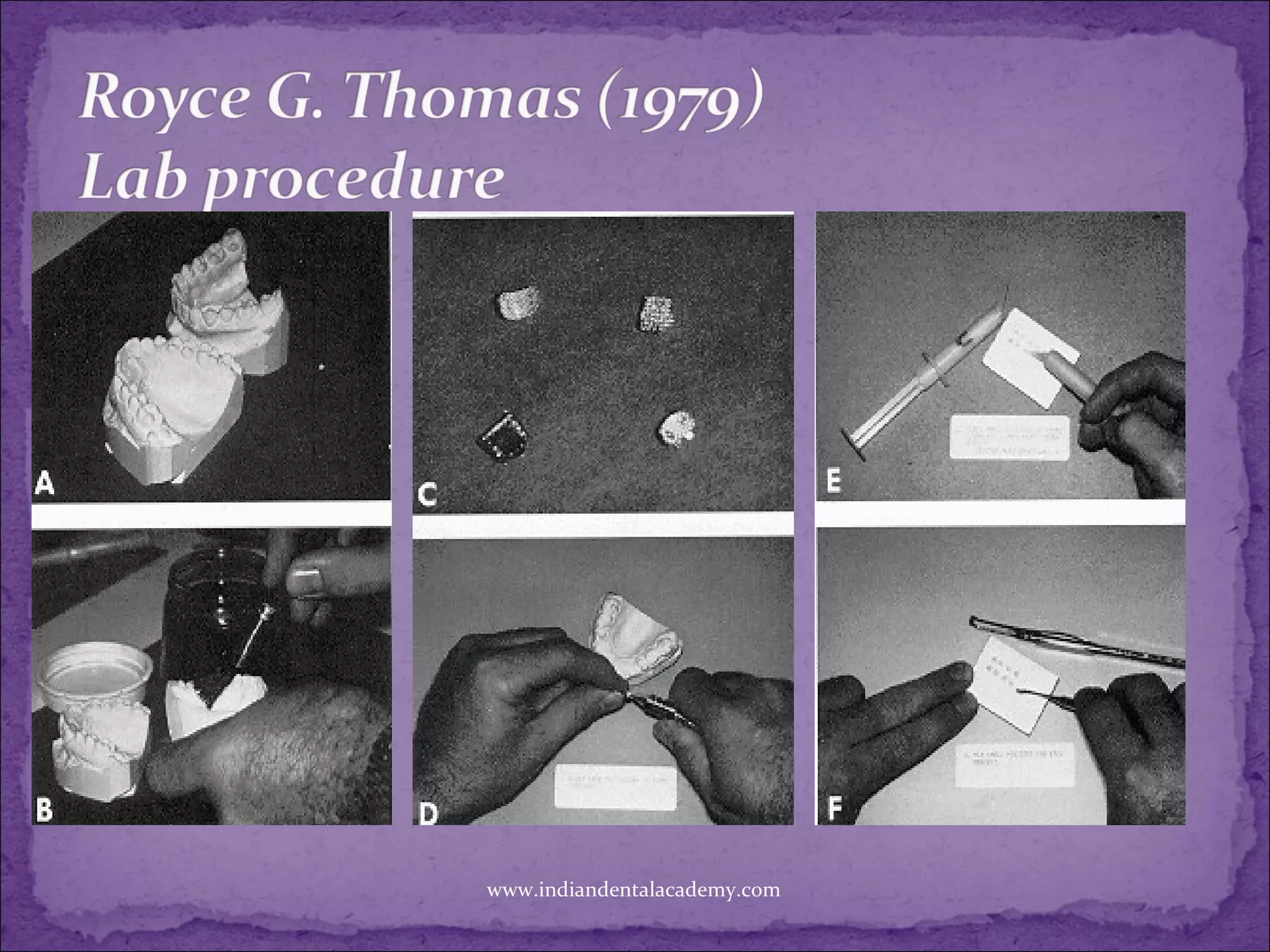
Thomas in his original thesis in 1979, discussed a
modification of the Silverman & Cohen technique & was
first to described the construction of these custom
composite bases.
Fried & Newman discussed the use of a no-mix adhesive in
indirect bonding in 1983.
In 1984, the concept of a rapidly setting curing system
took place when Aguirre experimented with varying
setting times by changing catalyse/base composites.
www.indiandentalacademy.com
In 1990, Read & O’Brien used a visible light-cured adhesive
in indirect bonding on foil mesh based brackets.
Hamula discussed the advantages of using light-cured
adhesives for indirect bonding in 1991.
Read and Pearson, in 1998, were the first to discuss the use
of a light-cured, lightly filled sealant to attach brackets
with a custom resin base to the teeth via an indirect
method.
In 2001, White used a self-etching primer and a quick cure
composite adhesive in indirect bonding.
 A filled flowable composite developed for use in
restorative dentistry for air abrasion, tunnel preparations,
shallow Class V cavities, and as a fissure sealant, was first
incorporated into an indirect bonding technique by Miles
in 2002.
www.indiandentalacademy.com
1. Permits more accurate placement of brackets.
2. Decreases chair time of appliance placement from 2
to 3 hours to 25 to 45 minutes.
3. Less patient discomfort, since separation is no longer
necessary.
4. Interproximal caries can be detected more readily
and restored if necessary with no bands in the way.
5. Reduces risk of caries and decalcification as is
possible under bands, especially loose bands.
www.indiandentalacademy.com
6. Esthetically more pleasing.
7. Improved tissue health during treatment
8. Diagnostic considerations. (Extraction or
nonextraction?)
9. "Sealant" placed on labial and buccal surfaces
"preventive" in nature.
10. Occlusion— "What you see is what you get."
Minimal settling in bonded treatment.
11. Partly erupted teeth can quickly be brought under
control. No need to wait for full eruption to cement
band.
www.indiandentalacademy.com
12. No band space to close upon completion.
13. Immediate retainers may routinely be made.
14. Reduces costly band inventory.
15. New techniques or appliances may be tried without
costly inventory.
16. Overall better patient acceptance related to esthetics
and ease of placement.
www.indiandentalacademy.com
1. Teeth with crowns, large buccal restorations or acrylic
restorations will not bond.
2. Sometimes difficult on very short clinical crowns.
3. Correct technique must be followed closely.
4. Those fearful of change will likely be reluctant to try
the technique
www.indiandentalacademy.com
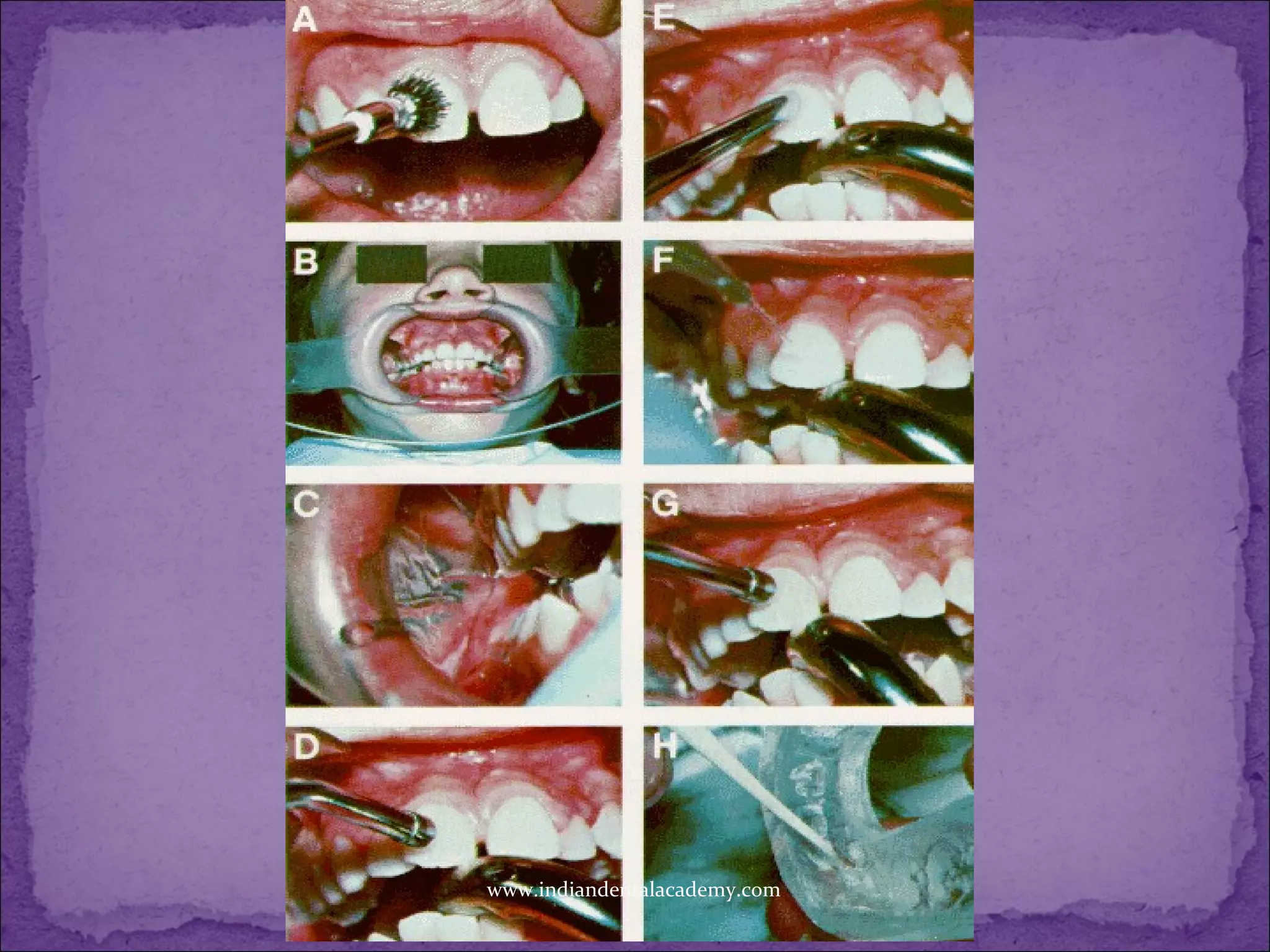
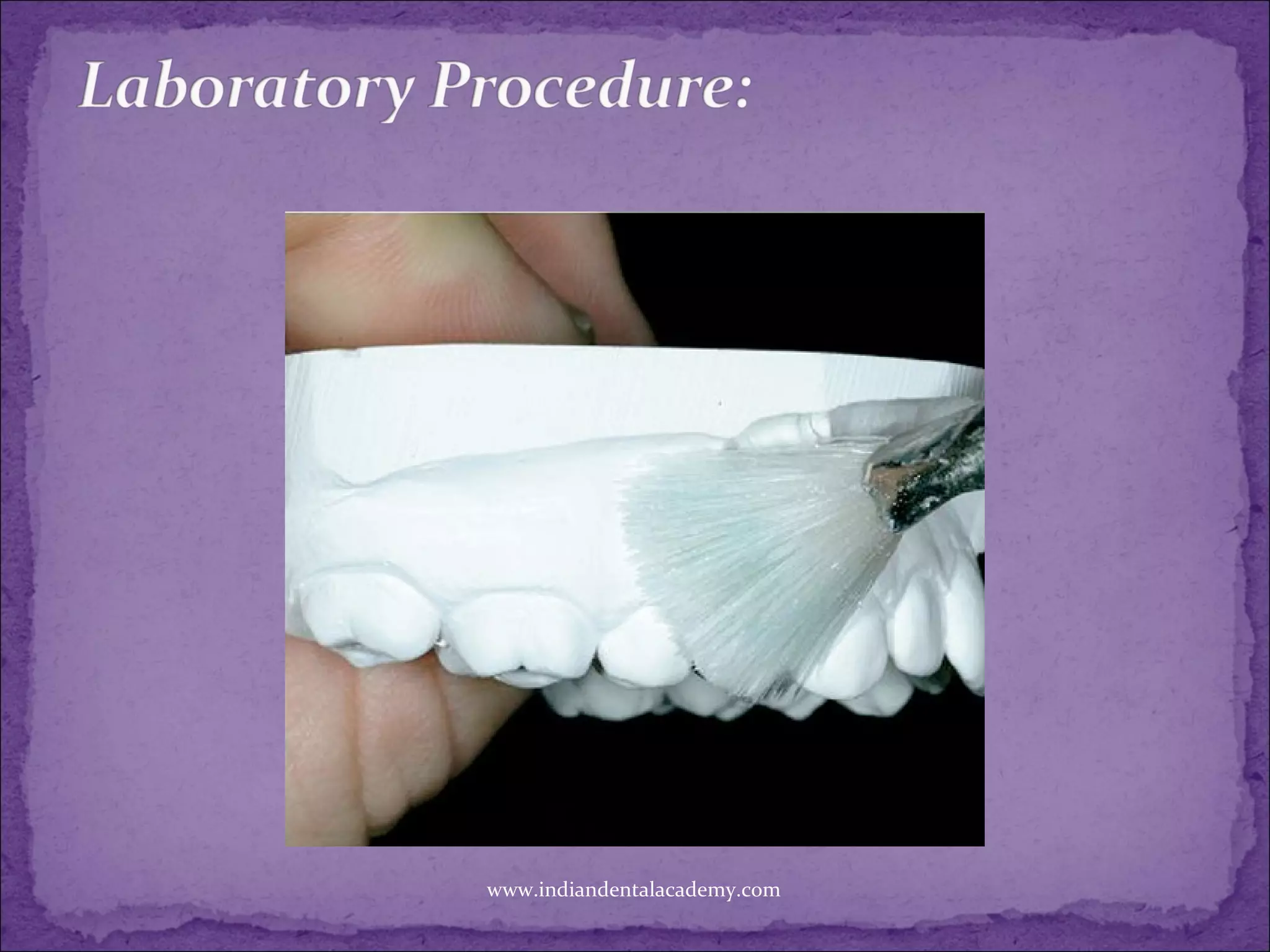
Nuva-Tach facing on the model
First we take impressions of the teeth and make two
sets of models.
Lab man then puts a separating medium on the stone
teeth of the work model.
 Next, cover almost the entire labial and buccal
surfaces of the teeth short of the contact points and
the gingiva with a layer of Nuva-Tach which forms a
backing for the attachments and a facing for the
teeth.
www.indiandentalacademy.com
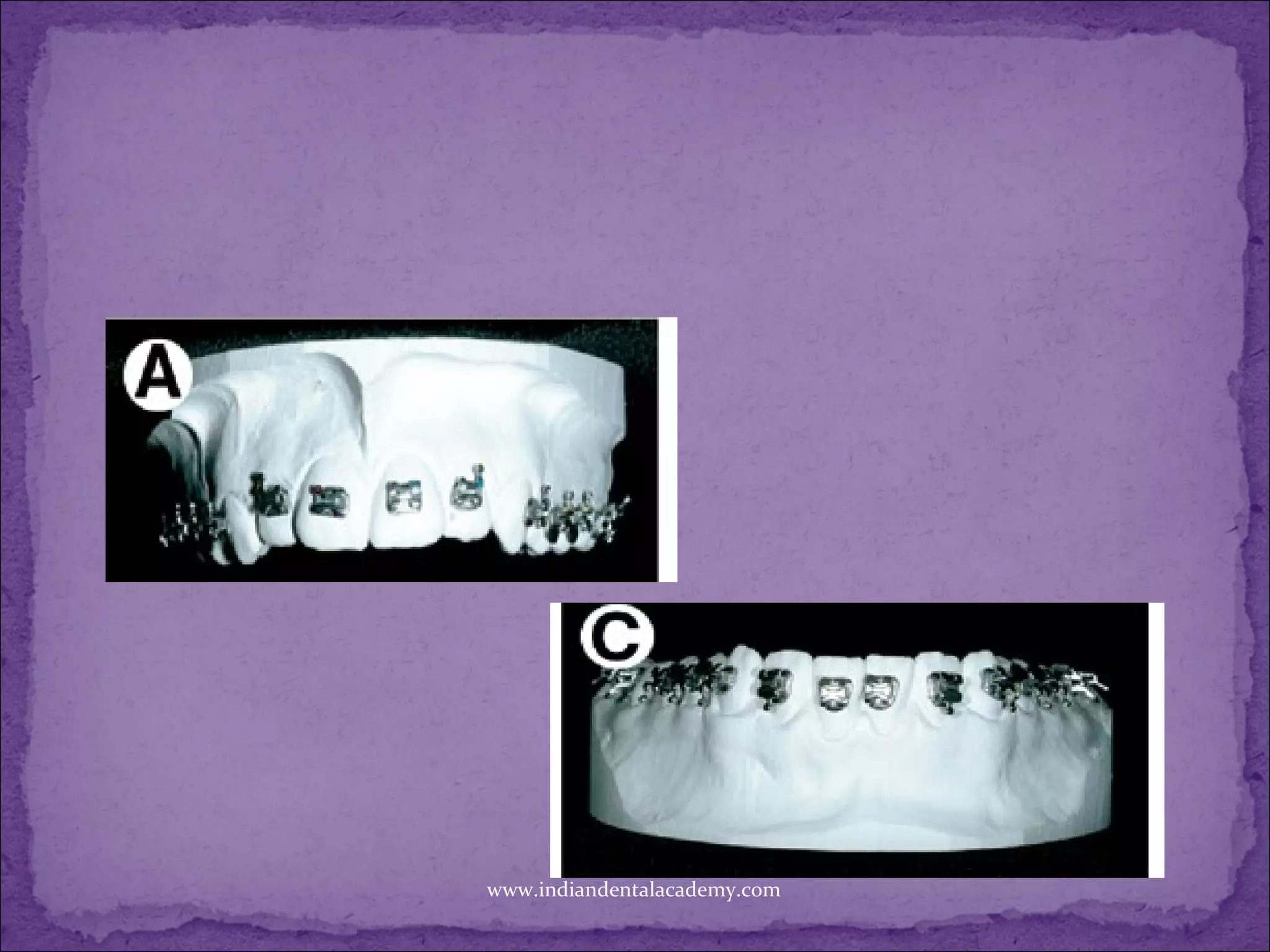
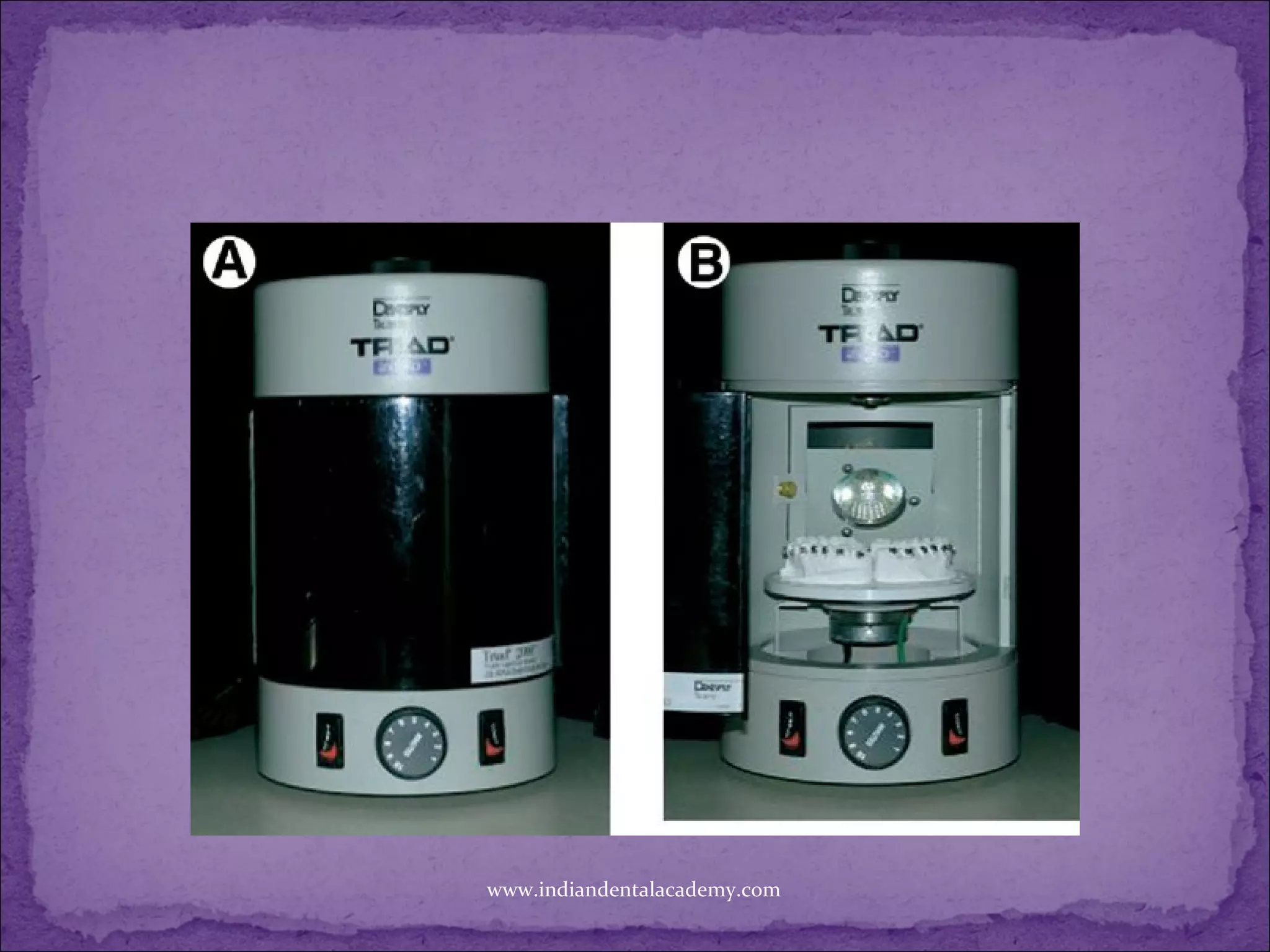
Placing the brackets on the model
After the Nuva-Tach has been shaped to the desired
backing or facing on the model teeth, brackets are placed
in their desired positions on each of the teeth, with their
flanges covered.
Curing the facings on the model
When all the attachments have been placed, the individual
teeth on the model are treated with the ultraviolet light to
cure the Nuva-Tach.
Once the Nuva-Tach on the model teeth has been
polymerized, a plastic wafer is vacuum-molded over the
teeth, facings and attachments. The material use is about
1/16" thick
www.indiandentalacademy.com
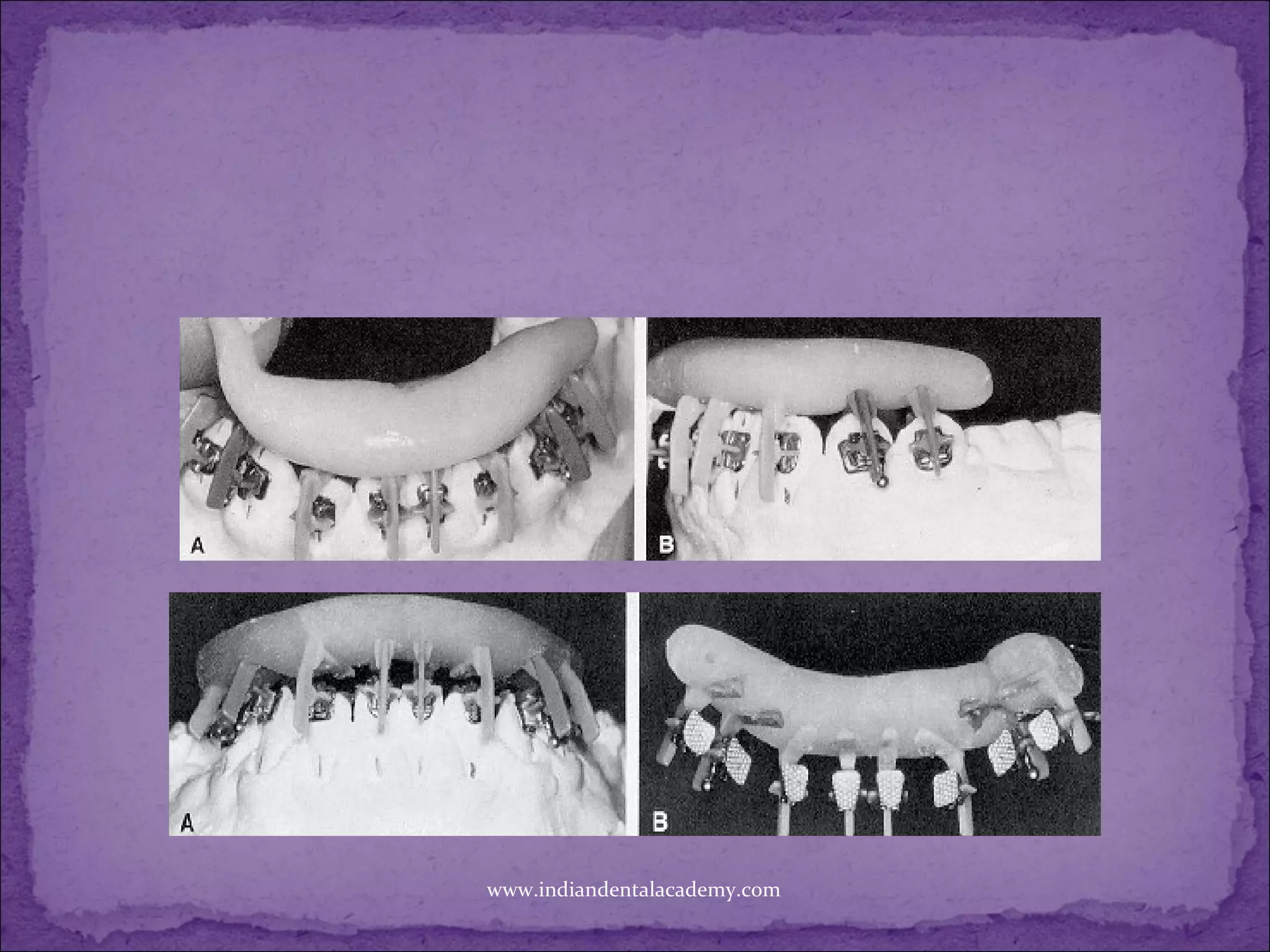
Vacuum-formed plastic tray
When the vacuum-formed plastic wafer is removed
from the work model, it takes the attachments and
the hardened Nuva-Tach facings with it.
The wafer is then trimmed.
Now we have a plastic tray ready to be placed in the
mouth
But first we have to prepare the teeth.
Tooth surface preparation
The first step in preparing the tooth surface is
pumicing followed by acid conditioning.
www.indiandentalacademy.com
Polymerizing the Nuva-Seal coating
The Nuva-Seal is then painted on the tooth surfaces and
polymerized with the ultraviolet light.
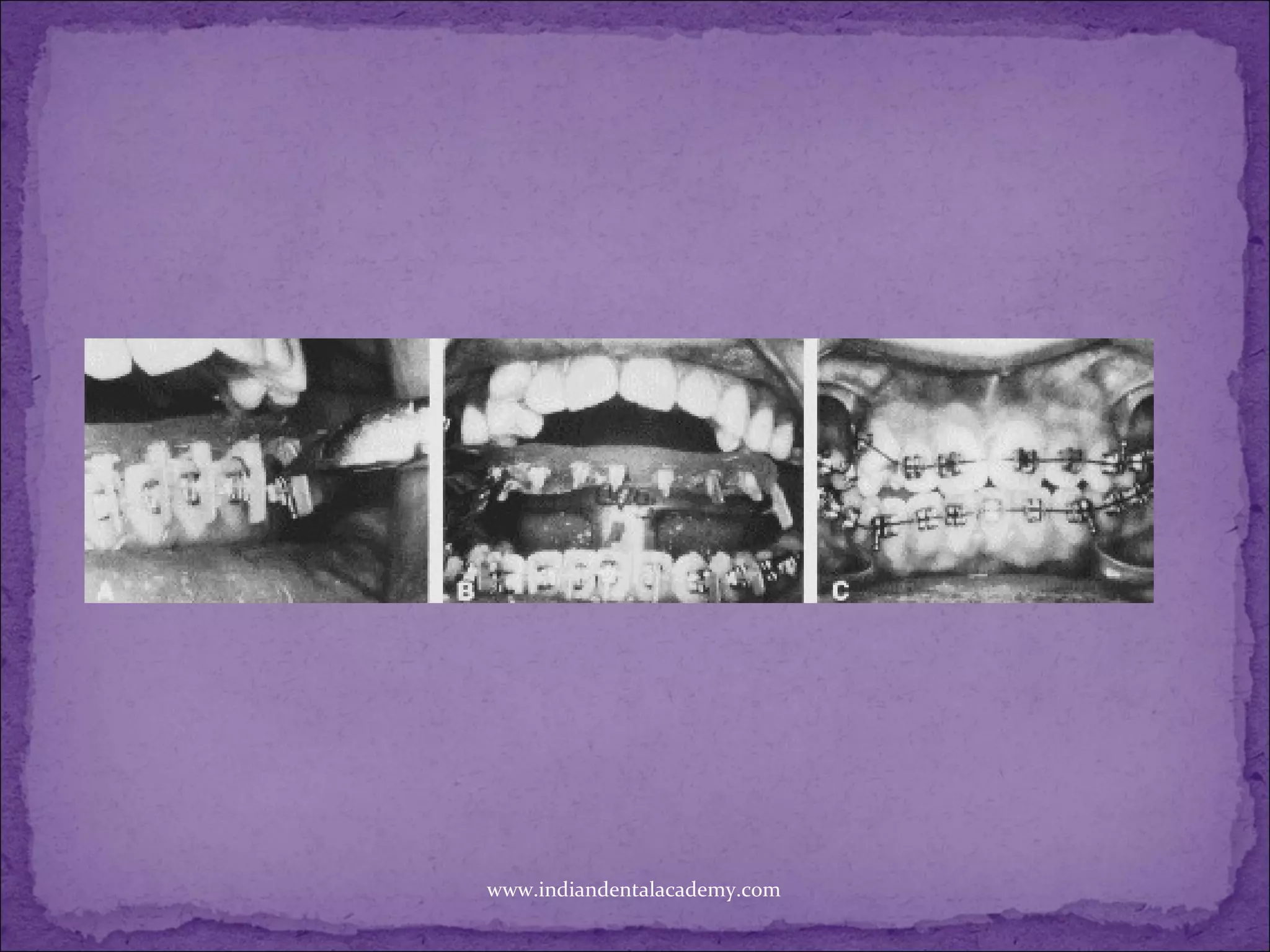
Seating the tray
With the thin layer of fresh Nuva-Tach applied to the
backings to be bonded, the tray is placed directly in the
mouth and forced onto the teeth, both sides at the same
time. However, generally bond only one side at a time.
the tray is seated completely, the brackets and facings are
exposed to the ultraviolet light for 90 seconds per tooth
through the tray.
Removing the tray
When the tray is removed, the bonded brackets remain on
the teeth and the unbonded ones remain in the tray. The
inside of the tray is now washed and dried
thoroughlyThen we bond the second side in the same
manner as the first
www.indiandentalacademy.com
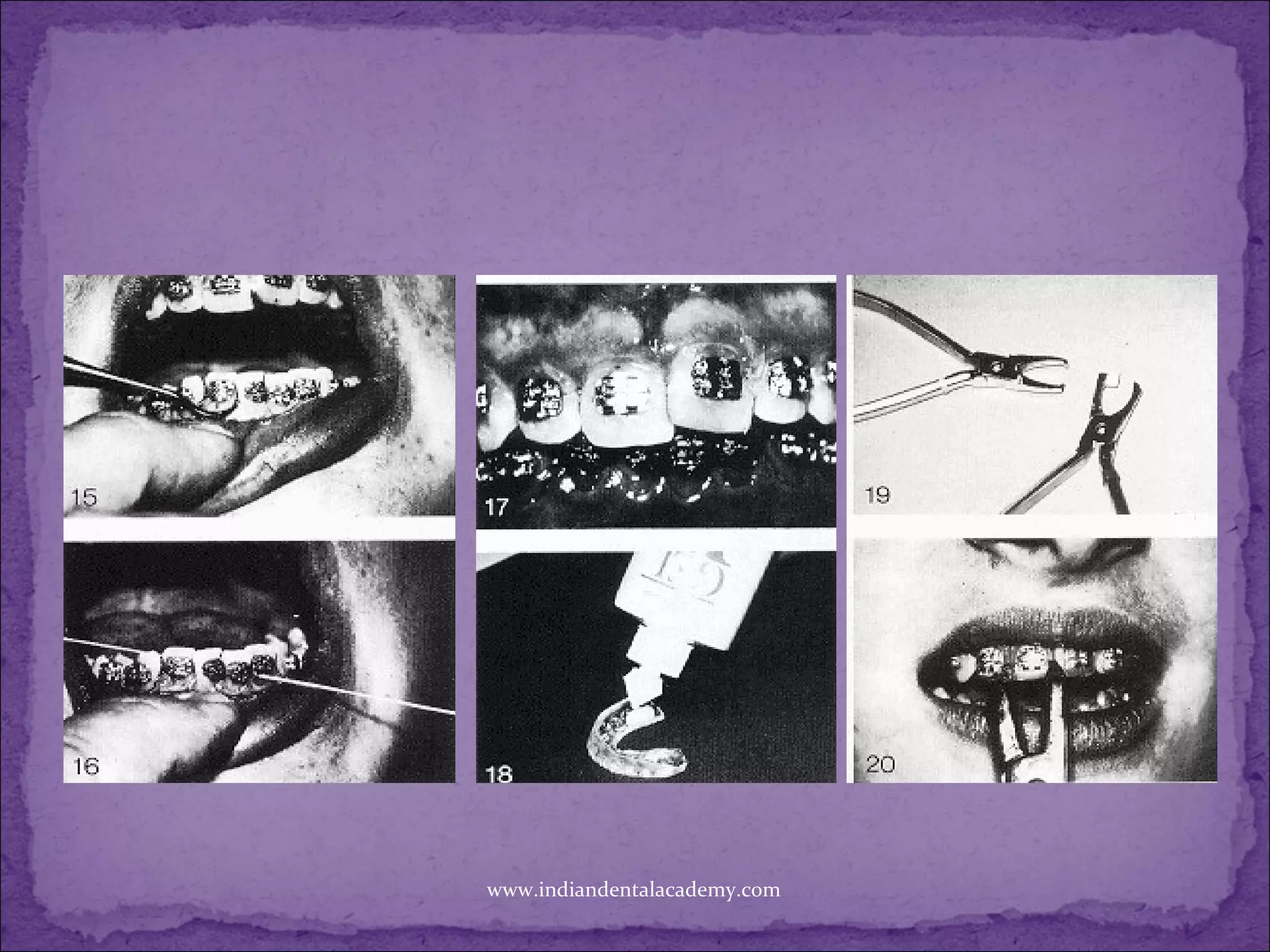
Auto-Tach, This new and important product
eliminates two steps of the previous indirect
technique.
Due to its fluid consistency and adequate working
time, Auto-Tach can be loaded into the Bracket Tray
without undue haste.
After the tray is inserted into the mouth, no
ultraviolet light is needed to set the material, since it
is a thermoset and self polymerizes rapidly in the
warm environs of the oral cavity. In short, the fewer
steps involved, the faster the technique
www.indiandentalacademy.com
A New Indirect Bonding Resin:
a new resin was required specifically for indirect bonding.
This resin was developed with the aid of 3M Unitek
(Sondhi Rapid Set, 3M Unitek).
The viscosity of the new resin was increased with the use
of a fine-particle-fumed silica filler (approximately 5%), so
that it would have the ability of filling any such voids
without compromising bond strength.
Second, because there is no need for increased working
time once the trays have been placed, the new resin was
developed with a quick-set time of 30 seconds.
www.indiandentalacademy.com
The latter significantly decreases the time needed
to hold the bonding tray in place during curing.
The resin is completely cured in 2 minutes, which
allows for rapid removal of the bonding tray This
new resin has been specifically designed for
indirect bonding and would not be useful for
direct bonding.
www.indiandentalacademy.com
Bond strengths and failure locations in direct and indirect
bonding of orthodontic brackets with foil mesh bonding
pads were compared in an in vitro study that used
extracted human premolars. The direct technique
comprised bonding the attachments directly to the
premolars with composite resin. The indirect technique
comprised bonding the attachments to die-stone models
of the teeth with composite resin, making silicone
positioners to transfer the attachments from the models to
the teeth, and bonding to the teeth with the use of two-
part unfilled resin. One part of the unfilled resin was
applied to the teeth and the other part to the composite
resin that was already bonded to the attachments. And
concluded that
www.indiandentalacademy.com
1. Comparison of bond strengths between in vitro direct and
indirect bonded attachments showed no significant
difference between the two groups.
2. On visual inspection, voids could be detected in 65% of
the indirect samples; unfilled voids yielded a significant
decrease in bond strength (P < 0.001).
3. Sealing voids with liquid resin produced bond strengths
comparable to direct bonds and void-free indirect bonds.
4. Although 72% of the indirect group failed predominately
at the enamel-resin interface (vs. 56% of the direct
sample), no significant decrease in bond strength resulted.
www.indiandentalacademy.com
An in vitro study was conducted to evaluate the
accuracy of bracket placement for direct and indirect
bonding techniques. Nineteen sets of duplicated Class
II malocclusion models were divided into three
groups:
(1) One set for ideal bracket placement,
(2) Nine sets for direct bonding on mannequins,
(3) Nine sets for indirect bonding. Both direct and
indirect bonding were performed on all teeth except
molars by nine faculty members from the Department
of Orthodontics, University of Pennsylvania.
www.indiandentalacademy.com
The position of each bonded bracket from these two
bonding groups was compared with that of the same
tooth from the ideal group and to each other in terms
of bracket height, mesiodistal position, and
angulation. And concluded:
1. Indirect bonding technique provides better bracket
placement with regard to bracket height than direct
bonding (P < .05). No statistically significant
difference was found between these two techniques
regarding angulation or mesiodistal position of
brackets.
2. Neither technique yielded ideal bracket placement.
(A better measuring device for bracket placement is
needed for both techniques.)
www.indiandentalacademy.com
John T. Kalange and Royce G. Thomas: Indirect
Bonding: A Comprehensive Review of the Literature;
Semin Orthod 2007;13:3-10.
Morton Cohen & Elliott Silverman: Completely
indirect bonded practice; JCO 1974 July:384-405
Morton Cohen & Elliott Silverman: THE TWENTY-
MINUTE FULL STRAPUP; JCO 1976 Oct: 764-768
Royce G. Thomas: Indirect Bonding, Simplicity in
Action; JCO 1979 Feb: 93-106
Myrberg & Warner: Indirect Bonding Technique:
JCO 1982 April: 269-272
www.indiandentalacademy.com
Robert P. Scholz: Indirect Bonding Revisited: JCO
1983 Aug: 529-536
Stephen & Robert: An Indirect Bonding Technique:
JCO 1990 Jan: 21-24
M. J.F. Read, A.I. Pearson: A Method for Light-
Cured Indirect Bonding: JCO 1998 Aug: 502-503
Anoop Sondhi: Efficient and effective indirect
bonding: AJO- DO 1999;115:352-9
Anoop Sondhi: Bonding in the New Millennium:
Reliable and Consistent Bracket Placement with
Indirect Bonding: World J Orthod 2001;2:106–114.
www.indiandentalacademy.com
Anoop Sondhi: Effective and Efficient Indirect Bonding:
The Sondhi Method: Semin Orthod 2007;13:43-57.
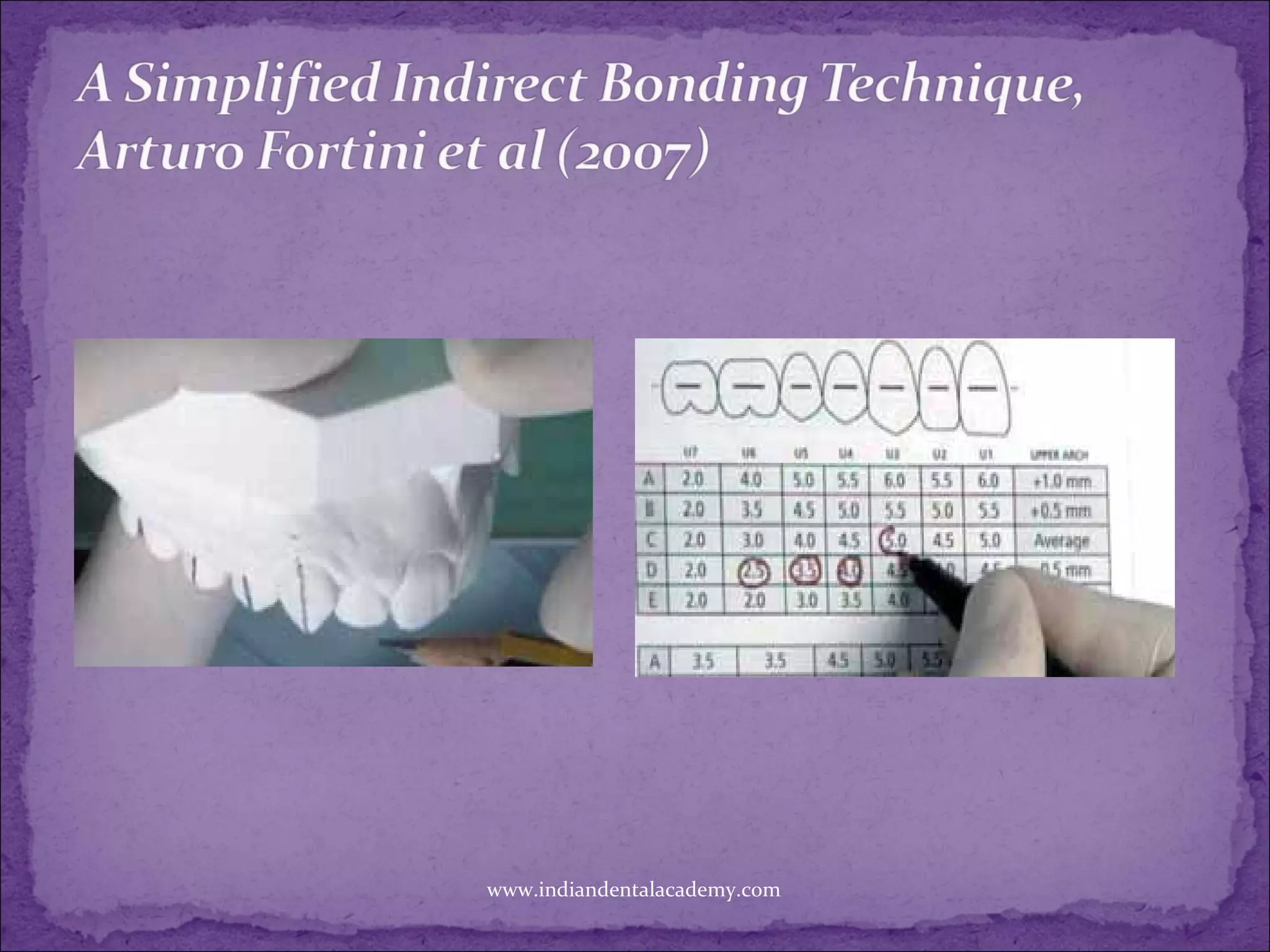
Arturo Fortini et al: A Simplified Indirect Bonding
Technique: JCO 2007 Nov: 680-683
Michael J. Aguirre: Indirect Bonding for Lingual Cases:
JCO 1984 Aug: 565-569
Richard A. Hocevar, Howard F. Vincent: Indirect versus
direct bonding: Bond strength and failure location: AJO –
DO 1988 Nov: 367-371
Bon Chan Koo et al: Comparison of the accuracy of
bracket placement between direct and indirect bonding
techniques: AJO - DO 1999;116:346-51
www.indiandentalacademy.com

Indirect bonding/prosthodontic courses

  • 1.
  • 2.
    Indirect bonding isa technique in which orthodontic brackets or other attachments are transferred from dental casts & bonded to the dentition using a transfer device. It was first described in detail as a concept in 1972 by Silverman & Cohen; some of the initial trials used a Softened sugar daddy candy as a means of attaching the brackets to the working models before transfer tray fabrication. Additionally, other has used water-soluble adhesives & even sticky wax to attach the brackets to the models. Silverman and Cohen further stated, “It should take no longer than twenty minutes to complete a full strap-up in the mouth in both arches, including second molars if desired. www.indiandentalacademy.com
  • 3.
    Modern techniques haveexpanded on this concept and have utilized precision bracket placement techniques. it becomes apparent that the indirect bonding fall into certain categories. In terms of the types of chemicals used to bond the brackets, this concept can be broken down into three distinct categories: chemically cured, light-cured, and thermally cured bases. www.indiandentalacademy.com
  • 4.
    The use oflight cured materials was mentioned as early as 1972 in the original Silverman and Cohen technique and elaborated on by them in 1974. In 1974, Newman discussed the use of acrylic-base adhesives to direct & in-direct bond plastic & mesh base brackets. Thomas in his original thesis in 1979, discussed a modification of the Silverman & Cohen technique & was first to described the construction of these custom composite bases. Fried & Newman discussed the use of a no-mix adhesive in indirect bonding in 1983. In 1984, the concept of a rapidly setting curing system took place when Aguirre experimented with varying setting times by changing catalyse/base composites. www.indiandentalacademy.com
  • 5.
    In 1990, Read& O’Brien used a visible light-cured adhesive in indirect bonding on foil mesh based brackets. Hamula discussed the advantages of using light-cured adhesives for indirect bonding in 1991. Read and Pearson, in 1998, were the first to discuss the use of a light-cured, lightly filled sealant to attach brackets with a custom resin base to the teeth via an indirect method. In 2001, White used a self-etching primer and a quick cure composite adhesive in indirect bonding.  A filled flowable composite developed for use in restorative dentistry for air abrasion, tunnel preparations, shallow Class V cavities, and as a fissure sealant, was first incorporated into an indirect bonding technique by Miles in 2002. www.indiandentalacademy.com
  • 6.
    1. Permits moreaccurate placement of brackets. 2. Decreases chair time of appliance placement from 2 to 3 hours to 25 to 45 minutes. 3. Less patient discomfort, since separation is no longer necessary. 4. Interproximal caries can be detected more readily and restored if necessary with no bands in the way. 5. Reduces risk of caries and decalcification as is possible under bands, especially loose bands. www.indiandentalacademy.com
  • 7.
    6. Esthetically morepleasing. 7. Improved tissue health during treatment 8. Diagnostic considerations. (Extraction or nonextraction?) 9. "Sealant" placed on labial and buccal surfaces "preventive" in nature. 10. Occlusion— "What you see is what you get." Minimal settling in bonded treatment. 11. Partly erupted teeth can quickly be brought under control. No need to wait for full eruption to cement band. www.indiandentalacademy.com
  • 8.
    12. No bandspace to close upon completion. 13. Immediate retainers may routinely be made. 14. Reduces costly band inventory. 15. New techniques or appliances may be tried without costly inventory. 16. Overall better patient acceptance related to esthetics and ease of placement. www.indiandentalacademy.com
  • 9.
    1. Teeth withcrowns, large buccal restorations or acrylic restorations will not bond. 2. Sometimes difficult on very short clinical crowns. 3. Correct technique must be followed closely. 4. Those fearful of change will likely be reluctant to try the technique www.indiandentalacademy.com
  • 10.
    Nuva-Tach facing onthe model First we take impressions of the teeth and make two sets of models. Lab man then puts a separating medium on the stone teeth of the work model.  Next, cover almost the entire labial and buccal surfaces of the teeth short of the contact points and the gingiva with a layer of Nuva-Tach which forms a backing for the attachments and a facing for the teeth. www.indiandentalacademy.com
  • 11.
    Placing the bracketson the model After the Nuva-Tach has been shaped to the desired backing or facing on the model teeth, brackets are placed in their desired positions on each of the teeth, with their flanges covered. Curing the facings on the model When all the attachments have been placed, the individual teeth on the model are treated with the ultraviolet light to cure the Nuva-Tach. Once the Nuva-Tach on the model teeth has been polymerized, a plastic wafer is vacuum-molded over the teeth, facings and attachments. The material use is about 1/16" thick www.indiandentalacademy.com
  • 12.
    Vacuum-formed plastic tray Whenthe vacuum-formed plastic wafer is removed from the work model, it takes the attachments and the hardened Nuva-Tach facings with it. The wafer is then trimmed. Now we have a plastic tray ready to be placed in the mouth But first we have to prepare the teeth. Tooth surface preparation The first step in preparing the tooth surface is pumicing followed by acid conditioning. www.indiandentalacademy.com
  • 13.
    Polymerizing the Nuva-Sealcoating The Nuva-Seal is then painted on the tooth surfaces and polymerized with the ultraviolet light. Seating the tray With the thin layer of fresh Nuva-Tach applied to the backings to be bonded, the tray is placed directly in the mouth and forced onto the teeth, both sides at the same time. However, generally bond only one side at a time. the tray is seated completely, the brackets and facings are exposed to the ultraviolet light for 90 seconds per tooth through the tray. Removing the tray When the tray is removed, the bonded brackets remain on the teeth and the unbonded ones remain in the tray. The inside of the tray is now washed and dried thoroughlyThen we bond the second side in the same manner as the first www.indiandentalacademy.com
  • 14.
  • 15.
    Auto-Tach, This newand important product eliminates two steps of the previous indirect technique. Due to its fluid consistency and adequate working time, Auto-Tach can be loaded into the Bracket Tray without undue haste. After the tray is inserted into the mouth, no ultraviolet light is needed to set the material, since it is a thermoset and self polymerizes rapidly in the warm environs of the oral cavity. In short, the fewer steps involved, the faster the technique www.indiandentalacademy.com
  • 16.
  • 17.
  • 18.
  • 19.
  • 20.
  • 21.
  • 22.
  • 23.
  • 24.
  • 25.
  • 26.
  • 27.
  • 28.
  • 29.
  • 30.
  • 31.
  • 32.
  • 33.
  • 34.
  • 35.
  • 36.
  • 37.
  • 38.
    A New IndirectBonding Resin: a new resin was required specifically for indirect bonding. This resin was developed with the aid of 3M Unitek (Sondhi Rapid Set, 3M Unitek). The viscosity of the new resin was increased with the use of a fine-particle-fumed silica filler (approximately 5%), so that it would have the ability of filling any such voids without compromising bond strength. Second, because there is no need for increased working time once the trays have been placed, the new resin was developed with a quick-set time of 30 seconds. www.indiandentalacademy.com
  • 39.
    The latter significantlydecreases the time needed to hold the bonding tray in place during curing. The resin is completely cured in 2 minutes, which allows for rapid removal of the bonding tray This new resin has been specifically designed for indirect bonding and would not be useful for direct bonding. www.indiandentalacademy.com
  • 40.
  • 41.
  • 42.
  • 43.
  • 44.
  • 45.
  • 46.
  • 47.
  • 48.
  • 49.
  • 50.
  • 51.
  • 52.
  • 53.
  • 54.
  • 55.
    Bond strengths andfailure locations in direct and indirect bonding of orthodontic brackets with foil mesh bonding pads were compared in an in vitro study that used extracted human premolars. The direct technique comprised bonding the attachments directly to the premolars with composite resin. The indirect technique comprised bonding the attachments to die-stone models of the teeth with composite resin, making silicone positioners to transfer the attachments from the models to the teeth, and bonding to the teeth with the use of two- part unfilled resin. One part of the unfilled resin was applied to the teeth and the other part to the composite resin that was already bonded to the attachments. And concluded that www.indiandentalacademy.com
  • 56.
    1. Comparison ofbond strengths between in vitro direct and indirect bonded attachments showed no significant difference between the two groups. 2. On visual inspection, voids could be detected in 65% of the indirect samples; unfilled voids yielded a significant decrease in bond strength (P < 0.001). 3. Sealing voids with liquid resin produced bond strengths comparable to direct bonds and void-free indirect bonds. 4. Although 72% of the indirect group failed predominately at the enamel-resin interface (vs. 56% of the direct sample), no significant decrease in bond strength resulted. www.indiandentalacademy.com
  • 57.
    An in vitrostudy was conducted to evaluate the accuracy of bracket placement for direct and indirect bonding techniques. Nineteen sets of duplicated Class II malocclusion models were divided into three groups: (1) One set for ideal bracket placement, (2) Nine sets for direct bonding on mannequins, (3) Nine sets for indirect bonding. Both direct and indirect bonding were performed on all teeth except molars by nine faculty members from the Department of Orthodontics, University of Pennsylvania. www.indiandentalacademy.com
  • 58.
    The position ofeach bonded bracket from these two bonding groups was compared with that of the same tooth from the ideal group and to each other in terms of bracket height, mesiodistal position, and angulation. And concluded: 1. Indirect bonding technique provides better bracket placement with regard to bracket height than direct bonding (P < .05). No statistically significant difference was found between these two techniques regarding angulation or mesiodistal position of brackets. 2. Neither technique yielded ideal bracket placement. (A better measuring device for bracket placement is needed for both techniques.) www.indiandentalacademy.com
  • 59.
    John T. Kalangeand Royce G. Thomas: Indirect Bonding: A Comprehensive Review of the Literature; Semin Orthod 2007;13:3-10. Morton Cohen & Elliott Silverman: Completely indirect bonded practice; JCO 1974 July:384-405 Morton Cohen & Elliott Silverman: THE TWENTY- MINUTE FULL STRAPUP; JCO 1976 Oct: 764-768 Royce G. Thomas: Indirect Bonding, Simplicity in Action; JCO 1979 Feb: 93-106 Myrberg & Warner: Indirect Bonding Technique: JCO 1982 April: 269-272 www.indiandentalacademy.com
  • 60.
    Robert P. Scholz:Indirect Bonding Revisited: JCO 1983 Aug: 529-536 Stephen & Robert: An Indirect Bonding Technique: JCO 1990 Jan: 21-24 M. J.F. Read, A.I. Pearson: A Method for Light- Cured Indirect Bonding: JCO 1998 Aug: 502-503 Anoop Sondhi: Efficient and effective indirect bonding: AJO- DO 1999;115:352-9 Anoop Sondhi: Bonding in the New Millennium: Reliable and Consistent Bracket Placement with Indirect Bonding: World J Orthod 2001;2:106–114. www.indiandentalacademy.com
  • 61.
    Anoop Sondhi: Effectiveand Efficient Indirect Bonding: The Sondhi Method: Semin Orthod 2007;13:43-57. Arturo Fortini et al: A Simplified Indirect Bonding Technique: JCO 2007 Nov: 680-683 Michael J. Aguirre: Indirect Bonding for Lingual Cases: JCO 1984 Aug: 565-569 Richard A. Hocevar, Howard F. Vincent: Indirect versus direct bonding: Bond strength and failure location: AJO – DO 1988 Nov: 367-371 Bon Chan Koo et al: Comparison of the accuracy of bracket placement between direct and indirect bonding techniques: AJO - DO 1999;116:346-51 www.indiandentalacademy.com
  • 62.