1790-1838






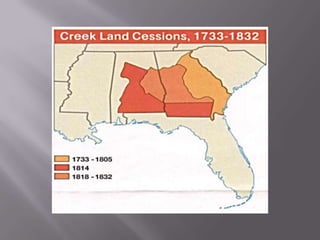
After the American Revolution there were two
main tribes located in the state of Georgia.
The two main tribes were the Creek and
Cherokee Indians.
As settlers began to move west into newly
acquired land from the American Revolution
conflict arose between the Native Americans
and the settlers.
1821










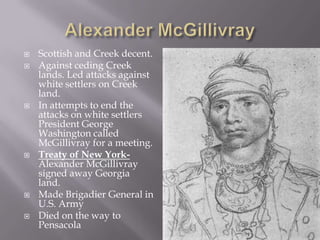
Scottish and Creek decent.
Against ceding Creek
lands. Led attacks against
white settlers on Creek
land.
In attempts to end the
attacks on white settlers
President George
Washington called
McGillivray for a meeting.
Treaty of New YorkAlexander McGillivray
signed away Georgia
land.
Made Brigadier General in
U.S. Army
Died on the way to
Pensacola








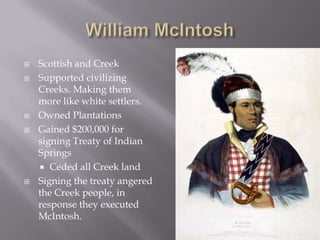
Scottish and Creek
Supported civilizing
Creeks. Making them
more like white settlers.
Owned Plantations
Gained $200,000 for
signing Treaty of Indian
Springs
 Ceded all Creek land
Signing the treaty angered
the Creek people, in
response they executed
McIntosh.
1790-1838








Of all the Native American tribes the Cherokee
tribe adapted most to white culture.
The Cherokee tribe lived in houses, farmed,
owned property, and some even owned slaves.
The Cherokee even had their own capital city
called New Echota.
Some of the more famous Cherokees were
Sequoyah and John Ross.






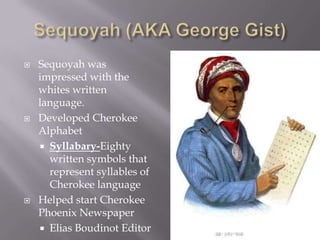
Sequoyah was
impressed with the
whites written
language.
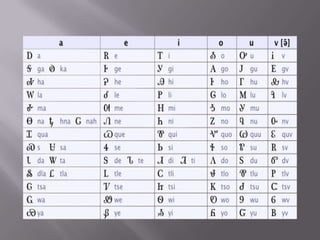
Developed Cherokee
Alphabet
 Syllabary-Eighty
written symbols that
represent syllables of
Cherokee language
Helped start Cherokee
Phoenix Newspaper
 Elias Boudinot Editor






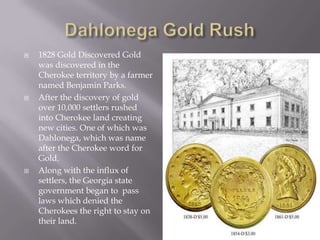
1828 Gold Discovered Gold
was discovered in the
Cherokee territory by a farmer
named Benjamin Parks.
After the discovery of gold
over 10,000 settlers rushed
into Cherokee land creating
new cities. One of which was
Dahlonega, which was name
after the Cherokee word for
Gold.
Along with the influx of
settlers, the Georgia state
government began to pass
laws which denied the
Cherokees the right to stay on
their land.




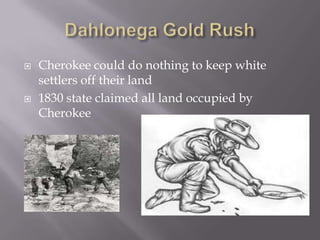
Cherokee could do nothing to keep white
settlers off their land
1830 state claimed all land occupied by
Cherokee











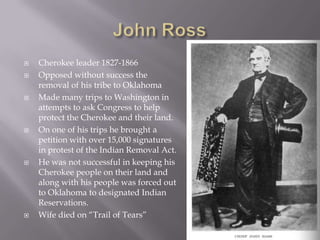
Cherokee leader 1827-1866
Opposed without success the
removal of his tribe to Oklahoma
Made many trips to Washington in
attempts to ask Congress to help
protect the Cherokee and their land.
On one of his trips he brought a
petition with over 15,000 signatures
in protest of the Indian Removal Act.
He was not successful in keeping his
Cherokee people on their land and
along with his people was forced out
to Oklahoma to designated Indian
Reservations.
Wife died on “Trail of Tears”








Some whites wanted to come to the aid of the Cherokee tribe, but
in an effort to keep whites from helping the Native Amerians
Georgia passed a law stating that whites could not live in
Cherokee land without swearing an oath of allegiance.
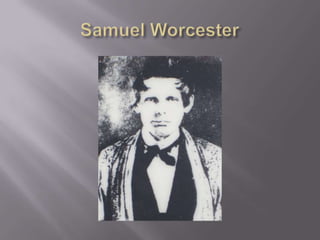
Reverand Samuel Worchester and several missionaries refused to
leave Cherokee land after Georgia Governor George Gilmar made
it illegal for white citizens to live on Cherokee land.
Goveror Gilmar stated that in order for white citizens to live on
Cherokee land they must pledge allegiance to the state and receive
a permit from the Governor.
For not pledging allegiance and leaving Cherokee land
Worchester was arrested and imprisoned. He filed an appeal to
the US Supreme court, specifically Judge John Marshall in
attempts to get out of prison.




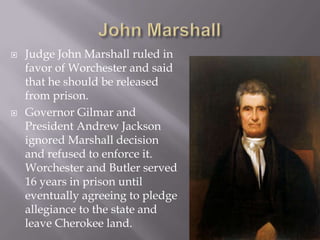
Judge John Marshall ruled in
favor of Worchester and said
that he should be released
from prison.
Governor Gilmar and
President Andrew Jackson
ignored Marshall decision
and refused to enforce it.
Worchester and Butler served
16 years in prison until
eventually agreeing to pledge
allegiance to the state and
leave Cherokee land.
1829-1837




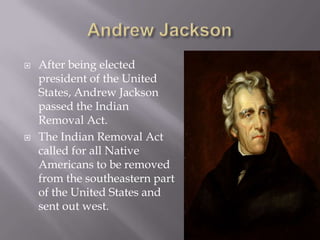
After being elected
president of the United
States, Andrew Jackson
passed the Indian
Removal Act.
The Indian Removal Act
called for all Native
Americans to be removed
from the southeastern part
of the United States and
sent out west.
1838










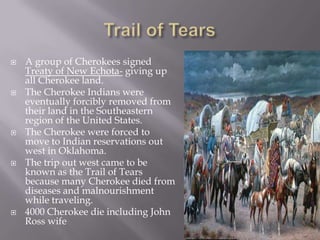
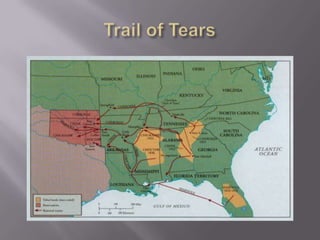
A group of Cherokees signed
Treaty of New Echota- giving up
all Cherokee land.
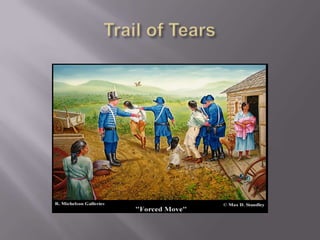
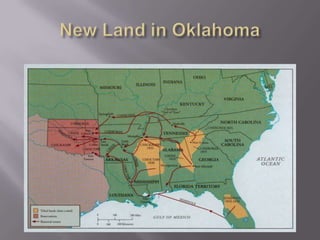
The Cherokee Indians were
eventually forcibly removed from
their land in the Southeastern
region of the United States.
The Cherokee were forced to
move to Indian reservations out
west in Oklahoma.
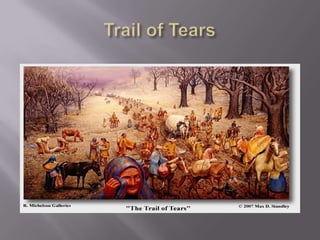
The trip out west came to be
known as the Trail of Tears
because many Cherokee died from
diseases and malnourishment
while traveling.
4000 Cherokee die including John
Ross wife
Indian Removal Power Point

Indian Removal Power Point

  • 1.
  • 2.
       After the AmericanRevolution there were two main tribes located in the state of Georgia. The two main tribes were the Creek and Cherokee Indians. As settlers began to move west into newly acquired land from the American Revolution conflict arose between the Native Americans and the settlers.
  • 3.
  • 4.
          Scottish and Creekdecent. Against ceding Creek lands. Led attacks against white settlers on Creek land. In attempts to end the attacks on white settlers President George Washington called McGillivray for a meeting. Treaty of New YorkAlexander McGillivray signed away Georgia land. Made Brigadier General in U.S. Army Died on the way to Pensacola
  • 5.
         Scottish and Creek Supportedcivilizing Creeks. Making them more like white settlers. Owned Plantations Gained $200,000 for signing Treaty of Indian Springs  Ceded all Creek land Signing the treaty angered the Creek people, in response they executed McIntosh.
  • 6.
  • 7.
        Of all theNative American tribes the Cherokee tribe adapted most to white culture. The Cherokee tribe lived in houses, farmed, owned property, and some even owned slaves. The Cherokee even had their own capital city called New Echota. Some of the more famous Cherokees were Sequoyah and John Ross.
  • 8.
       Sequoyah was impressed withthe whites written language. Developed Cherokee Alphabet  Syllabary-Eighty written symbols that represent syllables of Cherokee language Helped start Cherokee Phoenix Newspaper  Elias Boudinot Editor
  • 10.
       1828 Gold DiscoveredGold was discovered in the Cherokee territory by a farmer named Benjamin Parks. After the discovery of gold over 10,000 settlers rushed into Cherokee land creating new cities. One of which was Dahlonega, which was name after the Cherokee word for Gold. Along with the influx of settlers, the Georgia state government began to pass laws which denied the Cherokees the right to stay on their land.
  • 11.
      Cherokee could donothing to keep white settlers off their land 1830 state claimed all land occupied by Cherokee
  • 12.
          Cherokee leader 1827-1866 Opposedwithout success the removal of his tribe to Oklahoma Made many trips to Washington in attempts to ask Congress to help protect the Cherokee and their land. On one of his trips he brought a petition with over 15,000 signatures in protest of the Indian Removal Act. He was not successful in keeping his Cherokee people on their land and along with his people was forced out to Oklahoma to designated Indian Reservations. Wife died on “Trail of Tears”
  • 13.
        Some whites wantedto come to the aid of the Cherokee tribe, but in an effort to keep whites from helping the Native Amerians Georgia passed a law stating that whites could not live in Cherokee land without swearing an oath of allegiance. Reverand Samuel Worchester and several missionaries refused to leave Cherokee land after Georgia Governor George Gilmar made it illegal for white citizens to live on Cherokee land. Goveror Gilmar stated that in order for white citizens to live on Cherokee land they must pledge allegiance to the state and receive a permit from the Governor. For not pledging allegiance and leaving Cherokee land Worchester was arrested and imprisoned. He filed an appeal to the US Supreme court, specifically Judge John Marshall in attempts to get out of prison.
  • 15.
      Judge John Marshallruled in favor of Worchester and said that he should be released from prison. Governor Gilmar and President Andrew Jackson ignored Marshall decision and refused to enforce it. Worchester and Butler served 16 years in prison until eventually agreeing to pledge allegiance to the state and leave Cherokee land.
  • 16.
  • 17.
      After being elected presidentof the United States, Andrew Jackson passed the Indian Removal Act. The Indian Removal Act called for all Native Americans to be removed from the southeastern part of the United States and sent out west.
  • 18.
  • 19.
         A group ofCherokees signed Treaty of New Echota- giving up all Cherokee land. The Cherokee Indians were eventually forcibly removed from their land in the Southeastern region of the United States. The Cherokee were forced to move to Indian reservations out west in Oklahoma. The trip out west came to be known as the Trail of Tears because many Cherokee died from diseases and malnourishment while traveling. 4000 Cherokee die including John Ross wife