- 1 / 19
- 2 / 19

- 3 / 19
- 4 / 19
- 5 / 19
- 6 / 19
- 7 / 19
- 8 / 19

- 9 / 19

- 10 / 19

- 11 / 19
- 12 / 19
- 13 / 19
- 14 / 19
- 15 / 19
- 16 / 19
 Most read
- 17 / 19
 Most read
- 18 / 19
- 19 / 19
 Most read

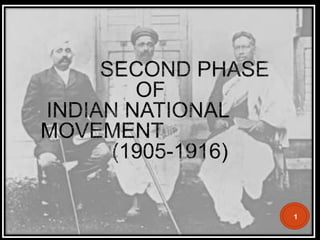
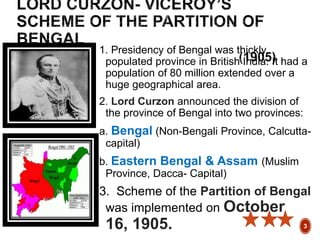
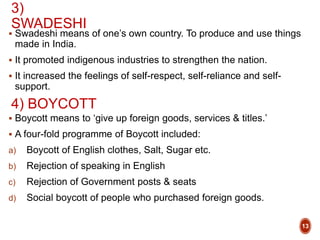
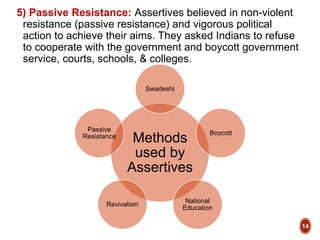
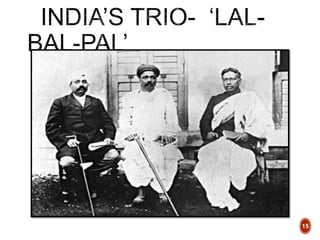
The document outlines the partition of Bengal in 1905, noting the British government's justification for it as administrative necessity while highlighting nationalist perspectives that viewed it as an attempt to weaken Indian nationalism. It discusses the rise of assertive nationalists, including figures like Lala Lajpat Rai, Bal Gangadhar Tilak, and Bipin Chandra Pal, who used methods such as swadeshi, boycott, and passive resistance to promote self-governance and solidarity among Indians. The Surat split of 1907 is noted as a significant division within the Indian National Congress, exacerbating tensions between early and assertive nationalists, ultimately impacting the national movement.


![HISTORYProjectOutline class 10 of icse board education]](https://cdn.slidesharecdn.com/ss_thumbnails/historyprojectoutline10-240727055256-780bf30f-thumbnail.jpg?width=640&height=640&fit=bounds)


