INDIAN FINANCIAL
SYSTEM
Introduction
Financial System is a set of institutional arrangements through which
financial surpluses in the economy are mobilised from surplus units and
transferred to deficit spenders.
The institutional arrangements include all conditions and mechanisms
governing the production, distribution, exchange and holding of financial
assets or instruments.
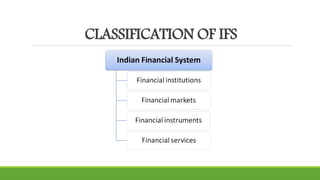
CLASSIFICATION OF IFS
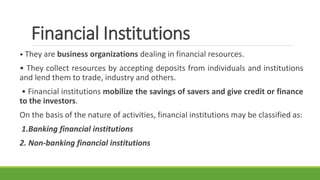
Financial Institutions
• They are business organizations dealing in financial resources.
• They collect resources by accepting deposits from individuals and institutions
and lend them to trade, industry and others.
• Financial institutions mobilize the savings of savers and give credit or finance
to the investors.
On the basis of the nature of activities, financial institutions may be classified as:
1.Banking financial institutions
2. Non-banking financial institutions
Financial markets
They are the centres or arrangements that provide facilities for
buying and selling of financial claims and services.
• Financial markets exist wherever financial transactions take place.
Eg- Derivative market and capital market.
Financial Instruments and Services
They are used for raising resources for corporate activities
That are used for raising capital through the capital market are known as ‘capital
market instruments’.
Financial Services - The development of a matured financial system in the
country, especially after the early nineties, led to the emergence of a new sector.
Its objective is to intermediate and facilitate financial transactions of
individuals and institutional investors.
Features
It plays a vital role in economic development of country
It encourages both savings an investment
It links savers and investors
It helps in Capital formation
It helps in allocation of Risk
It aids in Financial deepening and broadening
Indian financial system

Indian financial system

  • 1.
  • 2.
    Introduction Financial System isa set of institutional arrangements through which financial surpluses in the economy are mobilised from surplus units and transferred to deficit spenders. The institutional arrangements include all conditions and mechanisms governing the production, distribution, exchange and holding of financial assets or instruments.
  • 3.
  • 4.
    Financial Institutions • Theyare business organizations dealing in financial resources. • They collect resources by accepting deposits from individuals and institutions and lend them to trade, industry and others. • Financial institutions mobilize the savings of savers and give credit or finance to the investors. On the basis of the nature of activities, financial institutions may be classified as: 1.Banking financial institutions 2. Non-banking financial institutions
  • 5.
    Financial markets They arethe centres or arrangements that provide facilities for buying and selling of financial claims and services. • Financial markets exist wherever financial transactions take place. Eg- Derivative market and capital market.
  • 6.
    Financial Instruments andServices They are used for raising resources for corporate activities That are used for raising capital through the capital market are known as ‘capital market instruments’. Financial Services - The development of a matured financial system in the country, especially after the early nineties, led to the emergence of a new sector. Its objective is to intermediate and facilitate financial transactions of individuals and institutional investors.
  • 7.
    Features It plays avital role in economic development of country It encourages both savings an investment It links savers and investors It helps in Capital formation It helps in allocation of Risk It aids in Financial deepening and broadening