INDEXING Of
LARGE BIOMETRIC
DATABASE
Presented by: Chandni Sharma Sophia Girls college(Autonomous) Ajmer.
M.Sc.(CS)- Previous Sem IV www.sophiacollegeajmer.in
Presentation On
CONTENTS
• What Is Biometric ?
• Operation and Stages
• Generic Biometric
• Types of Biometric
• Performance Measures
• Challenges faced by Biometric Systems
• Clustering Methods
• Tree Data Structures and Indexing
• Conclusion
What is Biometric ?“Biometrics” means “life measurement” but the term is usually
associated with the use of unique physiological characteristics
to identify an individual.
Biometrics utilize “something you are” to
authenticate identification .
This might include :
1. Fingerprints
2. Retina pattern
3. Iris
4. Hand geometry
5. Voice password or signature dynamics.
Biometric operation
A biometric system has two modes of operation
1. Verification
A one to one comparison of a captured biometric with a
stored template to verify that the individual is the one
who she claims to be.
2. Identification
A one to many comparison of the captured biometric
against a biometric database in an attempt to identify
an unknown individual.
stages
The method consists of mainly three stages:
1. Data Acquisition
Data acquisition is the process of sampling signals that measure
real world physical conditions and converting the resulting
samples into digital numeric values that can be manipulated by
a computer.
2. Feature Extraction
Feature extraction is a dimensionality reduction process,
where an initial set of raw variables is reduced to more
manageable groups (features) for processing, while still
accurately and completely describing the original data
set.
continue ...
The method consists of mainly three stages:
3. Matching
Biometric matching refers to the process of the degree of
match (usually in the form of a match score) between two
biometric signatures, one usually collected at the biometric
enrollment stage and the other collected at the biometric
verification or identification stage.
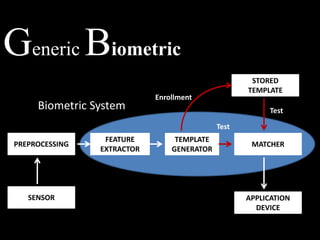
Generic Biometric
A biometric system is a pattern recognition system that
works in the following way: acquires biometric data from
an individual, extracts a feature set from the acquired
data, and compares this feature set against the template
set in the database.
Generic Biometric
PREPROCESSING
SENSOR
FEATURE
EXTRACTOR
TEMPLATE
GENERATOR
STORED
TEMPLATE
MATCHER
APPLICATION
DEVICE
TestBiometric System
Enrollment
Test
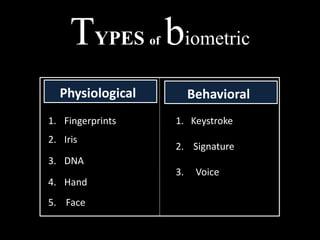
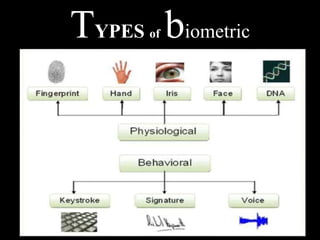
Physiological Behavioral
1. Fingerprints
2. Iris
3. DNA
4. Hand
5. Face
1. Keystroke
2. Signature
3. Voice
TYPES of biometric
TYPES of biometric
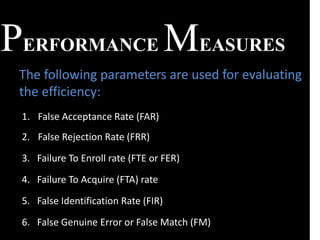
PERFORMANCE MEASURES
1. False Acceptance Rate (FAR)
2. False Rejection Rate (FRR)
3. Failure To Enroll rate (FTE or FER)
4. Failure To Acquire (FTA) rate
5. False Identification Rate (FIR)
6. False Genuine Error or False Match (FM)
The following parameters are used for evaluating
the efficiency:
Challenges
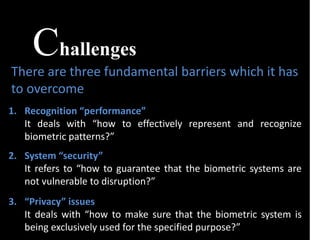
There are three fundamental barriers which it has
to overcome
1. Recognition “performance”
It deals with “how to effectively represent and recognize
biometric patterns?”
2. System “security”
It refers to “how to guarantee that the biometric systems are
not vulnerable to disruption?”
3. “Privacy” issues
It deals with “how to make sure that the biometric system is
being exclusively used for the specified purpose?”
Clustering METHODS
Clustering involves arranging data points in such a way that the
items sharing similar characteristics are grouped together.
It include two methods:
1. Fuzzy C means
2. K means
Fuzzy C Means
Fuzzy C Means (FCM) is a feature clustering technique
wherein each feature point belongs to a cluster by some
degree that is specified by a membership grade [3]. These
kind of clustering algorithms are known as objective
function based clustering.
K Means
K-means is known to be one of the simplest unsupervised
learning algorithms that can solve the well known
clustering problem. A given data set is classified through
the use of a certain number of clusters,
What is Indexing ?Indexing is a way to optimize performance of a database by
minimizing the number of disk accesses required when a query
is processed.
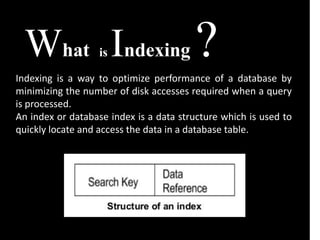
An index or database index is a data structure which is used to
quickly locate and access the data in a database table.
What is BT?
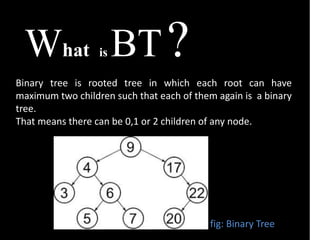
Binary tree is rooted tree in which each root can have
maximum two children such that each of them again is a binary
tree.
That means there can be 0,1 or 2 children of any node.
fig: Binary Tree
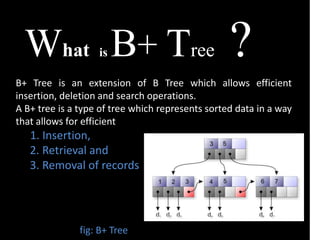
What is B+ Tree ?
B+ Tree is an extension of B Tree which allows efficient
insertion, deletion and search operations.
A B+ tree is a type of tree which represents sorted data in a way
that allows for efficient
1. Insertion,
2. Retrieval and
3. Removal of records
fig: B+ Tree
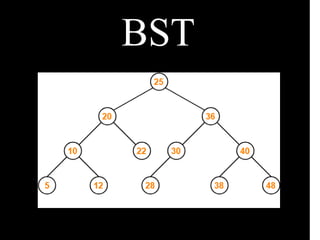
What is BST?
Binary Search Tree is a node-based binary tree data
structure which has the following properties:
1. The left sub tree of a node contains only nodes with
keys lesser than the node’s key.
2. The right sub tree of a node contains only nodes with
keys greater than the node’s key.
3. The left and right sub tree each must also be a binary
search tree.
BST
Indexing of large biometric database

Indexing of large biometric database

  • 1.
    INDEXING Of LARGE BIOMETRIC DATABASE Presentedby: Chandni Sharma Sophia Girls college(Autonomous) Ajmer. M.Sc.(CS)- Previous Sem IV www.sophiacollegeajmer.in Presentation On
  • 2.
    CONTENTS • What IsBiometric ? • Operation and Stages • Generic Biometric • Types of Biometric • Performance Measures • Challenges faced by Biometric Systems • Clustering Methods • Tree Data Structures and Indexing • Conclusion
  • 3.
    What is Biometric?“Biometrics” means “life measurement” but the term is usually associated with the use of unique physiological characteristics to identify an individual. Biometrics utilize “something you are” to authenticate identification . This might include : 1. Fingerprints 2. Retina pattern 3. Iris 4. Hand geometry 5. Voice password or signature dynamics.
  • 4.
    Biometric operation A biometricsystem has two modes of operation 1. Verification A one to one comparison of a captured biometric with a stored template to verify that the individual is the one who she claims to be. 2. Identification A one to many comparison of the captured biometric against a biometric database in an attempt to identify an unknown individual.
  • 5.
    stages The method consistsof mainly three stages: 1. Data Acquisition Data acquisition is the process of sampling signals that measure real world physical conditions and converting the resulting samples into digital numeric values that can be manipulated by a computer. 2. Feature Extraction Feature extraction is a dimensionality reduction process, where an initial set of raw variables is reduced to more manageable groups (features) for processing, while still accurately and completely describing the original data set.
  • 6.
    continue ... The methodconsists of mainly three stages: 3. Matching Biometric matching refers to the process of the degree of match (usually in the form of a match score) between two biometric signatures, one usually collected at the biometric enrollment stage and the other collected at the biometric verification or identification stage.
  • 7.
    Generic Biometric A biometricsystem is a pattern recognition system that works in the following way: acquires biometric data from an individual, extracts a feature set from the acquired data, and compares this feature set against the template set in the database.
  • 8.
  • 9.
    Physiological Behavioral 1. Fingerprints 2.Iris 3. DNA 4. Hand 5. Face 1. Keystroke 2. Signature 3. Voice TYPES of biometric
  • 10.
  • 11.
    PERFORMANCE MEASURES 1. FalseAcceptance Rate (FAR) 2. False Rejection Rate (FRR) 3. Failure To Enroll rate (FTE or FER) 4. Failure To Acquire (FTA) rate 5. False Identification Rate (FIR) 6. False Genuine Error or False Match (FM) The following parameters are used for evaluating the efficiency:
  • 12.
    Challenges There are threefundamental barriers which it has to overcome 1. Recognition “performance” It deals with “how to effectively represent and recognize biometric patterns?” 2. System “security” It refers to “how to guarantee that the biometric systems are not vulnerable to disruption?” 3. “Privacy” issues It deals with “how to make sure that the biometric system is being exclusively used for the specified purpose?”
  • 13.
    Clustering METHODS Clustering involvesarranging data points in such a way that the items sharing similar characteristics are grouped together. It include two methods: 1. Fuzzy C means 2. K means
  • 14.
    Fuzzy C Means FuzzyC Means (FCM) is a feature clustering technique wherein each feature point belongs to a cluster by some degree that is specified by a membership grade [3]. These kind of clustering algorithms are known as objective function based clustering.
  • 15.
    K Means K-means isknown to be one of the simplest unsupervised learning algorithms that can solve the well known clustering problem. A given data set is classified through the use of a certain number of clusters,
  • 16.
    What is Indexing?Indexing is a way to optimize performance of a database by minimizing the number of disk accesses required when a query is processed. An index or database index is a data structure which is used to quickly locate and access the data in a database table.
  • 17.
    What is BT? Binarytree is rooted tree in which each root can have maximum two children such that each of them again is a binary tree. That means there can be 0,1 or 2 children of any node. fig: Binary Tree
  • 18.
    What is B+Tree ? B+ Tree is an extension of B Tree which allows efficient insertion, deletion and search operations. A B+ tree is a type of tree which represents sorted data in a way that allows for efficient 1. Insertion, 2. Retrieval and 3. Removal of records fig: B+ Tree
  • 19.
    What is BST? BinarySearch Tree is a node-based binary tree data structure which has the following properties: 1. The left sub tree of a node contains only nodes with keys lesser than the node’s key. 2. The right sub tree of a node contains only nodes with keys greater than the node’s key. 3. The left and right sub tree each must also be a binary search tree.
  • 20.