Improving Your Child’s Self Esteem Dr. Moya O’Brien  Clinical Psychologist
What is Self Esteem?   Feeling good about yourself  Putting a high value on your worth Thinking or thoughts in your head about your self Is different depending on circumstances and relationships
Aspects of our Self Esteem Relationships Mother / Father, Daughter Son, Sister /Brother, Friend, Aunt / Uncle Physical Self Work / School Hobbies Leisure Activities
Why is Self Esteem Important? Feelings Associated with High Self Esteem   Confidence Pleasure Sense of Optimism Happiness
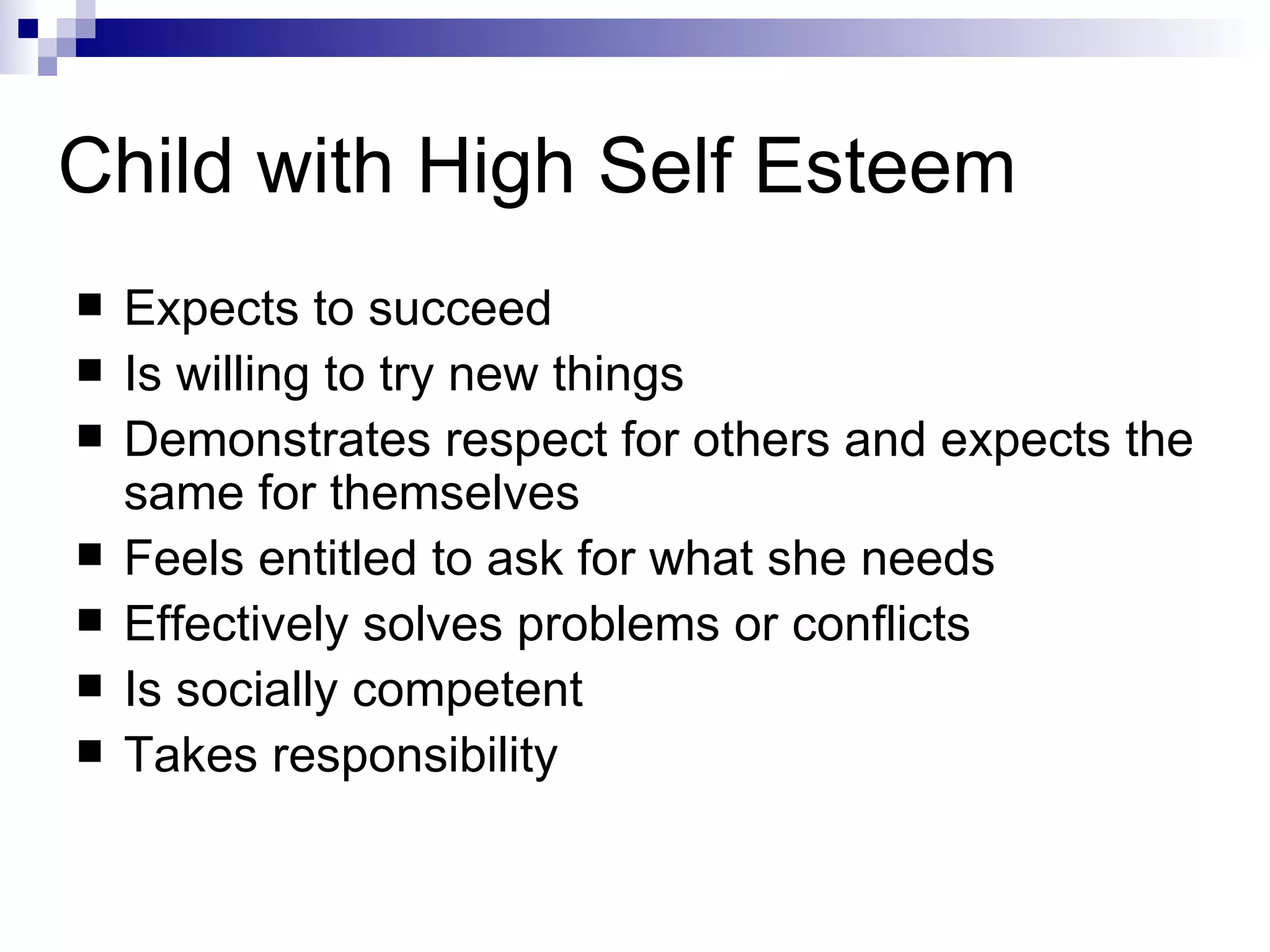
Child with High Self Esteem Expects to succeed  Is willing to try new things  Demonstrates respect for others and expects the same for themselves  Feels entitled to ask for what she needs Effectively solves problems or conflicts  Is socially competent Takes responsibility
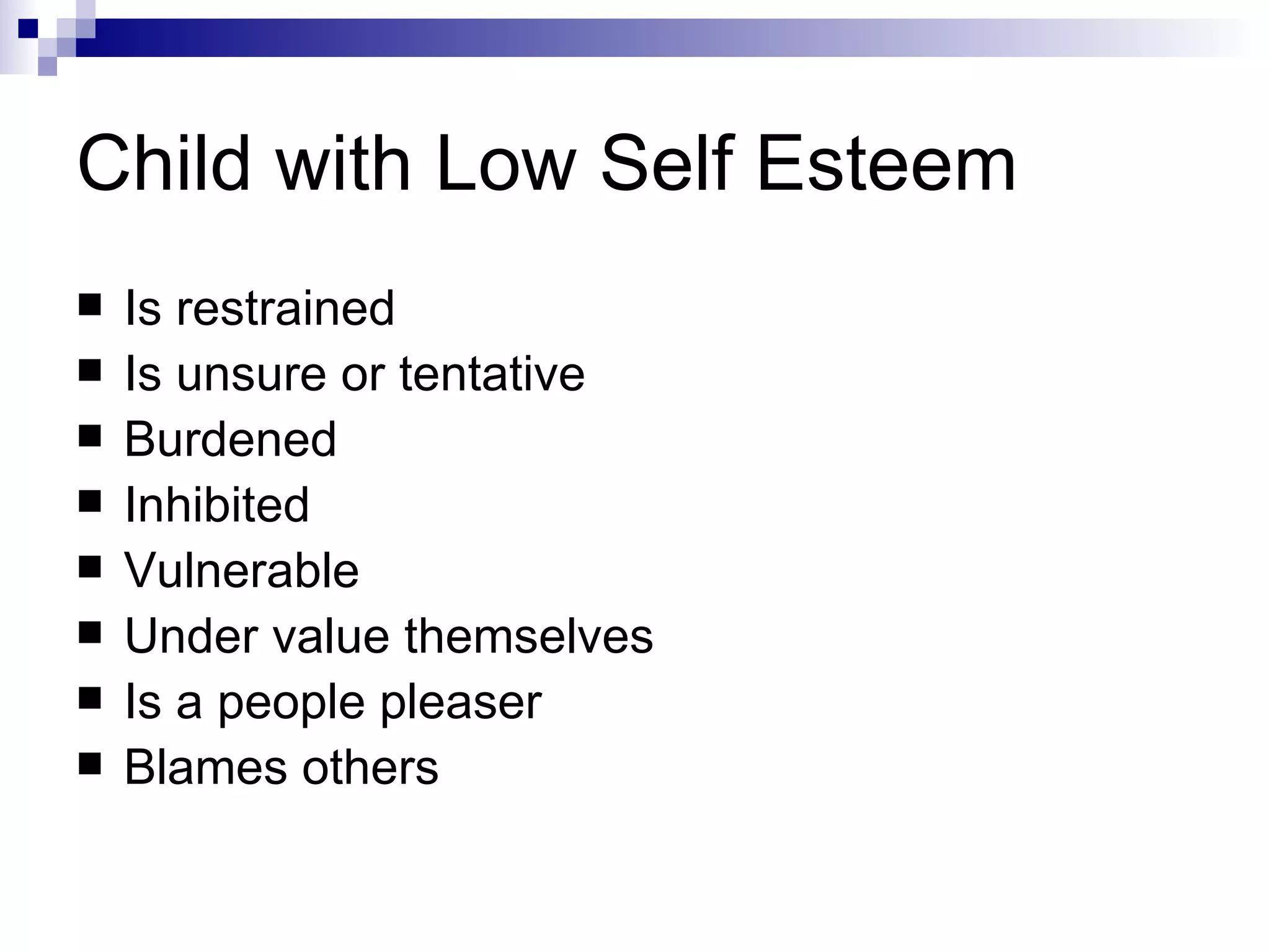
Child with Low Self Esteem Is restrained  Is unsure or tentative  Burdened  Inhibited Vulnerable Under value themselves Is a people pleaser Blames others
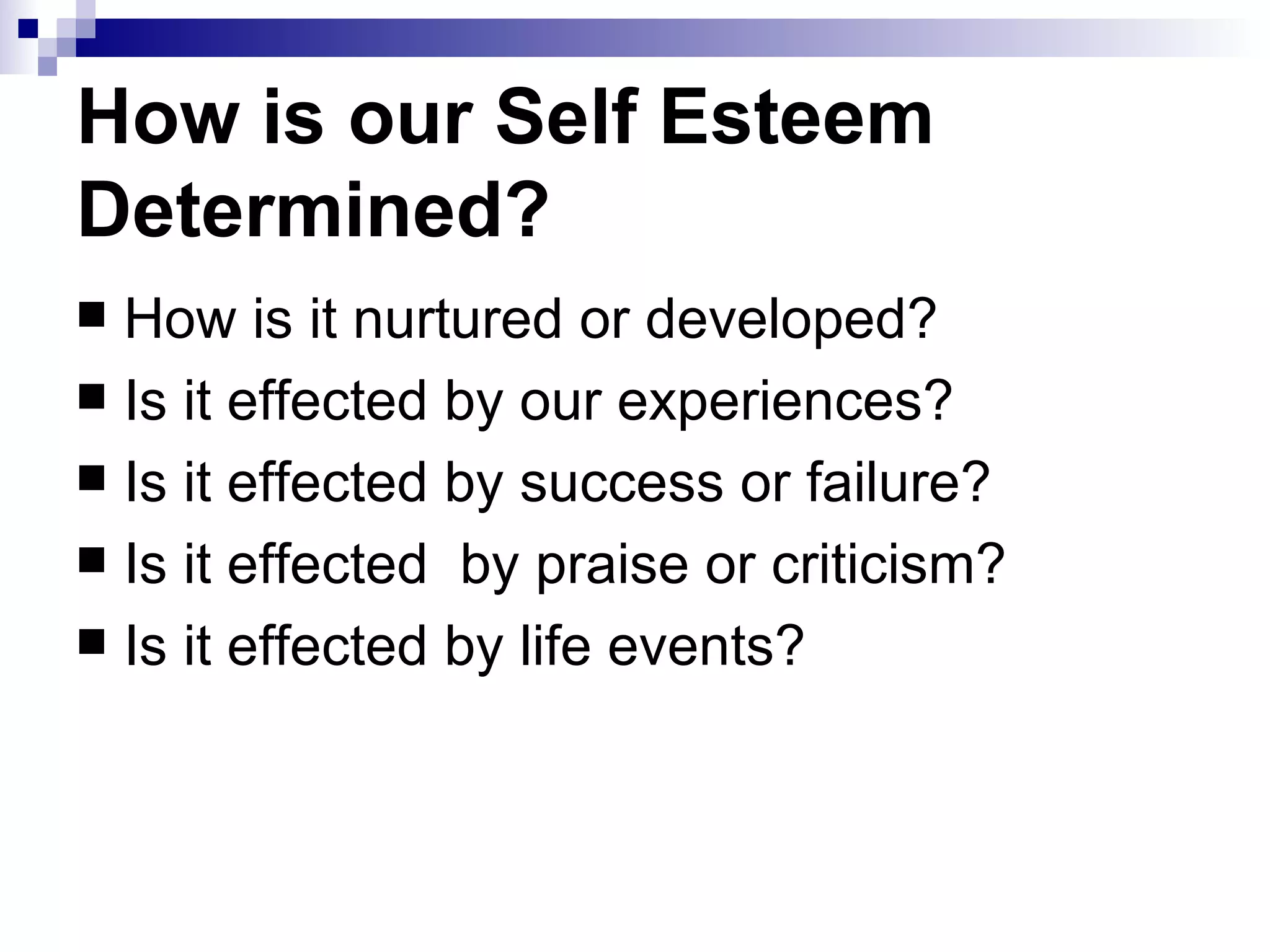
How is our Self Esteem Determined? How is it nurtured or developed? Is it effected by our experiences?  Is it effected by success or failure? Is it effected  by praise or criticism? Is it effected by life events?
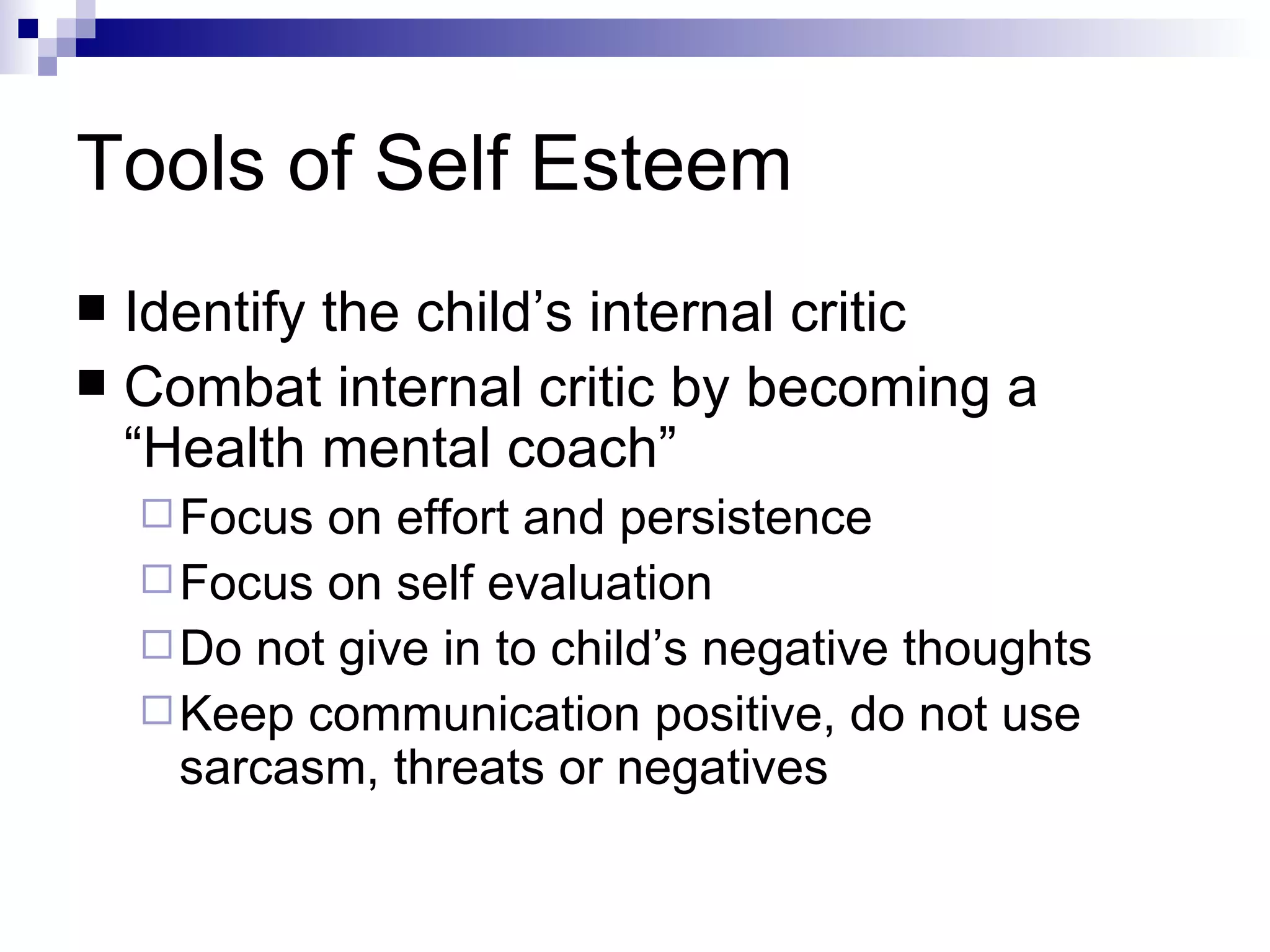
Tools of Self Esteem   Identify the child’s internal critic Combat internal critic by becoming a “Health mental coach” Focus on effort and persistence Focus on self evaluation  Do not give in to child’s negative thoughts Keep communication positive, do not use sarcasm, threats or negatives
Parenting to support positive self esteem Set limits and be consistent “ If ----- Then ------” Be firm but kind Let small stuff go  Separate the deed and the doer Love child – communicate this  Offer choice and respect choice Model self worth Unconditional love – mirror of positive regard See your child as a unique individual not an extension of you
Parenting to  Promote Self Esteem Show them they are valued by giving them your time. Point out that they may not be perfect but neither is anyone else. Show you appreciate their efforts and persistence and that sometimes you may fail before you succeed. Give them responsibility (that is appropriate to their age) so they can show that they can follow through and be relied on.  Listen - don't finish their sentences for them. Help your child to remember the good times and successes when they experience bad times. Help them accept the things they cannot change. Tell them they are special. Use encouragement more often then praise.
Critical elements for successfully building Self Esteem   Positive atmosphere Opportunity for active involvement and participation Valued for their contribution Valued for their difference  Opportunities to learn and make mistakes Give praise and encouragement  Opportunities to evaluate own performance Opportunities to develop skills and learn life lessons
Parent Behaviours that Encourage Self Esteem Active Listening Allow choice with in reason Value opinions even if different to your own Make individual time Respect boundaries Use encouragement  Putting up pictures on wall or fridge Collecting medals, certificates / good reports Going to match's, concerts, end of year displays etc Putting photos of achievements on walls or in albums
Books on Self Esteem Self Esteem Books Young Children   The Little Engine That Could  by Watty Piper, George Hauman The Lovables in the Kingdom of Self-Esteem by Diane Loomans  General Parenting Books Parenting Teenagers: Systematic Training for Effective Parenting of Teens by Don Dinkmeyer  The Parent's Handbook: Systematic Training for Effective Parenting by Don Dinkmeyer  Parenting Young Children: Systematic Training for Effective Parenting (STEP) of Children Under Six by Don, Sr. Dinkmeyer  Self Esteem Adults Self-Esteem: A Proven Program of Cognitive Techniques for Assessing, Improving, and Maintaining Your Self-Esteem by Mathew McKay & Patrick Fanning.

Improving Your Childs Self Esteem

  • 1.
    Improving Your Child’sSelf Esteem Dr. Moya O’Brien Clinical Psychologist
  • 2.
    What is SelfEsteem? Feeling good about yourself Putting a high value on your worth Thinking or thoughts in your head about your self Is different depending on circumstances and relationships
  • 3.
    Aspects of ourSelf Esteem Relationships Mother / Father, Daughter Son, Sister /Brother, Friend, Aunt / Uncle Physical Self Work / School Hobbies Leisure Activities
  • 4.
    Why is SelfEsteem Important? Feelings Associated with High Self Esteem Confidence Pleasure Sense of Optimism Happiness
  • 5.
    Child with HighSelf Esteem Expects to succeed Is willing to try new things Demonstrates respect for others and expects the same for themselves Feels entitled to ask for what she needs Effectively solves problems or conflicts Is socially competent Takes responsibility
  • 6.
    Child with LowSelf Esteem Is restrained Is unsure or tentative Burdened Inhibited Vulnerable Under value themselves Is a people pleaser Blames others
  • 7.
    How is ourSelf Esteem Determined? How is it nurtured or developed? Is it effected by our experiences? Is it effected by success or failure? Is it effected by praise or criticism? Is it effected by life events?
  • 8.
    Tools of SelfEsteem Identify the child’s internal critic Combat internal critic by becoming a “Health mental coach” Focus on effort and persistence Focus on self evaluation Do not give in to child’s negative thoughts Keep communication positive, do not use sarcasm, threats or negatives
  • 9.
    Parenting to supportpositive self esteem Set limits and be consistent “ If ----- Then ------” Be firm but kind Let small stuff go Separate the deed and the doer Love child – communicate this Offer choice and respect choice Model self worth Unconditional love – mirror of positive regard See your child as a unique individual not an extension of you
  • 10.
    Parenting to Promote Self Esteem Show them they are valued by giving them your time. Point out that they may not be perfect but neither is anyone else. Show you appreciate their efforts and persistence and that sometimes you may fail before you succeed. Give them responsibility (that is appropriate to their age) so they can show that they can follow through and be relied on. Listen - don't finish their sentences for them. Help your child to remember the good times and successes when they experience bad times. Help them accept the things they cannot change. Tell them they are special. Use encouragement more often then praise.
  • 11.
    Critical elements forsuccessfully building Self Esteem Positive atmosphere Opportunity for active involvement and participation Valued for their contribution Valued for their difference Opportunities to learn and make mistakes Give praise and encouragement  Opportunities to evaluate own performance Opportunities to develop skills and learn life lessons
  • 12.
    Parent Behaviours thatEncourage Self Esteem Active Listening Allow choice with in reason Value opinions even if different to your own Make individual time Respect boundaries Use encouragement Putting up pictures on wall or fridge Collecting medals, certificates / good reports Going to match's, concerts, end of year displays etc Putting photos of achievements on walls or in albums
  • 13.
    Books on SelfEsteem Self Esteem Books Young Children The Little Engine That Could by Watty Piper, George Hauman The Lovables in the Kingdom of Self-Esteem by Diane Loomans General Parenting Books Parenting Teenagers: Systematic Training for Effective Parenting of Teens by Don Dinkmeyer The Parent's Handbook: Systematic Training for Effective Parenting by Don Dinkmeyer Parenting Young Children: Systematic Training for Effective Parenting (STEP) of Children Under Six by Don, Sr. Dinkmeyer Self Esteem Adults Self-Esteem: A Proven Program of Cognitive Techniques for Assessing, Improving, and Maintaining Your Self-Esteem by Mathew McKay & Patrick Fanning.