Self-Esteem 
Support System
Childhood Experiences Which 
Lead to Low Self-Esteem 
Allow your child to experiment and explore new activities 
without providing them correction. If they fail, encourage them 
to try again until they succeed. If they are frustrated, 
give them a helpful prompt.
Dedicate Time ToYour Child 
Dedicate time to spend with your child. Don’t timeshare 
quality time between your child and your mobile device.
The Perfectionist & 
Procrastinator 
People with low self-esteem may try to 
perfect or put off completing a project. They 
fear that if they fail then they are perceived 
as a complete failure. Set due dates and 
accept your project as complete.
Challenge the Inner Critic 
The first important step in improving self-esteem 
is to begin to challenge the negative messages of 
your internal critic. Just because the voice 
speaks, does not mean what it says is true or 
accurate. When the critic speaks, say “Cancel! 
Cancel!” This breaks the pattern.
Unlearning Low Self-Esteem 
Low self-esteem is learned. People aren’t born with a low-esteem 
gene. Every single child is born confident, self-loving and 
self-appreciating, but along the way interactions and events 
change a person’s perception of their own intrinsic worth. Good 
self-esteem grows from positive habits.
Share Not Compare 
We are not identical to others so it doesn’t benefit you 
to compare yourself to others. Develop your 
self-image by discovering who you really are and 
sharing that with the world.
Take action! You won't develop belief in yourself by 
sitting on the sidelines and avoiding challenges. When 
you take action-regardless of the ensuing result, you 
will feel better about yourself.
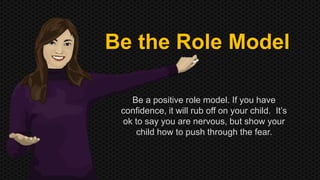
Be the Role Model 
Be a positive role model. If you have 
confidence, it will rub off on your child. It’s 
ok to say you are nervous, but show your 
child how to push through the fear.
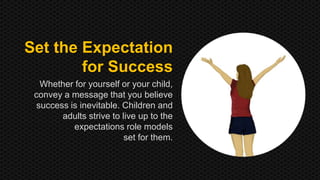
Set the Expectation 
for Success 
Whether for yourself or your child, 
convey a message that you believe 
success is inevitable. Children and 
adults strive to live up to the 
expectations role models 
set for them.
Confidence for New Parents 
Accept that this is a new role and you don’t have all the answers. 
Enlist other’s help. When in doubt about your child’s health, call your 
pediatrician. Follow your instincts, but ask for 
help when you need it.

Self Esteem Tips 07

  • 1.
  • 2.
    Childhood Experiences Which Lead to Low Self-Esteem Allow your child to experiment and explore new activities without providing them correction. If they fail, encourage them to try again until they succeed. If they are frustrated, give them a helpful prompt.
  • 3.
    Dedicate Time ToYourChild Dedicate time to spend with your child. Don’t timeshare quality time between your child and your mobile device.
  • 4.
    The Perfectionist & Procrastinator People with low self-esteem may try to perfect or put off completing a project. They fear that if they fail then they are perceived as a complete failure. Set due dates and accept your project as complete.
  • 5.
    Challenge the InnerCritic The first important step in improving self-esteem is to begin to challenge the negative messages of your internal critic. Just because the voice speaks, does not mean what it says is true or accurate. When the critic speaks, say “Cancel! Cancel!” This breaks the pattern.
  • 6.
    Unlearning Low Self-Esteem Low self-esteem is learned. People aren’t born with a low-esteem gene. Every single child is born confident, self-loving and self-appreciating, but along the way interactions and events change a person’s perception of their own intrinsic worth. Good self-esteem grows from positive habits.
  • 7.
    Share Not Compare We are not identical to others so it doesn’t benefit you to compare yourself to others. Develop your self-image by discovering who you really are and sharing that with the world.
  • 8.
    Take action! Youwon't develop belief in yourself by sitting on the sidelines and avoiding challenges. When you take action-regardless of the ensuing result, you will feel better about yourself.
  • 9.
    Be the RoleModel Be a positive role model. If you have confidence, it will rub off on your child. It’s ok to say you are nervous, but show your child how to push through the fear.
  • 10.
    Set the Expectation for Success Whether for yourself or your child, convey a message that you believe success is inevitable. Children and adults strive to live up to the expectations role models set for them.
  • 11.
    Confidence for NewParents Accept that this is a new role and you don’t have all the answers. Enlist other’s help. When in doubt about your child’s health, call your pediatrician. Follow your instincts, but ask for help when you need it.