Implementation of renewable
energy resources in India
Presented by,
Neha Chouhan
IVth sem
1) Energy crises
2) Renewable energy
3) Solar energy
4) Solar updraft tower
5) Parts of solar updraft tower
6) Working of solar updraft tower
7) Role of collector
8) Role of chimney
9) Role of turbine
10) Output dependence
Content
11) Governing equation
12) Cost evaluation
13) Advantages
14) Disadvantages
15) Conclusion
Continued…………
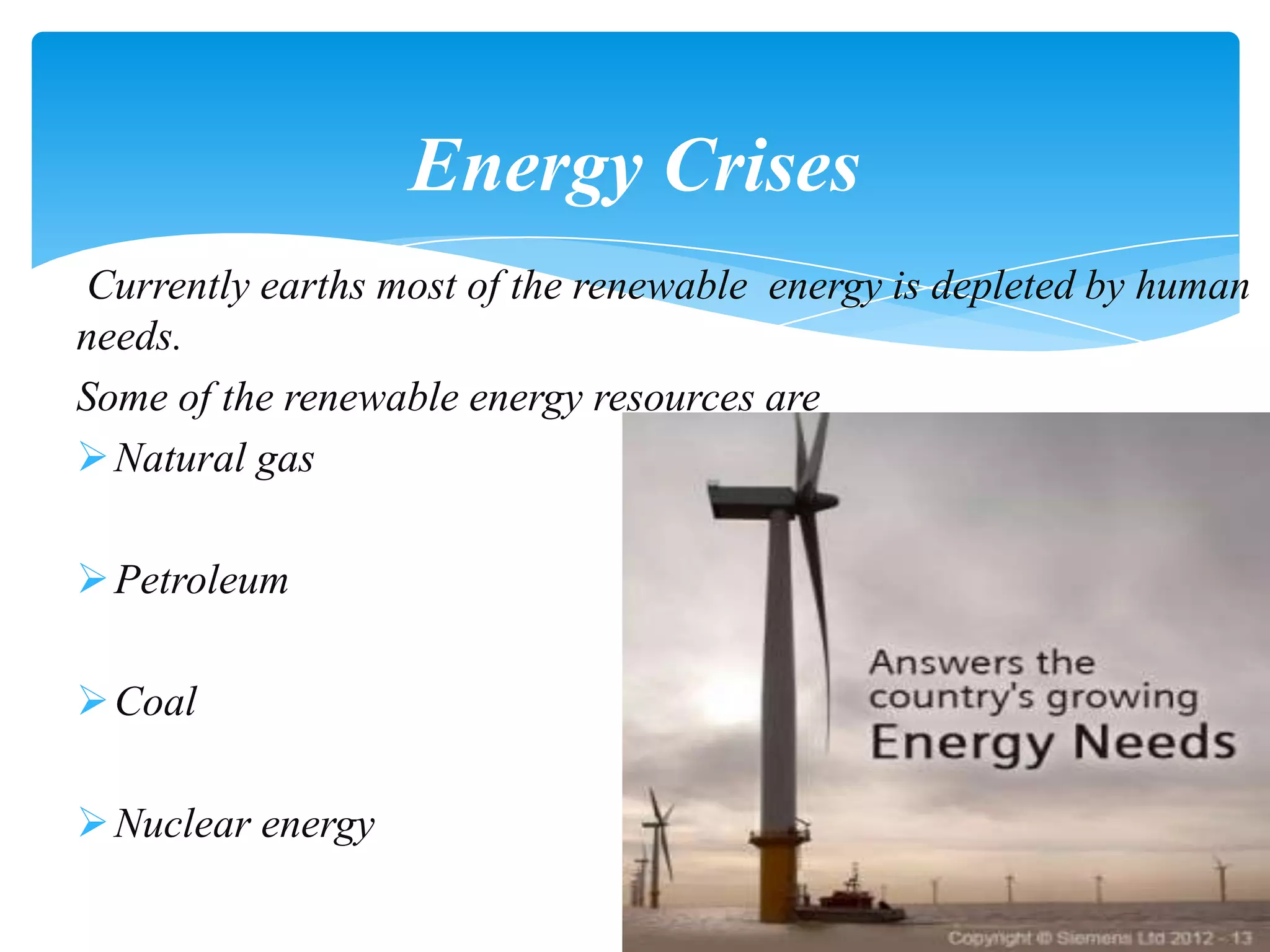
Currently earths most of the renewable energy is depleted by human
needs.
Some of the renewable energy resources are
Natural gas
Petroleum
Coal
Nuclear energy
Energy Crises
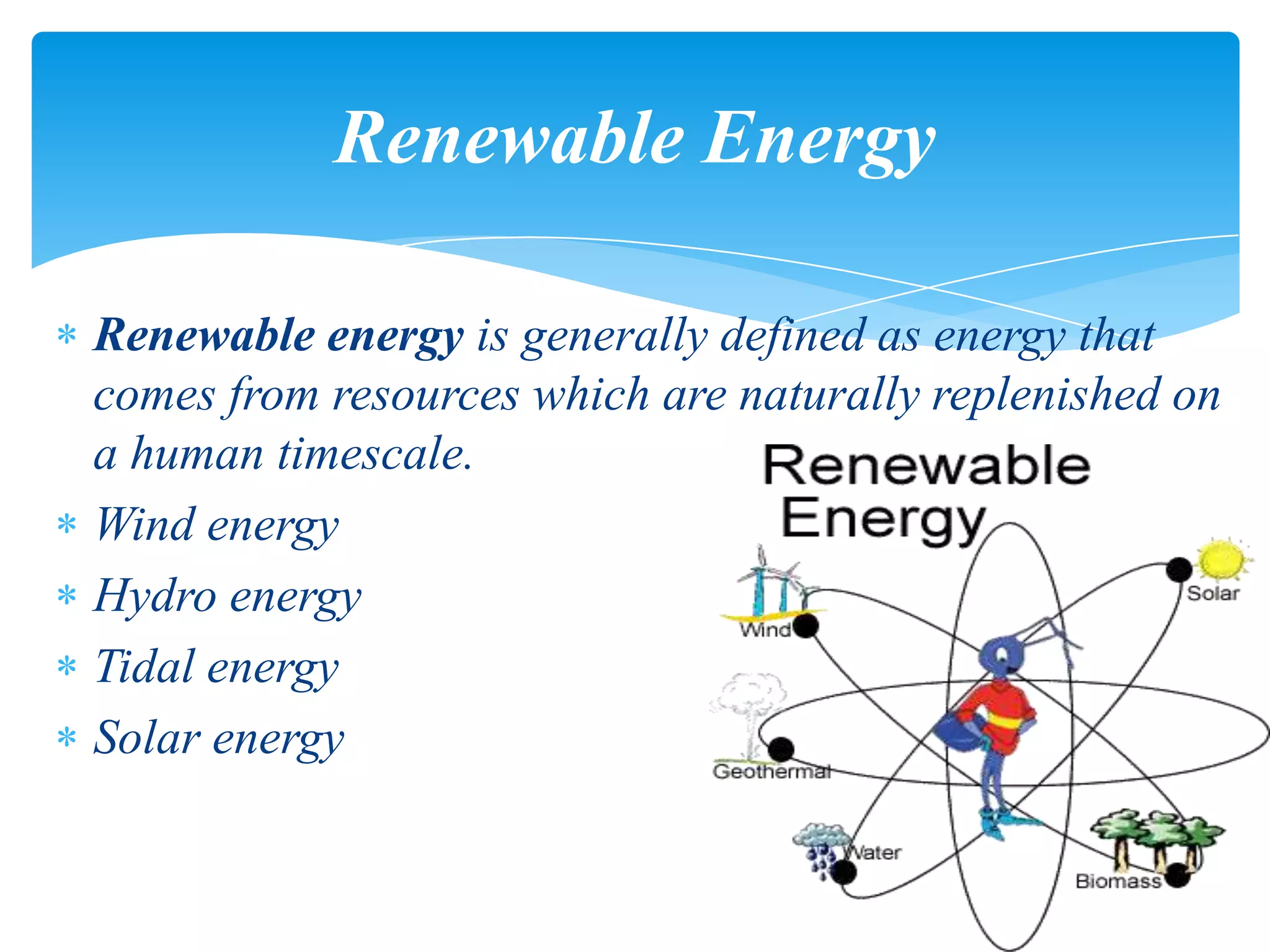
Renewable energy is generally defined as energy that
comes from resources which are naturally replenished on
a human timescale.
Wind energy
Hydro energy
Tidal energy
Solar energy
Renewable Energy
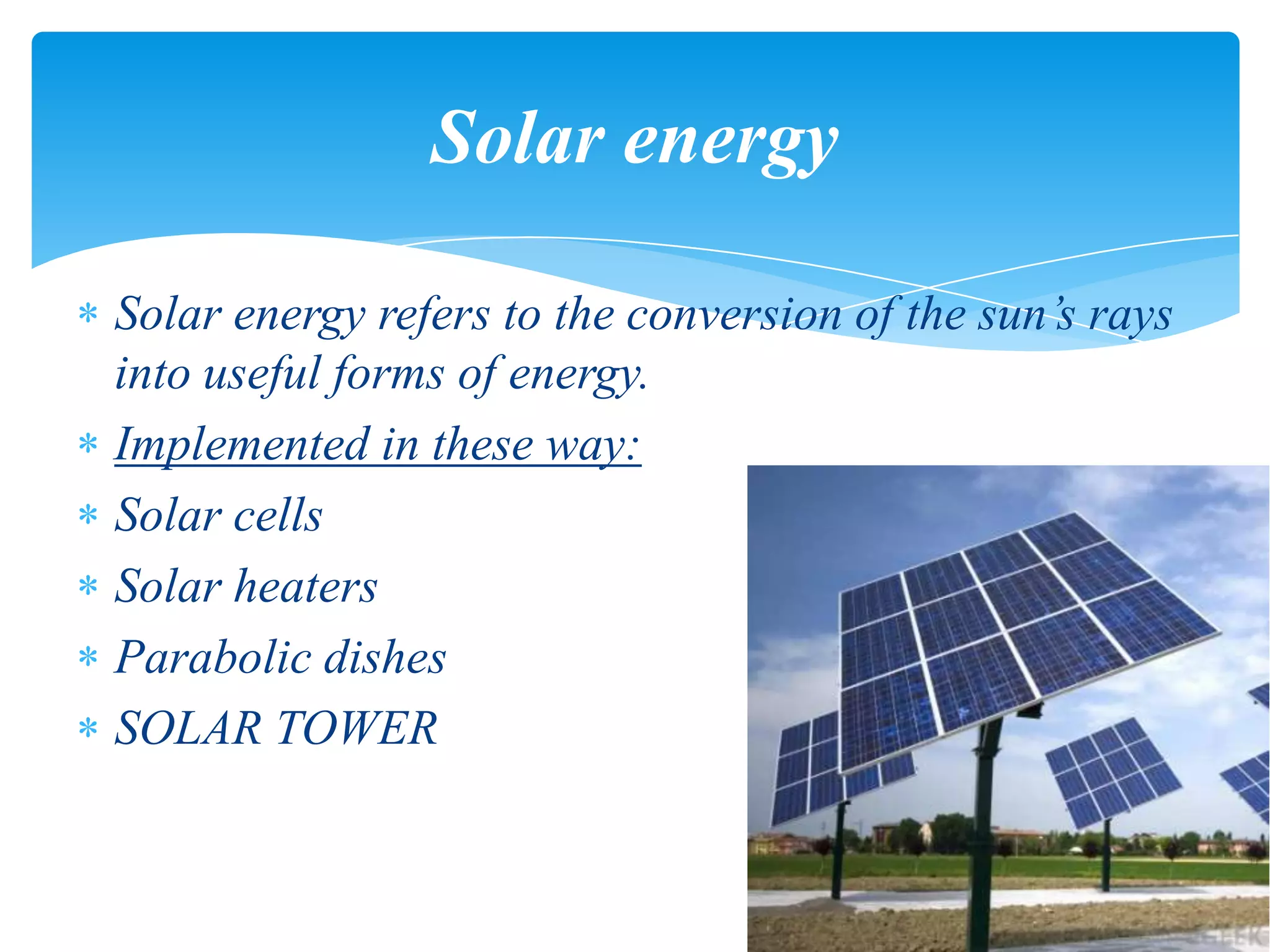
Solar energy refers to the conversion of the sun’s rays
into useful forms of energy.
Implemented in these way:
Solar cells
Solar heaters
Parabolic dishes
SOLAR TOWER
Solar energy
The solar updraft tower is
renewable type power
plant.
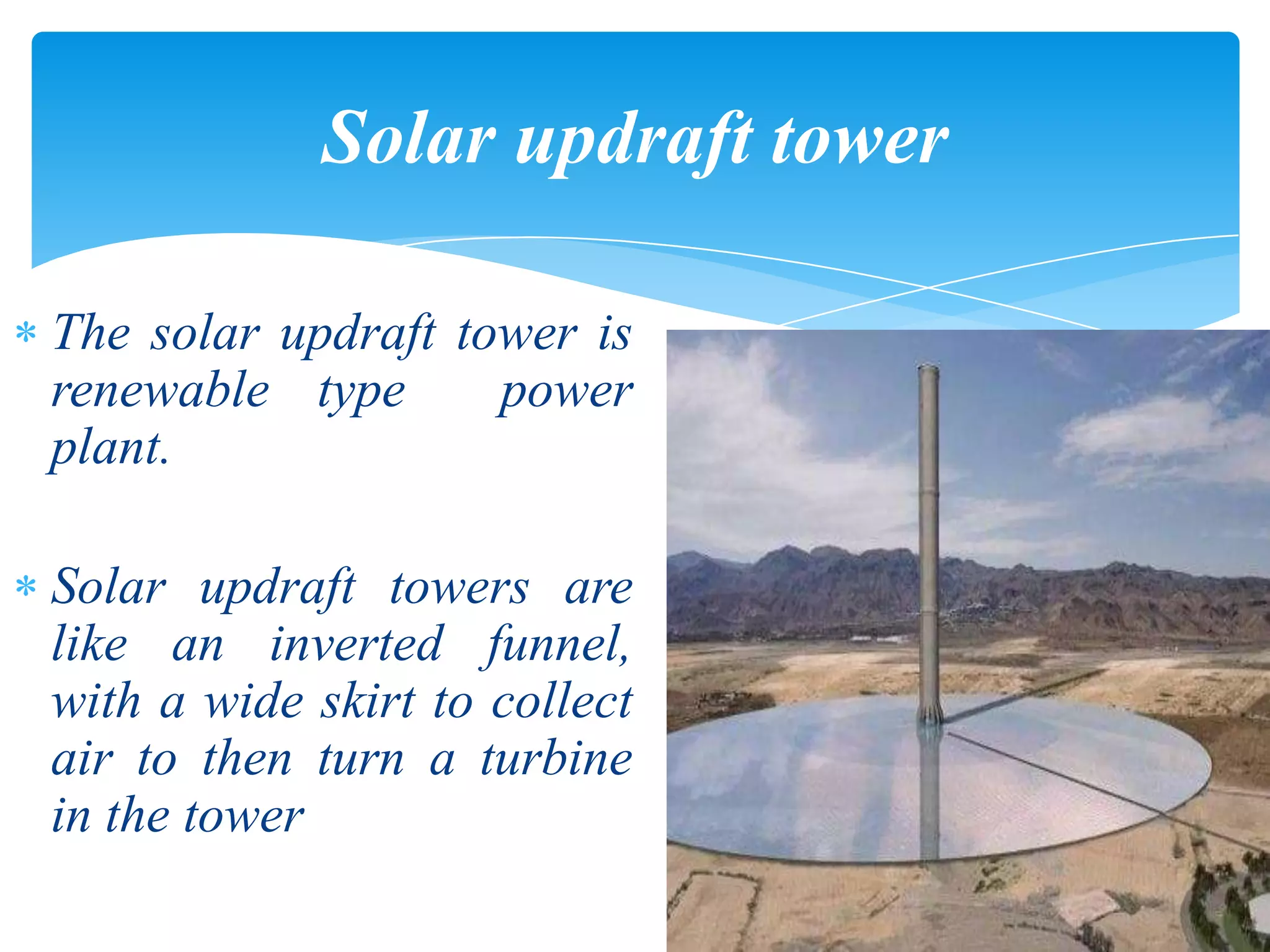
Solar updraft towers are
like an inverted funnel,
with a wide skirt to collect
air to then turn a turbine
in the tower
Solar updraft tower
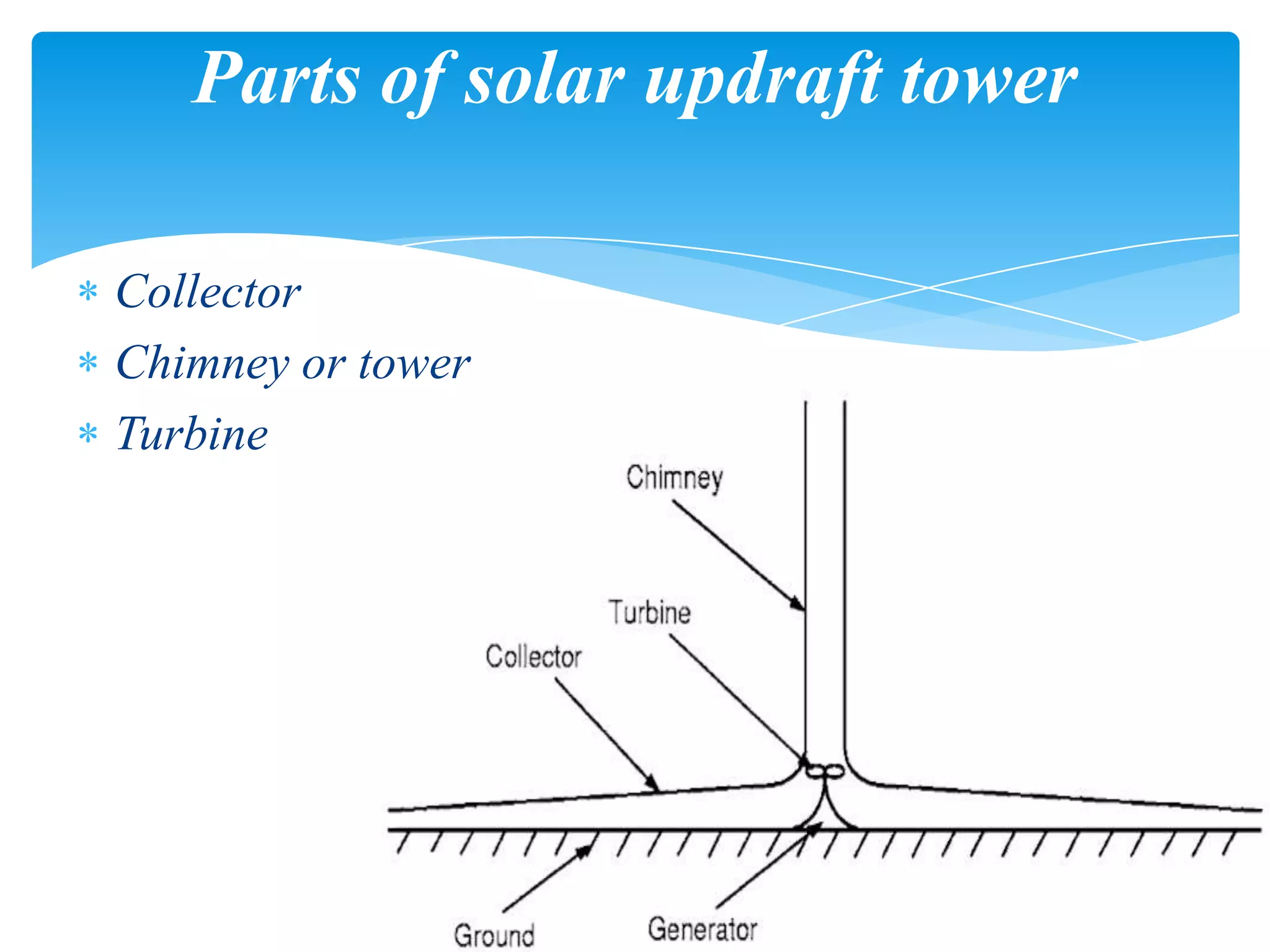
Collector
Chimney or tower
Turbine
Parts of solar updraft tower
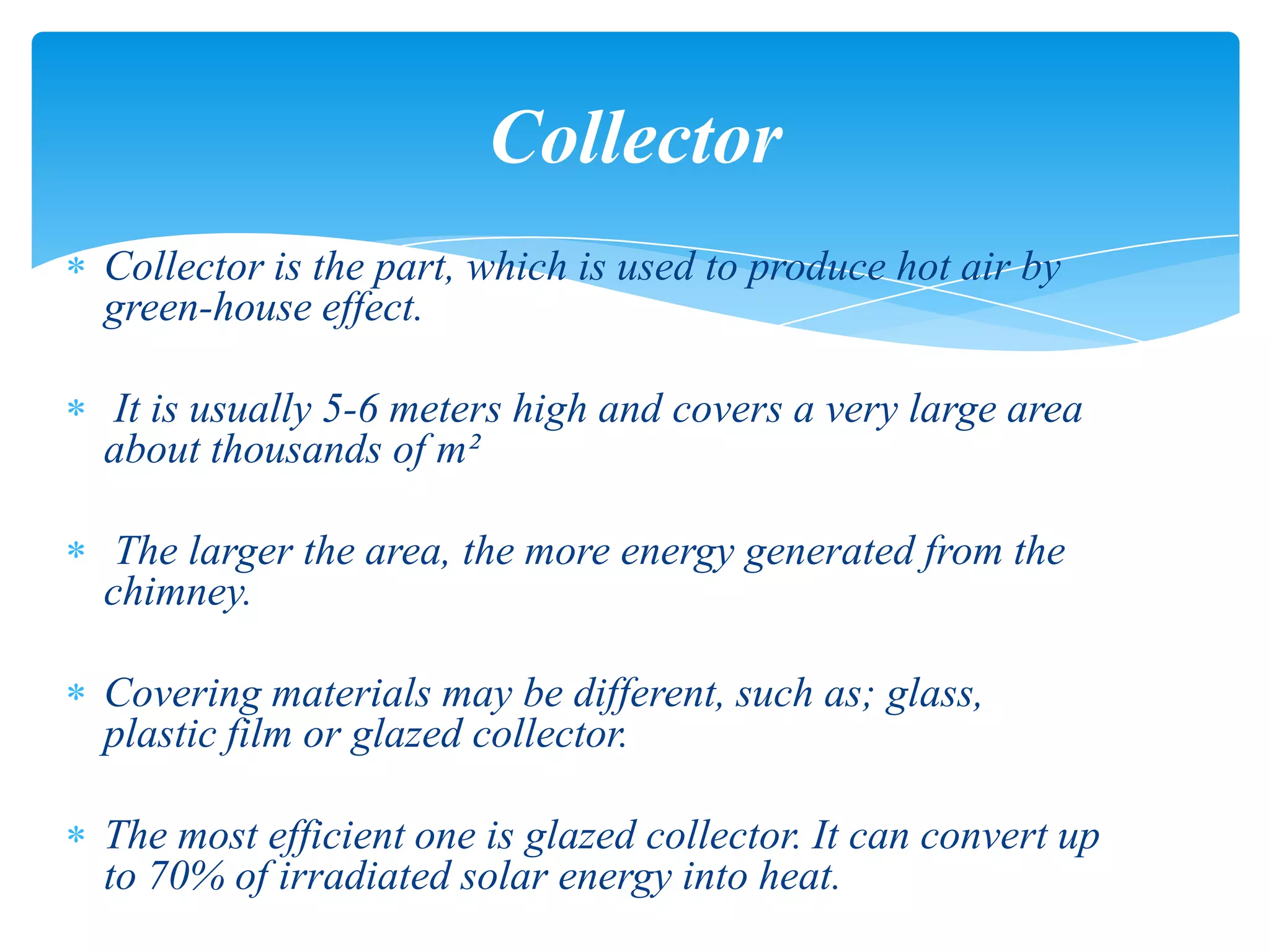
Collector is the part, which is used to produce hot air by
green-house effect.
It is usually 5-6 meters high and covers a very large area
about thousands of m²
The larger the area, the more energy generated from the
chimney.
Covering materials may be different, such as; glass,
plastic film or glazed collector.
The most efficient one is glazed collector. It can convert up
to 70% of irradiated solar energy into heat.
Collector
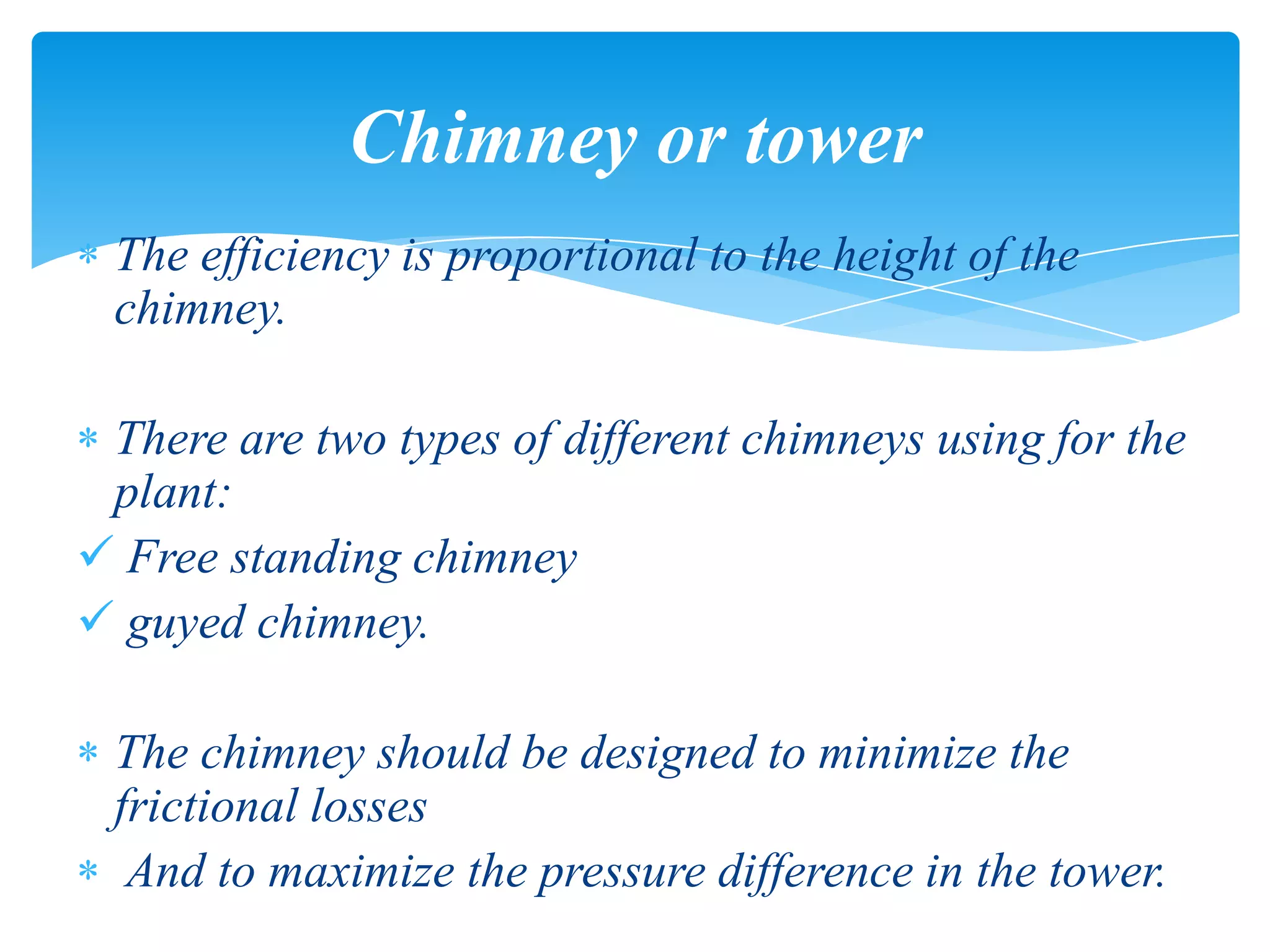
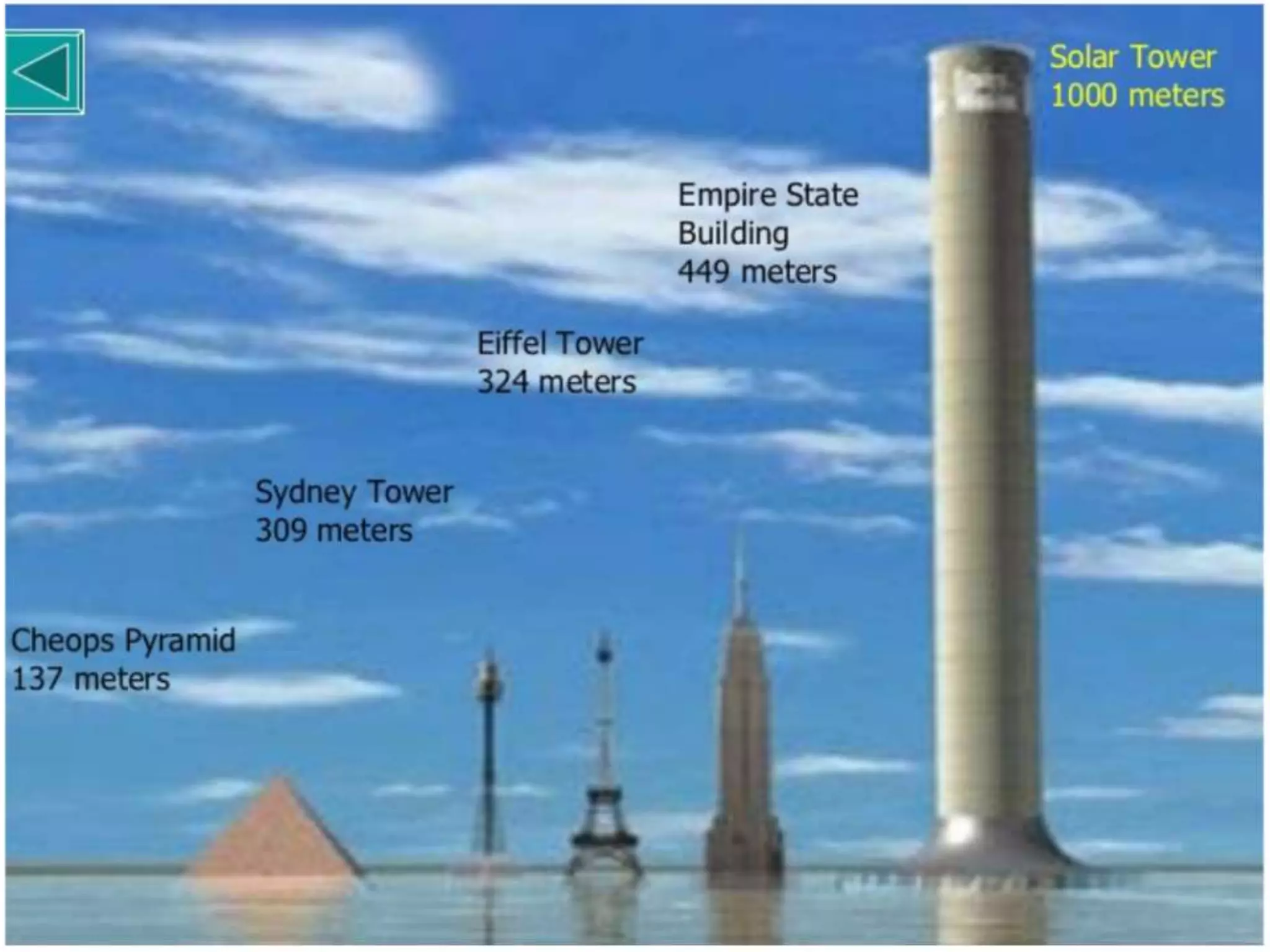
The efficiency is proportional to the height of the
chimney.
There are two types of different chimneys using for the
plant:
 Free standing chimney
 guyed chimney.
The chimney should be designed to minimize the
frictional losses
And to maximize the pressure difference in the tower.
Chimney or tower
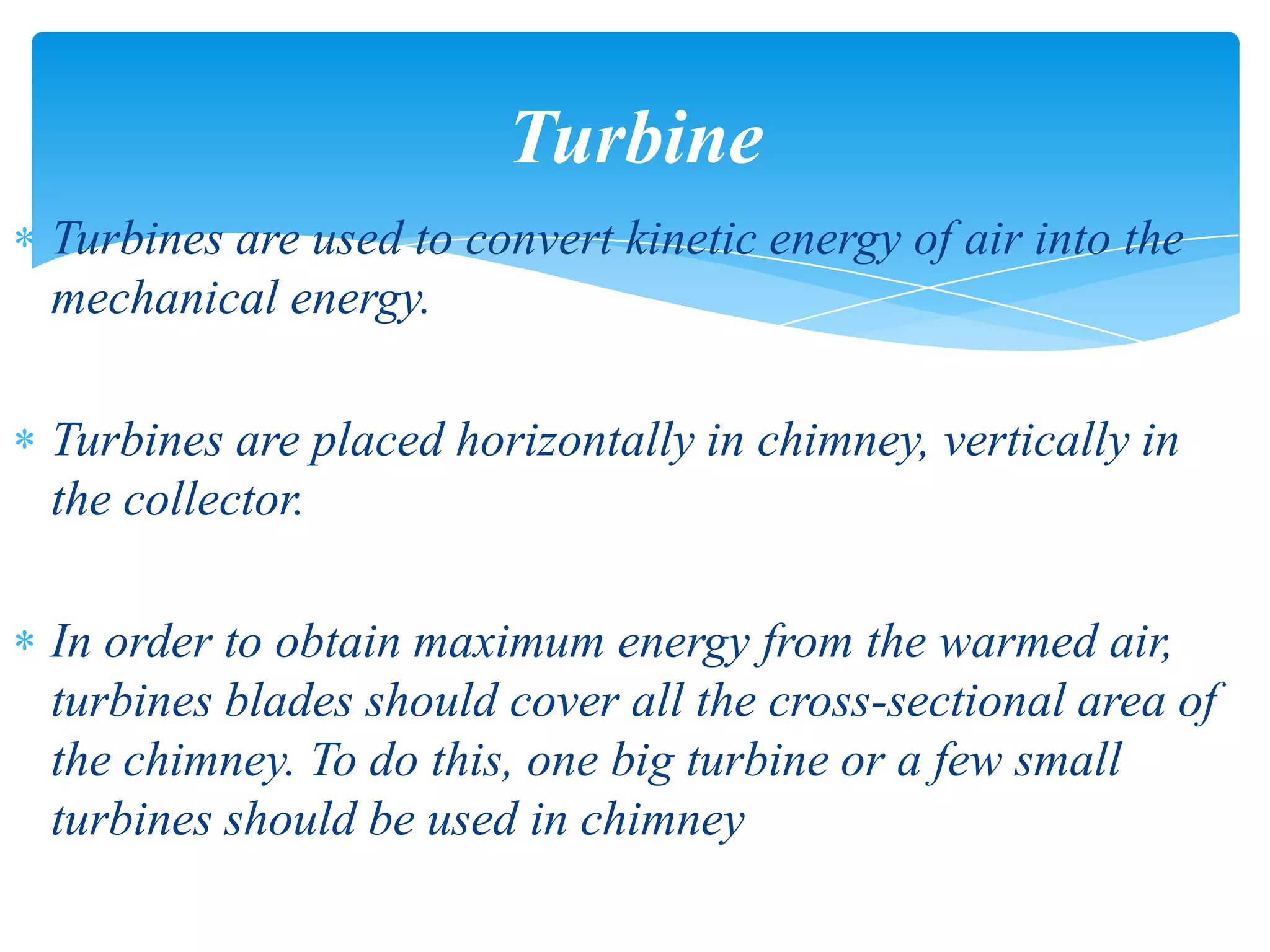
Turbines are used to convert kinetic energy of air into the
mechanical energy.
Turbines are placed horizontally in chimney, vertically in
the collector.
In order to obtain maximum energy from the warmed air,
turbines blades should cover all the cross-sectional area of
the chimney. To do this, one big turbine or a few small
turbines should be used in chimney
Turbine
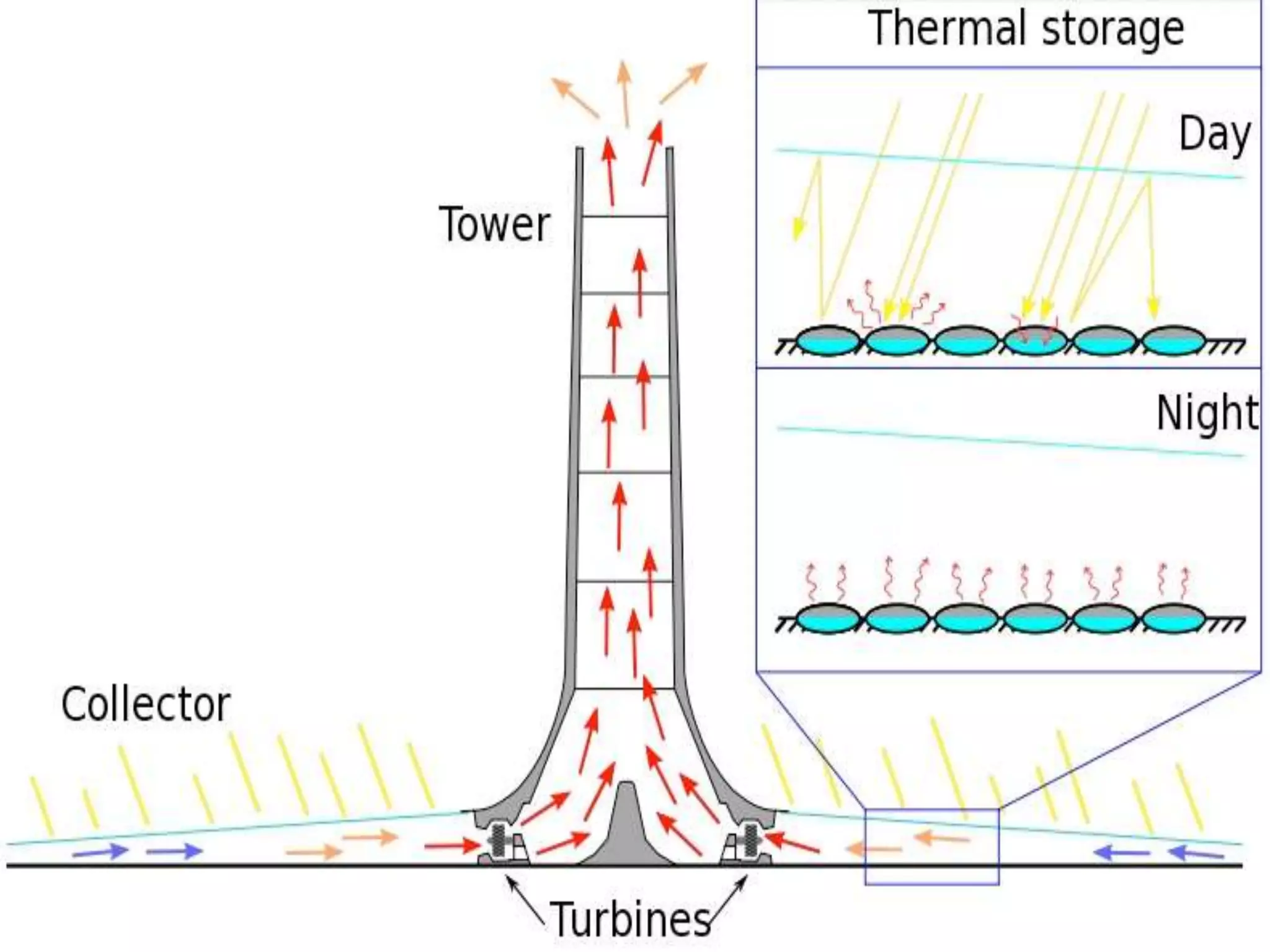
Two basic principle behind solar updraft tower are
:Green house effect and buoyancy driven flow
Incident solar radiation heats the air under the
collector .
The temperature difference causes a pressure drop
over the height of chimney resulting in an upwind
which is converted into mechanical energy by the
turbines and then into electricity via conventional
generators.
How does a solar updraft tower
works?
The solar tower uses a greenhouse-like collector to
heat the air that drives the power plant.
The collector surface gradually rises closer to the
tower, to direct the heated air towards the tower, then
curves up sharply at the base of the tower in order to
transition the air flow up the tower
Collector is about 2 to 6 m stretched above the
ground.
The height of the roof increases adjacent to the
chimney base.
Role of collector
The chimney (or tower) of a solar updraft tower is
the thermal engine of the plant.
The heated air from the collector is funneled into the
chimney, where the buoyancy difference between the
heated air and the surrounding atmosphere creates a
pressure difference that drives the air up the
chimney.
Role of chimney
Turbines are placed near the bottom of the
tower.
For ease of access for maintenance and easy
connection to the generating equipment.
A single turbine can be mounted on vertical
axes inside the chimney.
Role of turbine
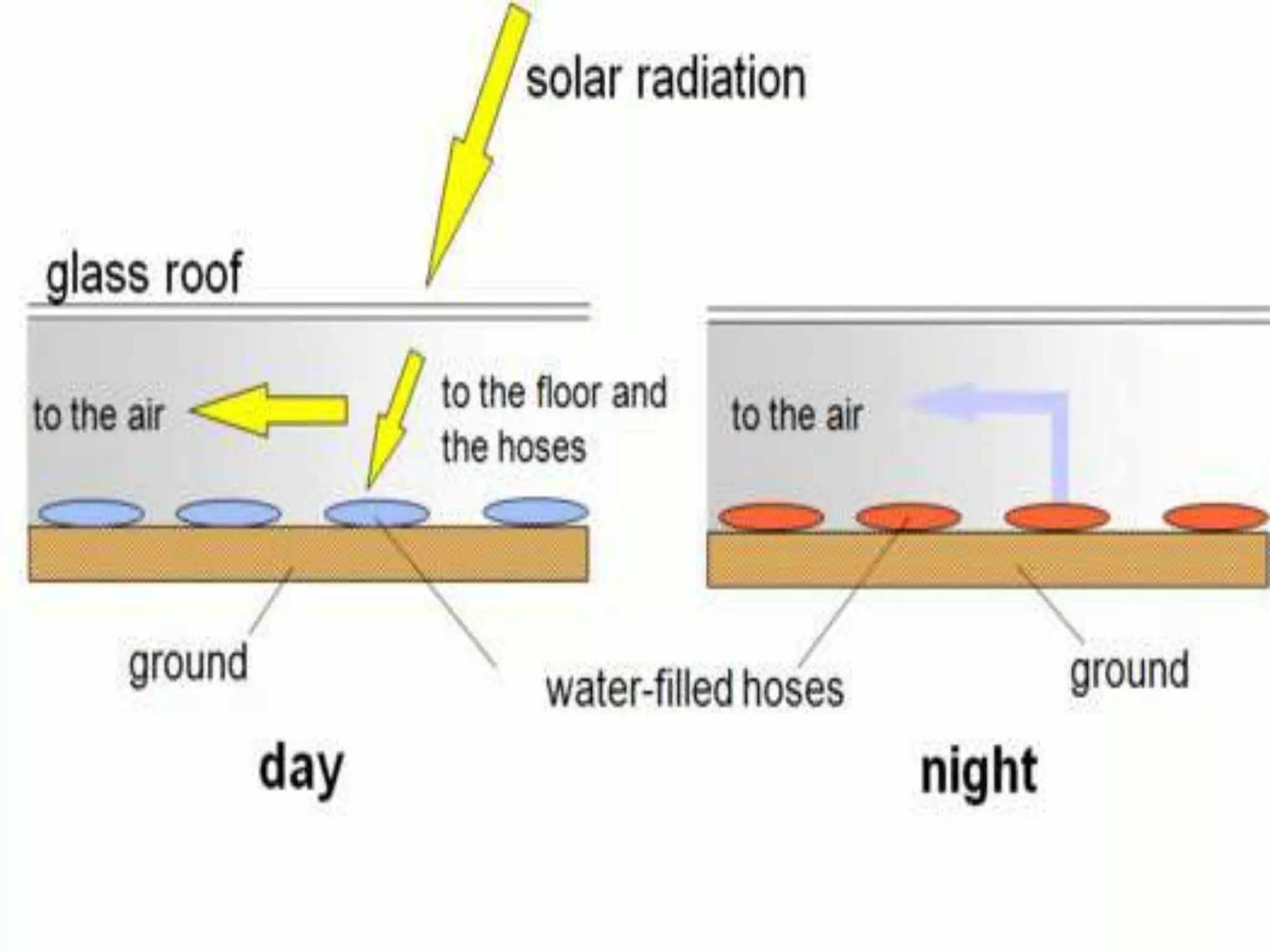
Water filled black tubes are laid down side by side
on the black sheeted or sprayed soil under the glass
roof collector.
They are filled with water once and remain closed
thereafter, so that no evaporation can take place.
The water inside the tubes stores a part of the solar
heat and releases it during the night, when the air
in the collector cools down.
Energy storage
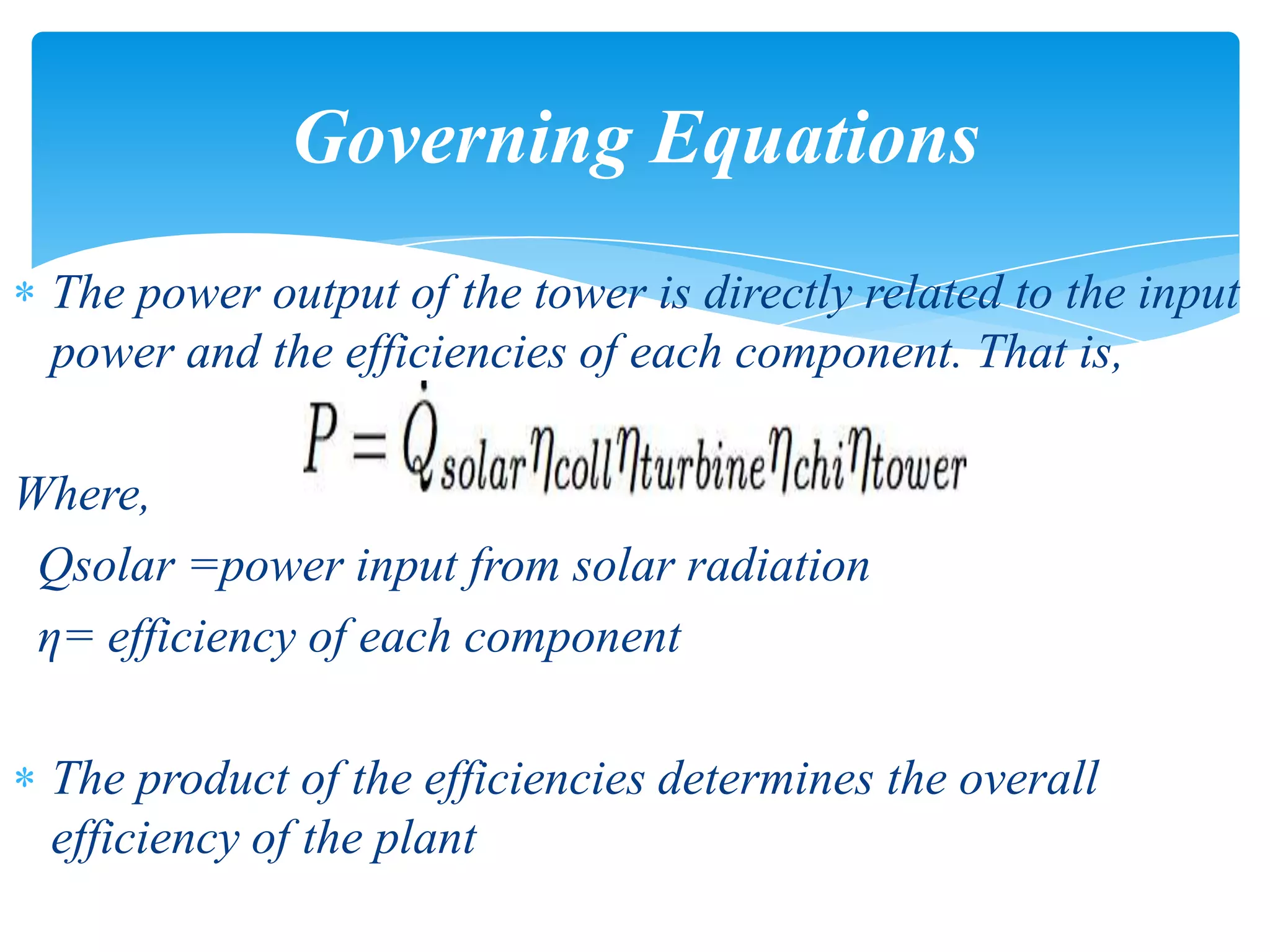
The power output of the tower is directly related to the input
power and the efficiencies of each component. That is,
Where,
Qsolar =power input from solar radiation
η= efficiency of each component
The product of the efficiencies determines the overall
efficiency of the plant
Governing Equations
The main cost of a solar updraft tower is
in its construction. Operation and
maintenance are minimal.
Cost evaluation
It can be operated in day as well as night .
It is releases any greenhouse gases .
Low maintenance
Cultivation of crops
Needs no cooling water
Advantages
High construction cost
Requires a large amount of initial capital
Efficiency & Production Cost
Cost/kWh is higher than traditional forms of natural
gas energy production
Requires large amount of land
Not suitable for areas with high cost/acre
Disadvantages
 Current energy production from coal and oil is damaging
our environment and non renewable energy sources .
SOLAR ENERGY IS THE ANSWER
Technology for the use of solar energy must be:
-Be simple and reliable
-Be accessible to the technologically less
developed countries that are sunny and often have limited
raw materials resources.
Conclusion
SOLAR UPDRAFT
TOWER MEETS
THESE CONDITION!!!!
KEEP CALM
N
GO SOLAR

Implementation of renewable energy resources in india-solar updraft tower

  • 1.
    Implementation of renewable energyresources in India Presented by, Neha Chouhan IVth sem
  • 2.
    1) Energy crises 2)Renewable energy 3) Solar energy 4) Solar updraft tower 5) Parts of solar updraft tower 6) Working of solar updraft tower 7) Role of collector 8) Role of chimney 9) Role of turbine 10) Output dependence Content
  • 3.
    11) Governing equation 12)Cost evaluation 13) Advantages 14) Disadvantages 15) Conclusion Continued…………
  • 4.
    Currently earths mostof the renewable energy is depleted by human needs. Some of the renewable energy resources are Natural gas Petroleum Coal Nuclear energy Energy Crises
  • 5.
    Renewable energy isgenerally defined as energy that comes from resources which are naturally replenished on a human timescale. Wind energy Hydro energy Tidal energy Solar energy Renewable Energy
  • 6.
    Solar energy refersto the conversion of the sun’s rays into useful forms of energy. Implemented in these way: Solar cells Solar heaters Parabolic dishes SOLAR TOWER Solar energy
  • 7.
    The solar updrafttower is renewable type power plant. Solar updraft towers are like an inverted funnel, with a wide skirt to collect air to then turn a turbine in the tower Solar updraft tower
  • 8.
  • 9.
    Collector is thepart, which is used to produce hot air by green-house effect. It is usually 5-6 meters high and covers a very large area about thousands of m² The larger the area, the more energy generated from the chimney. Covering materials may be different, such as; glass, plastic film or glazed collector. The most efficient one is glazed collector. It can convert up to 70% of irradiated solar energy into heat. Collector
  • 10.
    The efficiency isproportional to the height of the chimney. There are two types of different chimneys using for the plant:  Free standing chimney  guyed chimney. The chimney should be designed to minimize the frictional losses And to maximize the pressure difference in the tower. Chimney or tower
  • 12.
    Turbines are usedto convert kinetic energy of air into the mechanical energy. Turbines are placed horizontally in chimney, vertically in the collector. In order to obtain maximum energy from the warmed air, turbines blades should cover all the cross-sectional area of the chimney. To do this, one big turbine or a few small turbines should be used in chimney Turbine
  • 13.
    Two basic principlebehind solar updraft tower are :Green house effect and buoyancy driven flow Incident solar radiation heats the air under the collector . The temperature difference causes a pressure drop over the height of chimney resulting in an upwind which is converted into mechanical energy by the turbines and then into electricity via conventional generators. How does a solar updraft tower works?
  • 15.
    The solar toweruses a greenhouse-like collector to heat the air that drives the power plant. The collector surface gradually rises closer to the tower, to direct the heated air towards the tower, then curves up sharply at the base of the tower in order to transition the air flow up the tower Collector is about 2 to 6 m stretched above the ground. The height of the roof increases adjacent to the chimney base. Role of collector
  • 16.
    The chimney (ortower) of a solar updraft tower is the thermal engine of the plant. The heated air from the collector is funneled into the chimney, where the buoyancy difference between the heated air and the surrounding atmosphere creates a pressure difference that drives the air up the chimney. Role of chimney
  • 17.
    Turbines are placednear the bottom of the tower. For ease of access for maintenance and easy connection to the generating equipment. A single turbine can be mounted on vertical axes inside the chimney. Role of turbine
  • 18.
    Water filled blacktubes are laid down side by side on the black sheeted or sprayed soil under the glass roof collector. They are filled with water once and remain closed thereafter, so that no evaporation can take place. The water inside the tubes stores a part of the solar heat and releases it during the night, when the air in the collector cools down. Energy storage
  • 20.
    The power outputof the tower is directly related to the input power and the efficiencies of each component. That is, Where, Qsolar =power input from solar radiation η= efficiency of each component The product of the efficiencies determines the overall efficiency of the plant Governing Equations
  • 21.
    The main costof a solar updraft tower is in its construction. Operation and maintenance are minimal. Cost evaluation
  • 22.
    It can beoperated in day as well as night . It is releases any greenhouse gases . Low maintenance Cultivation of crops Needs no cooling water Advantages
  • 23.
    High construction cost Requiresa large amount of initial capital Efficiency & Production Cost Cost/kWh is higher than traditional forms of natural gas energy production Requires large amount of land Not suitable for areas with high cost/acre Disadvantages
  • 24.
     Current energyproduction from coal and oil is damaging our environment and non renewable energy sources . SOLAR ENERGY IS THE ANSWER Technology for the use of solar energy must be: -Be simple and reliable -Be accessible to the technologically less developed countries that are sunny and often have limited raw materials resources. Conclusion
  • 25.
  • 26.

Editor's Notes

  • #2 Smeday renewable energy will b the only way to satisfy human needs.Renewable energy is the gift of nature to us and consumption of energy is proportional to progress of makindAs we all knw demand of
  • #5 Some of the rnewable energy resources are
  • #6 Energy made frm resources which mother nature provide us .clean,green
  • #7 solar energy represents totally nonpolluting energy resource that can be utilizedeconomically to supply man’s energy needs forall time.
  • #8 Imagine huge circular green house ,around 4 miles in diameter .tower 3000 feet into the atmosphere.what I hve described is c/d st1st en-visioned in 20th century and prototype was used by spain to smesuccess.that failed due to guy wires were not corrosion safe .But now it is making a bit come back. It uses the combination of both solar n windIt is a large inverted funnel with turbine inside it , in the centre of large collecter area .
  • #10 Larger area more energy open at the periphery , Material high tranperancy to solar spectrum and low transperancy to infrared ray
  • #11 Thermal engine of plant ., the pressure differencein the tower isproportional to itsheight, so maximizingthe height of the toweris critical to improving the efficiency of thetower
  • #12 Australian company EnviroMission proposes to build the world's tallest solar updraft power plant, or chimney, in Arizona. With a 2,600-foot tall tower that would be the centerpiece of this giant non-polluting power plant, it would be the second tallest structure on the planet (as of 2011) – only 100 feet shorter than the BurjKhalifa skyscraper in Dubai UAE.
  • #13 Horizontal chimney vetical collectorThis rotational energy is converted intoelectrical energy.to maximise the energy frm warmed air the turbine blade shuld cover max. area
  • #16 Air temp.160F, surface rises closer to tower ,to direct the air ,curves sharply at the base of tower
  • #23 Soil under collector work as a natural collector so it work in day night. Gases co2 n methaneLess maintainance,even 3000 ft tower require only 7 member,cash crops
  • #25 Accessible to the technologically less