The Solar Chimney Power
Plant
Contents:
1. Introduction
2. The Solar Chimney
a. Parts of the Solar Chimney
i. Collector
ii. Turbines
iii. Chimney
b. Working Principles of Solar Chimney
c. Technology
3. The Mildura Solar Chimney
4. Advantages
5. Disadvantages
6. Conclusion
Contents:
1.Introduction:
In many parts of the world , there is a
growing awareness that some
alternative energy sources could have
an important role to play in the
production of electricity.
However , only the solar energy
represents totally nonpolluting
inexhaustible energy resource that
can be utilized economically to
supply Man’s energy needs for
all time.
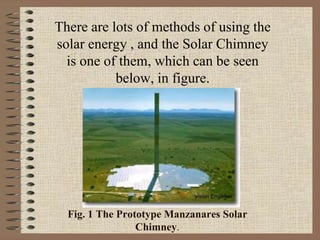
Fig. 1 The Prototype Manzanares Solar
Chimney.
There are lots of methods of using the
solar energy , and the Solar Chimney
is one of them, which can be seen
below, in figure.
2.The Solar Chimney
In 1978, it was suggested by
Professor Schlaich of Stuttgart
university that power could be
produced by a hybrid solar system.
The solar chimney system consists of
three parts; The collector , turbines
and the chimney.
2.a. Parts of the Solar Chimney
2.a.i. The Collector
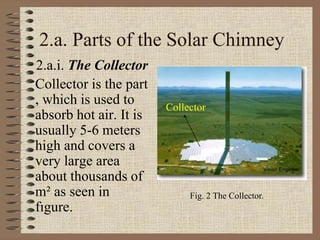
Collector is the part
, which is used to
absorb hot air. It is
usually 5-6 meters
high and covers a
very large area
about thousands of
m² as seen in
fıgure.
Fig. 2 The Collector.
Collector
• There is no limitation for the surface area. The
larger the area, the more energy generated from
the chimney.
• Covering materials may be different, such as;
glass, plastic film or glazed collector.The most
efficient one is glazed collector.It can convert up
to 70% of irratiated solar energy into heat a
typical annual average is 50%. Also, with proper
maintenance, its life span can easily be 60 years
or more.
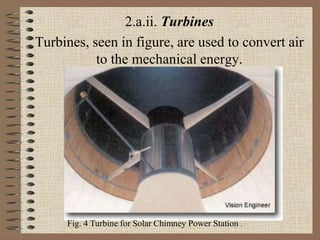
2.a.ii. Turbines
Turbines, seen in figure, are used to convert air
to the mechanical energy.
Fig. 4 Turbine for Solar Chimney Power Station .
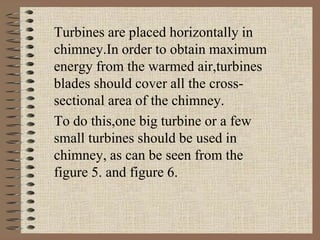
Turbines are placed horizontally in
chimney.In order to obtain maximum
energy from the warmed air,turbines
blades should cover all the cross-
sectional area of the chimney.
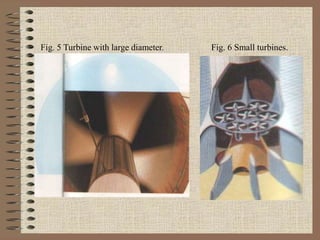
To do this,one big turbine or a few
small turbines should be used in
chimney, as can be seen from the
figure 5. and figure 6.
Fig. 5 Turbine with large diameter. Fig. 6 Small turbines.
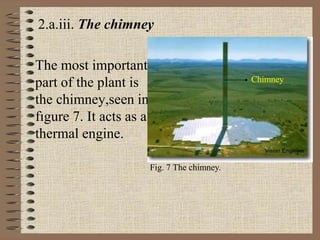
2.a.iii. The chimney
The most important
part of the plant is
the chimney,seen in
fıgure 7. It acts as a
thermal engine.
Chimney
Fig. 7 The chimney.
• Longer the chimneys height, the more the
energy produced from the chimney.
• The efficiency of the chimney does not
depend on the amount of the temperature
rising, but depends on the outside
temperature.
Thus, efficiency is directly proportional to the
ratio between the height of the chimney and
the outside temperature.
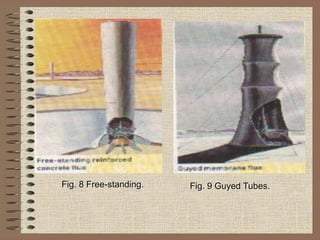
There are two types of different
chimneys using for the plant. Free
standing chimneys and guyed tubes
(Figure 8. and figure 9. ) .
The life span of a free standing
chimney is longer than that of the
guyed tubes. It lasts about a hundred
years, while the guyed tubes’ is much
shorter.
Although, the efficiency is
proportional to the height of the
chimney, there is a limitation in
practice.
Fig. 8 Free-standing. Fig. 9 Guyed Tubes.
2.b. Working principles of
Solar Chimney
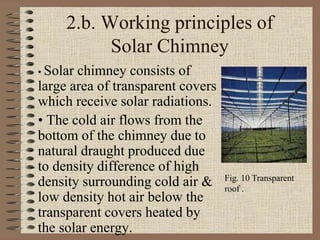
• Solar chimney consists of
large area of transparent covers
which receive solar radiations.
• The cold air flows from the
bottom of the chimney due to
natural draught produced due
to density difference of high
density surrounding cold air &
low density hot air below the
transparent covers heated by
the solar energy.
Fig. 10 Transparent
roof .
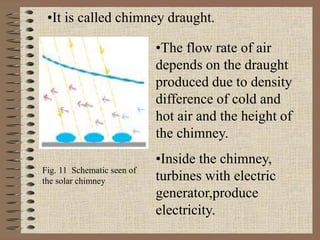
•It is called chimney draught.
•The flow rate of air
depends on the draught
produced due to density
difference of cold and
hot air and the height of
the chimney.
•Inside the chimney,
turbines with electric
generator,produce
electricity.
Fig. 11 Schematic seen of
the solar chimney
2.c. Technology
•Solar chimneys are large-scale power
plants with an output of 5 to 200 MW
each.
•A 100 MW plant will produce about 750
GWh/year.
•For that the glass roof has to be several
kilometers in diameter and the tube has to
be as high as possible to achieve a large
annual output.
3.The Mildura Solar Chimney
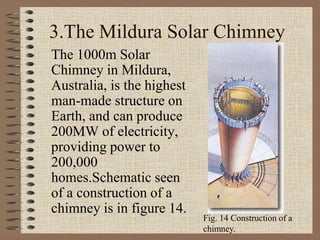
The 1000m Solar
Chimney in Mildura,
Australia, is the highest
man-made structure on
Earth, and can produce
200MW of electricity,
providing power to
200,000
homes.Schematic seen
of a construction of a
chimney is in figure 14.
Fig. 14 Construction of a
chimney.
•The cost to build the tower is
estimated at $395 million. (About 14
percent more than an equivalent coal-
fired power station, and about 70
percent more per installed megawatt
than a comparable wind farm).
• The Australian government target of
producing 2% of energy from
renewable sources by 2010 (9500
GigaWatt hours) could be met easily.
4.Advantages
Solar chimney power stations are
particularly suitable for generating
electricity in deserts and sun-rich
wasteland.
 It provides electricity 24 hour a
day from solar energy alone.
No fuel is needed. It needs no
cooling water and is suitable in
extreme drying regions.
It is particularly reliable and a little
trouble-prone compared with other
power plants.
The materials concrete, glass and
steel necessary for the building of
solar chimney power stations are
everywhere in sufficient quantities.
 No ecological harm and no
consumption of resources.
5.Disadvantages
Some estimates say that the cost of
generating electricity from a solar
chimney is 5x more than from a gas
turbine. Although fuel is not required,
solar chimneys have a very high
capital cost.
 The structure itself is massive and
requires a lot of engineering expertise
and materials to construct.
6.Conclusion
Solar chimney power stations could
make important contributions to the
energy supplies in Africa, Asia and
Australia, because there is plenty of
space and sunlight available there.
It is very important for the future,
because our resources are limited,
except our sun.
THE END

solar chimney power plant

  • 1.
    The Solar ChimneyPower Plant
  • 2.
    Contents: 1. Introduction 2. TheSolar Chimney a. Parts of the Solar Chimney i. Collector ii. Turbines iii. Chimney b. Working Principles of Solar Chimney c. Technology 3. The Mildura Solar Chimney
  • 3.
  • 4.
    1.Introduction: In many partsof the world , there is a growing awareness that some alternative energy sources could have an important role to play in the production of electricity. However , only the solar energy represents totally nonpolluting inexhaustible energy resource that can be utilized economically to supply Man’s energy needs for all time.
  • 5.
    Fig. 1 ThePrototype Manzanares Solar Chimney. There are lots of methods of using the solar energy , and the Solar Chimney is one of them, which can be seen below, in figure.
  • 6.
    2.The Solar Chimney In1978, it was suggested by Professor Schlaich of Stuttgart university that power could be produced by a hybrid solar system. The solar chimney system consists of three parts; The collector , turbines and the chimney.
  • 7.
    2.a. Parts ofthe Solar Chimney 2.a.i. The Collector Collector is the part , which is used to absorb hot air. It is usually 5-6 meters high and covers a very large area about thousands of m² as seen in fıgure. Fig. 2 The Collector. Collector
  • 8.
    • There isno limitation for the surface area. The larger the area, the more energy generated from the chimney. • Covering materials may be different, such as; glass, plastic film or glazed collector.The most efficient one is glazed collector.It can convert up to 70% of irratiated solar energy into heat a typical annual average is 50%. Also, with proper maintenance, its life span can easily be 60 years or more.
  • 9.
    2.a.ii. Turbines Turbines, seenin figure, are used to convert air to the mechanical energy. Fig. 4 Turbine for Solar Chimney Power Station .
  • 10.
    Turbines are placedhorizontally in chimney.In order to obtain maximum energy from the warmed air,turbines blades should cover all the cross- sectional area of the chimney. To do this,one big turbine or a few small turbines should be used in chimney, as can be seen from the figure 5. and figure 6.
  • 11.
    Fig. 5 Turbinewith large diameter. Fig. 6 Small turbines.
  • 12.
    2.a.iii. The chimney Themost important part of the plant is the chimney,seen in fıgure 7. It acts as a thermal engine. Chimney Fig. 7 The chimney.
  • 13.
    • Longer thechimneys height, the more the energy produced from the chimney. • The efficiency of the chimney does not depend on the amount of the temperature rising, but depends on the outside temperature. Thus, efficiency is directly proportional to the ratio between the height of the chimney and the outside temperature.
  • 14.
    There are twotypes of different chimneys using for the plant. Free standing chimneys and guyed tubes (Figure 8. and figure 9. ) . The life span of a free standing chimney is longer than that of the guyed tubes. It lasts about a hundred years, while the guyed tubes’ is much shorter. Although, the efficiency is proportional to the height of the chimney, there is a limitation in practice.
  • 15.
    Fig. 8 Free-standing.Fig. 9 Guyed Tubes.
  • 16.
    2.b. Working principlesof Solar Chimney • Solar chimney consists of large area of transparent covers which receive solar radiations. • The cold air flows from the bottom of the chimney due to natural draught produced due to density difference of high density surrounding cold air & low density hot air below the transparent covers heated by the solar energy. Fig. 10 Transparent roof .
  • 17.
    •It is calledchimney draught. •The flow rate of air depends on the draught produced due to density difference of cold and hot air and the height of the chimney. •Inside the chimney, turbines with electric generator,produce electricity. Fig. 11 Schematic seen of the solar chimney
  • 18.
    2.c. Technology •Solar chimneysare large-scale power plants with an output of 5 to 200 MW each. •A 100 MW plant will produce about 750 GWh/year. •For that the glass roof has to be several kilometers in diameter and the tube has to be as high as possible to achieve a large annual output.
  • 19.
    3.The Mildura SolarChimney The 1000m Solar Chimney in Mildura, Australia, is the highest man-made structure on Earth, and can produce 200MW of electricity, providing power to 200,000 homes.Schematic seen of a construction of a chimney is in figure 14. Fig. 14 Construction of a chimney.
  • 20.
    •The cost tobuild the tower is estimated at $395 million. (About 14 percent more than an equivalent coal- fired power station, and about 70 percent more per installed megawatt than a comparable wind farm). • The Australian government target of producing 2% of energy from renewable sources by 2010 (9500 GigaWatt hours) could be met easily.
  • 21.
    4.Advantages Solar chimney powerstations are particularly suitable for generating electricity in deserts and sun-rich wasteland.  It provides electricity 24 hour a day from solar energy alone. No fuel is needed. It needs no cooling water and is suitable in extreme drying regions.
  • 22.
    It is particularlyreliable and a little trouble-prone compared with other power plants. The materials concrete, glass and steel necessary for the building of solar chimney power stations are everywhere in sufficient quantities.  No ecological harm and no consumption of resources.
  • 23.
    5.Disadvantages Some estimates saythat the cost of generating electricity from a solar chimney is 5x more than from a gas turbine. Although fuel is not required, solar chimneys have a very high capital cost.  The structure itself is massive and requires a lot of engineering expertise and materials to construct.
  • 24.
    6.Conclusion Solar chimney powerstations could make important contributions to the energy supplies in Africa, Asia and Australia, because there is plenty of space and sunlight available there. It is very important for the future, because our resources are limited, except our sun. THE END

Editor's Notes