IMMUNOSUPRESSAN
TS
SANJU KALADHARAN
sanju kaladharan
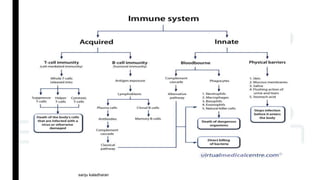
■ Immunosuppressants are drugs which inhibit cellular/humoral or both types of
immune responses, and have their major use in organ transplantation and
autoimmune diseases
sanju kaladharan
sanju kaladharan
sanju kaladharan
sanju kaladharan
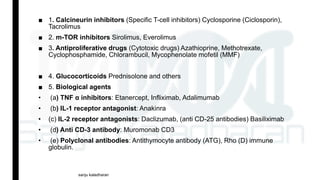
■ 1. Calcineurin inhibitors (Specific T-cell inhibitors) Cyclosporine (Ciclosporin),
Tacrolimus
■ 2. m-TOR inhibitors Sirolimus, Everolimus
■ 3. Antiproliferative drugs (Cytotoxic drugs) Azathioprine, Methotrexate,
Cyclophosphamide, Chlorambucil, Mycophenolate mofetil (MMF)
■ 4. Glucocorticoids Prednisolone and others
■ 5. Biological agents
• (a) TNF α inhibitors: Etanercept, Infliximab, Adalimumab
• (b) IL-1 receptor antagonist: Anakinra
• (c) IL-2 receptor antagonists: Daclizumab, (anti CD-25 antibodies) Basiliximab
• (d) Anti CD-3 antibody: Muromonab CD3
• (e) Polyclonal antibodies: Antithymocyte antibody (ATG), Rho (D) immune
globulin.
sanju kaladharan
CALCINEURIN INHIBITORS
(Specific T-cell inhibitors) -
CYCLOSPORINE■ Cyclosporine is a lipophilic cyclic polypeptide composed of 11 amino acids (several
of the amino acids are methylated on the peptidyl nitrogen).
■ The drug is extracted from the soil fungus Beauveria nivea.
■ Cyclosporine is used to prevent rejection of kidney, liver, and cardiac allogeneic
transplants.
■ Cyclosporine is most effective in preventing acute rejection of transplanted organs
when combined in a double-drug or triple-drug regimen with corticosteroids and an
antimetabolite such as mycophenolate mofetil.
■ Cyclosporine is an alternative to methotrexate for the treatment of severe, active
rheumatoid arthritis.
■ It can also be used for patients with recalcitrant psoriasis that does not respond to
other therapies, and it is also used for xerophthalmia.
sanju kaladharan
MOA
■ Cyclosporine preferentially suppresses cell mediated immune reactions, whereas
humoral immunity is affected to a far lesser extent.
■ After diffusing into the T cell, cyclosporine binds to a cyclophilin (more generally
called an immunophilin) to form a complex that binds to calcineurin.
■ The latter is responsible for dephosphorylating NFATc (cytosolic Nuclear Factor of
Activated T cells).
■ Because the cyclosporine-calcineurin complex cannot perform this reaction,
■ NFATc cannot enter the nucleus to promote the reactions that are required for the
synthesis of a number of cytokines, including IL-2.
■ The end result is a decrease in IL-2, which is the primary chemical stimulus for
increasing the number of T lymphocytes.
sanju kaladharan
sanju kaladharan
CALCINEURIN INHIBITORS
(Specific T-cell inhibitors) -
TACROLIMUS■ Tacrolimus is a macrolide that is isolated from the soil fungus Streptomyces
tsukubaensis.
■ Tacrolimus is approved for the prevention of rejection of liver and kidney
transplants and is given with a corticosteroid and/or an antimetabolite.
■ This drug has found favor over cyclosporine, not only because of its potency
and decreased episodes of rejection, but also because lower doses of
corticosteroids can be used, thus reducing the likelihood of steroid-associated
adverse effects.
Mechanism of action: Tacrolimus exerts its immunosuppressive effect in the same
manner as cyclosporine, except that it binds to a different immunophilin, FKBP-12
(FK-binding protein).
sanju kaladharan
m-TOR inhibitors: Sirolimus
■ Sirolimus is a macrolide obtained from fermentations of the soil mold
Streptomyces hygroscopicus.
■ The earlier name, and one that is sometimes still used, is rapamycin
■ The combination of sirolimus and cyclosporine is apparently synergistic because
sirolimus works later in the immune activation cascade.
■ To limit the long-term side effects of the calcineurin inhibitor, sirolimus is often
used in calcineurin inhibitor withdrawal protocols in patients who remain
rejection free during the first 3 months posttransplant
■ In addition to its immunosuppressive effects, sirolimus also inhibits proliferation
of cells in the graft intimal areas and, thus, is effective in halting graft vascular
disease.
sanju kaladharan
Mechanism of action: Sirolimus
■ Sirolimus and tacrolimus bind to the
same cytoplasmic FK-binding protein,
but instead of forming a complex with
calcineurin, sirolimus binds to mTOR,
interfering with Signal 3.
■ The latter is a serine-threonine kinase.
[Note: TOR proteins are essential for
many cellular functions, such as cell-
cycle progression, DNA repair, and as
regulators involved in protein
translation.]
■ Binding of sirolimus to mTOR blocks the
progression of activated T cells from the
G1 to the S phase of the cell cycle and,
consequently, the proliferation of these
cells .
■ Unlike cyclosporine and tacrolimus,
sirolimus does not owe its effect to
lowering IL-2 production but, rather, to
inhibiting the cellular responses to IL-2.sanju kaladharan
m-TOR inhibitors : Everolimus
■ Everolimus has the same mechanism of action as sirolimus. It inhibits activation
of T cells by forming a complex with FKBP-12 and subsequently blocking mTOR
sanju kaladharan
Antiproliferative drugs (Cytotoxic
drugs): Azathioprine
■ It is a prodrug that is converted first to 6-mercaptopurine (6-MP) and then to the
corresponding nucleotide, thioinosinic acid.
■ The immunosuppressive effects of azathioprine are due to this nucleotide
analog.
■ Because of their rapid proliferation in the immune response and their
dependence on the de novo synthesis of purines required for cell division,
lymphocytes are predominantly affected by the cytotoxic effects of azathioprine.
sanju kaladharan
sanju kaladharan
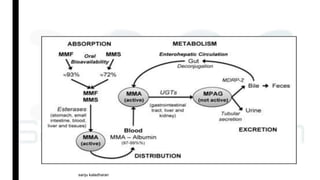
Mycophenolate mofetil (MMF)
■ It is a newer
immunosuppressant; prodrug of
mycophenolic acid which
selectively inhibits inosine
monophosphate
dehydrogenase, an enzyme
essential for de novo synthesis
of guanosine nucleotides in the
T and B cells (these cells, unlike
others, do not have the purine
salvage pathway).
■ Lymphocyte proliferation,
antibody production and CMI
are inhibited.
sanju kaladharan
■ Inosine monophosphate dehydrogenase
(IMPDH) catalyzes the nicotinamide
adenine dinucleotide-dependent
oxidation of inosine monophosphate
dehydrogenase to xanthine 5′-
monophosphate, an intermediate
metabolite in the production of
guanosine-triphosphate.
■ Mycophenolic acid is a potent,
selective, reversible, and noncompetitive
inhibitor of IMPDH, the rate-limiting
enzyme involved in the de novo
synthesis of intracellular guanosine.
■
sanju kaladharan
sanju kaladharan
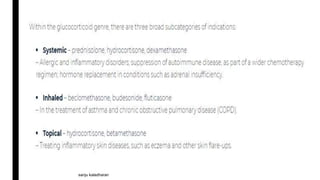
Glucocorticoids
■ Glucocorticoid Effects on carbohydrate, protein and fat metabolism, and other
actions that are inseparably linked to these.
■ Mineralocorticoid Effects on Na+, K+ and fluid balance.
■ Glucocorticoids inhibit MHC expression and IL-1, IL-2, IL-6 production so that
helper T-cells are not activated.
sanju kaladharan
sanju kaladharan
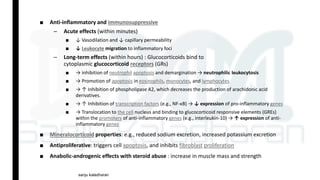
■ Anti-inflammatory and immunosuppressive
– Acute effects (within minutes)
■ ↓ Vasodilation and ↓ capillary permeability
■ ↓ Leukocyte migration to inflammatory foci
– Long-term effects (within hours) : Glucocorticoids bind to
cytoplasmic glucocorticoid receptors (GRs)
■ → inhibition of neutrophil apoptosis and demargination → neutrophilic leukocytosis
■ → Promotion of apoptosis in eosinophils, monocytes, and lymphocytes
■ → ↑ Inhibition of phospholipase A2, which decreases the production of arachidonic acid
derivatives.
■ → ↑ Inhibition of transcription factors (e.g., NF-κB) → ↓ expression of pro-inflammatory genes
■ → Translocation to the cell nucleus and binding to glucocorticoid responsive elements (GREs)
within the promoters of anti-inflammatory genes (e.g., interleukin-10) → ↑ expression of anti-
inflammatory genes
■ Mineralocorticoid properties: e.g., reduced sodium excretion, increased potassium excretion
■ Antiproliferative: triggers cell apoptosis, and inhibits fibroblast proliferation
■ Anabolic-androgenic effects with steroid abuse : increase in muscle mass and strength
sanju kaladharan
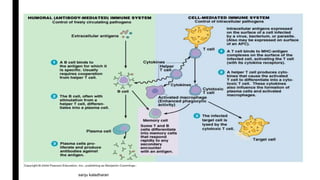
■ The antigen (Ag) is processed by
macrophages or other antigen presenting
cells (APC), coupled with class II major
histocompatibility complex (MHC) and
presented to the CD4 helper T-cell which
are activated by interleukin-I (IL-1),
proliferate and secrete cytokines—these
in turn promote proliferation and
differentiation of antigen activated B cells
into antibody (Ab) secreting plasma cells.
■ Antibodies finally bind and inactivate the
antigen.
■ In cell-mediated immunity—foreign
antigen is processed and presented to
CD4 helper T cell which elaborate
■ IL-2 and other cytokines that in turn
stimulate proliferation and maturation of
precursor cytotoxic lymphocytes (CTL)
that have been activated by antigen
presented with class I MHC. The mature
CTL (Killer cells) recognize cells carrying
the antigen and lyse them.
Glucocorticoids inhibit MHC expression and
IL-1, IL-2, IL-6 production so that helper T-
cells are not activated
sanju kaladharan
sanju kaladharan
sanju kaladharan
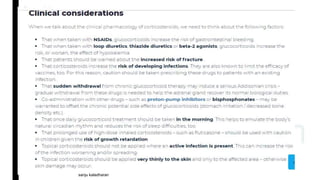
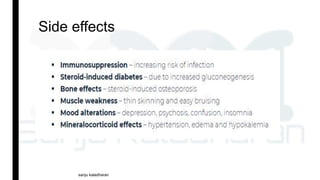
Side effects
sanju kaladharan
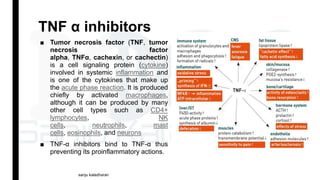
TNF α inhibitors
sanju kaladharan
■ Tumor necrosis factor (TNF, tumor
necrosis factor
alpha, TNFα, cachexin, or cachectin)
is a cell signaling protein (cytokine)
involved in systemic inflammation and
is one of the cytokines that make up
the acute phase reaction. It is produced
chiefly by activated macrophages,
although it can be produced by many
other cell types such as CD4+
lymphocytes, NK
cells, neutrophils, mast
cells, eosinophils, and neurons
■ TNF-α inhibitors bind to TNF-α thus
preventing its proinflammatory actions.
IL antagonists
■ Stimulated macrophages and other mononuclear cells elaborate IL-1 which
activates helper T-cells and induces production of other ILs, metalloproteinases,
etc. An endogenous IL-1 receptor antagonist has been isolated and several of
its recombinant variants have been produced for clinical use.
■ The CD-25 molecule is expressed on the surface of immunologically activated,
but not resting T-cells. It acts as a high affinity receptor for IL-2 through which
cell proliferation and differentiation are promoted.
■ Some anti CD-25 antibodies have been developed as IL-2 receptor antagonist
to specifically arrest the activated T-cells.
sanju kaladharan
Anti CD-3 antibody: Muromonab
CD3■ the CD3 (cluster of differentiation 3) T cell co-receptor helps to activate both the
cytotoxic T cell (CD8+ naive T cells) and also T helper cells (CD4+ naive T cells).
■ It consists of a protein complex and is composed of four distinct chains. In mammals,
the complex contains a CD3γ chain, a CD3δ chain, and two CD3ε chains. These chains
associate with the T-cell receptor (TCR) and the ζ-chain (zeta-chain) to generate an
activation signal in T lymphocytes.
■ Muromonab binds to the T-cell surface glycoprotein CD3 epsilon chain. It appears to kill
CD-3 positive cells by inducing Fc mediated apoptosis, antibody mediated cytotoxicity
and complement-dependent cytotoxicity.
■ Binding to the CD3 protein results in a disruption of T-lymphocyte function, because
access of antigen to the recognition site is blocked. Circulating T cells are depleted;
thus, their participation in the immune response is decreased.
■ Because muromonab-CD3 recognizes only one antigenic site, the immunosuppression is
less broad than that seen with the polyclonal antibodies. T cells usually return to
normal within 48 hours of discontinuation of therapy.
sanju kaladharan
Polyclonal antibodies :
Antithymocyte globulin (ATG)
■ Thymocytes are cells that develop in the thymus and serve as T-cell precursors.
The antibodies developed against them are prepared by immunization of large
rabbits or horses with human lymphoid cells and, thus, are polyclonal.
■ The antibodies bind to the surface of circulating T lymphocytes, which then
undergo various reactions, such as complement-mediated destruction, antibody-
dependent cytotoxicity, apoptosis, and opsonization.
■ The antibody-bound cells are phagocytosed in the liver and spleen, resulting in
lymphopenia and impaired T-cell responses. The antibodies are slowly infused
intravenously, and their half-life extends from 3 to 9 days.
■ Because the humoral antibody mechanism remains active, antibodies can be
formed against these foreign proteins.
sanju kaladharan
Polyclonal antibodies : Anti-D
immune globulin
■ It is human IgG having a high titer of antibodies against Rh (D) antigen.
■ It binds the Rho antigens and does not allow them to induce antibody formation
in Rh negative individuals.
■ It is used for prevention of postpartum/post-abortion formation of antibodies in
Rho-D negative, DU negative women who have delivered or aborted an Rho-D
positive, DU positive baby/foetus.
■ Administered within 72 hours of delivery/ abortion, such treatment prevents Rh
haemolytic disease in future offspring.
■ It has also been given at 28th week of pregnancy
sanju kaladharan
sanju kaladharan

Immunosupressants

  • 1.
  • 2.
    ■ Immunosuppressants aredrugs which inhibit cellular/humoral or both types of immune responses, and have their major use in organ transplantation and autoimmune diseases sanju kaladharan
  • 3.
  • 4.
  • 5.
  • 6.
    ■ 1. Calcineurininhibitors (Specific T-cell inhibitors) Cyclosporine (Ciclosporin), Tacrolimus ■ 2. m-TOR inhibitors Sirolimus, Everolimus ■ 3. Antiproliferative drugs (Cytotoxic drugs) Azathioprine, Methotrexate, Cyclophosphamide, Chlorambucil, Mycophenolate mofetil (MMF) ■ 4. Glucocorticoids Prednisolone and others ■ 5. Biological agents • (a) TNF α inhibitors: Etanercept, Infliximab, Adalimumab • (b) IL-1 receptor antagonist: Anakinra • (c) IL-2 receptor antagonists: Daclizumab, (anti CD-25 antibodies) Basiliximab • (d) Anti CD-3 antibody: Muromonab CD3 • (e) Polyclonal antibodies: Antithymocyte antibody (ATG), Rho (D) immune globulin. sanju kaladharan
  • 7.
    CALCINEURIN INHIBITORS (Specific T-cellinhibitors) - CYCLOSPORINE■ Cyclosporine is a lipophilic cyclic polypeptide composed of 11 amino acids (several of the amino acids are methylated on the peptidyl nitrogen). ■ The drug is extracted from the soil fungus Beauveria nivea. ■ Cyclosporine is used to prevent rejection of kidney, liver, and cardiac allogeneic transplants. ■ Cyclosporine is most effective in preventing acute rejection of transplanted organs when combined in a double-drug or triple-drug regimen with corticosteroids and an antimetabolite such as mycophenolate mofetil. ■ Cyclosporine is an alternative to methotrexate for the treatment of severe, active rheumatoid arthritis. ■ It can also be used for patients with recalcitrant psoriasis that does not respond to other therapies, and it is also used for xerophthalmia. sanju kaladharan
  • 8.
    MOA ■ Cyclosporine preferentiallysuppresses cell mediated immune reactions, whereas humoral immunity is affected to a far lesser extent. ■ After diffusing into the T cell, cyclosporine binds to a cyclophilin (more generally called an immunophilin) to form a complex that binds to calcineurin. ■ The latter is responsible for dephosphorylating NFATc (cytosolic Nuclear Factor of Activated T cells). ■ Because the cyclosporine-calcineurin complex cannot perform this reaction, ■ NFATc cannot enter the nucleus to promote the reactions that are required for the synthesis of a number of cytokines, including IL-2. ■ The end result is a decrease in IL-2, which is the primary chemical stimulus for increasing the number of T lymphocytes. sanju kaladharan
  • 9.
  • 10.
    CALCINEURIN INHIBITORS (Specific T-cellinhibitors) - TACROLIMUS■ Tacrolimus is a macrolide that is isolated from the soil fungus Streptomyces tsukubaensis. ■ Tacrolimus is approved for the prevention of rejection of liver and kidney transplants and is given with a corticosteroid and/or an antimetabolite. ■ This drug has found favor over cyclosporine, not only because of its potency and decreased episodes of rejection, but also because lower doses of corticosteroids can be used, thus reducing the likelihood of steroid-associated adverse effects. Mechanism of action: Tacrolimus exerts its immunosuppressive effect in the same manner as cyclosporine, except that it binds to a different immunophilin, FKBP-12 (FK-binding protein). sanju kaladharan
  • 11.
    m-TOR inhibitors: Sirolimus ■Sirolimus is a macrolide obtained from fermentations of the soil mold Streptomyces hygroscopicus. ■ The earlier name, and one that is sometimes still used, is rapamycin ■ The combination of sirolimus and cyclosporine is apparently synergistic because sirolimus works later in the immune activation cascade. ■ To limit the long-term side effects of the calcineurin inhibitor, sirolimus is often used in calcineurin inhibitor withdrawal protocols in patients who remain rejection free during the first 3 months posttransplant ■ In addition to its immunosuppressive effects, sirolimus also inhibits proliferation of cells in the graft intimal areas and, thus, is effective in halting graft vascular disease. sanju kaladharan
  • 12.
    Mechanism of action:Sirolimus ■ Sirolimus and tacrolimus bind to the same cytoplasmic FK-binding protein, but instead of forming a complex with calcineurin, sirolimus binds to mTOR, interfering with Signal 3. ■ The latter is a serine-threonine kinase. [Note: TOR proteins are essential for many cellular functions, such as cell- cycle progression, DNA repair, and as regulators involved in protein translation.] ■ Binding of sirolimus to mTOR blocks the progression of activated T cells from the G1 to the S phase of the cell cycle and, consequently, the proliferation of these cells . ■ Unlike cyclosporine and tacrolimus, sirolimus does not owe its effect to lowering IL-2 production but, rather, to inhibiting the cellular responses to IL-2.sanju kaladharan
  • 13.
    m-TOR inhibitors :Everolimus ■ Everolimus has the same mechanism of action as sirolimus. It inhibits activation of T cells by forming a complex with FKBP-12 and subsequently blocking mTOR sanju kaladharan
  • 14.
    Antiproliferative drugs (Cytotoxic drugs):Azathioprine ■ It is a prodrug that is converted first to 6-mercaptopurine (6-MP) and then to the corresponding nucleotide, thioinosinic acid. ■ The immunosuppressive effects of azathioprine are due to this nucleotide analog. ■ Because of their rapid proliferation in the immune response and their dependence on the de novo synthesis of purines required for cell division, lymphocytes are predominantly affected by the cytotoxic effects of azathioprine. sanju kaladharan
  • 15.
  • 16.
    Mycophenolate mofetil (MMF) ■It is a newer immunosuppressant; prodrug of mycophenolic acid which selectively inhibits inosine monophosphate dehydrogenase, an enzyme essential for de novo synthesis of guanosine nucleotides in the T and B cells (these cells, unlike others, do not have the purine salvage pathway). ■ Lymphocyte proliferation, antibody production and CMI are inhibited. sanju kaladharan
  • 17.
    ■ Inosine monophosphatedehydrogenase (IMPDH) catalyzes the nicotinamide adenine dinucleotide-dependent oxidation of inosine monophosphate dehydrogenase to xanthine 5′- monophosphate, an intermediate metabolite in the production of guanosine-triphosphate. ■ Mycophenolic acid is a potent, selective, reversible, and noncompetitive inhibitor of IMPDH, the rate-limiting enzyme involved in the de novo synthesis of intracellular guanosine. ■ sanju kaladharan
  • 18.
  • 19.
    Glucocorticoids ■ Glucocorticoid Effectson carbohydrate, protein and fat metabolism, and other actions that are inseparably linked to these. ■ Mineralocorticoid Effects on Na+, K+ and fluid balance. ■ Glucocorticoids inhibit MHC expression and IL-1, IL-2, IL-6 production so that helper T-cells are not activated. sanju kaladharan
  • 20.
  • 21.
    ■ Anti-inflammatory andimmunosuppressive – Acute effects (within minutes) ■ ↓ Vasodilation and ↓ capillary permeability ■ ↓ Leukocyte migration to inflammatory foci – Long-term effects (within hours) : Glucocorticoids bind to cytoplasmic glucocorticoid receptors (GRs) ■ → inhibition of neutrophil apoptosis and demargination → neutrophilic leukocytosis ■ → Promotion of apoptosis in eosinophils, monocytes, and lymphocytes ■ → ↑ Inhibition of phospholipase A2, which decreases the production of arachidonic acid derivatives. ■ → ↑ Inhibition of transcription factors (e.g., NF-κB) → ↓ expression of pro-inflammatory genes ■ → Translocation to the cell nucleus and binding to glucocorticoid responsive elements (GREs) within the promoters of anti-inflammatory genes (e.g., interleukin-10) → ↑ expression of anti- inflammatory genes ■ Mineralocorticoid properties: e.g., reduced sodium excretion, increased potassium excretion ■ Antiproliferative: triggers cell apoptosis, and inhibits fibroblast proliferation ■ Anabolic-androgenic effects with steroid abuse : increase in muscle mass and strength sanju kaladharan
  • 22.
    ■ The antigen(Ag) is processed by macrophages or other antigen presenting cells (APC), coupled with class II major histocompatibility complex (MHC) and presented to the CD4 helper T-cell which are activated by interleukin-I (IL-1), proliferate and secrete cytokines—these in turn promote proliferation and differentiation of antigen activated B cells into antibody (Ab) secreting plasma cells. ■ Antibodies finally bind and inactivate the antigen. ■ In cell-mediated immunity—foreign antigen is processed and presented to CD4 helper T cell which elaborate ■ IL-2 and other cytokines that in turn stimulate proliferation and maturation of precursor cytotoxic lymphocytes (CTL) that have been activated by antigen presented with class I MHC. The mature CTL (Killer cells) recognize cells carrying the antigen and lyse them. Glucocorticoids inhibit MHC expression and IL-1, IL-2, IL-6 production so that helper T- cells are not activated sanju kaladharan
  • 23.
  • 24.
  • 25.
  • 26.
    TNF α inhibitors sanjukaladharan ■ Tumor necrosis factor (TNF, tumor necrosis factor alpha, TNFα, cachexin, or cachectin) is a cell signaling protein (cytokine) involved in systemic inflammation and is one of the cytokines that make up the acute phase reaction. It is produced chiefly by activated macrophages, although it can be produced by many other cell types such as CD4+ lymphocytes, NK cells, neutrophils, mast cells, eosinophils, and neurons ■ TNF-α inhibitors bind to TNF-α thus preventing its proinflammatory actions.
  • 27.
    IL antagonists ■ Stimulatedmacrophages and other mononuclear cells elaborate IL-1 which activates helper T-cells and induces production of other ILs, metalloproteinases, etc. An endogenous IL-1 receptor antagonist has been isolated and several of its recombinant variants have been produced for clinical use. ■ The CD-25 molecule is expressed on the surface of immunologically activated, but not resting T-cells. It acts as a high affinity receptor for IL-2 through which cell proliferation and differentiation are promoted. ■ Some anti CD-25 antibodies have been developed as IL-2 receptor antagonist to specifically arrest the activated T-cells. sanju kaladharan
  • 28.
    Anti CD-3 antibody:Muromonab CD3■ the CD3 (cluster of differentiation 3) T cell co-receptor helps to activate both the cytotoxic T cell (CD8+ naive T cells) and also T helper cells (CD4+ naive T cells). ■ It consists of a protein complex and is composed of four distinct chains. In mammals, the complex contains a CD3γ chain, a CD3δ chain, and two CD3ε chains. These chains associate with the T-cell receptor (TCR) and the ζ-chain (zeta-chain) to generate an activation signal in T lymphocytes. ■ Muromonab binds to the T-cell surface glycoprotein CD3 epsilon chain. It appears to kill CD-3 positive cells by inducing Fc mediated apoptosis, antibody mediated cytotoxicity and complement-dependent cytotoxicity. ■ Binding to the CD3 protein results in a disruption of T-lymphocyte function, because access of antigen to the recognition site is blocked. Circulating T cells are depleted; thus, their participation in the immune response is decreased. ■ Because muromonab-CD3 recognizes only one antigenic site, the immunosuppression is less broad than that seen with the polyclonal antibodies. T cells usually return to normal within 48 hours of discontinuation of therapy. sanju kaladharan
  • 29.
    Polyclonal antibodies : Antithymocyteglobulin (ATG) ■ Thymocytes are cells that develop in the thymus and serve as T-cell precursors. The antibodies developed against them are prepared by immunization of large rabbits or horses with human lymphoid cells and, thus, are polyclonal. ■ The antibodies bind to the surface of circulating T lymphocytes, which then undergo various reactions, such as complement-mediated destruction, antibody- dependent cytotoxicity, apoptosis, and opsonization. ■ The antibody-bound cells are phagocytosed in the liver and spleen, resulting in lymphopenia and impaired T-cell responses. The antibodies are slowly infused intravenously, and their half-life extends from 3 to 9 days. ■ Because the humoral antibody mechanism remains active, antibodies can be formed against these foreign proteins. sanju kaladharan
  • 30.
    Polyclonal antibodies :Anti-D immune globulin ■ It is human IgG having a high titer of antibodies against Rh (D) antigen. ■ It binds the Rho antigens and does not allow them to induce antibody formation in Rh negative individuals. ■ It is used for prevention of postpartum/post-abortion formation of antibodies in Rho-D negative, DU negative women who have delivered or aborted an Rho-D positive, DU positive baby/foetus. ■ Administered within 72 hours of delivery/ abortion, such treatment prevents Rh haemolytic disease in future offspring. ■ It has also been given at 28th week of pregnancy sanju kaladharan
  • 31.