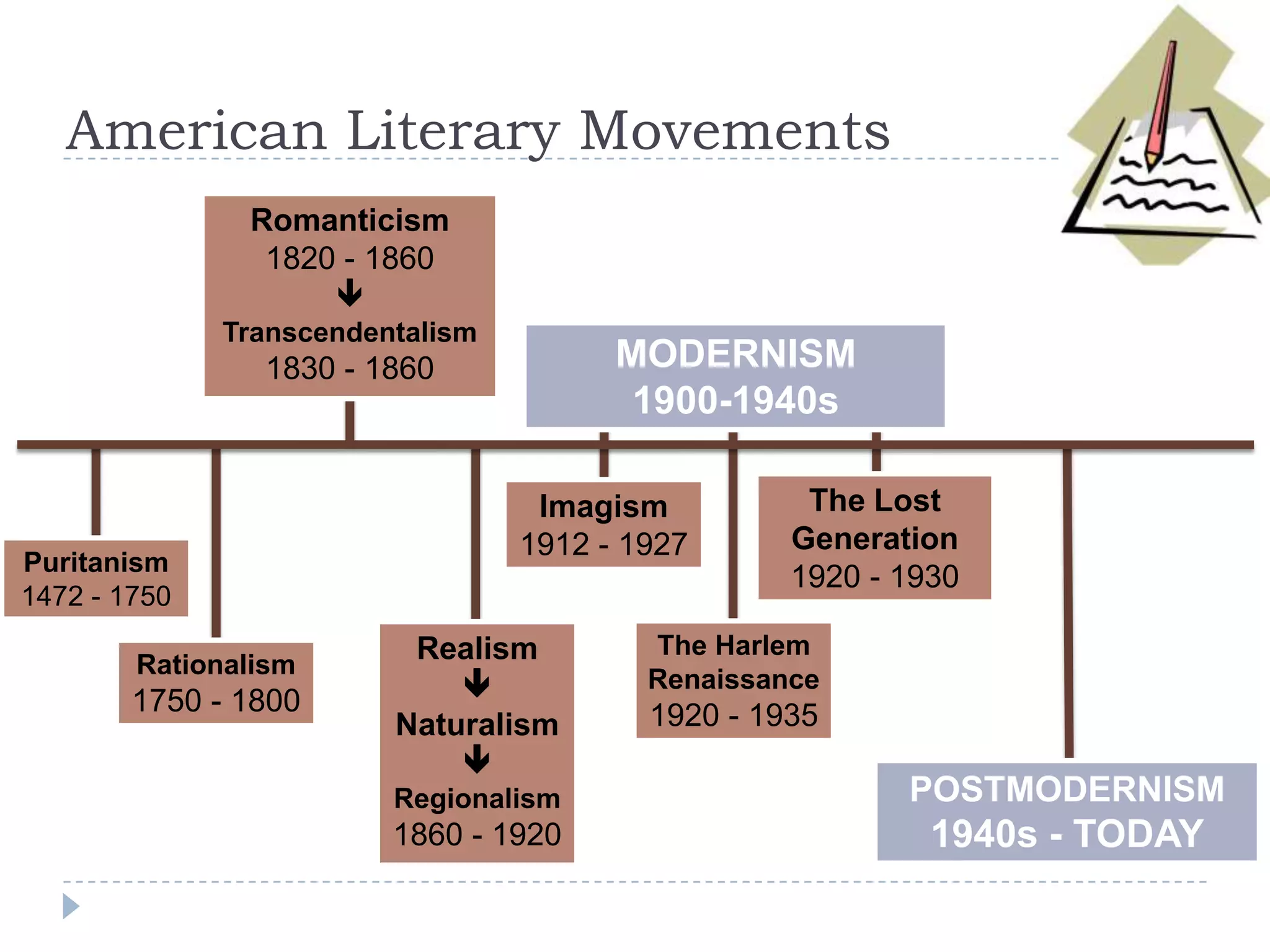
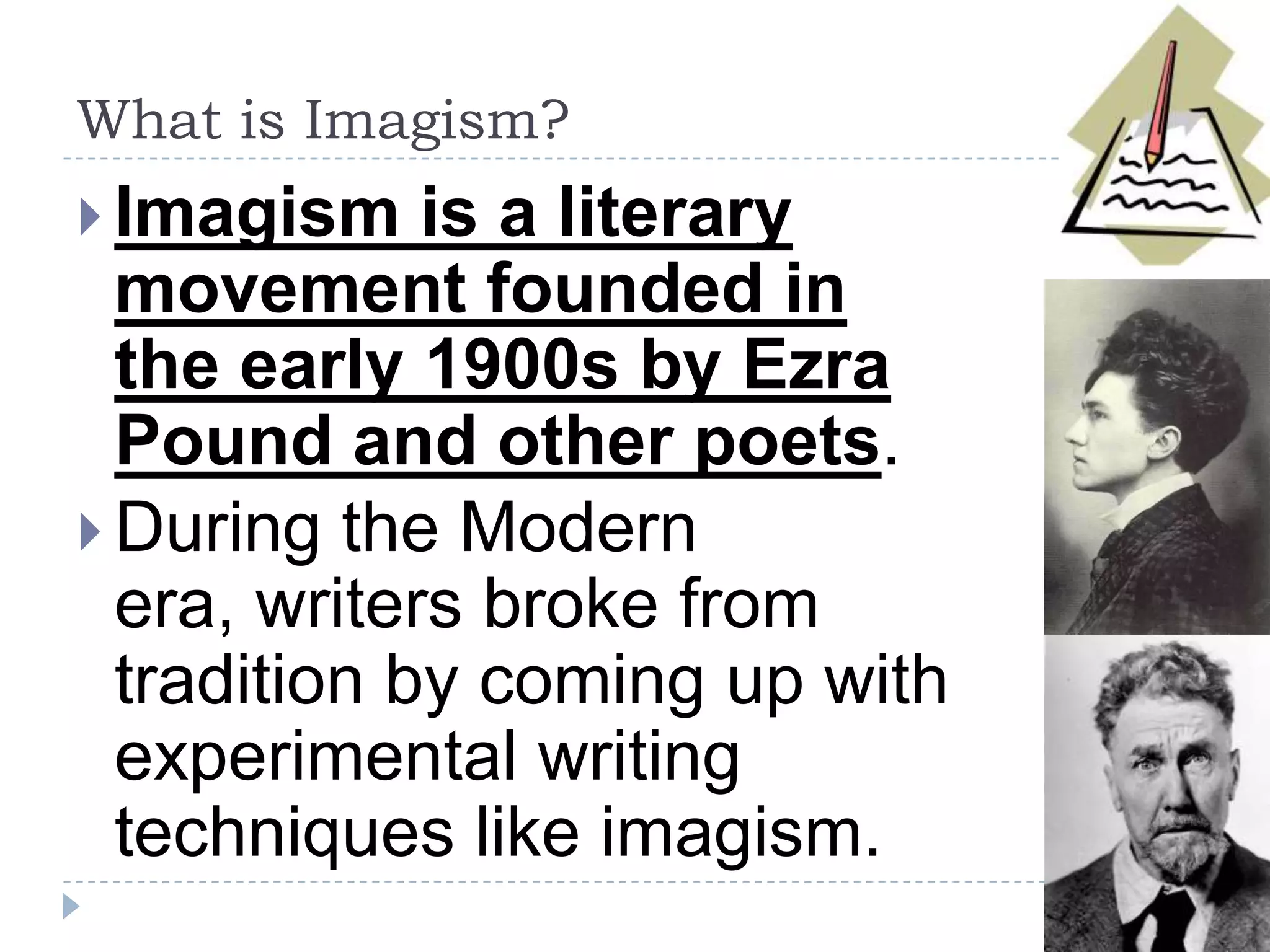
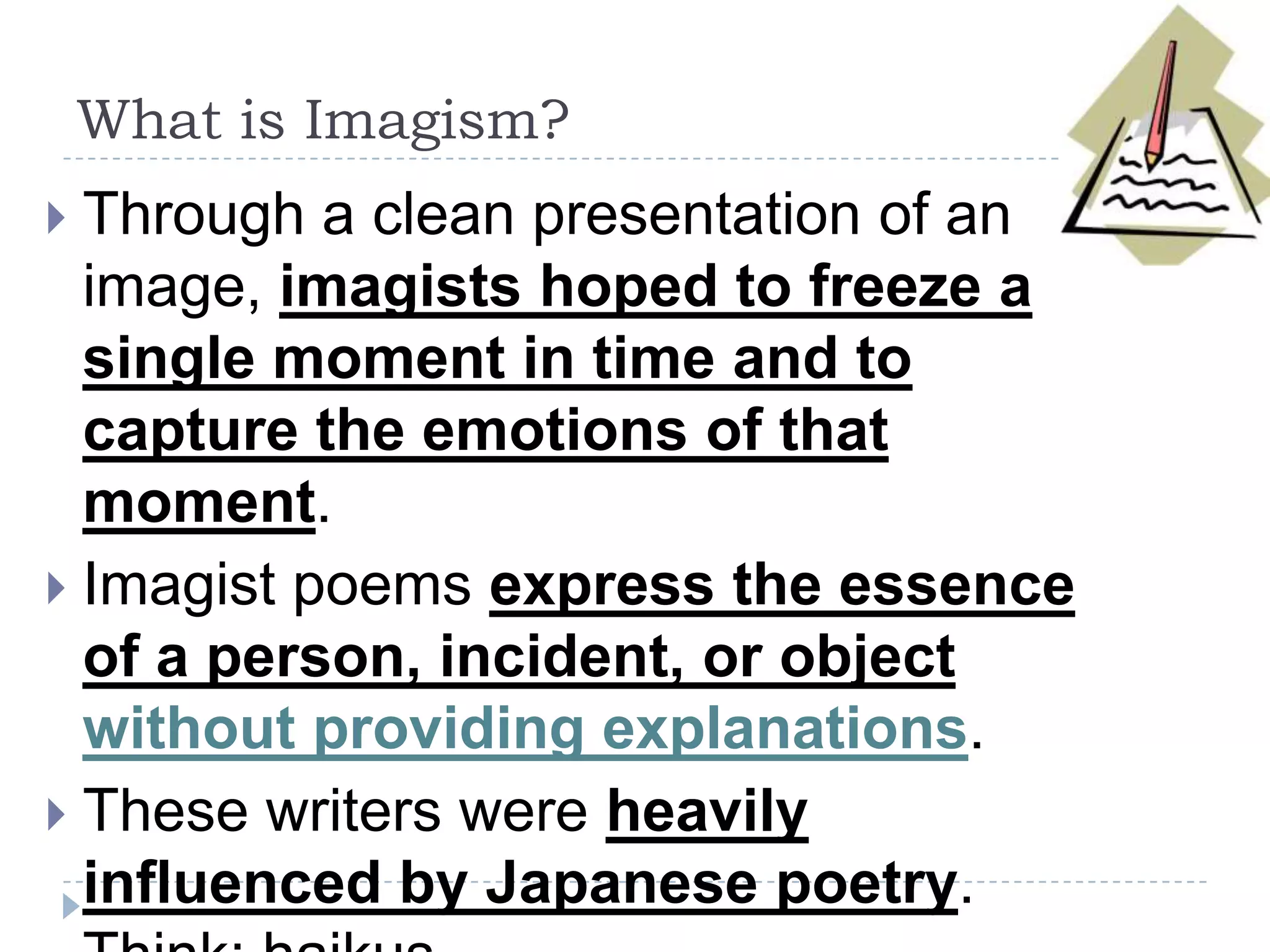
This document discusses the literary movement of Imagism. It began in the early 1900s as a reaction against traditional "genteel" poetry. Imagist poems aimed to freeze a single moment in time through precise imagery and concise language, capturing the essence and emotions of that moment without explanation. Famous Imagist poets like Ezra Pound, F. Scott Fitzgerald, and T.S. Eliot employed Imagist techniques in their works by using vivid, concrete descriptions to establish atmospheric scenes and moods. Students are taught to analyze Imagist poems by identifying the moment portrayed, listing the imagery, imagining a backstory, and determining the associated emotions.




![Eliot and Imagism
“And I have known the arms already, known them
all—
Arms that are braceleted and white and bare
[But in the lamplight, downed with light brown hair!]
“
“I should have been a pair of ragged claws
Scuttling across the floors of silent seas.”
“We have lingered in the chambers of the sea
By sea-girls wreathed with seaweed red and brown
Till human voices wake us, and we drown.”
T.S. Eliot used imagism throughout “The
Love Song of J. Alfred Prufrock.”](https://image.slidesharecdn.com/imagism-130423144438-phpapp02/75/Imagism-15-2048.jpg)