Workshop A: The Content
                  !
      Chair: Ilkka Jormanainen

      Joensuu Science Society

                Finland
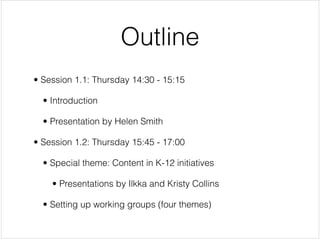
Outline
• Session 1.1: Thursday 14:30 - 15:15


  • Introduction


  • Presentation by Helen Smith


• Session 1.2: Thursday 15:45 - 17:00


  • Special theme: Content in K-12 initiatives


    • Presentations by Ilkka and Kristy Collins


  • Setting up working groups (four themes)
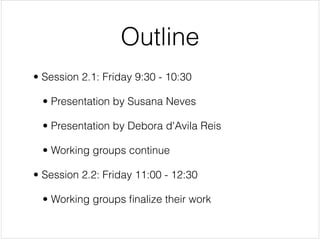
Outline
• Session 2.1: Friday 9:30 - 10:30


  • Presentation by Susana Neves


  • Presentation by Debora d'Avila Reis


  • Working groups continue


• Session 2.2: Friday 11:00 - 12:30


  • Working groups finalize their work
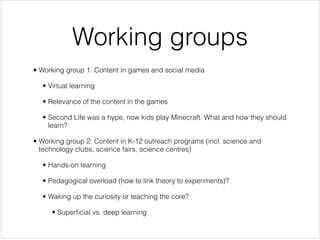
Working groups
• Working group 1: Content in games and social media


  • Virtual learning


  • Relevance of the content in the games


  • Second Life was a hype, now kids play Minecraft. What and how they should
    learn?


• Working group 2: Content in K-12 outreach programs (incl. science and
  technology clubs, science fairs, science centres)


  • Hands-on learning


  • Pedagogical overload (how to link theory to experiments)?


  • Waking up the curiosity or teaching the core?


     • Superficial vs. deep learning
Working groups
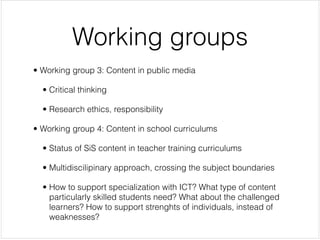
• Working group 3: Content in public media


  • Critical thinking


  • Research ethics, responsibility


• Working group 4: Content in school curriculums


  • Status of SiS content in teacher training curriculums


  • Multidiscilipinary approach, crossing the subject boundaries


  • How to support specialization with ICT? What type of content
    particularly skilled students need? What about the challenged
    learners? How to support strenghts of individuals, instead of
    weaknesses?
Working groups
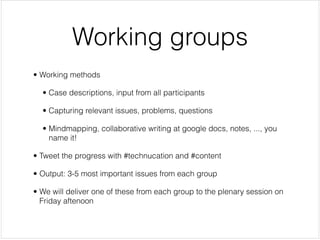
• Working methods


  • Case descriptions, input from all participants


  • Capturing relevant issues, problems, questions


  • Mindmapping, collaborative writing at google docs, notes, ..., you
    name it!


• Tweet the progress with #technucation and #content


• Output: 3-5 most important issues from each group


• We will deliver one of these from each group to the plenary session on
  Friday aftenoon
The most important
            issues
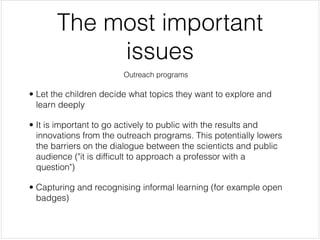
                        Outreach programs


• Let the children decide what topics they want to explore and
  learn deeply


• It is important to go actively to public with the results and
  innovations from the outreach programs. This potentially lowers
  the barriers on the dialogue between the scienticts and public
  audience ("it is difficult to approach a professor with a
  question")


• Capturing and recognising informal learning (for example open
  badges)
The most important
           issues
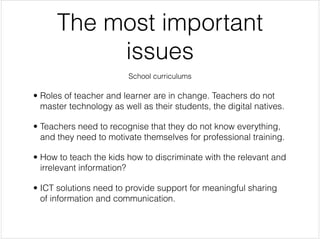
                         School curriculums


• Roles of teacher and learner are in change. Teachers do not
  master technology as well as their students, the digital natives.


• Teachers need to recognise that they do not know everything,
  and they need to motivate themselves for professional training.


• How to teach the kids how to discriminate with the relevant and
  irrelevant information?


• ICT solutions need to provide support for meaningful sharing
  of information and communication.
Questions
• What are you learning through internet, social
  media and games?


• Who is assisting you on learning?


• How these new ways of learning are
  contributing to your life? 


• What do you about the fact that you know more
  about technology than you teacher does?

Intro Ilkka Jormanainen (facilitator)

  • 1.
    Workshop A: TheContent ! Chair: Ilkka Jormanainen Joensuu Science Society Finland
  • 2.
    Outline • Session 1.1:Thursday 14:30 - 15:15 • Introduction • Presentation by Helen Smith • Session 1.2: Thursday 15:45 - 17:00 • Special theme: Content in K-12 initiatives • Presentations by Ilkka and Kristy Collins • Setting up working groups (four themes)
  • 3.
    Outline • Session 2.1:Friday 9:30 - 10:30 • Presentation by Susana Neves • Presentation by Debora d'Avila Reis • Working groups continue • Session 2.2: Friday 11:00 - 12:30 • Working groups finalize their work
  • 4.
    Working groups • Workinggroup 1: Content in games and social media • Virtual learning • Relevance of the content in the games • Second Life was a hype, now kids play Minecraft. What and how they should learn? • Working group 2: Content in K-12 outreach programs (incl. science and technology clubs, science fairs, science centres) • Hands-on learning • Pedagogical overload (how to link theory to experiments)? • Waking up the curiosity or teaching the core? • Superficial vs. deep learning
  • 5.
    Working groups • Workinggroup 3: Content in public media • Critical thinking • Research ethics, responsibility • Working group 4: Content in school curriculums • Status of SiS content in teacher training curriculums • Multidiscilipinary approach, crossing the subject boundaries • How to support specialization with ICT? What type of content particularly skilled students need? What about the challenged learners? How to support strenghts of individuals, instead of weaknesses?
  • 6.
    Working groups • Workingmethods • Case descriptions, input from all participants • Capturing relevant issues, problems, questions • Mindmapping, collaborative writing at google docs, notes, ..., you name it! • Tweet the progress with #technucation and #content • Output: 3-5 most important issues from each group • We will deliver one of these from each group to the plenary session on Friday aftenoon
  • 7.
    The most important issues Outreach programs • Let the children decide what topics they want to explore and learn deeply • It is important to go actively to public with the results and innovations from the outreach programs. This potentially lowers the barriers on the dialogue between the scienticts and public audience ("it is difficult to approach a professor with a question") • Capturing and recognising informal learning (for example open badges)
  • 8.
    The most important issues School curriculums • Roles of teacher and learner are in change. Teachers do not master technology as well as their students, the digital natives. • Teachers need to recognise that they do not know everything, and they need to motivate themselves for professional training. • How to teach the kids how to discriminate with the relevant and irrelevant information? • ICT solutions need to provide support for meaningful sharing of information and communication.
  • 9.
    Questions • What areyou learning through internet, social media and games? • Who is assisting you on learning? • How these new ways of learning are contributing to your life? • What do you about the fact that you know more about technology than you teacher does?