Page 1 of 5
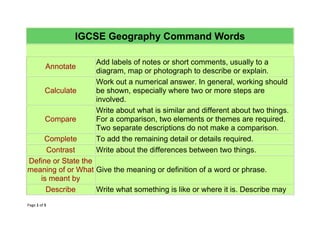
IGCSE Geography Command Words
Annotate
Add labels of notes or short comments, usually to a
diagram, map or photograph to describe or explain.
Calculate
Work out a numerical answer. In general, working should
be shown, especially where two or more steps are
involved.
Compare
Write about what is similar and different about two things.
For a comparison, two elements or themes are required.
Two separate descriptions do not make a comparison.
Complete To add the remaining detail or details required.
Contrast Write about the differences between two things.
Define or State the
meaning of or What
is meant by
Give the meaning or definition of a word or phrase.
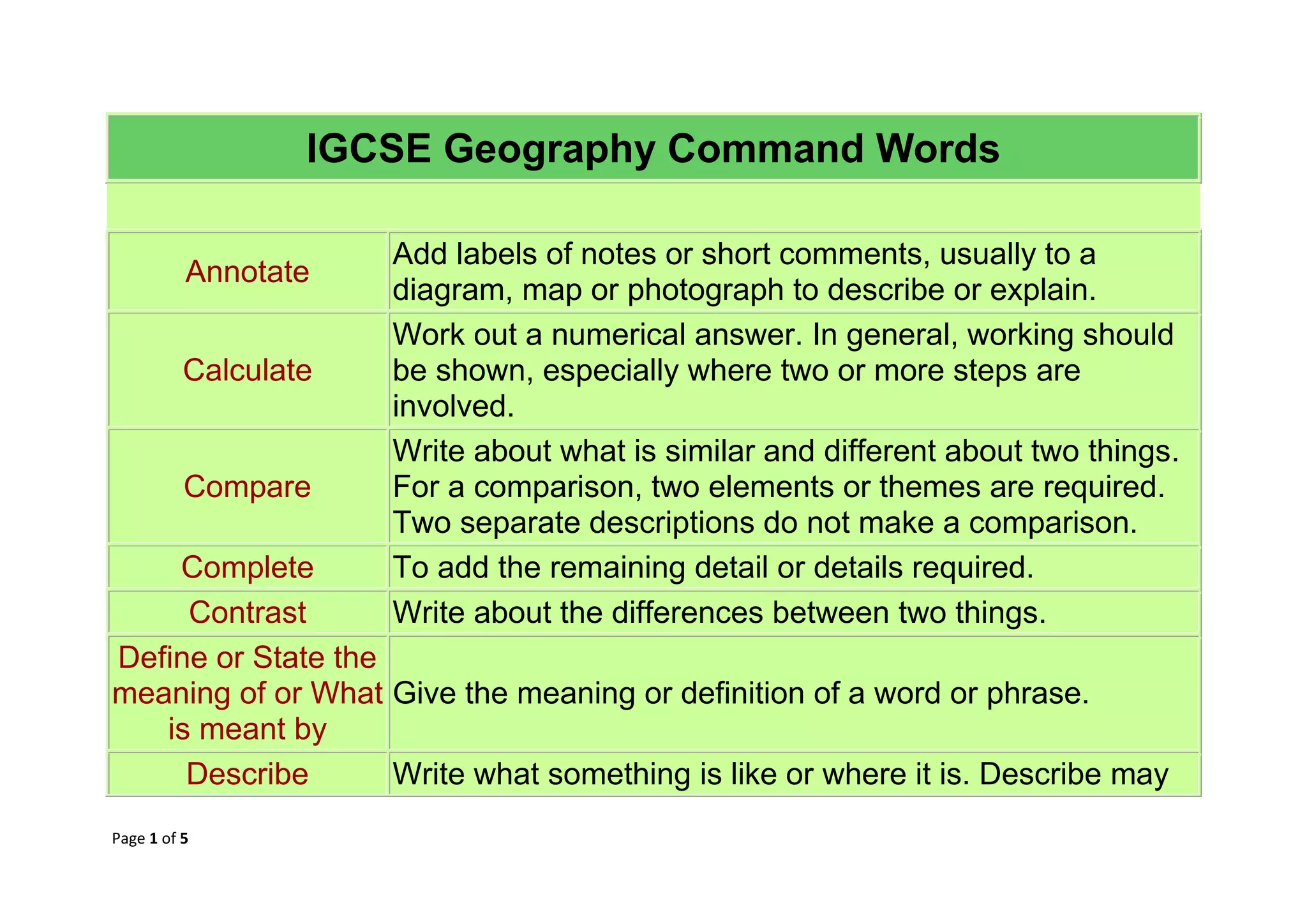
Describe Write what something is like or where it is. Describe may
Page 2 of 5
be used for questions about resources in the question
paper (describe the trend of a graph, the location of a
settlement on a map, etc.). It may also be used when you
need to describe something from memory (describe a
meander, etc.).
It is often coupled with other command words such as
Name and describe (name the feature and say what it is
like), Describe and explain (say what it is like and give
reasons for),
Devise or Plan
Presentation of a particular feature such as a form or
questionnaire to meet a specific requirement or
requirements.
Draw
Make a sketch of. Often coupled with a labelled diagram
(draw a diagram/illustration with written notes to identify its
features).
Explain or Account
for or Give reasons
for
Write about why something occurs or happens.
Page 3 of 5
Giving your views
or Comment on
Say what you think about something.
How
In what way? To what extent? By what means/method?
May be coupled with Show how (prove how, demonstrate
how).
Identify Pick out something from information you have been given.
Illustrating your
answer
Account for by using specific examples or diagrams. Often
coupled with by a labelled diagram].
Insert or Label
Placing specific names or details to an illustrative
technique in response to a particular requirement.
Justify
Say why you chose something or why you think in a
certain way.
List
Identify and name a number of features to meet a
particular purpose.
Locate
Find where something is placed or state where something
is found or mark it on a map or diagram.
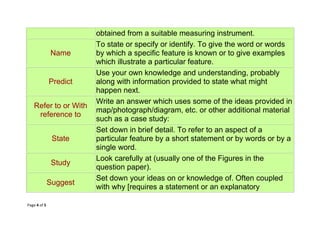
Measure Implies that the quantity concerned can be directly
Page 4 of 5
obtained from a suitable measuring instrument.
Name
To state or specify or identify. To give the word or words
by which a specific feature is known or to give examples
which illustrate a particular feature.
Predict
Use your own knowledge and understanding, probably
along with information provided to state what might
happen next.
Refer to or With
reference to
Write an answer which uses some of the ideas provided in
map/photograph/diagram, etc. or other additional material
such as a case study:
State
Set down in brief detail. To refer to an aspect of a
particular feature by a short statement or by words or by a
single word.
Study
Look carefully at (usually one of the Figures in the
question paper).
Suggest
Set down your ideas on or knowledge of. Often coupled
with why [requires a statement or an explanatory
Page 5 of 5
statement referring to a particular feature or features].
Use or Using the
information
provided
Base your answer on the information.
With the help of
information in
Write an answer which uses some of the information
provided as well as additional material.
What
Used to form a question concerned with selective
ideas/details/factors.
What differences
are shown
between A and B
Use comparative statements to describe the changes
involved as A changes to B. Factual descriptions of A and
B are not required.
Where At what place? To what place? From what place?
Why For what cause or reason?

Igcse Geography command words

  • 1.
    Page 1 of5 IGCSE Geography Command Words Annotate Add labels of notes or short comments, usually to a diagram, map or photograph to describe or explain. Calculate Work out a numerical answer. In general, working should be shown, especially where two or more steps are involved. Compare Write about what is similar and different about two things. For a comparison, two elements or themes are required. Two separate descriptions do not make a comparison. Complete To add the remaining detail or details required. Contrast Write about the differences between two things. Define or State the meaning of or What is meant by Give the meaning or definition of a word or phrase. Describe Write what something is like or where it is. Describe may
  • 2.
    Page 2 of5 be used for questions about resources in the question paper (describe the trend of a graph, the location of a settlement on a map, etc.). It may also be used when you need to describe something from memory (describe a meander, etc.). It is often coupled with other command words such as Name and describe (name the feature and say what it is like), Describe and explain (say what it is like and give reasons for), Devise or Plan Presentation of a particular feature such as a form or questionnaire to meet a specific requirement or requirements. Draw Make a sketch of. Often coupled with a labelled diagram (draw a diagram/illustration with written notes to identify its features). Explain or Account for or Give reasons for Write about why something occurs or happens.
  • 3.
    Page 3 of5 Giving your views or Comment on Say what you think about something. How In what way? To what extent? By what means/method? May be coupled with Show how (prove how, demonstrate how). Identify Pick out something from information you have been given. Illustrating your answer Account for by using specific examples or diagrams. Often coupled with by a labelled diagram]. Insert or Label Placing specific names or details to an illustrative technique in response to a particular requirement. Justify Say why you chose something or why you think in a certain way. List Identify and name a number of features to meet a particular purpose. Locate Find where something is placed or state where something is found or mark it on a map or diagram. Measure Implies that the quantity concerned can be directly
  • 4.
    Page 4 of5 obtained from a suitable measuring instrument. Name To state or specify or identify. To give the word or words by which a specific feature is known or to give examples which illustrate a particular feature. Predict Use your own knowledge and understanding, probably along with information provided to state what might happen next. Refer to or With reference to Write an answer which uses some of the ideas provided in map/photograph/diagram, etc. or other additional material such as a case study: State Set down in brief detail. To refer to an aspect of a particular feature by a short statement or by words or by a single word. Study Look carefully at (usually one of the Figures in the question paper). Suggest Set down your ideas on or knowledge of. Often coupled with why [requires a statement or an explanatory
  • 5.
    Page 5 of5 statement referring to a particular feature or features]. Use or Using the information provided Base your answer on the information. With the help of information in Write an answer which uses some of the information provided as well as additional material. What Used to form a question concerned with selective ideas/details/factors. What differences are shown between A and B Use comparative statements to describe the changes involved as A changes to B. Factual descriptions of A and B are not required. Where At what place? To what place? From what place? Why For what cause or reason?