Hinduism A Brief Introduction
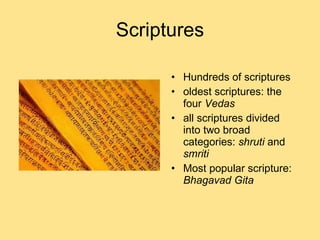
Scriptures Hundreds of scriptures oldest scriptures: the four  Vedas all scriptures divided into two broad categories:  shruti  and  smriti Most popular scripture:  Bhagavad Gita
What “ism” is Hinduism? Everything from Atheism to Polytheism Different interpretations of the same scriptures led to differences in belief Sanatana Dharma  Eternal Philosophy
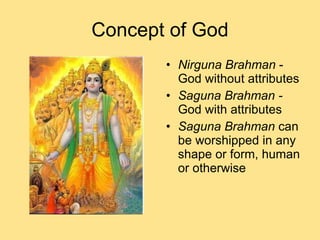
Concept of God Nirguna Brahman  - God without attributes Saguna Brahman -  God with attributes Saguna Brahman  can be worshipped in any shape or form, human or otherwise
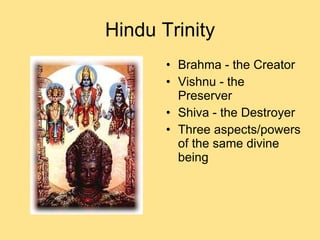
Hindu Trinity Brahma - the Creator Vishnu - the Preserver Shiva - the Destroyer Three aspects/powers of the same divine being
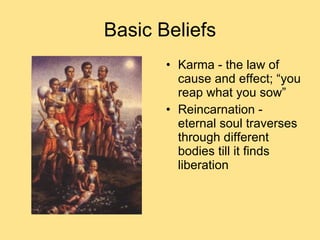
Basic Beliefs Karma - the law of cause and effect; “you reap what you sow” Reincarnation - eternal soul traverses through different bodies till it finds liberation
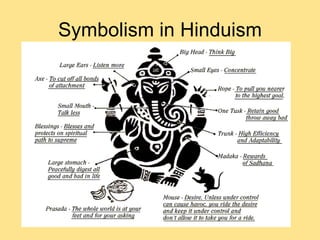
Symbolism in Hinduism
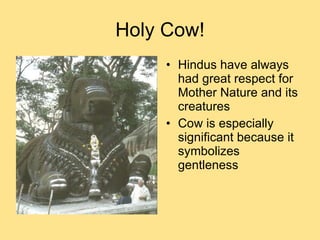
Holy Cow! Hindus have always had great respect for Mother Nature and its creatures Cow is especially significant because it symbolizes gentleness
Four Goals of Human Life Kama  – fulfillment of desires Artha  – accumulation of wealth Dharma  – performance of social and religious duties Moksha  – freedom from want
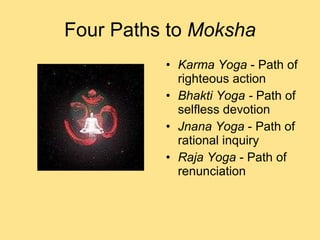
Four Paths to  Moksha Karma Yoga  - Path of righteous action Bhakti Yoga -  Path of selfless devotion Jnana   Yoga  - Path of rational inquiry Raja Yoga  - Path of renunciation
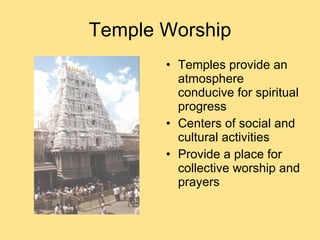
Temple Worship Temples provide an atmosphere conducive for spiritual progress Centers of social and cultural activities Provide a place for collective worship and prayers
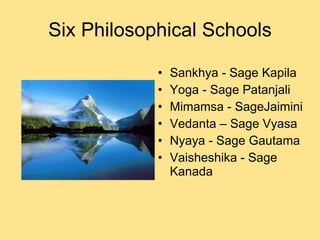
Six Philosophical Schools Sankhya - Sage Kapila Yoga - Sage Patanjali Mimamsa - SageJaimini Vedanta – Sage Vyasa Nyaya - Sage Gautama Vaisheshika - Sage Kanada
History of Hinduism Originated between 4000 and 2000 BC No single founder Vedas: the oldest scriptures of Hinduism Veda means “to know” Rig, Yajur, Sama and Atharva Veda Upanishads explain the philosophical ideas in story and dialogue form
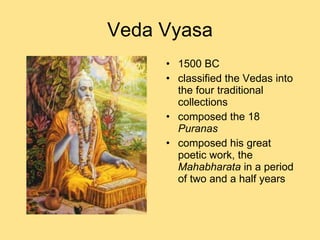
Veda Vyasa 1500 BC  classified the Vedas into the four traditional collections composed the 18  Puranas composed his great poetic work, the  Mahabharata  in a period of two and a half years
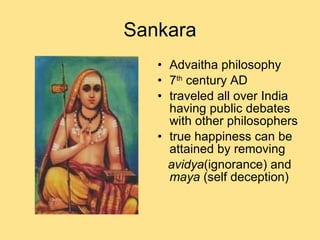
Sankara Advaitha philosophy 7 th  century AD traveled all over India having public debates with other philosophers  true happiness can be attained by removing avidya (ignorance) and  maya  (self deception)
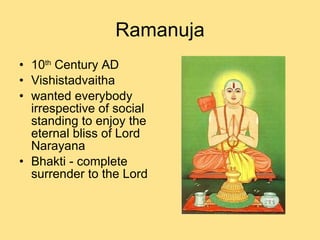
Ramanuja 10 th  Century AD Vishistadvaitha wanted everybody irrespective of social standing to enjoy the eternal bliss of Lord Narayana Bhakti - complete surrender to the Lord
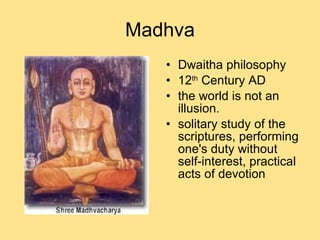
Madhva Dwaitha philosophy 12 th  Century AD the world is not an illusion. solitary study of the scriptures, performing one's duty without self-interest, practical acts of devotion
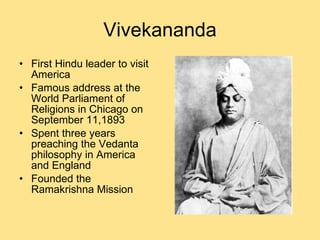
Vivekananda First Hindu leader to visit America Famous address at the World Parliament of Religions in Chicago on September 11,1893 Spent three years preaching the Vedanta philosophy in America and England Founded the Ramakrishna Mission
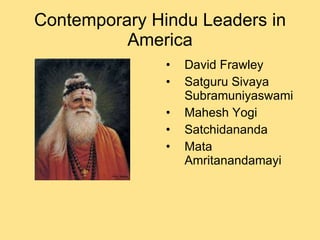
Contemporary Hindu Leaders in America David Frawley Satguru Sivaya Subramuniyaswami Mahesh Yogi Satchidananda Mata Amritanandamayi
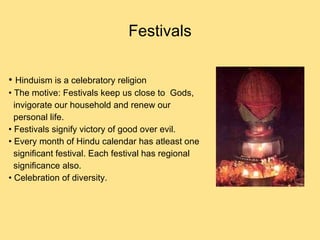
Festivals Hinduism is a celebratory religion The motive: Festivals keep us close to  Gods,  invigorate our household and renew our  personal life.  Festivals signify victory of good over evil.  Every month of Hindu calendar has atleast one significant festival. Each festival has regional significance also. Celebration of diversity.
Yugaadi/Ugaadi: The first day of the year according to  the National Calendar of India.  The day falls in the beginning of spring -  Vasanta Ritu  – When the Goddess of  Nature gets bedecked as a divine  bride. April/May
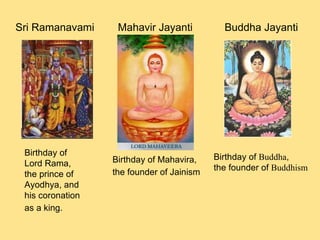
Birthday of Lord Rama, the prince of Ayodhya, and his coronation as a king.   Sri Ramanavami Mahavir Jayanti Birthday of Mahavira,  the founder of Jainism   Buddha Jayanti Birthday of  Buddha ,  the founder of  Buddhism
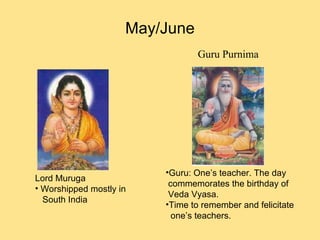
May/June Lord Muruga Worshipped mostly in  South India Guru: One’s teacher. The day  commemorates the birthday of  Veda Vyasa. Time to remember and felicitate  one’s teachers. Guru Purnima
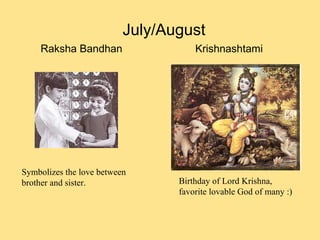
July/August Raksha Bandhan Symbolizes the love between brother and sister. Krishnashtami Birthday of Lord Krishna,  favorite lovable God of many :)
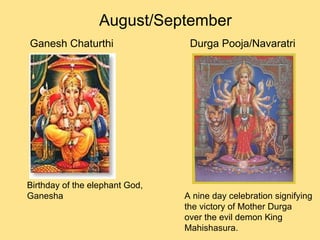
August/September Ganesh Chaturthi Birthday of the elephant God, Ganesha Durga Pooja/Navaratri A nine day celebration signifying  the victory of Mother Durga  over the evil demon King  Mahishasura.
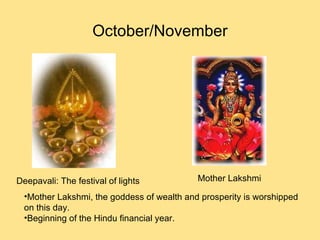
October/November Deepavali: The festival of lights Mother Lakshmi Mother Lakshmi, the goddess of wealth and prosperity is worshipped  on this day.  Beginning of the Hindu financial year.
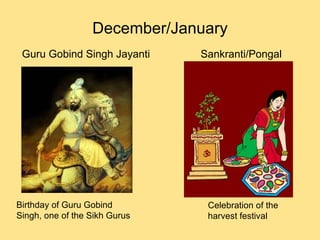
December/January Guru Gobind Singh Jayanti Birthday of Guru Gobind  Singh, one of the Sikh Gurus Sankranti/Pongal Celebration of the  harvest festival
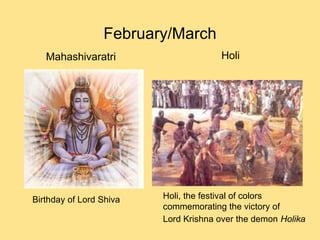
February/March Mahashivaratri Birthday of Lord Shiva Holi Holi, the festival of colors  commemorating the victory of  Lord Krishna over the demon   Holika

Hinduism

  • 1.
    Hinduism A BriefIntroduction
  • 2.
    Scriptures Hundreds ofscriptures oldest scriptures: the four Vedas all scriptures divided into two broad categories: shruti and smriti Most popular scripture: Bhagavad Gita
  • 3.
    What “ism” isHinduism? Everything from Atheism to Polytheism Different interpretations of the same scriptures led to differences in belief Sanatana Dharma Eternal Philosophy
  • 4.
    Concept of GodNirguna Brahman - God without attributes Saguna Brahman - God with attributes Saguna Brahman can be worshipped in any shape or form, human or otherwise
  • 5.
    Hindu Trinity Brahma- the Creator Vishnu - the Preserver Shiva - the Destroyer Three aspects/powers of the same divine being
  • 6.
    Basic Beliefs Karma- the law of cause and effect; “you reap what you sow” Reincarnation - eternal soul traverses through different bodies till it finds liberation
  • 7.
  • 8.
    Holy Cow! Hindushave always had great respect for Mother Nature and its creatures Cow is especially significant because it symbolizes gentleness
  • 9.
    Four Goals ofHuman Life Kama – fulfillment of desires Artha – accumulation of wealth Dharma – performance of social and religious duties Moksha – freedom from want
  • 10.
    Four Paths to Moksha Karma Yoga - Path of righteous action Bhakti Yoga - Path of selfless devotion Jnana Yoga - Path of rational inquiry Raja Yoga - Path of renunciation
  • 11.
    Temple Worship Templesprovide an atmosphere conducive for spiritual progress Centers of social and cultural activities Provide a place for collective worship and prayers
  • 12.
    Six Philosophical SchoolsSankhya - Sage Kapila Yoga - Sage Patanjali Mimamsa - SageJaimini Vedanta – Sage Vyasa Nyaya - Sage Gautama Vaisheshika - Sage Kanada
  • 13.
    History of HinduismOriginated between 4000 and 2000 BC No single founder Vedas: the oldest scriptures of Hinduism Veda means “to know” Rig, Yajur, Sama and Atharva Veda Upanishads explain the philosophical ideas in story and dialogue form
  • 14.
    Veda Vyasa 1500BC classified the Vedas into the four traditional collections composed the 18 Puranas composed his great poetic work, the Mahabharata in a period of two and a half years
  • 15.
    Sankara Advaitha philosophy7 th century AD traveled all over India having public debates with other philosophers true happiness can be attained by removing avidya (ignorance) and maya (self deception)
  • 16.
    Ramanuja 10 th Century AD Vishistadvaitha wanted everybody irrespective of social standing to enjoy the eternal bliss of Lord Narayana Bhakti - complete surrender to the Lord
  • 17.
    Madhva Dwaitha philosophy12 th Century AD the world is not an illusion. solitary study of the scriptures, performing one's duty without self-interest, practical acts of devotion
  • 18.
    Vivekananda First Hinduleader to visit America Famous address at the World Parliament of Religions in Chicago on September 11,1893 Spent three years preaching the Vedanta philosophy in America and England Founded the Ramakrishna Mission
  • 19.
    Contemporary Hindu Leadersin America David Frawley Satguru Sivaya Subramuniyaswami Mahesh Yogi Satchidananda Mata Amritanandamayi
  • 20.
    Festivals Hinduism isa celebratory religion The motive: Festivals keep us close to Gods, invigorate our household and renew our personal life. Festivals signify victory of good over evil. Every month of Hindu calendar has atleast one significant festival. Each festival has regional significance also. Celebration of diversity.
  • 21.
    Yugaadi/Ugaadi: The firstday of the year according to the National Calendar of India.  The day falls in the beginning of spring - Vasanta Ritu – When the Goddess of Nature gets bedecked as a divine bride. April/May
  • 22.
    Birthday of LordRama, the prince of Ayodhya, and his coronation as a king. Sri Ramanavami Mahavir Jayanti Birthday of Mahavira, the founder of Jainism Buddha Jayanti Birthday of Buddha , the founder of Buddhism
  • 23.
    May/June Lord MurugaWorshipped mostly in South India Guru: One’s teacher. The day commemorates the birthday of Veda Vyasa. Time to remember and felicitate one’s teachers. Guru Purnima
  • 24.
    July/August Raksha BandhanSymbolizes the love between brother and sister. Krishnashtami Birthday of Lord Krishna, favorite lovable God of many :)
  • 25.
    August/September Ganesh ChaturthiBirthday of the elephant God, Ganesha Durga Pooja/Navaratri A nine day celebration signifying the victory of Mother Durga over the evil demon King Mahishasura.
  • 26.
    October/November Deepavali: Thefestival of lights Mother Lakshmi Mother Lakshmi, the goddess of wealth and prosperity is worshipped on this day. Beginning of the Hindu financial year.
  • 27.
    December/January Guru GobindSingh Jayanti Birthday of Guru Gobind Singh, one of the Sikh Gurus Sankranti/Pongal Celebration of the harvest festival
  • 28.
    February/March Mahashivaratri Birthdayof Lord Shiva Holi Holi, the festival of colors commemorating the victory of Lord Krishna over the demon Holika