

Motivational interviewing
as a complex intervention

      Jim McCambridge
      ICMI-3 in Venice, June 19th 2012


Improving health worldwide
www.lshtm.ac.uk
Outline


1. Introduce complex interventions (CI) perspective and apply it to
    MI

2. Propose value of systematic reviews & studies of heterogeneity


    - Play with ideas of simplicity and complexity
                                       (+ a little data)
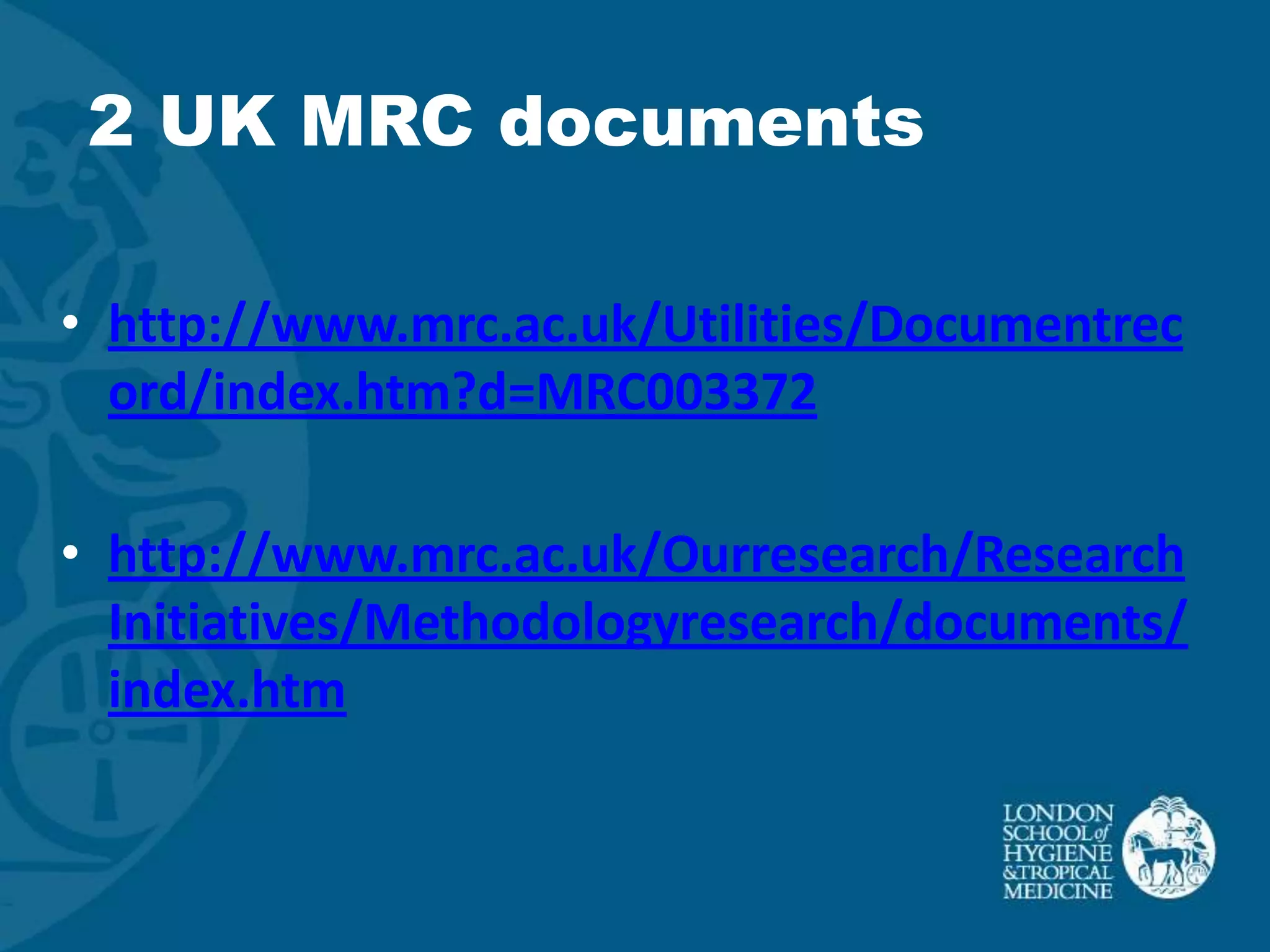
2 UK MRC documents

• http://www.mrc.ac.uk/Utilities/Documentrec
  ord/index.htm?d=MRC003372

• http://www.mrc.ac.uk/Ourresearch/Research
  Initiatives/Methodologyresearch/documents/
  index.htm
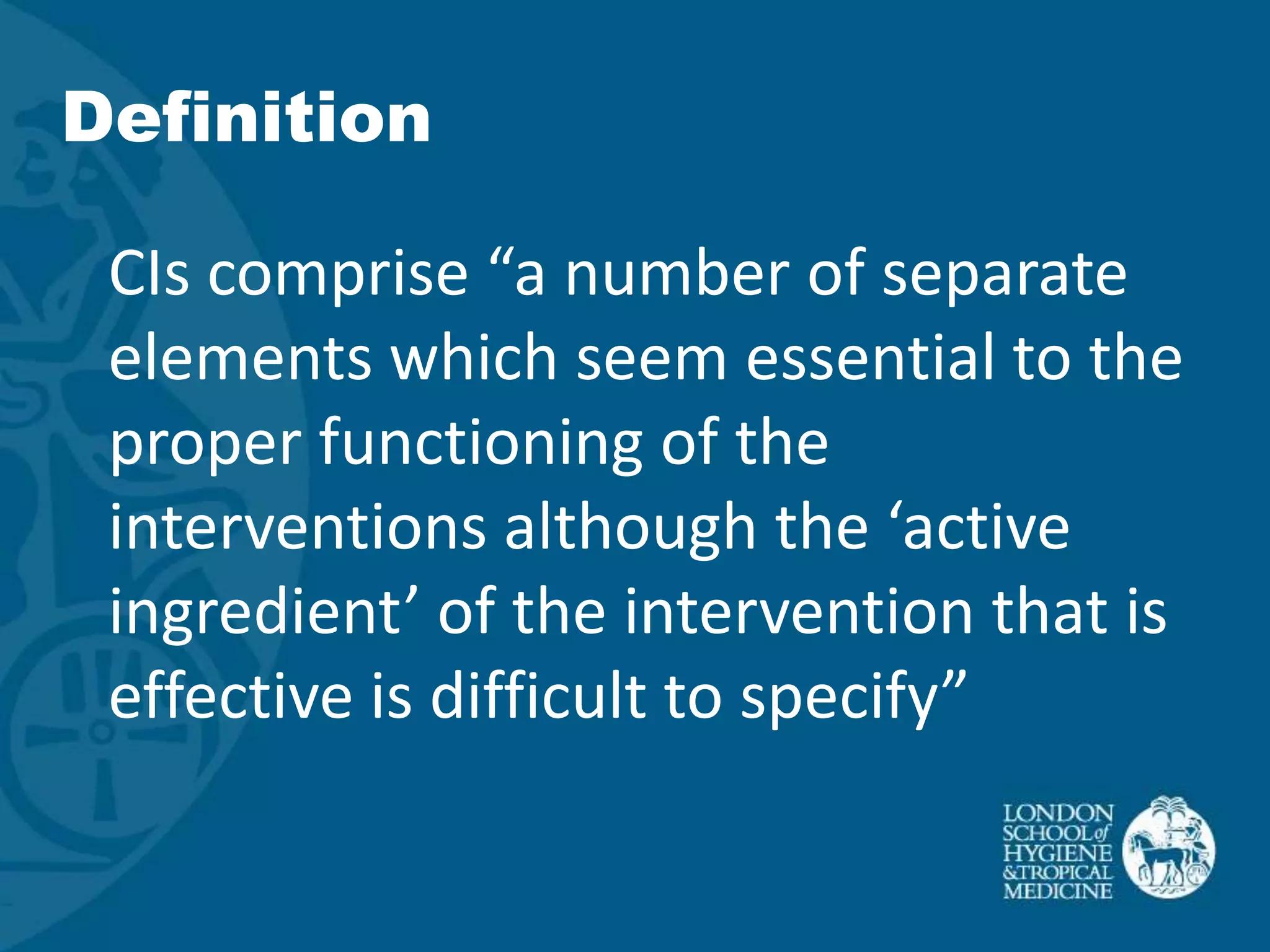
Definition

 CIs comprise “a number of separate
 elements which seem essential to the
 proper functioning of the
 interventions although the ‘active
 ingredient’ of the intervention that is
 effective is difficult to specify”
An alternative perspective


• Alan Shiell & Penelope Hawe

• Interventions conceptualised as events in complex
  systems.....which are adaptive and self-regulating
How is a CI different from a
simple one?

• Pragmatic distinction made according to what we
  want to find out

   – Aspirin, can be conceptualised as either
   – MI, ditto
Two suggestions


• It may be useful to think of MI as a CI

• Simplicity is often the best strategy for dealing with
  complexity
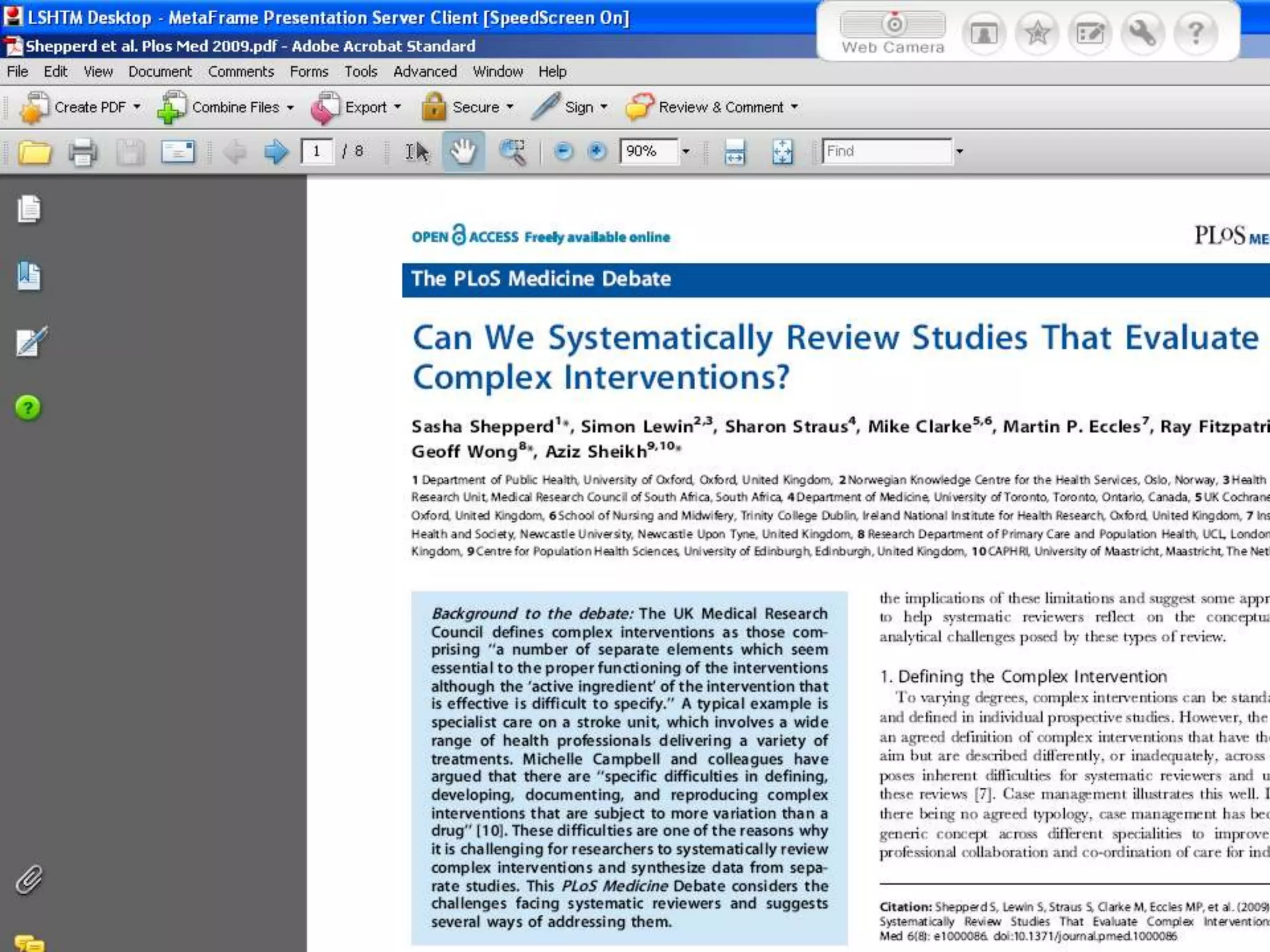
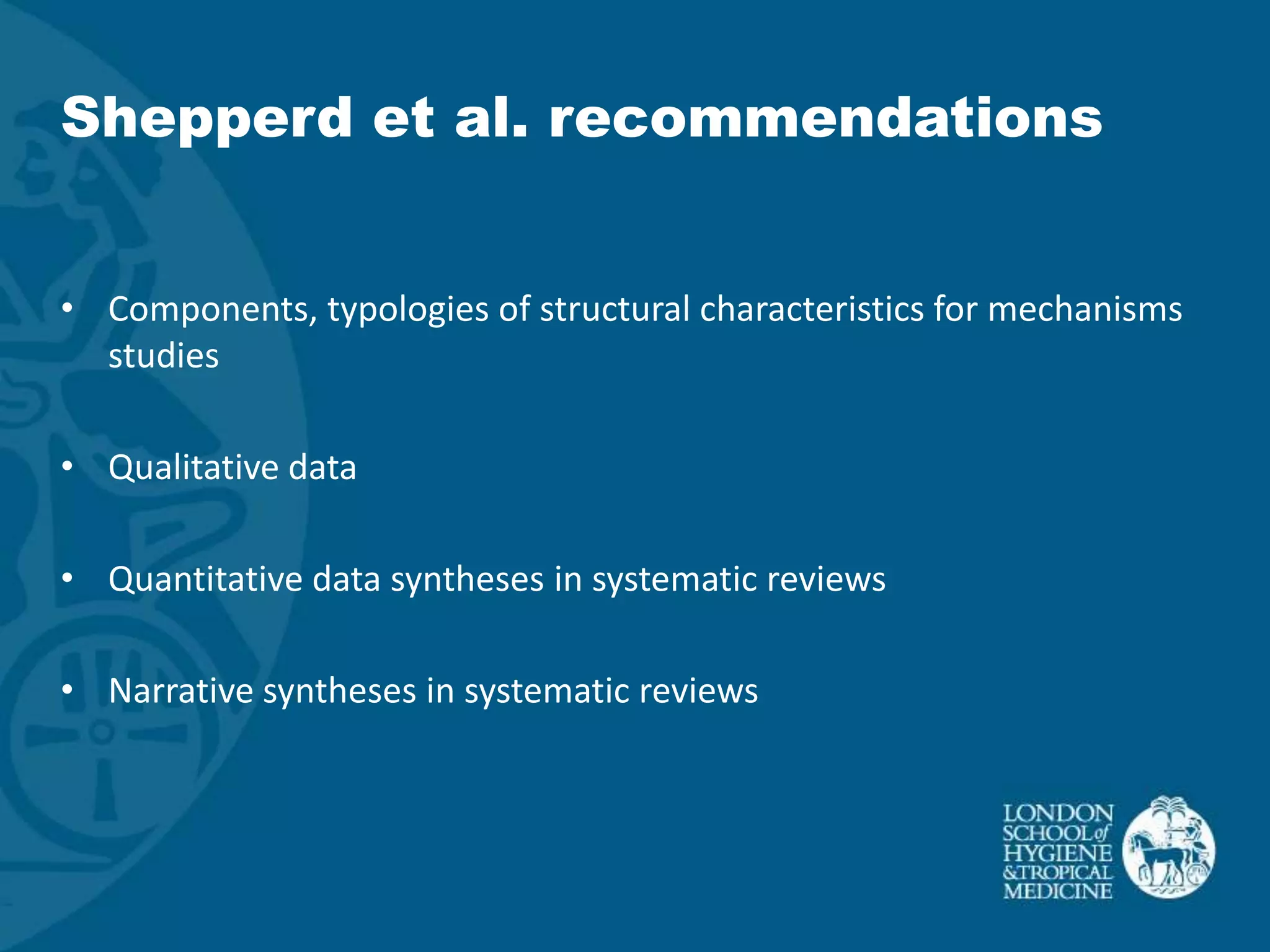
Shepperd et al. recommendations


• Components, typologies of structural characteristics for mechanisms
  studies

• Qualitative data

• Quantitative data syntheses in systematic reviews

• Narrative syntheses in systematic reviews
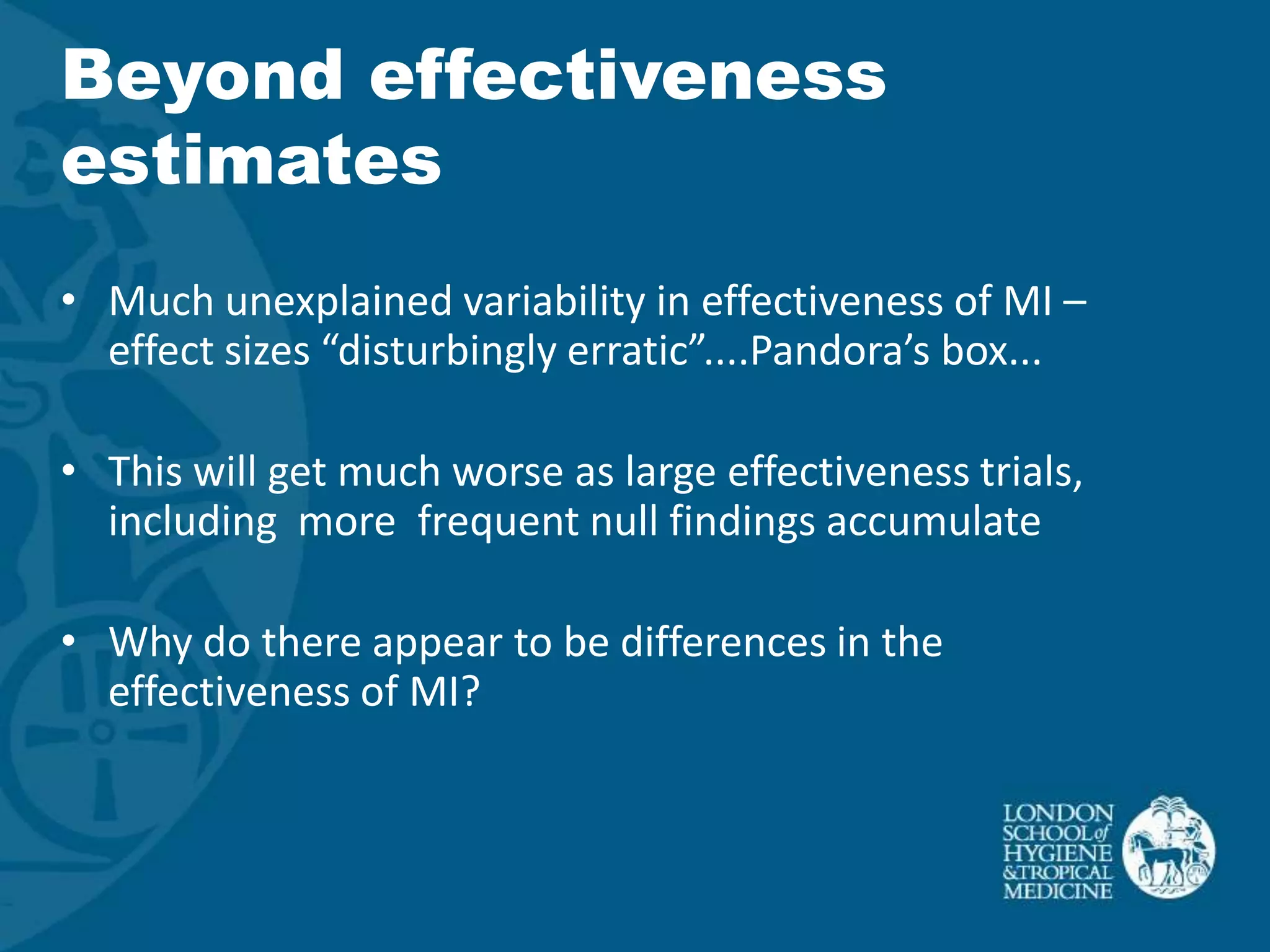
Beyond effectiveness
estimates
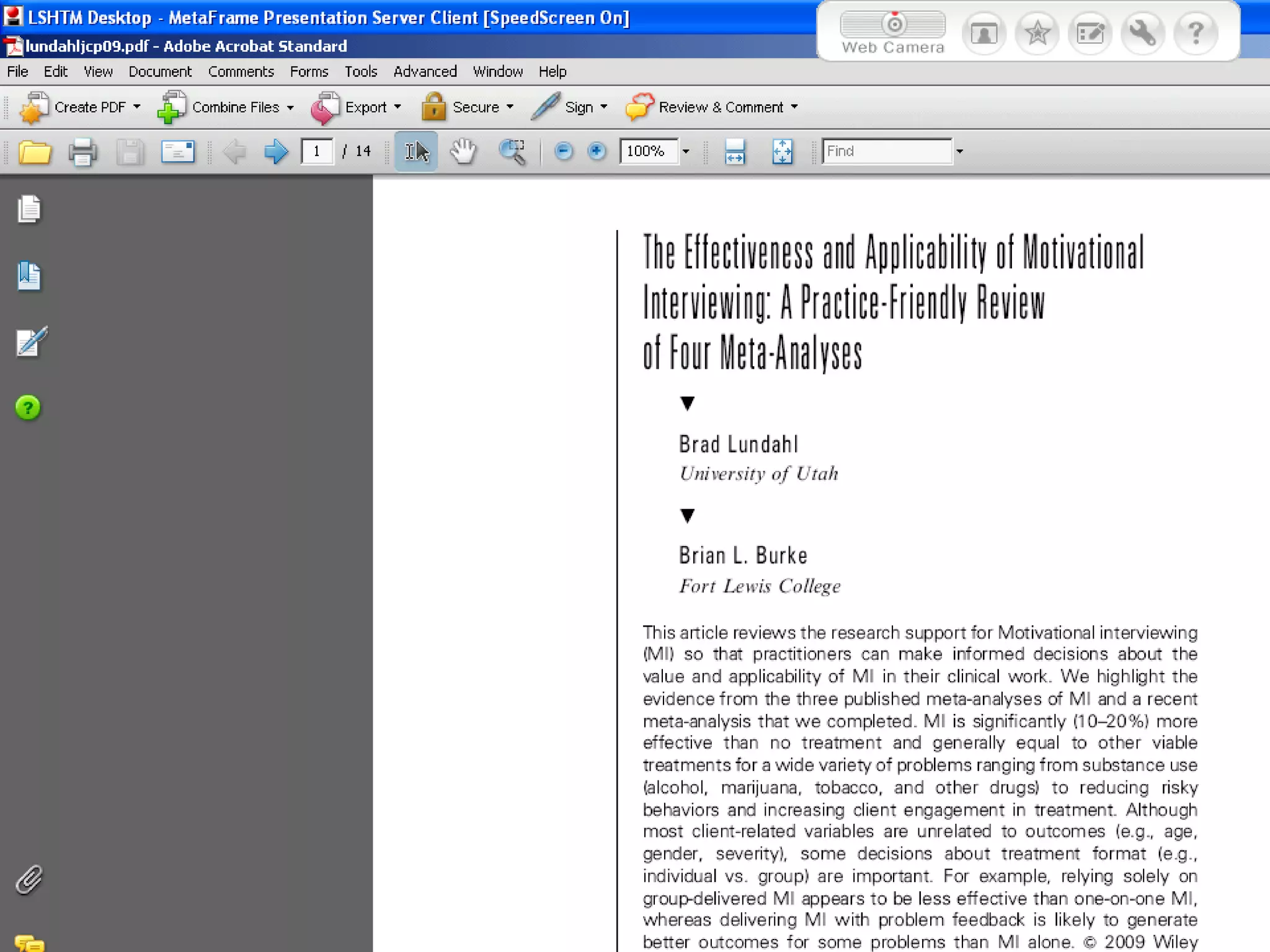
• Much unexplained variability in effectiveness of MI –
  effect sizes “disturbingly erratic”....Pandora’s box...

• This will get much worse as large effectiveness trials,
  including more frequent null findings accumulate

• Why do there appear to be differences in the
  effectiveness of MI?
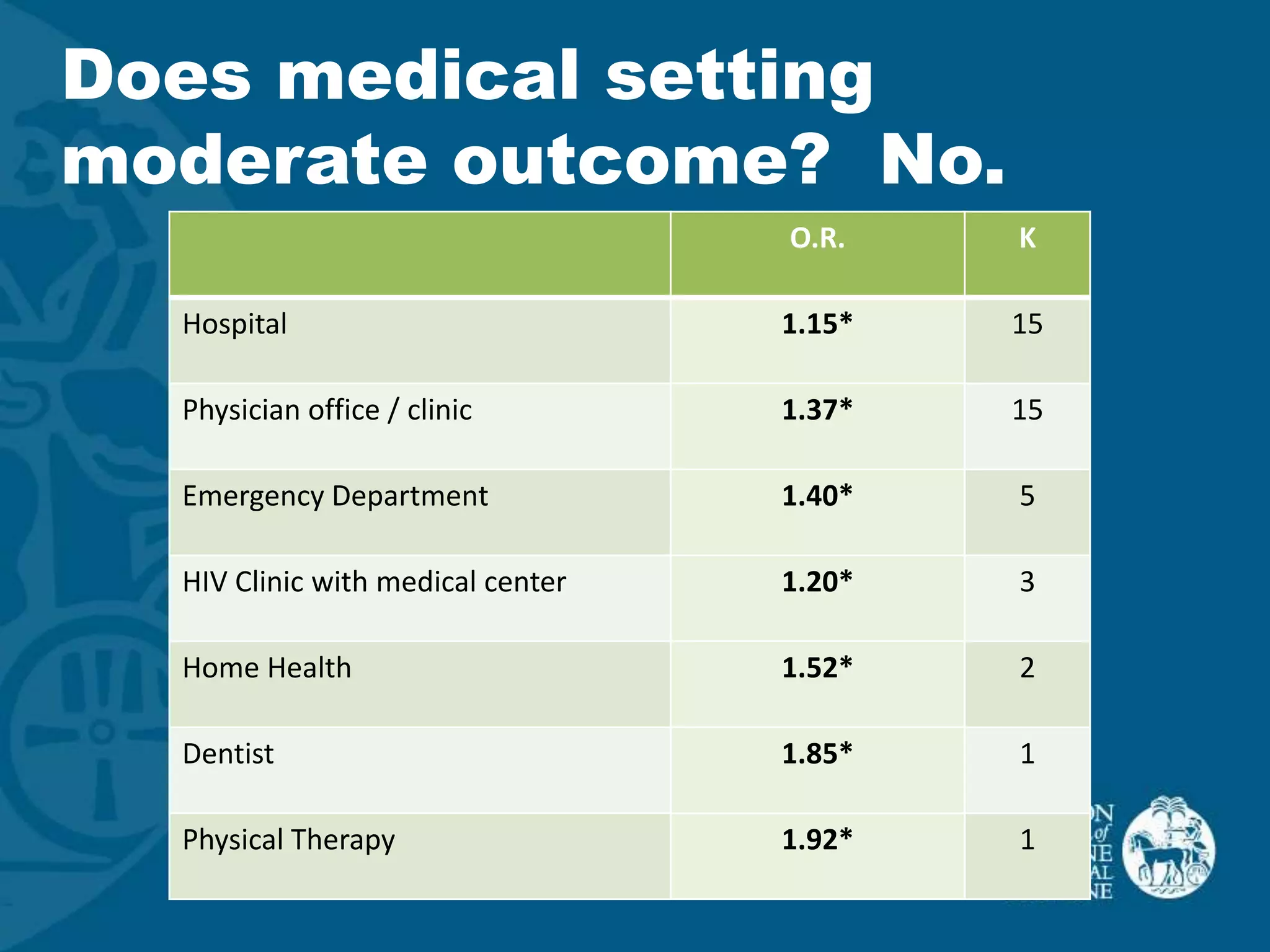
Does medical setting
moderate outcome? No.
                                   O.R.    K

  Hospital                         1.15*   15

  Physician office / clinic        1.37*   15

  Emergency Department             1.40*   5

  HIV Clinic with medical center   1.20*   3

  Home Health                      1.52*   2

  Dentist                          1.85*   1

  Physical Therapy                 1.92*   1
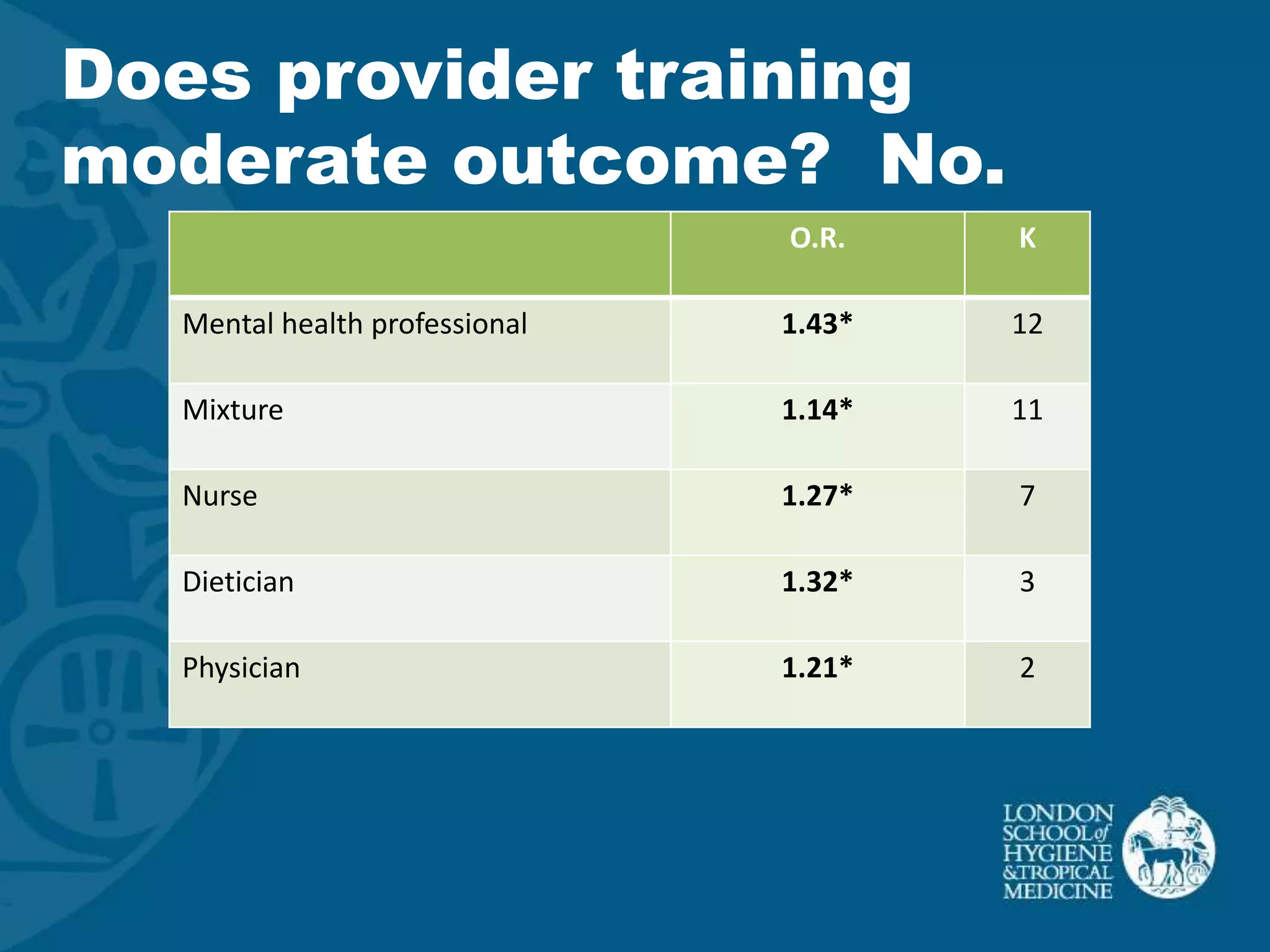
Does provider training
moderate outcome? No.
                               O.R.    K

  Mental health professional   1.43*   12

  Mixture                      1.14*   11

  Nurse                        1.27*   7

  Dietician                    1.32*   3

  Physician                    1.21*   2
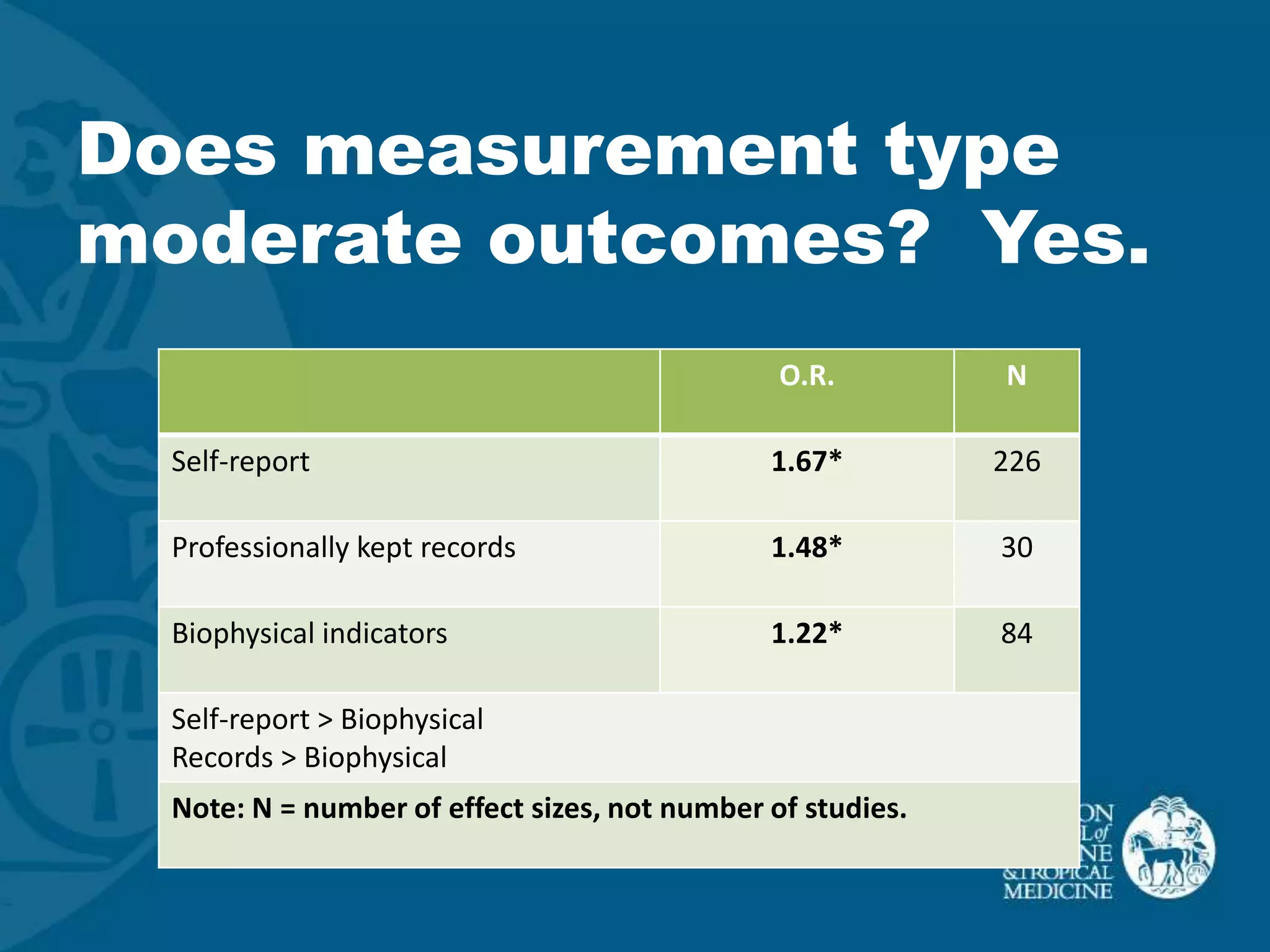
Does measurement type
moderate outcomes? Yes.
                                                O.R.         N

  Self-report                                  1.67*         226

  Professionally kept records                  1.48*         30

  Biophysical indicators                       1.22*         84

  Self-report > Biophysical
  Records > Biophysical
  Note: N = number of effect sizes, not number of studies.
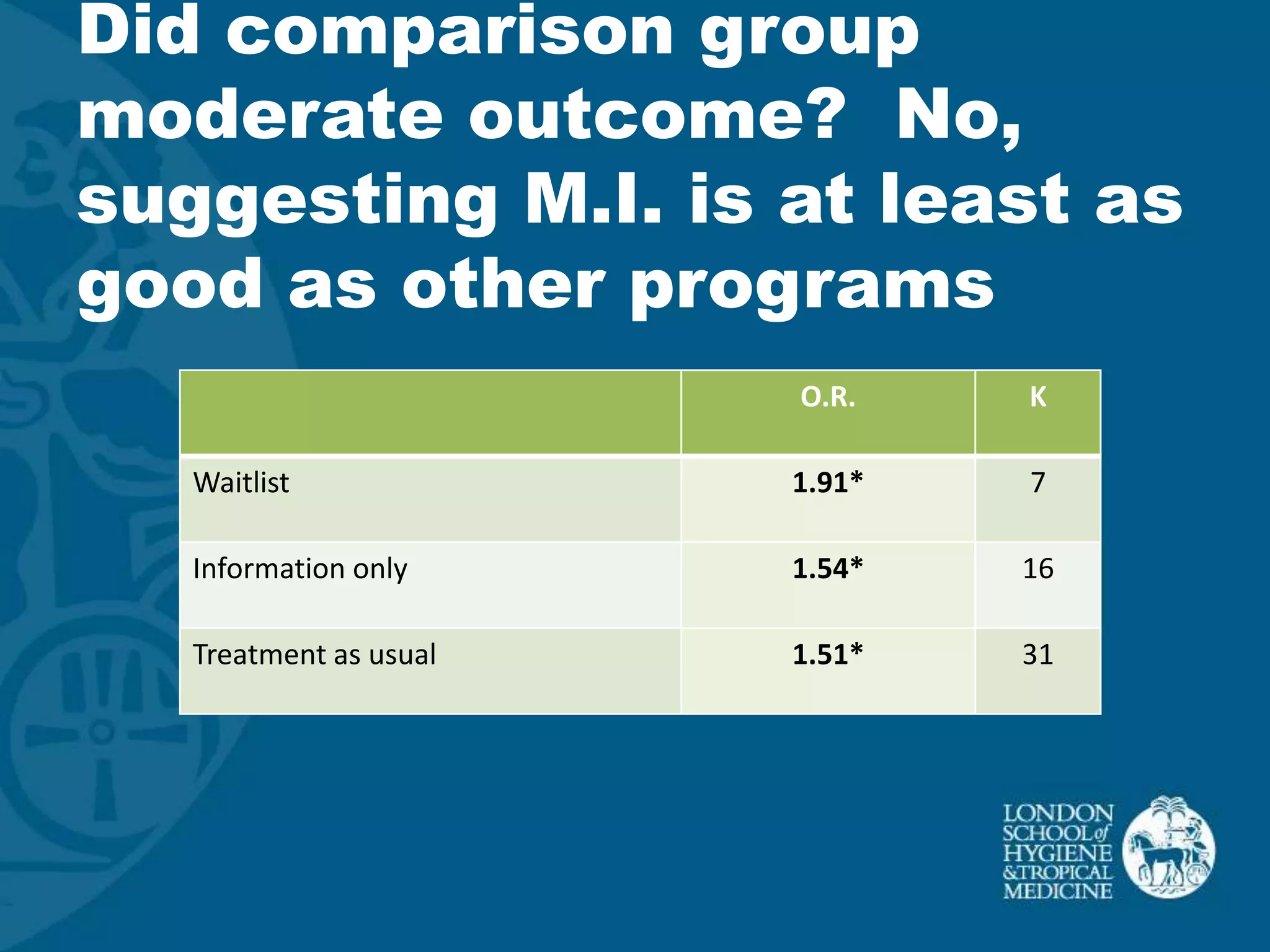
Did comparison group
moderate outcome? No,
suggesting M.I. is at least as
good as other programs
                        O.R.    K

   Waitlist             1.91*   7

   Information only     1.54*   16

   Treatment as usual   1.51*   31
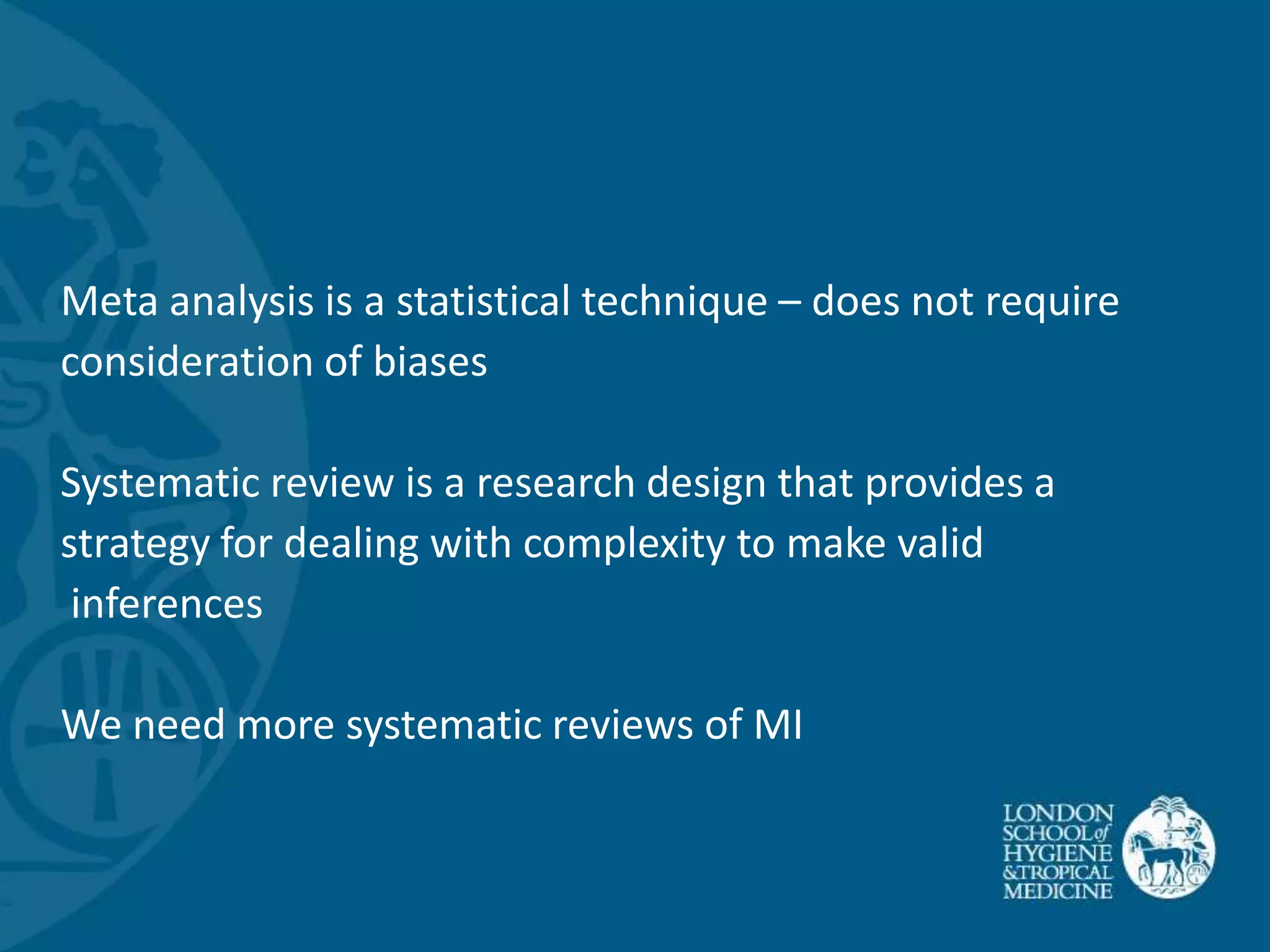
Meta analysis is a statistical technique – does not require
consideration of biases

Systematic review is a research design that provides a
strategy for dealing with complexity to make valid
 inferences

We need more systematic reviews of MI
Beyond systematic reviews

1. Meta-epidemiological methods for resolving differences in
   meta-analytic findings

2. Narrative methods also have the capacity to be sensitive
   to inference – reviews of reviews

3. Both have capacity to generate new research questions
Take home messages
• Getting to grips with complexity across studies as well
  as within them helps better understanding MI

• We can do much more with what’s already been done

• Answers relatively easy to get, asking the right
  research questions and choosing the right designs
  harder

• Keep it all simple as far as possible!
Acknowledgements

• Long term funding by the Wellcome Trust

• Many many colleagues and friends for helping with
  development of ideas

• Brad Lundahl and Jean Bernard Daeppen

• Miller & Rollnick for presenting what is complex simply

Icmiplenary1a

  • 1.
    Motivational interviewing as acomplex intervention Jim McCambridge ICMI-3 in Venice, June 19th 2012 Improving health worldwide www.lshtm.ac.uk
  • 3.
    Outline 1. Introduce complexinterventions (CI) perspective and apply it to MI 2. Propose value of systematic reviews & studies of heterogeneity - Play with ideas of simplicity and complexity (+ a little data)
  • 4.
    2 UK MRCdocuments • http://www.mrc.ac.uk/Utilities/Documentrec ord/index.htm?d=MRC003372 • http://www.mrc.ac.uk/Ourresearch/Research Initiatives/Methodologyresearch/documents/ index.htm
  • 5.
    Definition CIs comprise“a number of separate elements which seem essential to the proper functioning of the interventions although the ‘active ingredient’ of the intervention that is effective is difficult to specify”
  • 6.
    An alternative perspective •Alan Shiell & Penelope Hawe • Interventions conceptualised as events in complex systems.....which are adaptive and self-regulating
  • 7.
    How is aCI different from a simple one? • Pragmatic distinction made according to what we want to find out – Aspirin, can be conceptualised as either – MI, ditto
  • 8.
    Two suggestions • Itmay be useful to think of MI as a CI • Simplicity is often the best strategy for dealing with complexity
  • 11.
    Shepperd et al.recommendations • Components, typologies of structural characteristics for mechanisms studies • Qualitative data • Quantitative data syntheses in systematic reviews • Narrative syntheses in systematic reviews
  • 12.
    Beyond effectiveness estimates • Muchunexplained variability in effectiveness of MI – effect sizes “disturbingly erratic”....Pandora’s box... • This will get much worse as large effectiveness trials, including more frequent null findings accumulate • Why do there appear to be differences in the effectiveness of MI?
  • 13.
    Does medical setting moderateoutcome? No. O.R. K Hospital 1.15* 15 Physician office / clinic 1.37* 15 Emergency Department 1.40* 5 HIV Clinic with medical center 1.20* 3 Home Health 1.52* 2 Dentist 1.85* 1 Physical Therapy 1.92* 1
  • 14.
    Does provider training moderateoutcome? No. O.R. K Mental health professional 1.43* 12 Mixture 1.14* 11 Nurse 1.27* 7 Dietician 1.32* 3 Physician 1.21* 2
  • 15.
    Does measurement type moderateoutcomes? Yes. O.R. N Self-report 1.67* 226 Professionally kept records 1.48* 30 Biophysical indicators 1.22* 84 Self-report > Biophysical Records > Biophysical Note: N = number of effect sizes, not number of studies.
  • 16.
    Did comparison group moderateoutcome? No, suggesting M.I. is at least as good as other programs O.R. K Waitlist 1.91* 7 Information only 1.54* 16 Treatment as usual 1.51* 31
  • 17.
    Meta analysis isa statistical technique – does not require consideration of biases Systematic review is a research design that provides a strategy for dealing with complexity to make valid inferences We need more systematic reviews of MI
  • 18.
    Beyond systematic reviews 1.Meta-epidemiological methods for resolving differences in meta-analytic findings 2. Narrative methods also have the capacity to be sensitive to inference – reviews of reviews 3. Both have capacity to generate new research questions
  • 20.
    Take home messages •Getting to grips with complexity across studies as well as within them helps better understanding MI • We can do much more with what’s already been done • Answers relatively easy to get, asking the right research questions and choosing the right designs harder • Keep it all simple as far as possible!
  • 22.
    Acknowledgements • Long termfunding by the Wellcome Trust • Many many colleagues and friends for helping with development of ideas • Brad Lundahl and Jean Bernard Daeppen • Miller & Rollnick for presenting what is complex simply