mHealth
          John Ainsworth
john.ainsworth@manchester.ac.uk
        HI@M 9th July 2012
The Global Challenge: Ageing population and
                      management of long term conditions

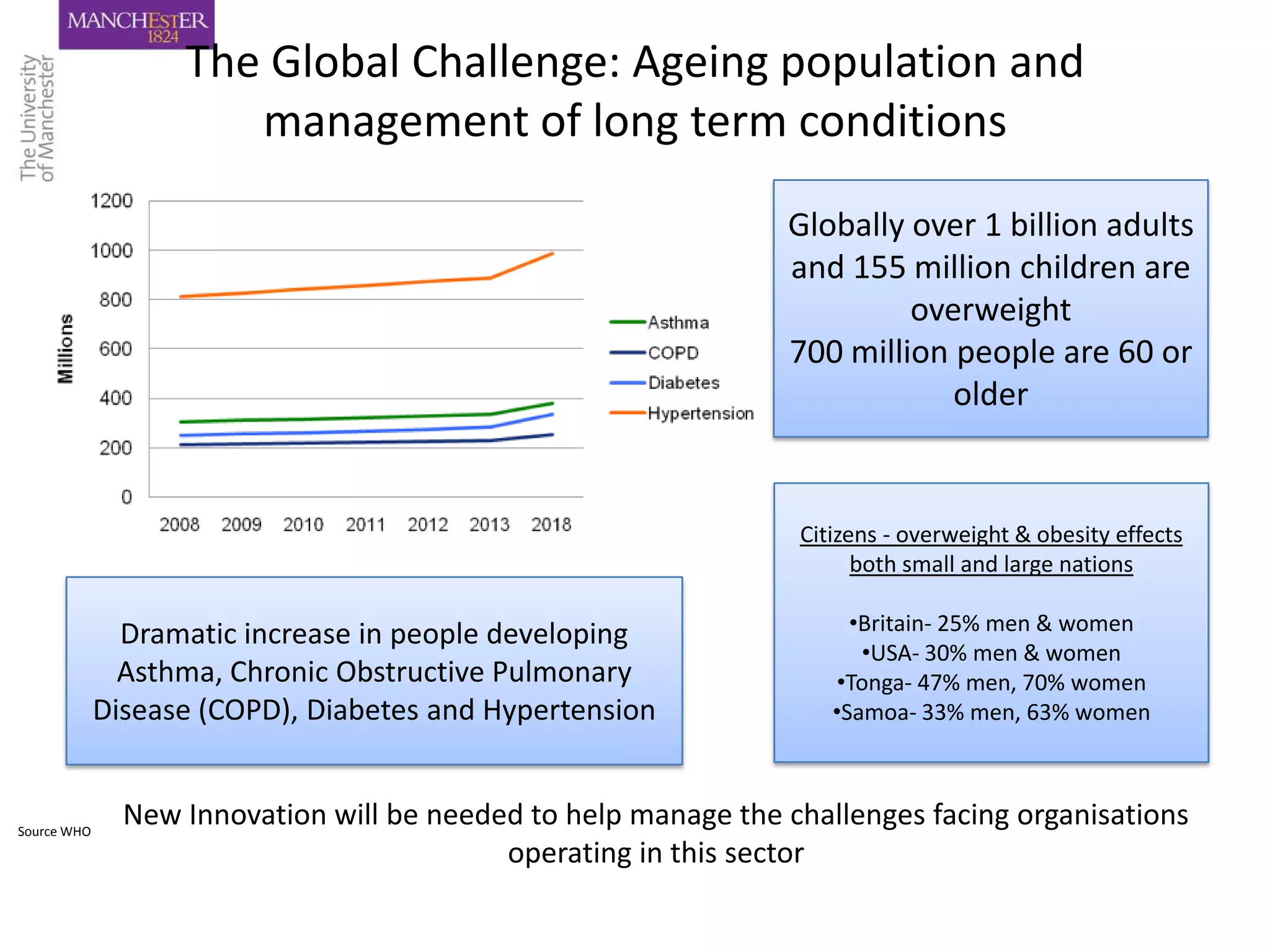
                                                                Globally over 1 billion adults
                                                                and 155 million children are
                                                                         overweight
                                                                700 million people are 60 or
                                                                            older


                                                                 Citizens - overweight & obesity effects
                                                                       both small and large nations

                                                                      •Britain- 25% men & women
               Dramatic increase in people developing
                                                                       •USA- 30% men & women
               Asthma, Chronic Obstructive Pulmonary                •Tonga- 47% men, 70% women
             Disease (COPD), Diabetes and Hypertension              •Samoa- 33% men, 63% women


Source WHO
               New Innovation will be needed to help manage the challenges facing organisations
                                           operating in this sector
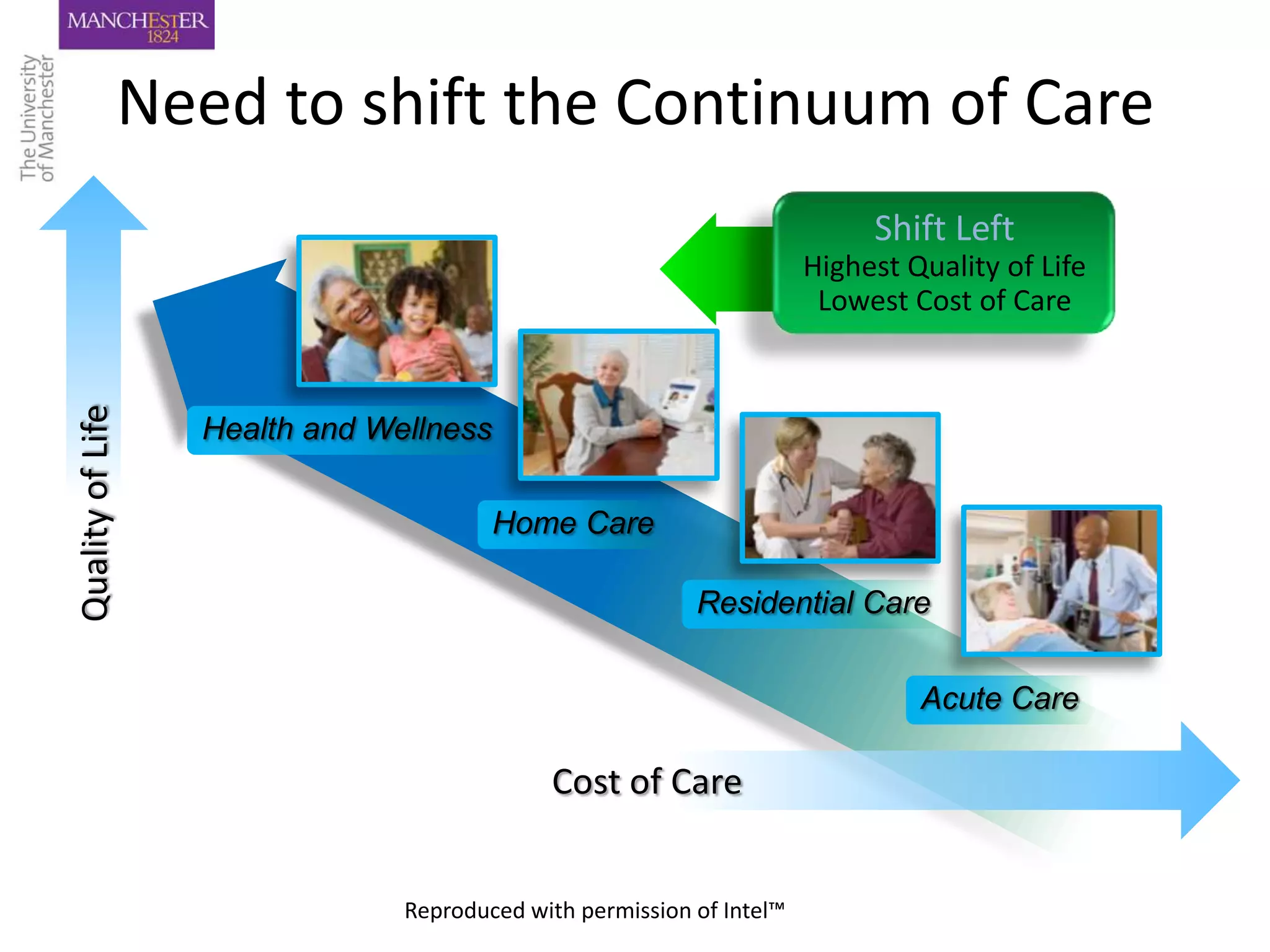
Need to shift the Continuum of Care
                                                                           Shift Left
                                                                      Highest Quality of Life
                                                                       Lowest Cost of Care
Quality of Life


                  Health and Wellness

                                        Home Care

                                                          Residential Care


                                                                               Acute Care

                                            Cost of Care


                               Reproduced with permission of Intel™
mHealth

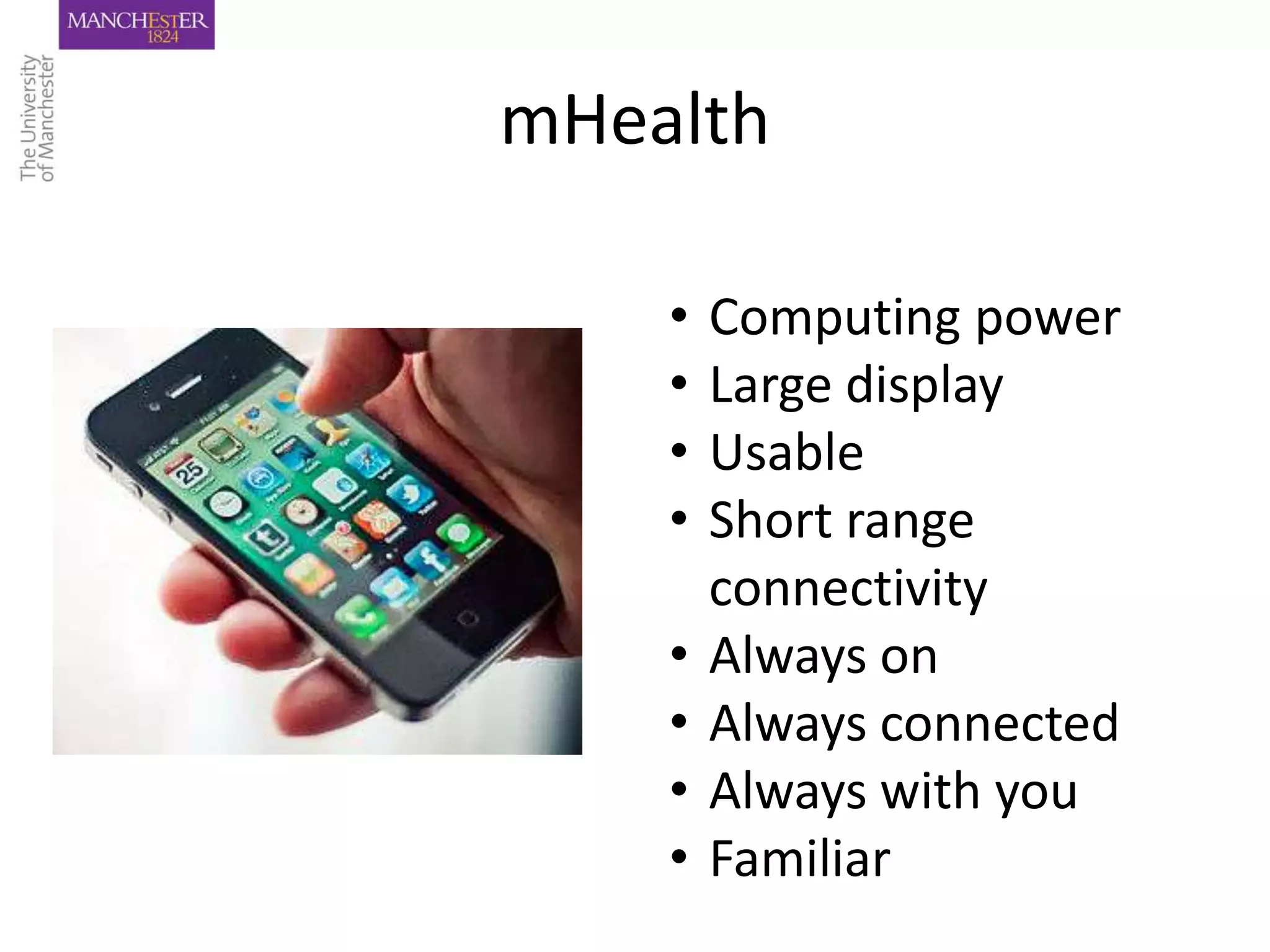
    •   Computing power
    •   Large display
    •   Usable
    •   Short range
        connectivity
    •   Always on
    •   Always connected
    •   Always with you
    •   Familiar
mHealth Now…
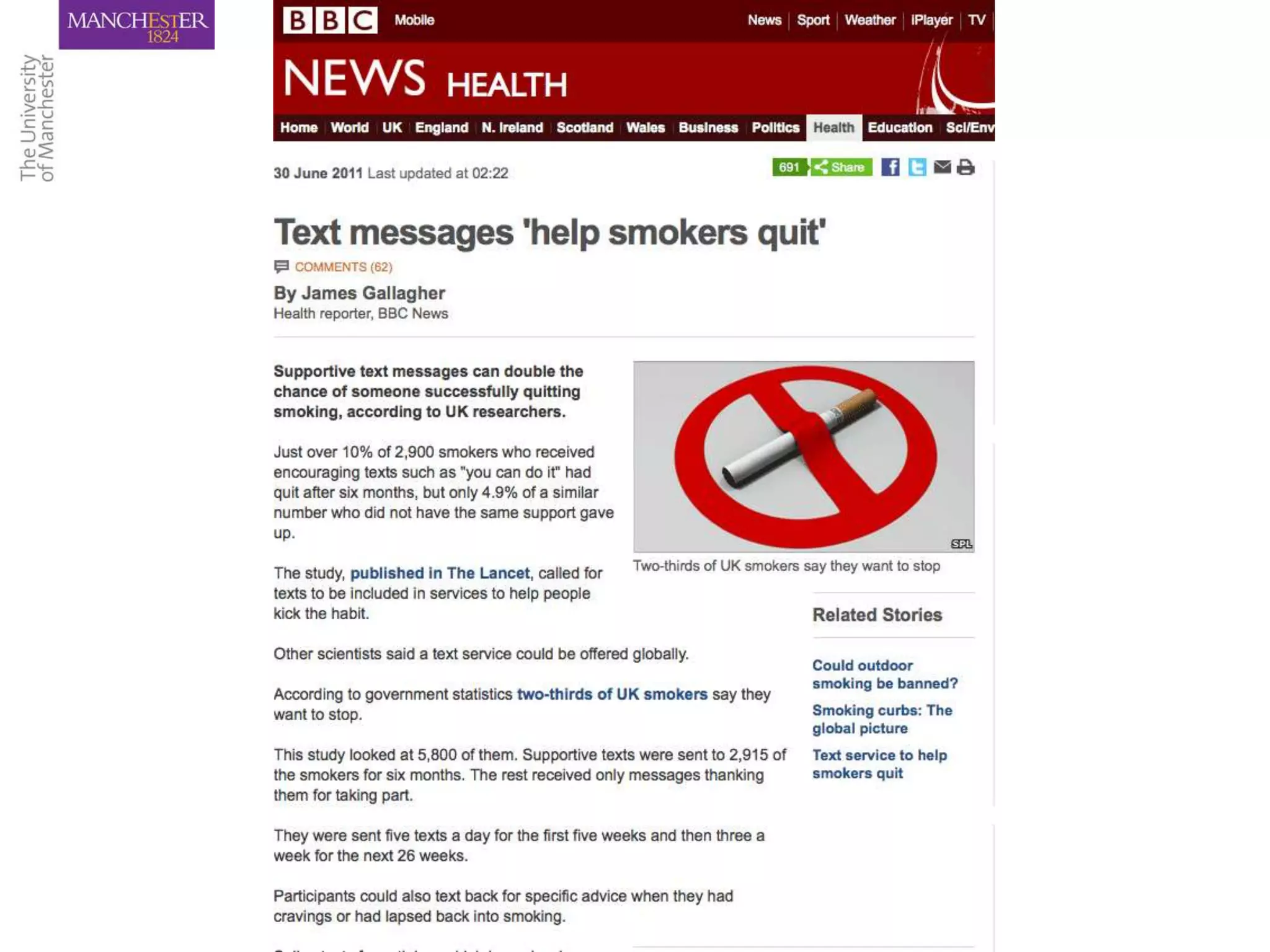
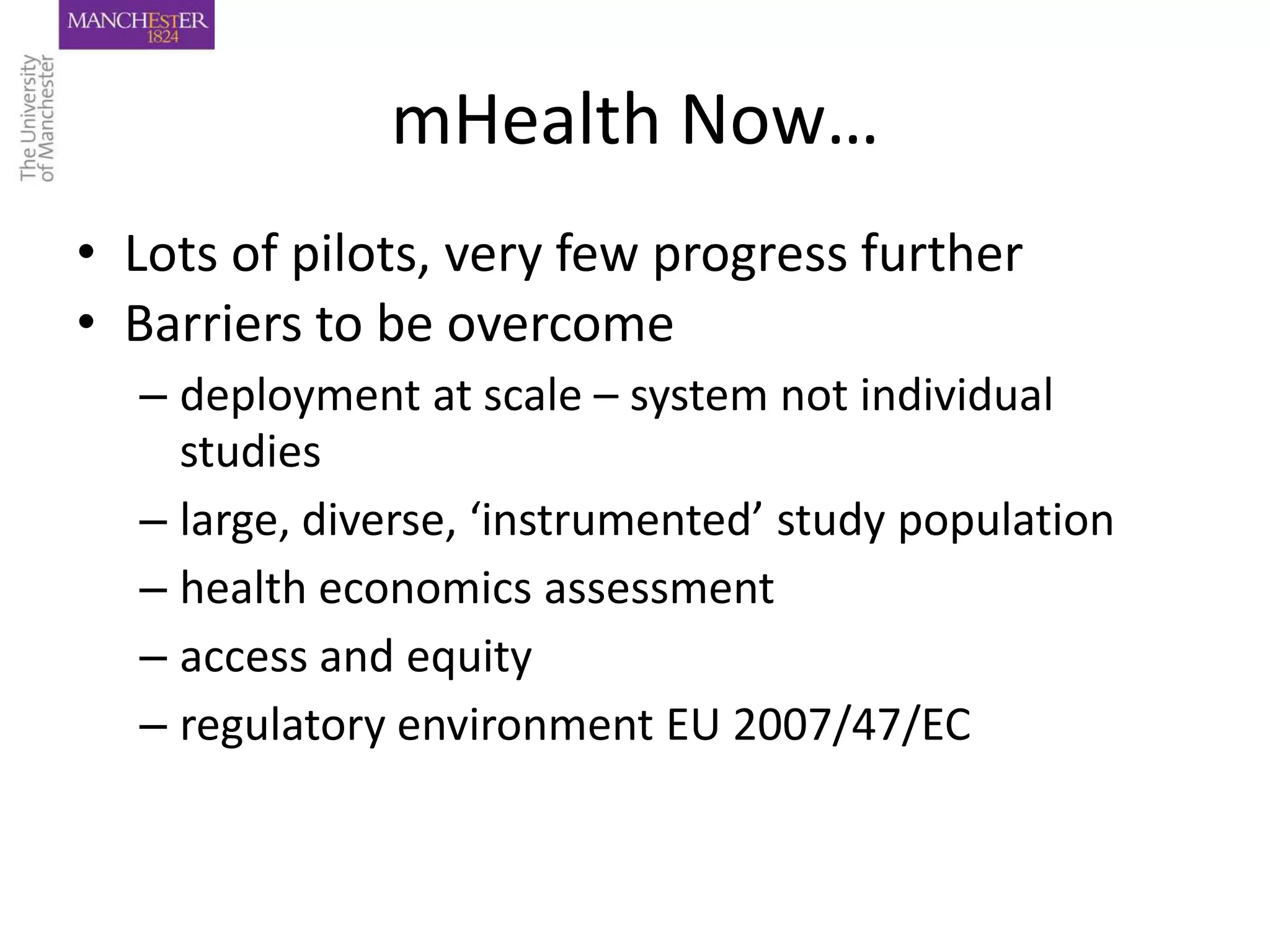
• Lots of pilots, very few progress further
• Barriers to be overcome
  – deployment at scale – system not individual
    studies
  – large, diverse, ‘instrumented’ study population
  – health economics assessment
  – access and equity
  – regulatory environment EU 2007/47/EC
mHealth Ecosystem
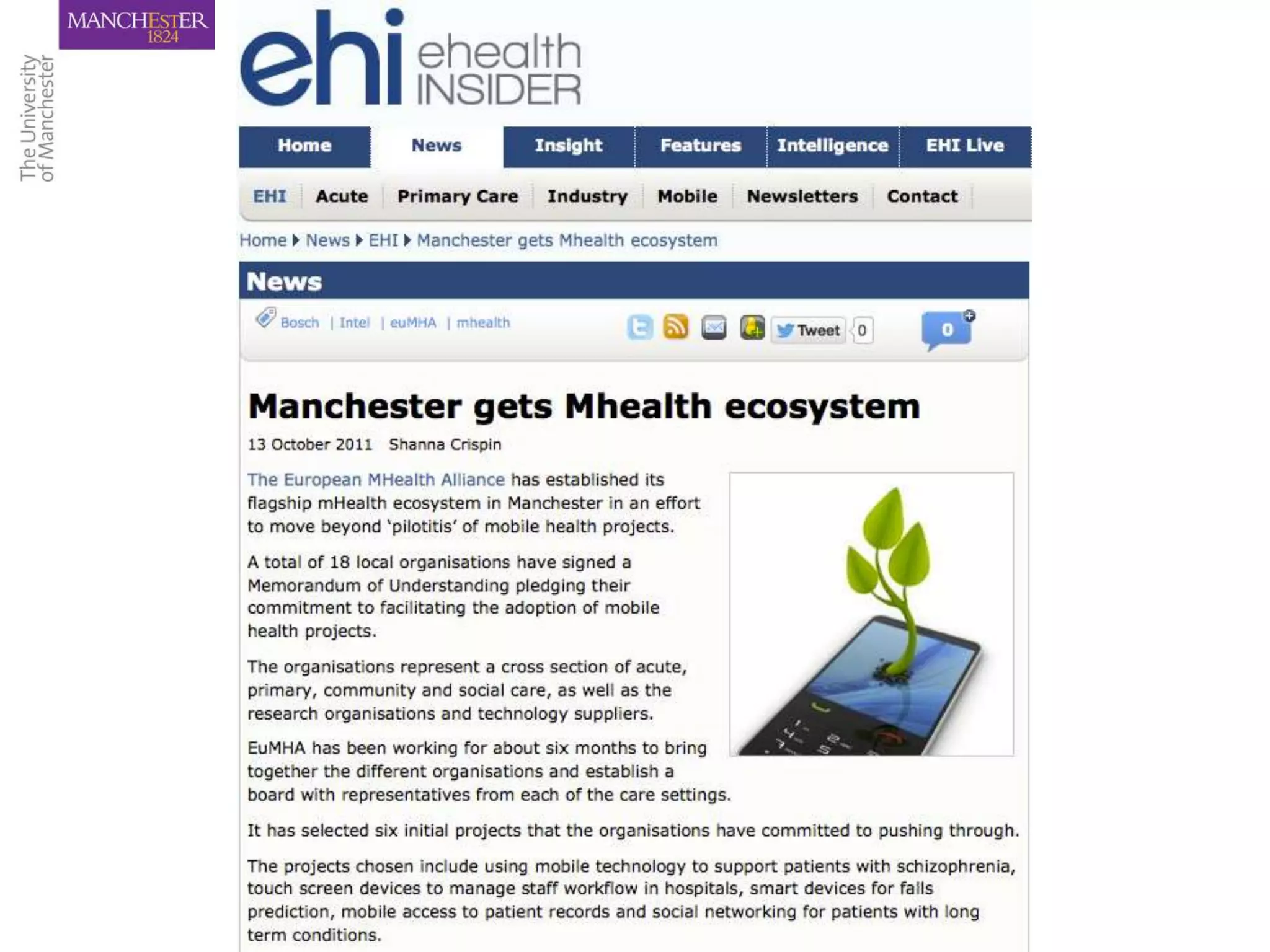
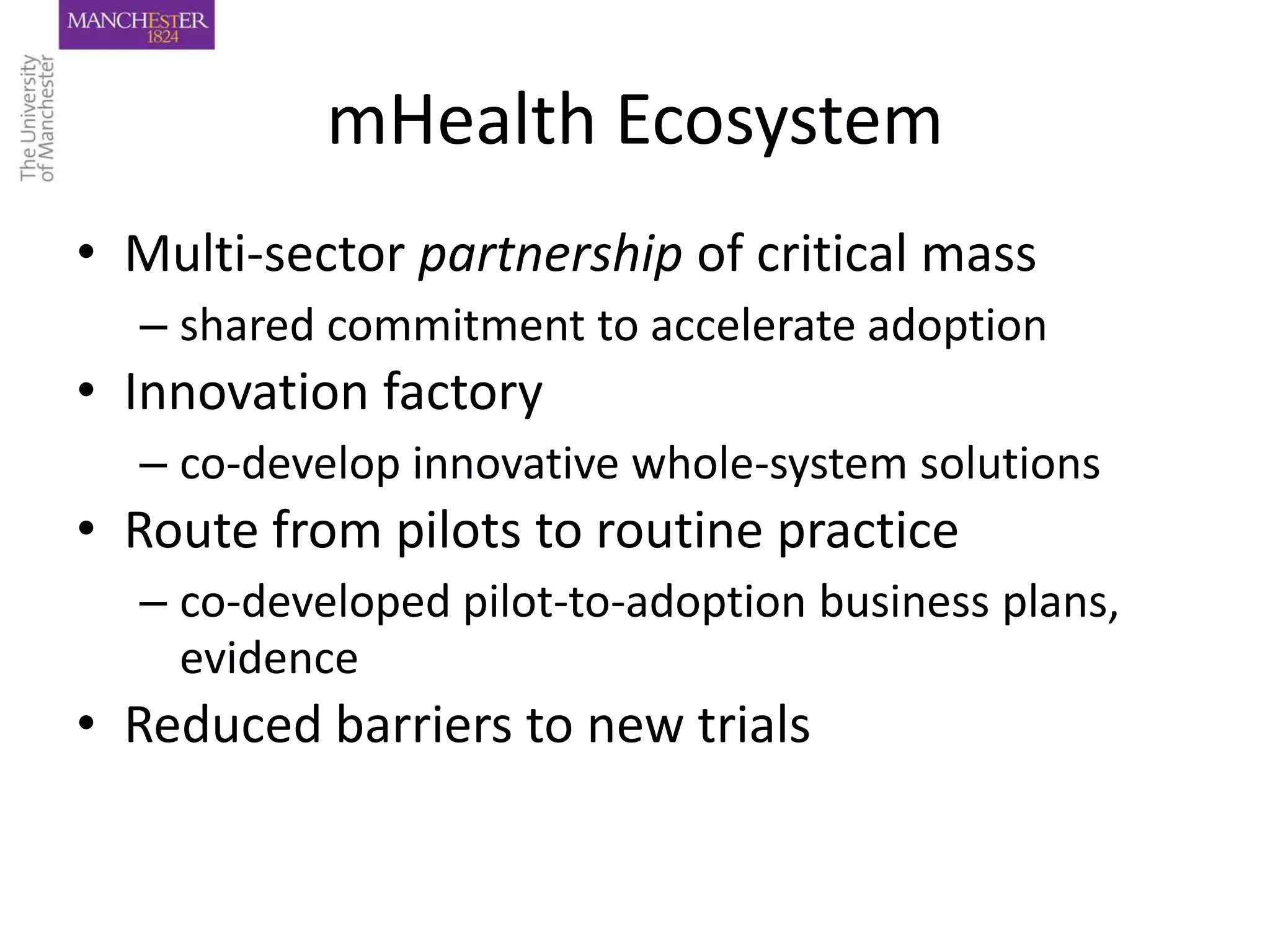
• Multi-sector partnership of critical mass
  – shared commitment to accelerate adoption
• Innovation factory
  – co-develop innovative whole-system solutions
• Route from pilots to routine practice
  – co-developed pilot-to-adoption business plans,
    evidence
• Reduced barriers to new trials
The Manchester mHealth eco-system
• Manchester
   – Social, ethnic, health and lifestyle diversity
   – Only UK city in WHO network of age-friendly cities
• University of Manchester
   – World-leading multidisciplinary research in health, particularly e-
     health, informatics, social sciences, business models
   – mHealth Innovation Centre (MHIC) founded in 2009 in partnership
     with the GSM Association
• Partnership with NHS Trusts:
   – Acute, specialist and primary care
   – NW Exemplar clinical trials network
   53 day trials set-up (UK av = 98 days)
• Partnerships with industry
Who is involved with the Manchester mHealth eco-
                          system?
Serves a population of > 3 million; delivers services to > 2 million patients p.a.
(3,700 beds); 8 Hospitals plus primary, community and social care; clinical
research network; c. 23,500NHS staff

              University Hospital of South Manchester NHS Foundation Trust

 J&J (Janssen Healthcare Innovation)                The Christie NHS Foundation Trust

The University of Manchester
                                                                   Intel
                                       Manchester
Greater Manchester
                                        MHealth
Comprehensive Local                                             NWeHealth
                                       Eco-system
Research Network

Manchester Mental Health &
Social Care Trust
                                                Salford Royal NHS Foundation Trust
  Central Manchester University Hospitals NHS Foundation Trust (comprising
  Manchester Royal Infirmary, Manchester Royal Eye Hospital, Royal Manchester
  Children’s Hospital, Saint Mary’s Hospital and University Dental Hospital)
m-Health Innovation Centre
            Research
• Mental health
   – Diagnosis & compliance with treatment
   – psychological therapy via mobile
• Metabolic Health & Wellbeing
   – bridging the gap: short-term decisions vs. long-term
     outcomes
• Remote Monitoring for Post-operative
  rehabilitation
   – after knee replacement, cardiac surgery
• Intelligent Clothing
   – wearer as mobile biosignal website
• Evaluation of long-term telecare interventions
Example projects
• Metabolic Health and Wellbeing (obesity,
  diabetes)
• Assisted Living (including ICT and ageing, falls
  prevention, self-care and remote monitoring)
• Mental Health & Wellbeing
• Process Optimisation
• Mobile Workforce
A new mobile assessment technology for psychosis

              Jasper Palmier-Claus, PhD
             The University of Manchester
                 Email: Jasper.Palmier-Claus@manchester.ac.uk
                                Tel: 01613067923
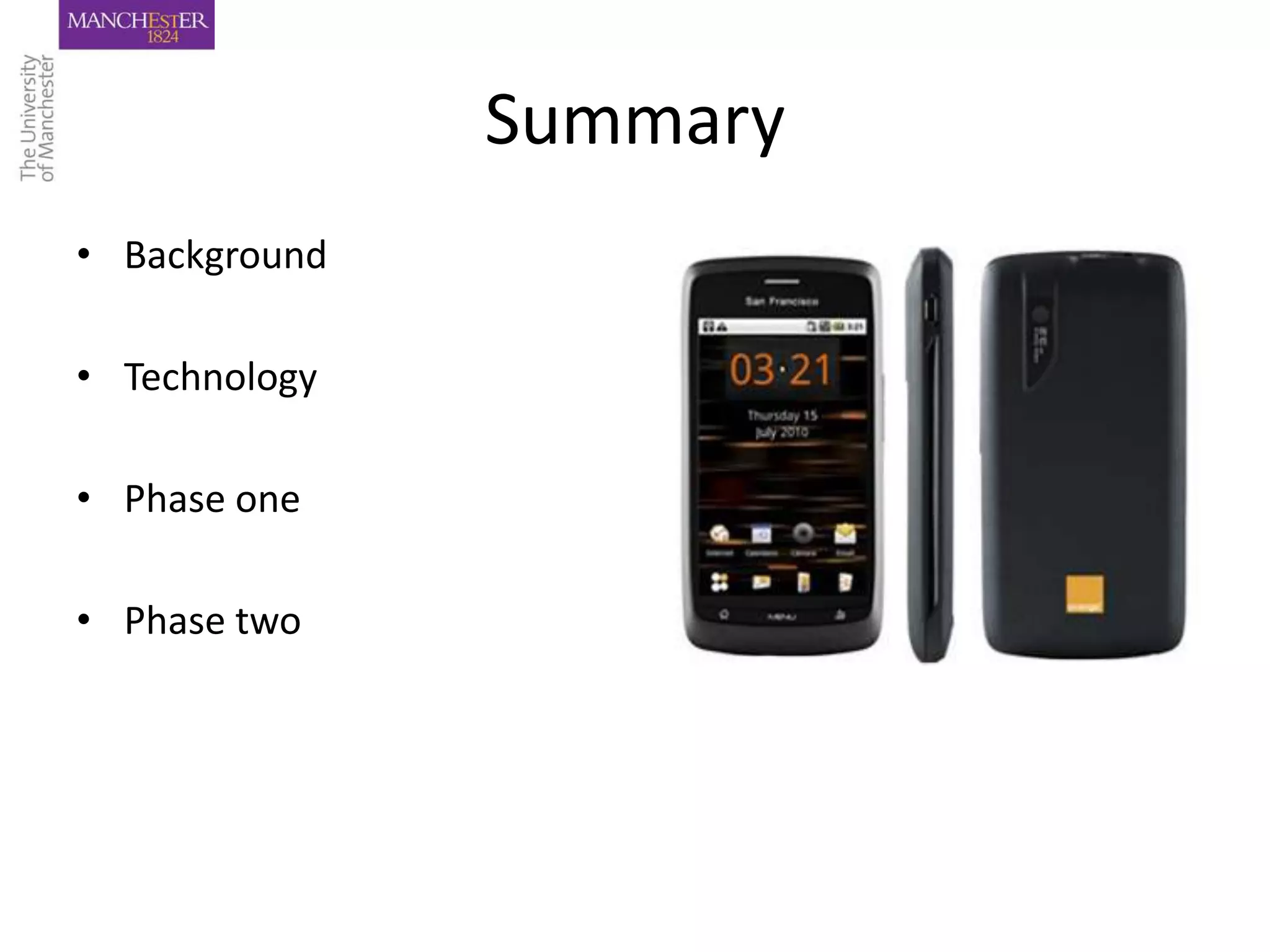
Summary
• Background

• Technology

• Phase one
• Phase two
Background
• Schizophrenia is one of the most prevalent forms of mental
illness.

• Associated cost of 6.7 billion pounds each year.

• Clinical outcome often poor despite treatment with 80% of
individuals relapsing within 5 years after the first episode.

• Major need for new forms of intervention and symptom
management.
Momentary assessment
• Considerable evidence to suggest that patient self-report is valid.

• Momentary assessment common in research.

• Detailed view of individual’s symptoms in everyday settings.

• Different clinical populations.
    –   Anger
    –   Depression
    –   Pain
    –   Hyperactivity
    –   Psychosis
Why adapt for clinical use?
• Reduces need for averaging.

• Reduces retrospective recall bias.

• Contextual information.

• Temporal associations.

• Relapse-signatures.

• Treatment effects.

• Adjunct to psychosocial intervention.
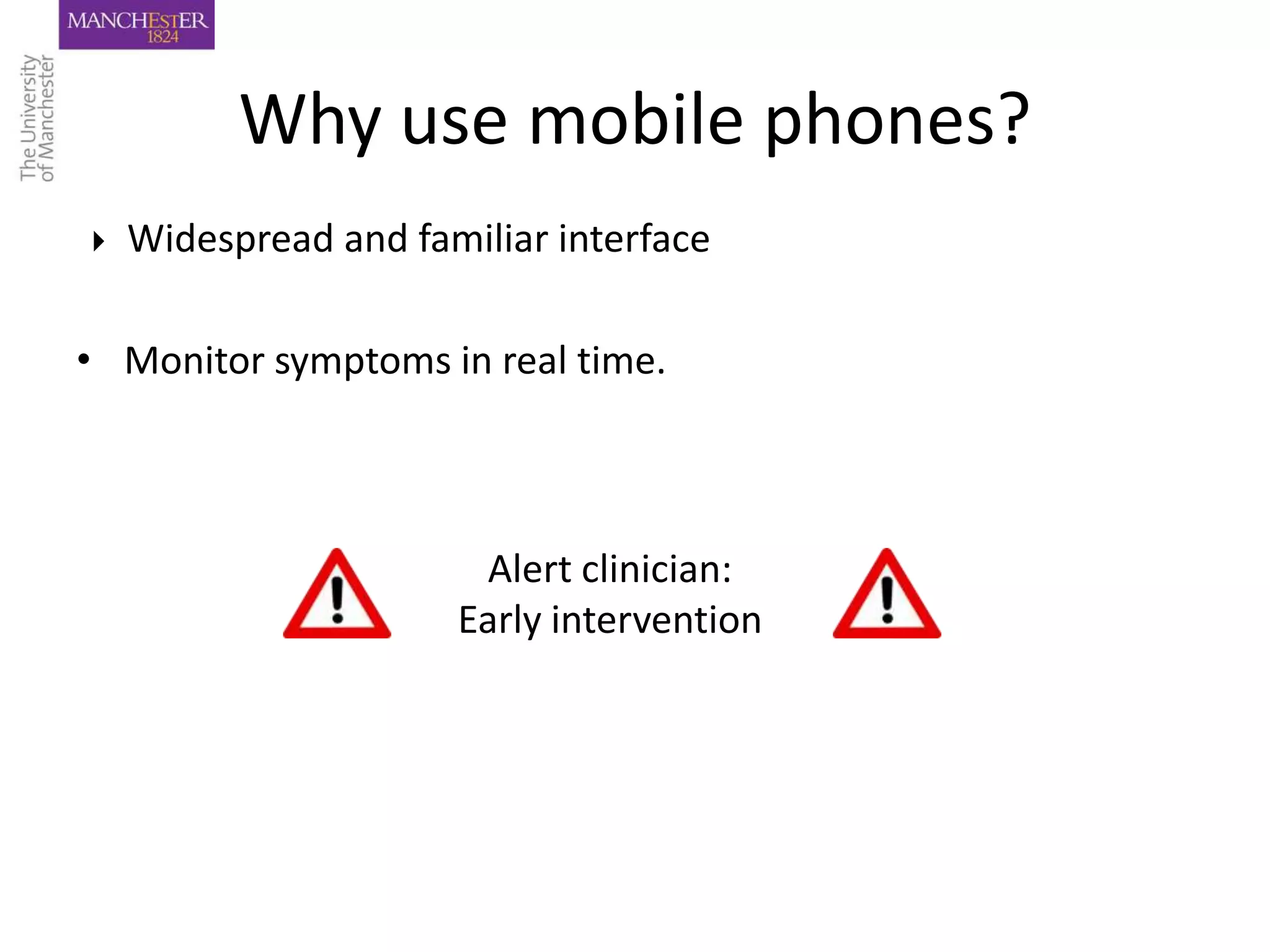
Why use mobile phones?
   Widespread and familiar interface

• Monitor symptoms in real time.


                       Alert clinician:
                      Early intervention
The technology
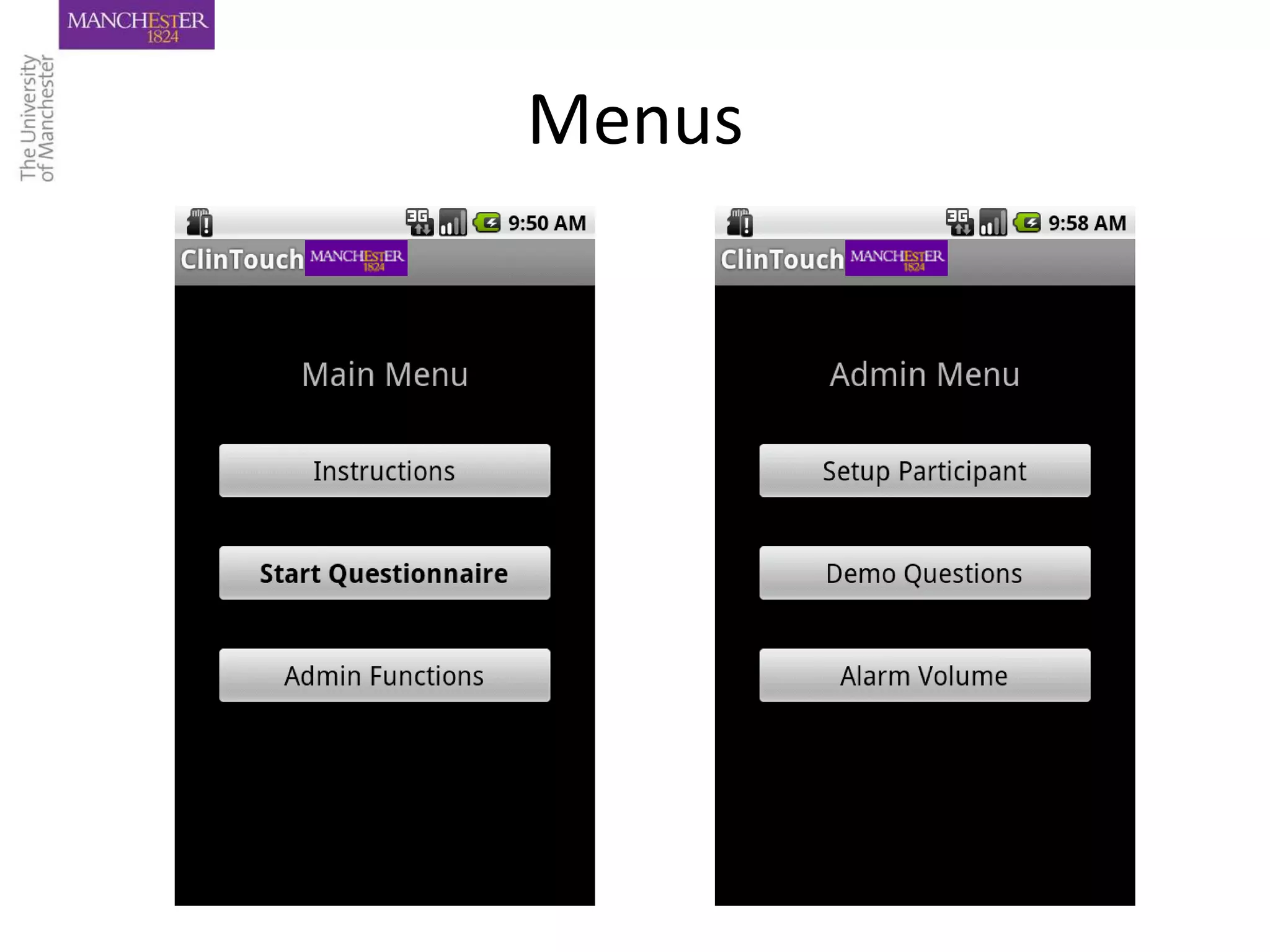
Menus
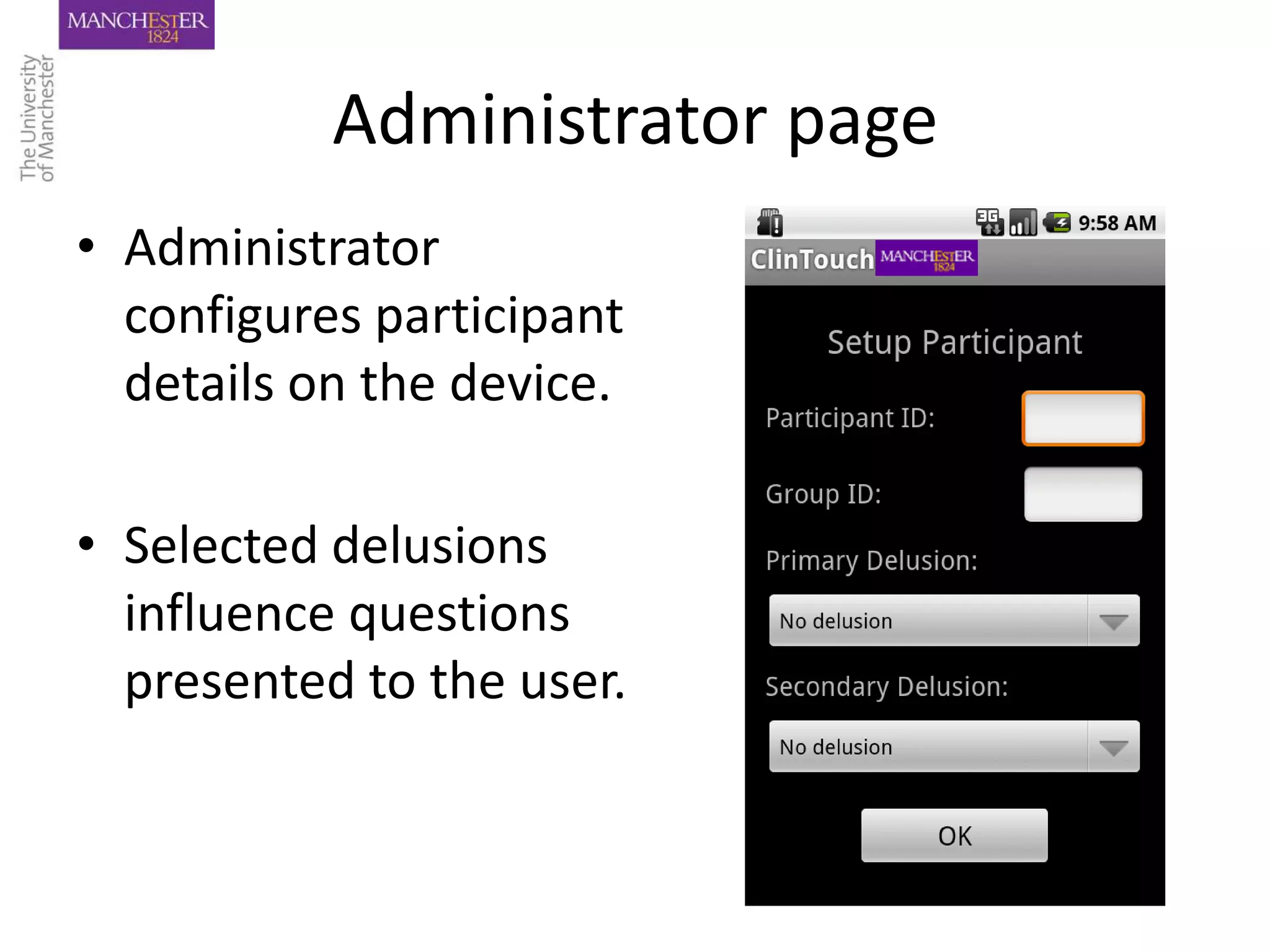
Administrator page
• Administrator
  configures participant
  details on the device.

• Selected delusions
  influence questions
  presented to the user.
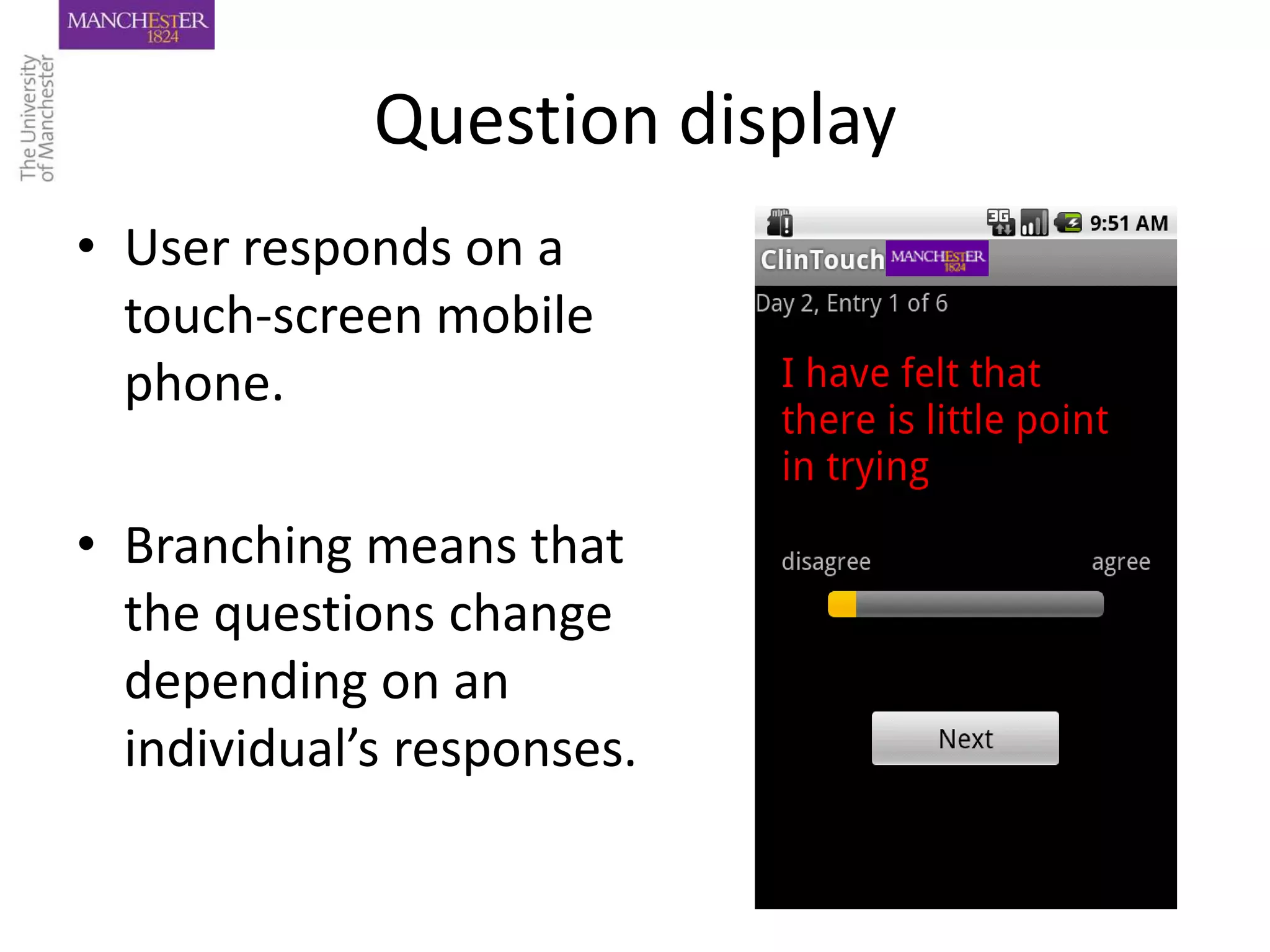
Question display
• User responds on a
  touch-screen mobile
  phone.

• Branching means that
  the questions change
  depending on an
  individual’s responses.
Phase one
Aims
•   To validate momentary assessment items against
    corresponding gold standard interview scales.

•   To ascertain levels of compliance and dropout in individuals
    at different stages of psychosis (acute, remitted and ultra-
    high risk).
Method
• Three groups:
   – 12 acute patients.
   – 12 remitted patients.
   – 12 ultra-high risk individuals.


• Alerts 6 times per day for 1 week.

• PANSS and CDS performed before and after sampling
  procedure by trained assessor.

• Telephone call during the week to encourage compliance.
Compliance
• Compliance = >33% of all possible entries.

• 44 individuals consented to take part.

• 8 individuals (6 acute, 2 remitted) failed to meet this
  threshold and were excluded from later analysis (82%
  compliance).

• Positive symptoms predicted non-compliance (OR = 0.68, p =
  .033)
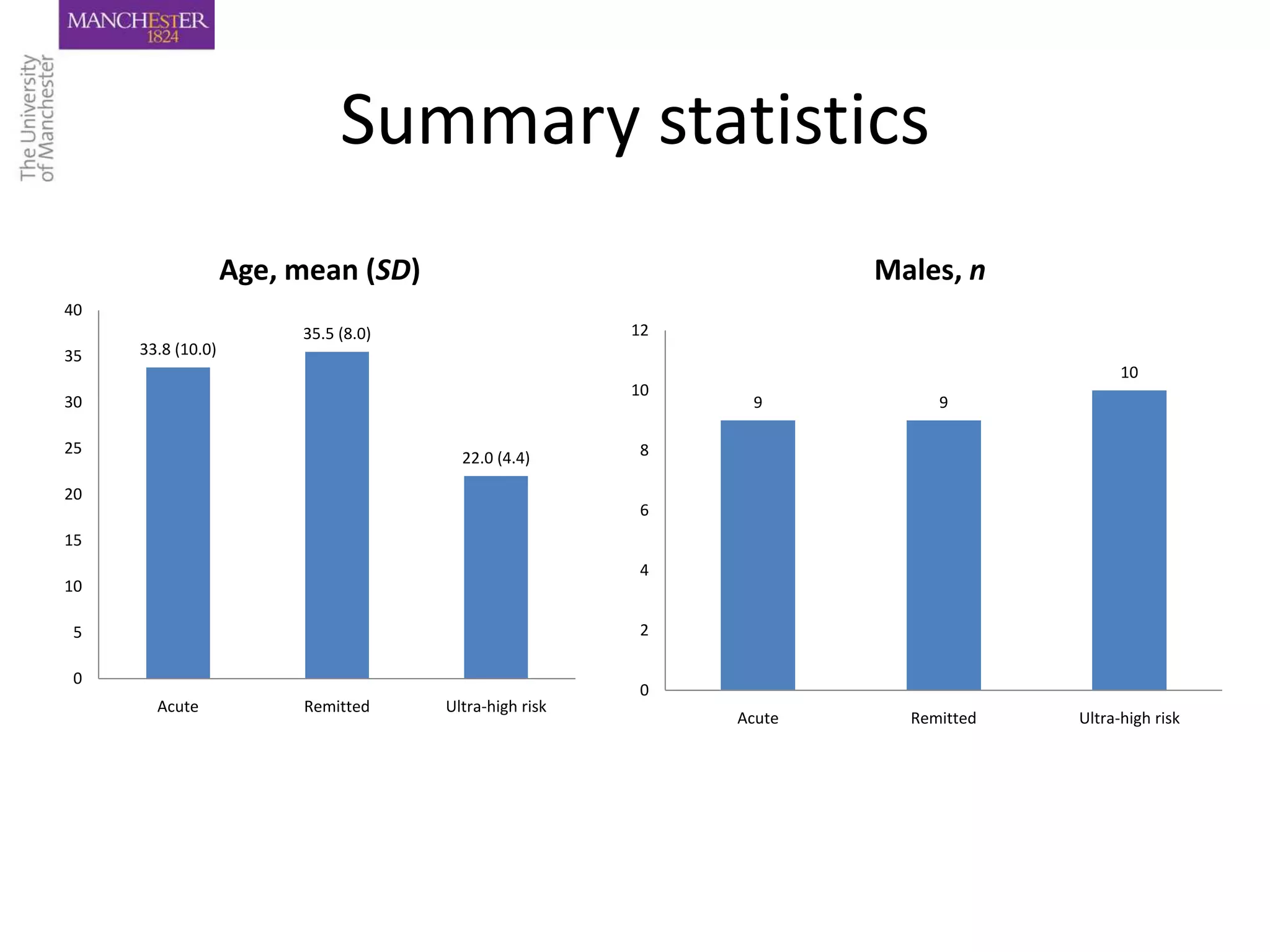
Summary statistics
                   Age, mean (SD)                                   Males, n
40
                        35.5 (8.0)                     12
35   33.8 (10.0)
                                                                                       10
                                                       10
30                                                           9           9

25                                                      8
                                       22.0 (4.4)

20
                                                        6
15
                                                        4
10

 5                                                      2

 0
                                                        0
       Acute            Remitted     Ultra-high risk
                                                            Acute     Remitted   Ultra-high risk
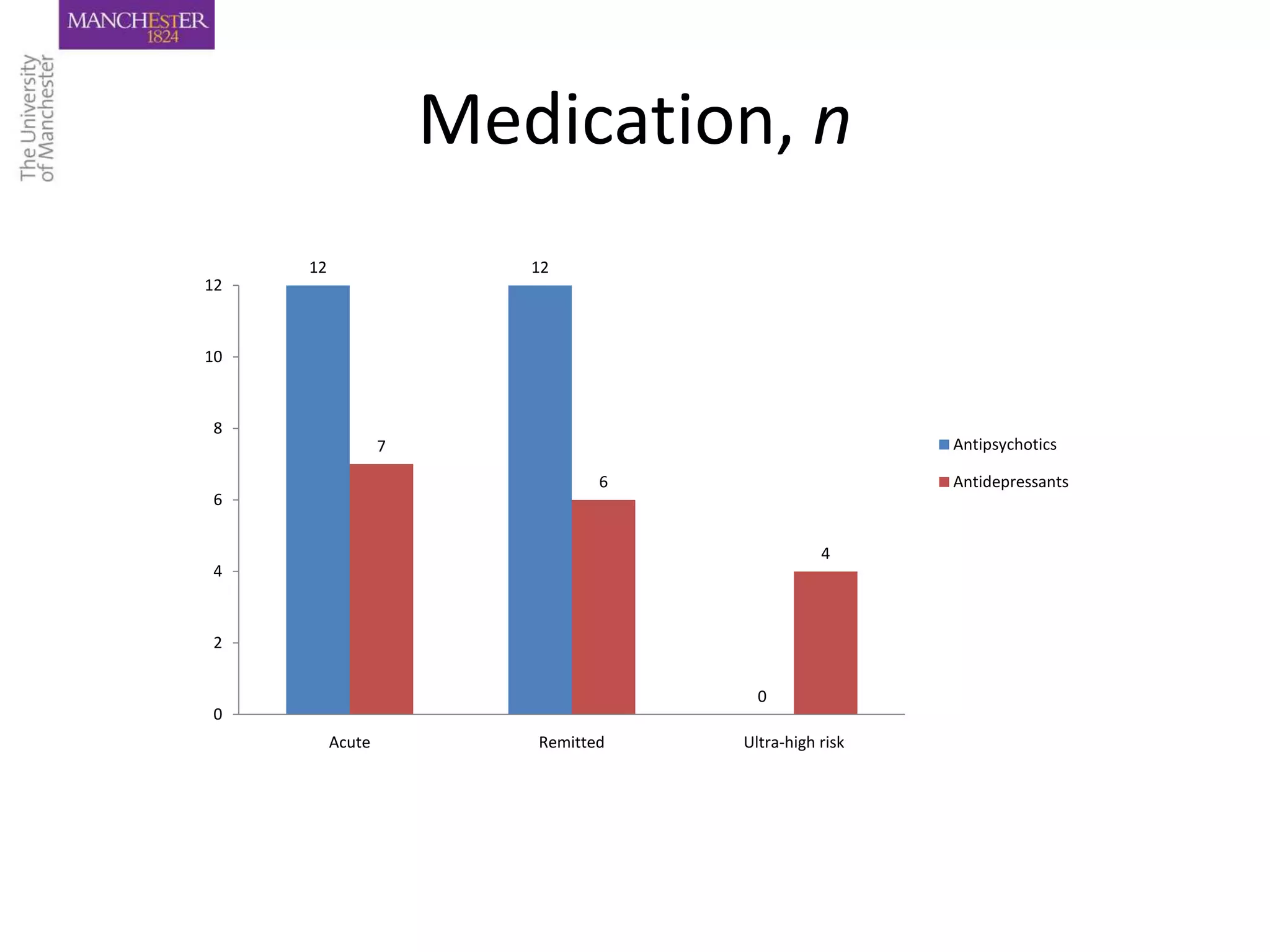
Medication, n
     12                  12
12


10


8
                  7                                   Antipsychotics

                                6                     Antidepressants
6


                                               4
4


2


                                      0
0
          Acute          Remitted   Ultra-high risk
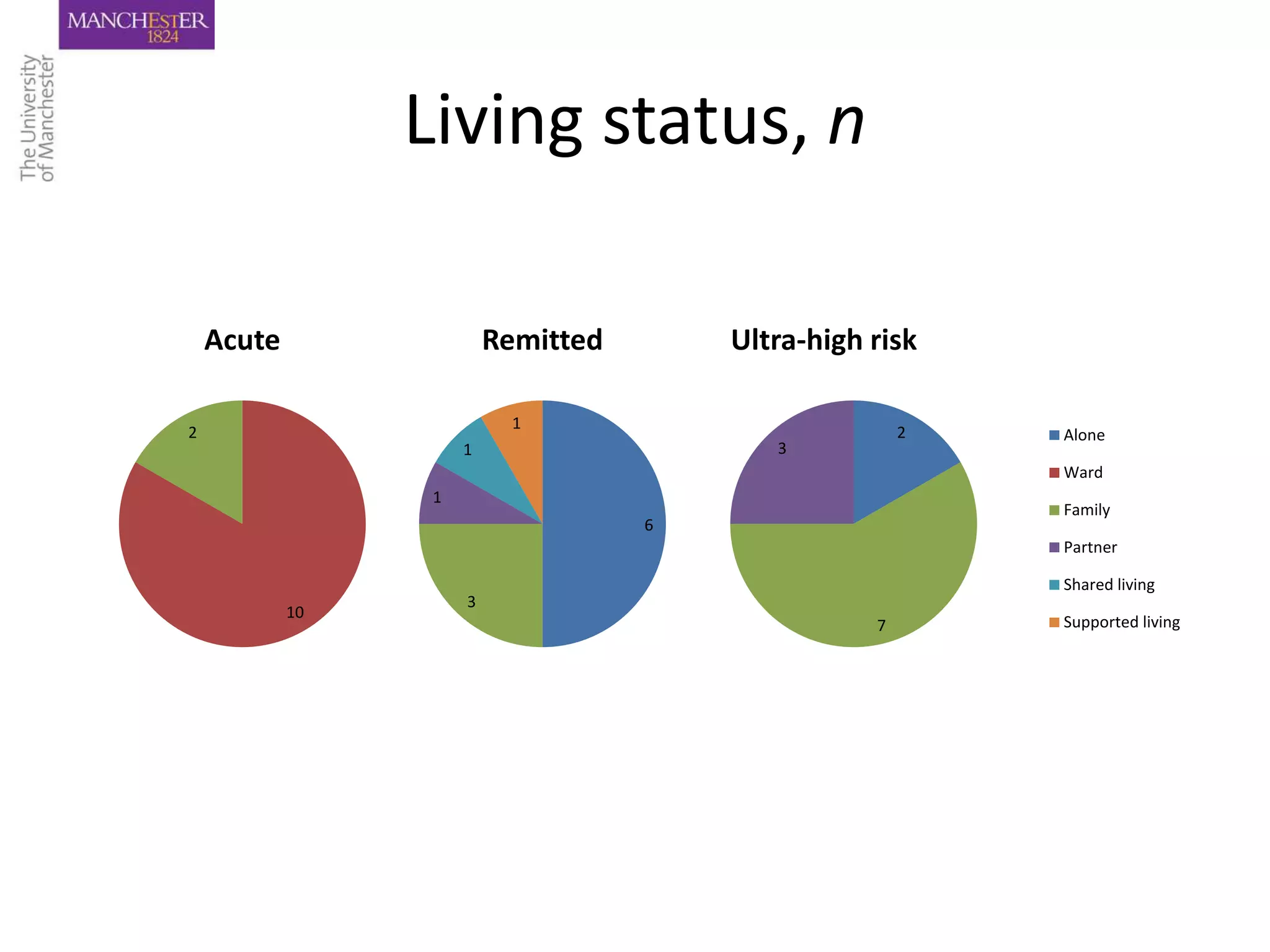
Living status, n

    Acute                 Remitted       Ultra-high risk

                           1
2                                                       2   Alone
                      1                     3
                                                            Ward
                  1
                                                            Family
                                     6
                                                            Partner

                                                            Shared living
                      3
            10
                                                    7       Supported living
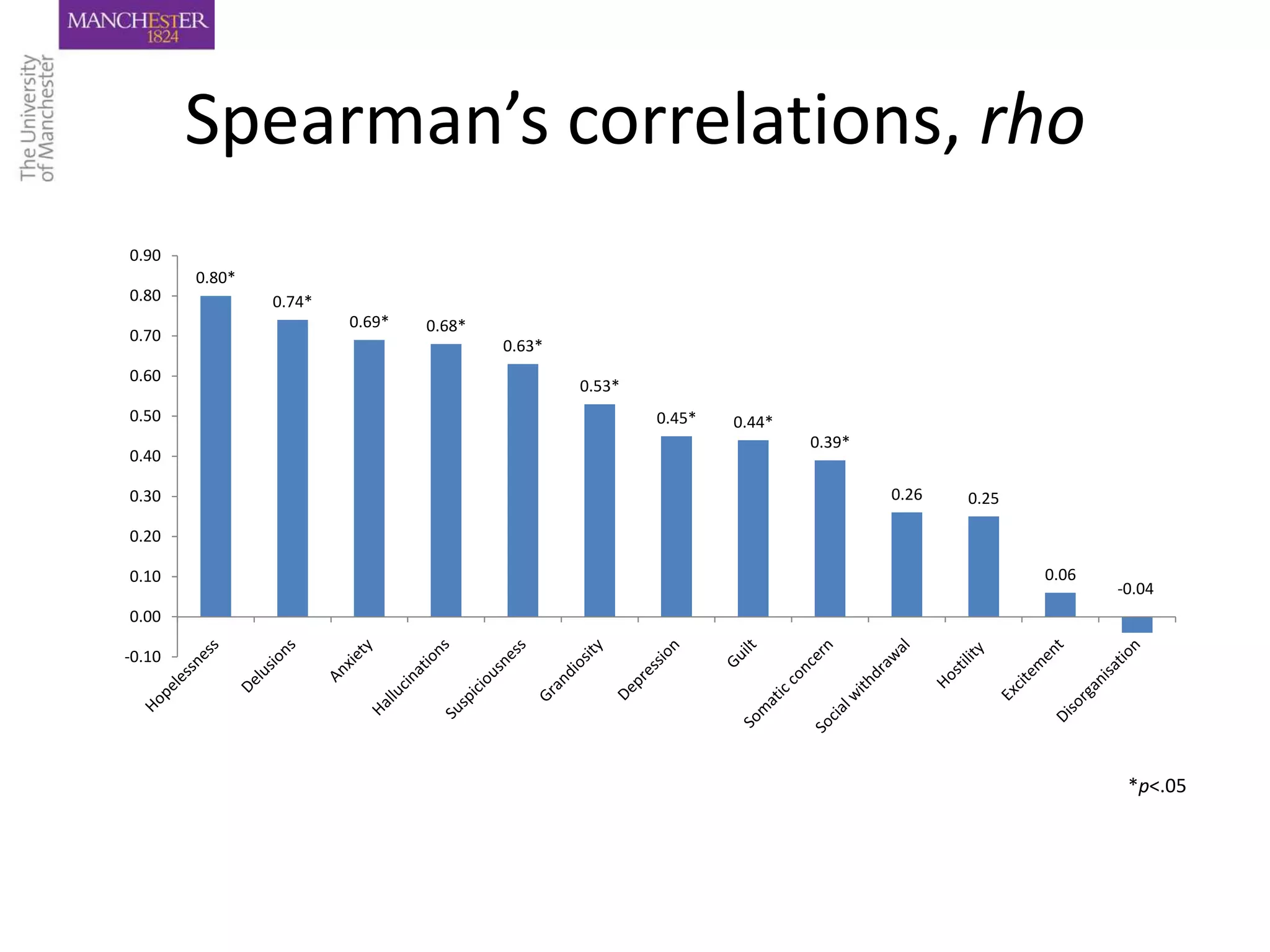
Spearman’s correlations, rho
0.90
        0.80*
0.80            0.74*
                        0.69*   0.68*
0.70
                                        0.63*
0.60
                                                0.53*
0.50                                                    0.45*   0.44*
                                                                        0.39*
0.40

0.30                                                                            0.26   0.25

0.20

0.10                                                                                          0.06
                                                                                                     -0.04
0.00

-0.10


                                                                                                      *p<.05
Conclusions for phase one
• Mobile phone based momentary assessment is feasible in
  individuals with different levels of psychosis.

• Positive symptom momentary assessment scales showed
  strong correlations with the PANSS.

• PANSS subscales based on care coordinator reports and
  behaviour during the interview showed more attenuated
  correlations.
Phase two
Background
• Text messages may also effectively monitor psychotic
  experiences in the real world.

• Texts may be advantageous in that individuals are familiar
  with the technology.

• However, the ClinTouch application may show greater
  functionality.

• Aim: To compare and contrast the new ClinTouch software
  with a text based system.
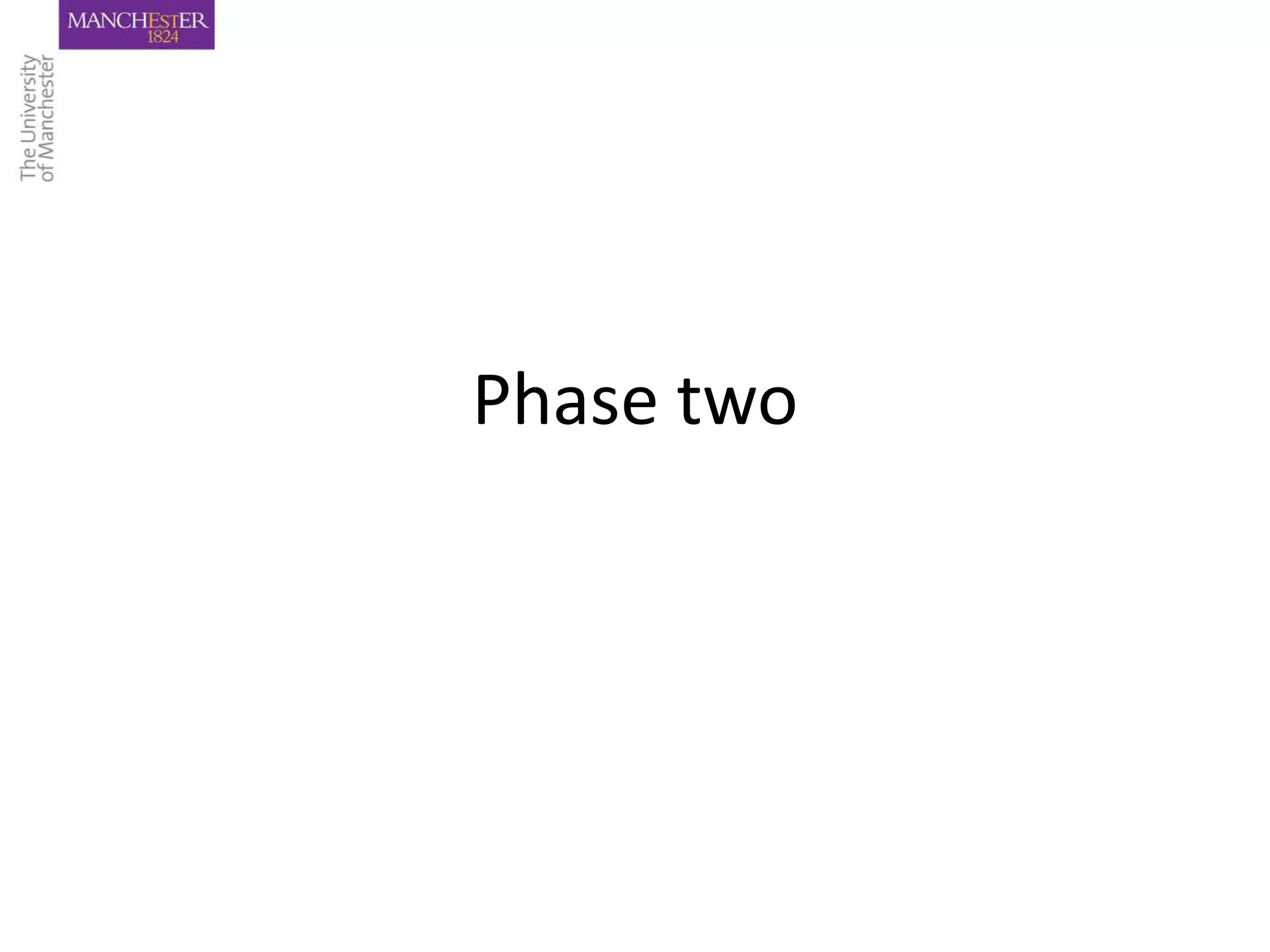
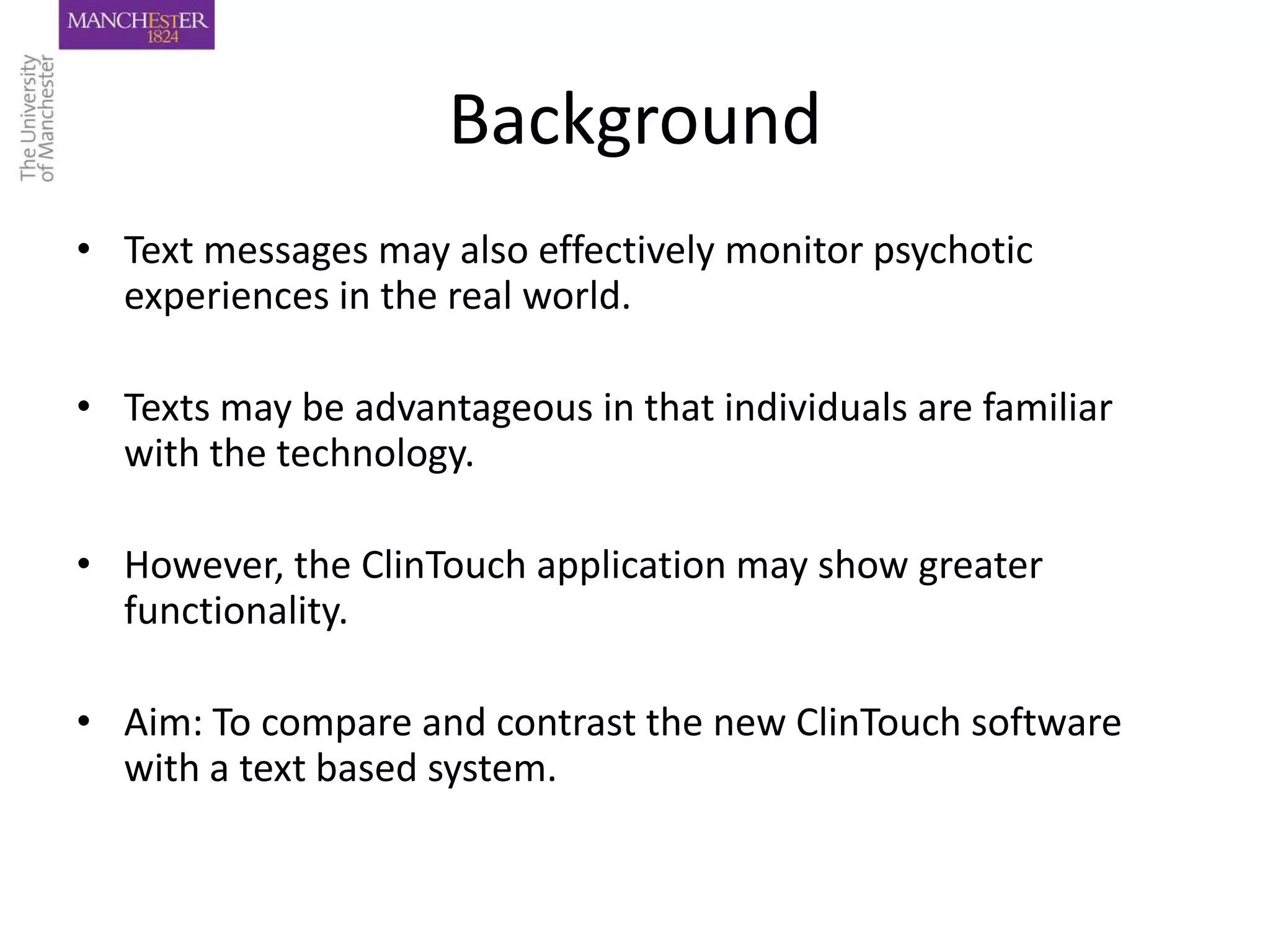
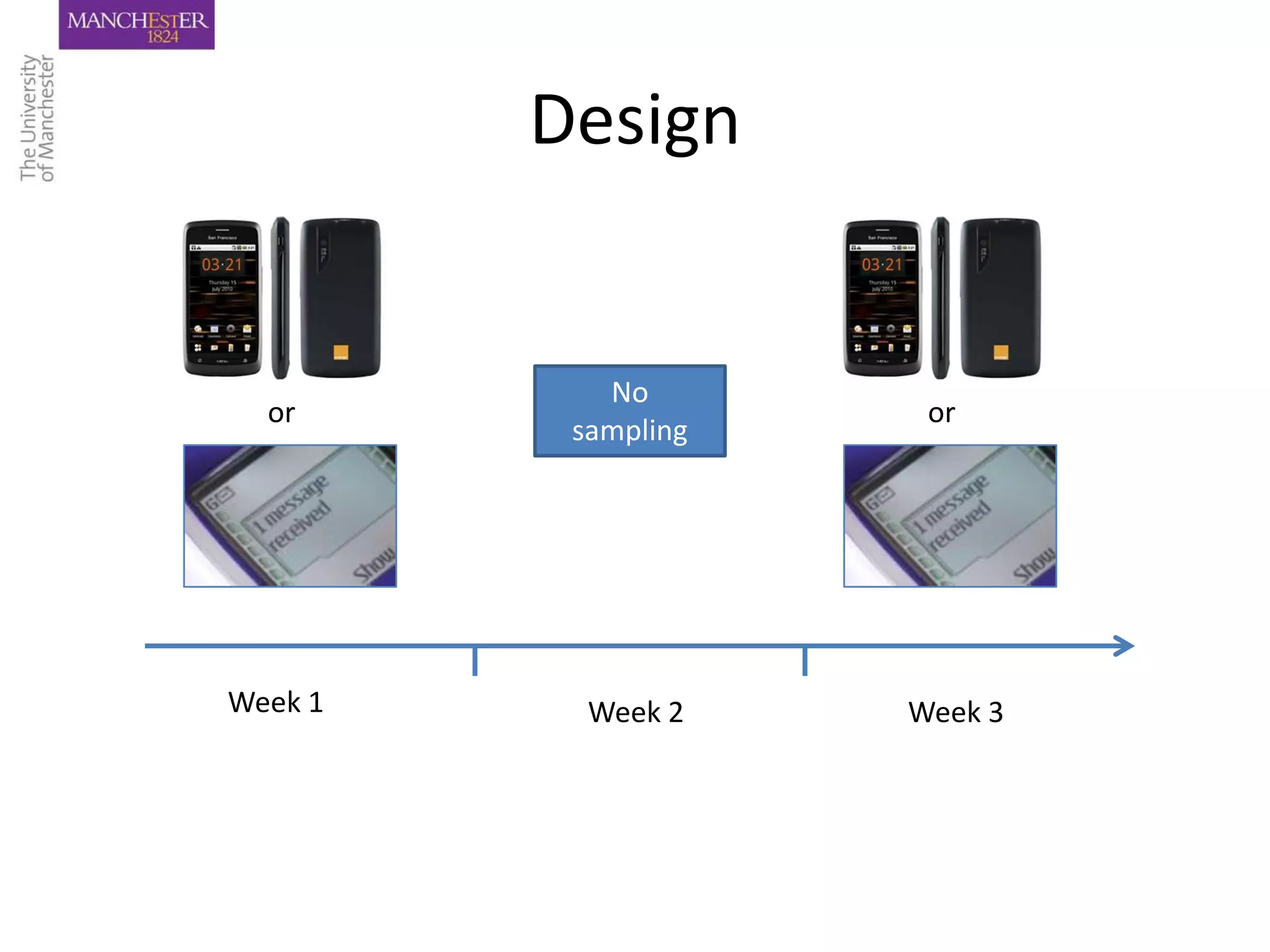
Design


            No
  or                  or
          sampling


Week 1     Week 2    Week 3
Design
• 24 community-based individuals with psychosis.

• Compare devices on:
   – Number of completed data-points.
   – Quantitative feedback scores.
   – Length of time to complete each entry.


• Qualitative interviews:
   – Benefits and limitations of both approaches.
   – Perceptions of phone-usage and integration of technology into
     everyday life and clinical case management.
   – Ways of improving technology.
MRC DPFS Mobile Assessment Technology for Schizophrenia (ClinTouch) Study
                    Milestone 3 Preliminary Results


• Demographics (n=24)
• Male, n =19
• White British, n =17
• Age = mean 33.0, SD 9.5, min 18, max 49
• Recruited through Community Mental Health
  Teams (N=15), Early Intervention Services (N=8)
  and supported living staff (N=1).
• Four individuals owned a touch-screen
  SmartPhone at the time of taking part.
MRC DPFS Mobile Assessment Technology for Schizophrenia (ClinTouch) Study
                    Milestone 3 Preliminary Results
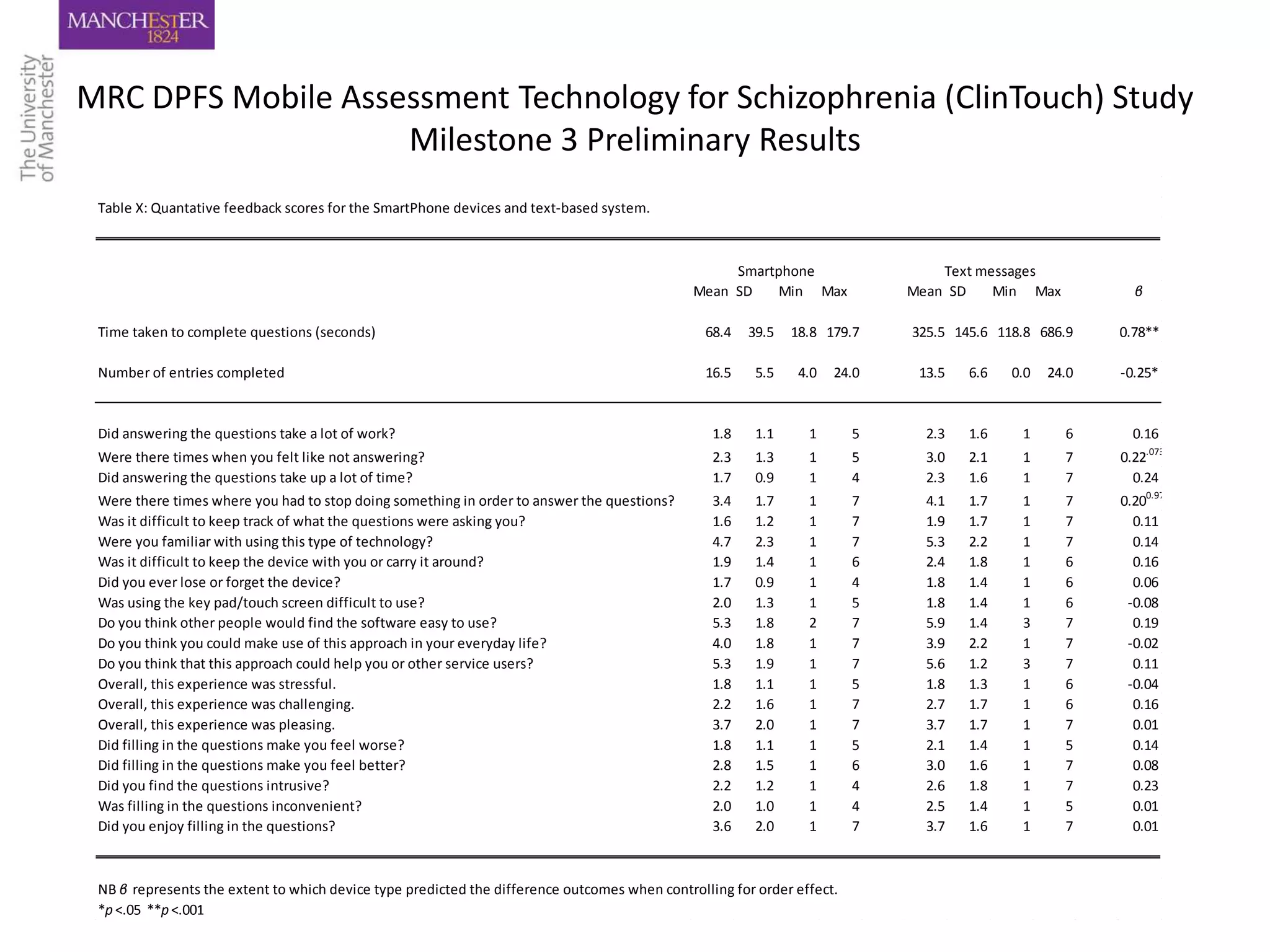
 Table X: Quantative feedback scores for the SmartPhone devices and text-based system.


                                                                                                   Smartphone                   Text messages
                                                                                              Mean SD    Min Max            Mean SD    Min Max           β

 Time taken to complete questions (seconds)                                                     68.4   39.5   18.8 179.7    325.5 145.6 118.8 686.9    0.78**

 Number of entries completed                                                                    16.5    5.5    4.0   24.0    13.5   6.6   0.0   24.0   -0.25*


 Did answering the questions take a lot of work?                                                 1.8    1.1     1       5     2.3   1.6    1      6      0.16
 Were there times when you felt like not answering?                                              2.3    1.3     1       5     3.0   2.1    1      7    0.22.073
 Did answering the questions take up a lot of time?                                              1.7    0.9     1       4     2.3   1.6    1      7      0.24
 Were there times where you had to stop doing something in order to answer the questions?        3.4    1.7     1       7     4.1   1.7    1      7    0.200.97
 Was it difficult to keep track of what the questions were asking you?                           1.6    1.2     1       7     1.9   1.7    1      7      0.11
 Were you familiar with using this type of technology?                                           4.7    2.3     1       7     5.3   2.2    1      7      0.14
 Was it difficult to keep the device with you or carry it around?                                1.9    1.4     1       6     2.4   1.8    1      6      0.16
 Did you ever lose or forget the device?                                                         1.7    0.9     1       4     1.8   1.4    1      6      0.06
 Was using the key pad/touch screen difficult to use?                                            2.0    1.3     1       5     1.8   1.4    1      6     -0.08
 Do you think other people would find the software easy to use?                                  5.3    1.8     2       7     5.9   1.4    3      7      0.19
 Do you think you could make use of this approach in your everyday life?                         4.0    1.8     1       7     3.9   2.2    1      7     -0.02
 Do you think that this approach could help you or other service users?                          5.3    1.9     1       7     5.6   1.2    3      7      0.11
 Overall, this experience was stressful.                                                         1.8    1.1     1       5     1.8   1.3    1      6     -0.04
 Overall, this experience was challenging.                                                       2.2    1.6     1       7     2.7   1.7    1      6      0.16
 Overall, this experience was pleasing.                                                          3.7    2.0     1       7     3.7   1.7    1      7      0.01
 Did filling in the questions make you feel worse?                                               1.8    1.1     1       5     2.1   1.4    1      5      0.14
 Did filling in the questions make you feel better?                                              2.8    1.5     1       6     3.0   1.6    1      7      0.08
 Did you find the questions intrusive?                                                           2.2    1.2     1       4     2.6   1.8    1      7      0.23
 Was filling in the questions inconvenient?                                                      2.0    1.0     1       4     2.5   1.4    1      5      0.01
 Did you enjoy filling in the questions?                                                         3.6    2.0     1       7     3.7   1.6    1      7      0.01


 NB β represents the extent to which device type predicted the difference outcomes when controlling for order effect.
 *p <.05 **p <.001
Future directions
• Feasible over longer periods of time?

• Can it be incorporated into clinical case
  management?

• Is it effective at assessing other clinical
  phenomena?
Quote

‘This is like quantitative stuff isn’t it? So as long
  as it was balanced with interviews, however
  often that person needs them then yeah [it
  would be useful], but I wouldn’t give all the
power to the robots just yet. I think it would be
   useful, but not to put all of our eggs in one
                      basket’
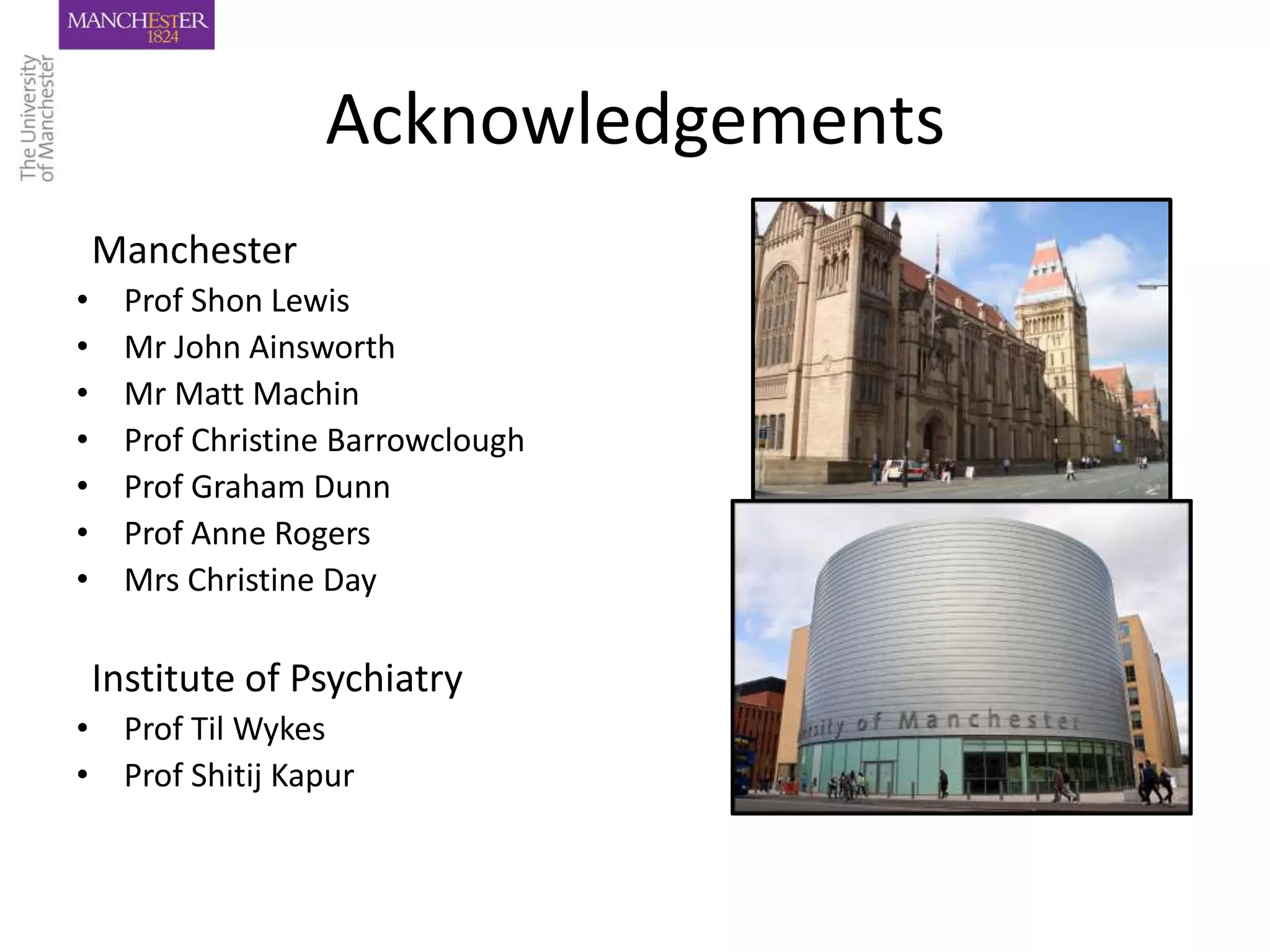
Acknowledgements
    Manchester
•     Prof Shon Lewis
•     Mr John Ainsworth
•     Mr Matt Machin
•     Prof Christine Barrowclough
•     Prof Graham Dunn
•     Prof Anne Rogers
•     Mrs Christine Day

    Institute of Psychiatry
• Prof Til Wykes
• Prof Shitij Kapur
Thank you

Mhealthintrohim 120726035455-phpapp02 (1)

  • 1.
    mHealth John Ainsworth john.ainsworth@manchester.ac.uk HI@M 9th July 2012
  • 2.
    The Global Challenge:Ageing population and management of long term conditions Globally over 1 billion adults and 155 million children are overweight 700 million people are 60 or older Citizens - overweight & obesity effects both small and large nations •Britain- 25% men & women Dramatic increase in people developing •USA- 30% men & women Asthma, Chronic Obstructive Pulmonary •Tonga- 47% men, 70% women Disease (COPD), Diabetes and Hypertension •Samoa- 33% men, 63% women Source WHO New Innovation will be needed to help manage the challenges facing organisations operating in this sector
  • 3.
    Need to shiftthe Continuum of Care Shift Left Highest Quality of Life Lowest Cost of Care Quality of Life Health and Wellness Home Care Residential Care Acute Care Cost of Care Reproduced with permission of Intel™
  • 4.
    mHealth • Computing power • Large display • Usable • Short range connectivity • Always on • Always connected • Always with you • Familiar
  • 6.
    mHealth Now… • Lotsof pilots, very few progress further • Barriers to be overcome – deployment at scale – system not individual studies – large, diverse, ‘instrumented’ study population – health economics assessment – access and equity – regulatory environment EU 2007/47/EC
  • 8.
    mHealth Ecosystem • Multi-sectorpartnership of critical mass – shared commitment to accelerate adoption • Innovation factory – co-develop innovative whole-system solutions • Route from pilots to routine practice – co-developed pilot-to-adoption business plans, evidence • Reduced barriers to new trials
  • 9.
    The Manchester mHealtheco-system • Manchester – Social, ethnic, health and lifestyle diversity – Only UK city in WHO network of age-friendly cities • University of Manchester – World-leading multidisciplinary research in health, particularly e- health, informatics, social sciences, business models – mHealth Innovation Centre (MHIC) founded in 2009 in partnership with the GSM Association • Partnership with NHS Trusts: – Acute, specialist and primary care – NW Exemplar clinical trials network 53 day trials set-up (UK av = 98 days) • Partnerships with industry
  • 10.
    Who is involvedwith the Manchester mHealth eco- system? Serves a population of > 3 million; delivers services to > 2 million patients p.a. (3,700 beds); 8 Hospitals plus primary, community and social care; clinical research network; c. 23,500NHS staff University Hospital of South Manchester NHS Foundation Trust J&J (Janssen Healthcare Innovation) The Christie NHS Foundation Trust The University of Manchester Intel Manchester Greater Manchester MHealth Comprehensive Local NWeHealth Eco-system Research Network Manchester Mental Health & Social Care Trust Salford Royal NHS Foundation Trust Central Manchester University Hospitals NHS Foundation Trust (comprising Manchester Royal Infirmary, Manchester Royal Eye Hospital, Royal Manchester Children’s Hospital, Saint Mary’s Hospital and University Dental Hospital)
  • 11.
    m-Health Innovation Centre Research • Mental health – Diagnosis & compliance with treatment – psychological therapy via mobile • Metabolic Health & Wellbeing – bridging the gap: short-term decisions vs. long-term outcomes • Remote Monitoring for Post-operative rehabilitation – after knee replacement, cardiac surgery • Intelligent Clothing – wearer as mobile biosignal website • Evaluation of long-term telecare interventions
  • 12.
    Example projects • MetabolicHealth and Wellbeing (obesity, diabetes) • Assisted Living (including ICT and ageing, falls prevention, self-care and remote monitoring) • Mental Health & Wellbeing • Process Optimisation • Mobile Workforce
  • 13.
    A new mobileassessment technology for psychosis Jasper Palmier-Claus, PhD The University of Manchester Email: Jasper.Palmier-Claus@manchester.ac.uk Tel: 01613067923
  • 14.
  • 15.
    Background • Schizophrenia isone of the most prevalent forms of mental illness. • Associated cost of 6.7 billion pounds each year. • Clinical outcome often poor despite treatment with 80% of individuals relapsing within 5 years after the first episode. • Major need for new forms of intervention and symptom management.
  • 16.
    Momentary assessment • Considerableevidence to suggest that patient self-report is valid. • Momentary assessment common in research. • Detailed view of individual’s symptoms in everyday settings. • Different clinical populations. – Anger – Depression – Pain – Hyperactivity – Psychosis
  • 17.
    Why adapt forclinical use? • Reduces need for averaging. • Reduces retrospective recall bias. • Contextual information. • Temporal associations. • Relapse-signatures. • Treatment effects. • Adjunct to psychosocial intervention.
  • 18.
    Why use mobilephones?  Widespread and familiar interface • Monitor symptoms in real time. Alert clinician: Early intervention
  • 19.
  • 20.
  • 21.
    Administrator page • Administrator configures participant details on the device. • Selected delusions influence questions presented to the user.
  • 22.
    Question display • Userresponds on a touch-screen mobile phone. • Branching means that the questions change depending on an individual’s responses.
  • 23.
  • 24.
    Aims • To validate momentary assessment items against corresponding gold standard interview scales. • To ascertain levels of compliance and dropout in individuals at different stages of psychosis (acute, remitted and ultra- high risk).
  • 25.
    Method • Three groups: – 12 acute patients. – 12 remitted patients. – 12 ultra-high risk individuals. • Alerts 6 times per day for 1 week. • PANSS and CDS performed before and after sampling procedure by trained assessor. • Telephone call during the week to encourage compliance.
  • 26.
    Compliance • Compliance =>33% of all possible entries. • 44 individuals consented to take part. • 8 individuals (6 acute, 2 remitted) failed to meet this threshold and were excluded from later analysis (82% compliance). • Positive symptoms predicted non-compliance (OR = 0.68, p = .033)
  • 27.
    Summary statistics Age, mean (SD) Males, n 40 35.5 (8.0) 12 35 33.8 (10.0) 10 10 30 9 9 25 8 22.0 (4.4) 20 6 15 4 10 5 2 0 0 Acute Remitted Ultra-high risk Acute Remitted Ultra-high risk
  • 28.
    Medication, n 12 12 12 10 8 7 Antipsychotics 6 Antidepressants 6 4 4 2 0 0 Acute Remitted Ultra-high risk
  • 29.
    Living status, n Acute Remitted Ultra-high risk 1 2 2 Alone 1 3 Ward 1 Family 6 Partner Shared living 3 10 7 Supported living
  • 30.
    Spearman’s correlations, rho 0.90 0.80* 0.80 0.74* 0.69* 0.68* 0.70 0.63* 0.60 0.53* 0.50 0.45* 0.44* 0.39* 0.40 0.30 0.26 0.25 0.20 0.10 0.06 -0.04 0.00 -0.10 *p<.05
  • 31.
    Conclusions for phaseone • Mobile phone based momentary assessment is feasible in individuals with different levels of psychosis. • Positive symptom momentary assessment scales showed strong correlations with the PANSS. • PANSS subscales based on care coordinator reports and behaviour during the interview showed more attenuated correlations.
  • 32.
  • 33.
    Background • Text messagesmay also effectively monitor psychotic experiences in the real world. • Texts may be advantageous in that individuals are familiar with the technology. • However, the ClinTouch application may show greater functionality. • Aim: To compare and contrast the new ClinTouch software with a text based system.
  • 34.
    Design No or or sampling Week 1 Week 2 Week 3
  • 35.
    Design • 24 community-basedindividuals with psychosis. • Compare devices on: – Number of completed data-points. – Quantitative feedback scores. – Length of time to complete each entry. • Qualitative interviews: – Benefits and limitations of both approaches. – Perceptions of phone-usage and integration of technology into everyday life and clinical case management. – Ways of improving technology.
  • 36.
    MRC DPFS MobileAssessment Technology for Schizophrenia (ClinTouch) Study Milestone 3 Preliminary Results • Demographics (n=24) • Male, n =19 • White British, n =17 • Age = mean 33.0, SD 9.5, min 18, max 49 • Recruited through Community Mental Health Teams (N=15), Early Intervention Services (N=8) and supported living staff (N=1). • Four individuals owned a touch-screen SmartPhone at the time of taking part.
  • 37.
    MRC DPFS MobileAssessment Technology for Schizophrenia (ClinTouch) Study Milestone 3 Preliminary Results Table X: Quantative feedback scores for the SmartPhone devices and text-based system. Smartphone Text messages Mean SD Min Max Mean SD Min Max β Time taken to complete questions (seconds) 68.4 39.5 18.8 179.7 325.5 145.6 118.8 686.9 0.78** Number of entries completed 16.5 5.5 4.0 24.0 13.5 6.6 0.0 24.0 -0.25* Did answering the questions take a lot of work? 1.8 1.1 1 5 2.3 1.6 1 6 0.16 Were there times when you felt like not answering? 2.3 1.3 1 5 3.0 2.1 1 7 0.22.073 Did answering the questions take up a lot of time? 1.7 0.9 1 4 2.3 1.6 1 7 0.24 Were there times where you had to stop doing something in order to answer the questions? 3.4 1.7 1 7 4.1 1.7 1 7 0.200.97 Was it difficult to keep track of what the questions were asking you? 1.6 1.2 1 7 1.9 1.7 1 7 0.11 Were you familiar with using this type of technology? 4.7 2.3 1 7 5.3 2.2 1 7 0.14 Was it difficult to keep the device with you or carry it around? 1.9 1.4 1 6 2.4 1.8 1 6 0.16 Did you ever lose or forget the device? 1.7 0.9 1 4 1.8 1.4 1 6 0.06 Was using the key pad/touch screen difficult to use? 2.0 1.3 1 5 1.8 1.4 1 6 -0.08 Do you think other people would find the software easy to use? 5.3 1.8 2 7 5.9 1.4 3 7 0.19 Do you think you could make use of this approach in your everyday life? 4.0 1.8 1 7 3.9 2.2 1 7 -0.02 Do you think that this approach could help you or other service users? 5.3 1.9 1 7 5.6 1.2 3 7 0.11 Overall, this experience was stressful. 1.8 1.1 1 5 1.8 1.3 1 6 -0.04 Overall, this experience was challenging. 2.2 1.6 1 7 2.7 1.7 1 6 0.16 Overall, this experience was pleasing. 3.7 2.0 1 7 3.7 1.7 1 7 0.01 Did filling in the questions make you feel worse? 1.8 1.1 1 5 2.1 1.4 1 5 0.14 Did filling in the questions make you feel better? 2.8 1.5 1 6 3.0 1.6 1 7 0.08 Did you find the questions intrusive? 2.2 1.2 1 4 2.6 1.8 1 7 0.23 Was filling in the questions inconvenient? 2.0 1.0 1 4 2.5 1.4 1 5 0.01 Did you enjoy filling in the questions? 3.6 2.0 1 7 3.7 1.6 1 7 0.01 NB β represents the extent to which device type predicted the difference outcomes when controlling for order effect. *p <.05 **p <.001
  • 38.
    Future directions • Feasibleover longer periods of time? • Can it be incorporated into clinical case management? • Is it effective at assessing other clinical phenomena?
  • 39.
    Quote ‘This is likequantitative stuff isn’t it? So as long as it was balanced with interviews, however often that person needs them then yeah [it would be useful], but I wouldn’t give all the power to the robots just yet. I think it would be useful, but not to put all of our eggs in one basket’
  • 40.
    Acknowledgements Manchester • Prof Shon Lewis • Mr John Ainsworth • Mr Matt Machin • Prof Christine Barrowclough • Prof Graham Dunn • Prof Anne Rogers • Mrs Christine Day Institute of Psychiatry • Prof Til Wykes • Prof Shitij Kapur
  • 41.

Editor's Notes

  • #20 So I’ll start with some brief background information on how and why ambulant assessment has been used in clinical settings, before going on to show you what the technology looks like and some of the functioning&apos;s of the app we’ve designed. I’ll then describe the first phase of our validation study, before going to tell you about what we’re working on at the moment. phase one of the project where
  • #23 SO why adapt this approach for use as a clinical tool? Well typically when assessing psychotic phenomena clinicians will use these relatively lengthy semi structured interviews here patients are asked to recall
  • #24 Why use mobile phones for momentary assessment? Mobile phone technology is becoming increasingly widespread and available. People are already highly familiar with the user interface. Additionally, individuals tend to carry their mobile phone with them anyway, obviating the need for an additional device. Well people are becoming more an more attached to their mobile phones, and increasingly widespread at least in the UK. As the market advances, this may mean that we can install mobile phones apps onto peoples own phones, which obviates the need for them to carry around an additional device when completing momentary assessment.
  • #25 SoIm now going to show you what the software we’ve developed looks like now.
  • #40 Text messages may also be an effective way of monitoring psychotic symptoms in real world settings. Indeed, text messages may be advantageous in that people might be more familiar with using them than smartphone applications, and do not require an individual to have a touch screen mobilephone. However, as out smartphone application is purpose built for momentary assessment it may have greater functionality and just be that bit easier to use. Therefore, our aim was to compare and contrast the new smartphone software that we’d developed against a text based system.
  • #45 I mentioned earlier some of the applications of this technology. However, theres still quite a lot of work to be done before we get there. We still need to pilot test whether its feasible over longer periods of time
  • #46 And I think that’s very right, I don’t think that this technology should be considered as an alternative to face time with a clinician, but rather as a complimentary strategy in order to improve the quality of clinical assessment and clinical case management.