Published on Society of Radiographers (https://www.sor.org)
Management of cancer patients receiving radiotherapy
with a cardiac implanted electronic device: A clinical
guideline
Responsible person: Charlotte Beardmore
Published: Thursday, September 17, 2015
Summary
A national review of cardiac device policies in use in radiotherapy departments across the UK in 2013
reported that most policies do not reflect current best evidence. The Royal College of Radiologists,
the Society and College of Radiographers and the Institute of Physics and Engineering in Medicine
formed a multidisciplinary working party comprising clinical oncology, cardiology, therapeutic
radiography and medical physics expertise to develop evidence-based guidelines for the
management of cancer patients receiving radiotherapy with a cardiac implanted electronic device
and this clinical guideline is published as a result of this work.
Page 1 of 12
Published on Society of Radiographers (https://www.sor.org)
Overview
A national review of cardiac device policies in use in radiotherapy departments across the UK in 2013
reported that most policies do not reflect current best evidence1.
The Royal College of Radiologists,
the Society and College of Radiographers and the Institute of Physics and Engineering in Medicine
formed a multidisciplinary working party comprising clinical oncology, cardiology, therapeutic
radiography and medical physics expertise to develop evidence-based guidelines for the
management of cancer patients receiving radiotherapy with a cardiac implanted electronic device.
Introduction
The number of cancer patients with cardiac implantable electronic devices (CIEDs) receiving
radiotherapy is increasing2-4.
There are two main categories of CIED: permanent pacemakers and
implantable cardioverter defibrillators (ICDs). Electronic monitoring devices (eg implantable loop
recorders) have no direct connection to the heart and are not covered in this guideline. Most
permanent pacemakers (referred to as ‘pacemakers’ in this document) are implanted in patients
who either have inappropriate bradycardia, or who are at risk of bradycardia.
Bradycardia pacemakers generally only pace the heart when the patient’s heart rate is excessively
slow (usually <50 beats/minute), otherwise the pacemakers simply monitor and therefore an ECG
may appear “normal” and not show any pacemaker activity. Cardiac Resynchronisation pacemakers
coordinate the sequence of cardiac contraction and are used in patients with heart failure. As such,
these pacemakers tend to pace the heart continuously and an ECG usually shows paced beats. ICDs
are more sophisticated devices; in addition to normal pacing capabilities (for bradycardia and/or for
resynchronisation), ICDs have the ability to monitor the patient’s cardiac rate and rhythm and deliver
shock therapy when certain criteria are met. The simplest shock criteria involve heart rate; thus
when sensed heart rate exceeds a pre-programmed value (usually >220 beats/minute), shock
therapy is delivered. Inappropriate shock therapy may arise when the ICD senses the cardiac rhythm
incorrectly.
Although most medical treatments pose little danger to the functioning of CIEDs, radiotherapy has
Page 2 of 12
Published on Society of Radiographers (https://www.sor.org)
the potential to alter device function. CIEDs may be affected in two ways: electromagnetic
interference (EMI) and direct damage via ionising radiation, both of which may cause temporary or
permanent device malfunction5.
Over the past three decades, the design and technology of CIEDs
has evolved. The use of complementary metal oxide semiconductor (CMOS) circuits within CIEDs has
increased6
.These are more sensitive to ionising radiation than the bipolar semiconductor devices
previously used, with the potential of increased damage and catastrophic device failure7,8
. CIEDs are
also now more complex in design, they are smaller, have thinner housing, less shielding and have
limited battery capacity. These CIEDs use random access memory (RAM) to hold patient-related
data. Ionising radiation can damage the RAM and can lead to complete loss of CIED function9
.
It is not possible to predict the exact behaviour of a CIED when it is within or close to a radiotherapy
treatment field10
. In addition, published results are not consistent in their findings or
recommendations. Radiotherapy has been shown to cause malfunction of CIEDs, ranging from
inappropriate triggering and device reprogramming to device failure10-13
. However, other
investigators have reported minimal effect of radiotherapy on CIEDs14-17
.
The American Association of Physicists in Medicine (AAPM) published a report in 1994 on the safe use
of radiotherapy in patients with permanent5
pacemakers18
The AAPM report is the basis of most of
the current CIED departmental radiotherapy policies in the UK1
. Frizzell published a more
contemporary review in which a distinction was made between pacemakers and ICDs19
. Both the
AAPM and the Frizzell reports are widely referenced in the literature and, in our opinion, have the
most robust evidence base to support them. The AAPM report is now nearly two decades old and
does not take into account subsequent advances in CIED or radiotherapy technology and treatment
delivery1
. A Dutch update of the 1994 AAPM guidelines was published by Hurkmans et al, in 20126
and in 2015 Gauter-Fleckenstein et al published the DEGRO/DGK guidelines9
. Both papers have been
referenced in these guidelines where appropriate6
. In the absence of more contemporary research
on safely treating CIED patients with radiotherapy, it is reasonable to use the AAPM
recommendations, the Frizzell review, the Dutch update and DEGRO/DGK guidelines as the basis of a
UK guideline document.
Currently, there are no UK guidelines on the use of radiotherapy in patients with CIEDs. A national
review of current cardiac device policies from radiotherapy centres across the UK reported that 30%
of UK radiotherapy centres have no policy for managing patients with CIEDs1
. Results showed that
policies differ between radiotherapy centres and a significant number of policies do not adhere to
current established tolerance doses for CIEDs. In the departments where there is a CIED policy, the
majority do not reflect best evidence1
. There is limited published research on the effect of
radiotherapy on CIEDs, but there is evidence to show that radiotherapy even at low doses can cause
malfunction or failure with potentially life-threatening consequences11
. Given this risk, all
radiotherapy centres should have policies in place to support the safe delivery of radiotherapy in
patients with CIEDs1
.
In 2014, a multidisciplinary working party was established with the aim of providing national
guidance for clinicians, therapy radiographers and medical physicists on the management of cancer
patients with a CIED who are receiving radiotherapy.
This document reviews the evidence and literature to determine current ‘gold standard’ practice and
provides recommendations for the management of cancer patients who have a CIED and are
receiving radiotherapy.
Summary of recommendations
CIEDs should not be placed directly in the radiotherapy treatment beam
The cumulative radiotherapy dose received by a pacemaker should not exceed 2Gy
Patients with rate-adaptive pacemakers should be reviewed by cardiology and consideration
given to temporary deactivation of the sensor whilst receiving radiotherapy
The cumulative radiotherapy dose received by an ICD should not exceed 0.5Gy
Page 3 of 12
Published on Society of Radiographers (https://www.sor.org)
The photon beam energy should be <10MV6
The dose contribution from on-treatment verification imaging should be taken into account
when calculating cumulative radiotherapy dose
The patient’s cardiologist should be informed in advance of any planned radiotherapy for
advice on monitoring during radiotherapy and subsequent follow-up
Patients with CIEDs should be fully informed of the potential short and long-term risks of
radiotherapy. This should be included in patient information available from the cardiology
department in addition to radiotherapy patient information
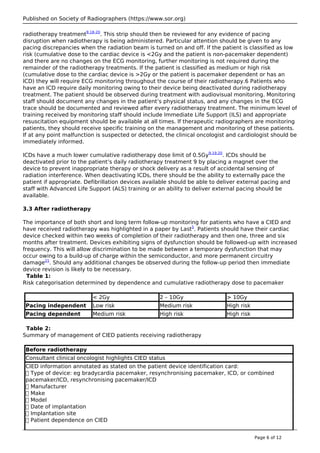
Patients should be allocated an appropriate risk categorisation group as defined in table1
Monitoring requirements based on the patient’s risk categorisation group should be
implemented
Appropriately trained staff should be involved in CIED monitoring during radiotherapy
Patient management
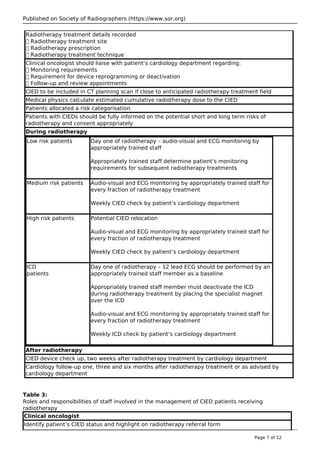
The management of CIED patients undergoing radiotherapy is summarised in table 2. The roles and
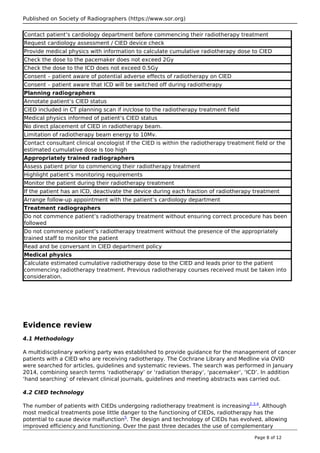
responsibilities of staff involved in the management of these patients is summarised in table 3.
3.1 Before radiotherapy
All patients should be screened for the presence of a CIED as part of the radiotherapy planning
process. Once these patients have been identified, CIED information should be annotated as stated
on the patients’ CIED identification card. Staff should be aware that some cardiologists place the
CIED on the patients’ right side if they are left-handed. Anecdotal evidence from a national review
showed that in some cases, a CIED is not discovered until a patient attends for radiotherapy1
. This
results in treatment being delayed or proceeding without safety measures in place. Planned
radiotherapy treatment details should be recorded as per standard practice. The cardiology team
should be informed as soon as possible to facilitate patient review before radiotherapy with the aim
of establishing CIED functionality. The purpose is to detect any possible change in
pacing-dependency of the patient. If an examination of technical CIED function has not been
conducted within the previous three months, it is recommended that it should be carried out prior to
the patient commencing radiotherapy. The Cardiologist should also recommend appropriate CIED
monitoring during and after radiotherapy. Patients with rate-adaptive CIEDs must be reviewed by
cardiology before a planned course of radiotherapy begins and consideration given to deactivating
the sensor.
3.1.1 Radiotherapy planning
If the CIED is near or in the anticipated treatment field or volume, it should be included in the
planning CT scan. This will allow accurate estimation of the cumulative radiotherapy dose received
by the CIED. The CIED should not be in the planning target volume (PTV) in order to minimise the
dose to the device. Radiotherapy beam energy no greater than 10MV should be used to7
avoid
neutron contamination6,9,20
. The medical physics team should be informed of the presence of a CIED
and every effort should be made in the planning process to limit the cumulative dose to the device.
3.1.2 Risk group
It is not possible to predict the exact behaviour of any given CIED when it is in, or in close proximity
to, the radiotherapy treatment field9
. Research indicates that the risk of CIED malfunction increases
as the cumulative radiation dose to the CIED increases. In addition, the risk to the patient is greater
if the patient is pacing-dependent. These include patients whose pacemaker is pacing all the time
(and who are at risk of asystole if the pacemaker malfunctions), and patients with a resynchronising
pacemaker where the patient may be at risk of increased heart failure symptoms in the event of
device malfunction.
Patients with a pacemaker should be allocated a risk group based on their pacing dependency and
Page 4 of 12
Published on Society of Radiographers (https://www.sor.org)
estimated cumulative radiotherapy dose received. In 2015, Gauter-Fleckenstein et al proposed a risk
categorisation that incorporates these two parameters (table 1)9
.
Low risk patients:
Pacemaker independent, and the device is anticipated to receive a cumulative radiotherapy
dose of less than 2Gy.
Medium risk patients:
Pacemaker dependent, and the device is anticipated to receive a cumulative radiotherapy
dose of less than 2Gy.
Pacemaker independent and the device is anticipated to receive a cumulative radiotherapy
dose of between 2Gy and 10Gy.
High risk patients:
Pacemaker dependent, and the device is anticipated to receive a cumulative radiotherapy
dose of between 2Gy and 10Gy
All patients (pacemaker dependent and independent) and the device is anticipated to receive
a cumulative radiotherapy dose of more than 10Gy.
Patients with an ICD in situ should be regarded as high risk. The estimated cumulative radiotherapy
dose to the ICD should not exceed 0.5Gy.
For all CIEDs, the potential dose received from on-treatment verification imaging should also be
taken into account. This is especially important with ICDs, which have a much lower recommended
maximum cumulative radiotherapy dose of 0.5Gy.
In patients identified as being medium or high risk, the clinical oncologist should liaise with medical
physics to discuss how to optimise the patient’s radiotherapy plan and limit the cumulative dose to
the CIED. If after optimisation of the radiotherapy plan the estimated cumulative dose exceeds those
outlined above then a review of management options should take place8
.
If radiotherapy is felt to be the most appropriate management option, it is recommended that the
clinical oncologist should liaise with the cardiology department.
3.1.3 Consent
Patients consenting for any type of treatment need to be informed of potentially serious side effects
related to that treatment. During the consent process the clinical oncologist should discuss the
potential damage to the CIED during and after radiotherapy. Patients should be told they will be
subject to close monitoring during treatment and further follow-up after radiotherapy has finished.
Given the lack of contemporary research in this area, it is not possible to quantify this risk of damage
or harm at present, but discussion of potential complications should take place for all patients with a
CIED. Patients with rate-adaptive CIEDs may have their sensor deactivated for the duration of
radiotherapy treatment. It is important that the implications and risks of this are fully discussed with
the patient by the cardiology team before any planned radiotherapy. ICDs are considered susceptible
to radiotherapy damage at lower doses than pacemakers. For this reason, all ICD patients should be
informed about the possibility of malfunction or failure resulting from radiotherapy treatment as the
complications may be life threatening. ICD patients should be informed in advance of radiotherapy
that their device will be deactivated using a magnet during treatment9,19,20
.
3.2 During radiotherapy
All patients with CIEDs should be monitored with a continuous ECG strip during their first
Page 5 of 12
Published on Society of Radiographers (https://www.sor.org)
radiotherapy treatment9,18-20
. This strip should then be reviewed for any evidence of pacing
disruption when radiotherapy is being administered. Particular attention should be given to any
pacing discrepancies when the radiation beam is turned on and off. If the patient is classified as low
risk (cumulative dose to the cardiac device is <2Gy and the patient is non-pacemaker dependent)
and there are no changes on the ECG monitoring, further monitoring is not required during the
remainder of the radiotherapy treatments. If the patient is classified as medium or high risk
(cumulative dose to the cardiac device is >2Gy or the patient is pacemaker dependent or has an
ICD) they will require ECG monitoring throughout the course of their radiotherapy.6 Patients who
have an ICD require daily monitoring owing to their device being deactivated during radiotherapy
treatment. The patient should be observed during treatment with audiovisual monitoring. Monitoring
staff should document any changes in the patient’s physical status, and any changes in the ECG
trace should be documented and reviewed after every radiotherapy treatment. The minimum level of
training received by monitoring staff should include Immediate Life Support (ILS) and appropriate
resuscitation equipment should be available at all times. If therapeutic radiographers are monitoring
patients, they should receive specific training on the management and monitoring of these patients.
If at any point malfunction is suspected or detected, the clinical oncologist and cardiologist should be
immediately informed.
ICDs have a much lower cumulative radiotherapy dose limit of 0.5Gy9,19,20
. ICDs should be
deactivated prior to the patient’s daily radiotherapy treatment 9 by placing a magnet over the
device to prevent inappropriate therapy or shock delivery as a result of accidental sensing of
radiation interference. When deactivating ICDs, there should be the ability to externally pace the
patient if appropriate. Defibrillation devices available should be able to deliver external pacing and
staff with Advanced Life Support (ALS) training or an ability to deliver external pacing should be
available.
3.3 After radiotherapy
The importance of both short and long term follow-up monitoring for patients who have a CIED and
have received radiotherapy was highlighted in a paper by Last5
. Patients should have their cardiac
device checked within two weeks of completion of their radiotherapy and then one, three and six
months after treatment. Devices exhibiting signs of dysfunction should be followed-up with increased
frequency. This will allow discrimination to be made between a temporary dysfunction that may
occur owing to a build-up of charge within the semiconductor, and more permanent circuitry
damage21
. Should any additional changes be observed during the follow-up period then immediate
device revision is likely to be necessary.
Table 1:
Risk categorisation determined by dependence and cumulative radiotherapy dose to pacemaker
< 2Gy 2 – 10Gy > 10Gy
Pacing independent Low risk Medium risk High risk
Pacing dependent Medium risk High risk High risk
Table 2:
Summary of management of CIED patients receiving radiotherapy
Before radiotherapy
Consultant clinical oncologist highlights CIED status
CIED information annotated as stated on the patient device identification card:
 Type of device: eg bradycardia pacemaker, resynchronising pacemaker, ICD, or combined
pacemaker/ICD, resynchronising pacemaker/ICD
 Manufacturer
 Make
 Model
 Date of implantation
 Implantation site
 Patient dependence on CIED
Page 6 of 12
Published on Society of Radiographers (https://www.sor.org)
Radiotherapy treatment details recorded
 Radiotherapy treatment site
 Radiotherapy prescription
 Radiotherapy treatment technique
Clinical oncologist should liaise with patient’s cardiology department regarding:
 Monitoring requirements
 Requirement for device reprogramming or deactivation
 Follow-up and review appointments
CIED to be included in CT planning scan if close to anticipated radiotherapy treatment field
Medical physics calculate estimated cumulative radiotherapy dose to the CIED
Patients allocated a risk categorisation
Patients with CIEDs should be fully informed on the potential short and long term risks of
radiotherapy and consent appropriately
During radiotherapy
Low risk patients Day one of radiotherapy – audio-visual and ECG monitoring by
appropriately trained staff
Appropriately trained staff determine patient’s monitoring
requirements for subsequent radiotherapy treatments
Medium risk patients Audio-visual and ECG monitoring by appropriately trained staff for
every fraction of radiotherapy treatment
Weekly CIED check by patient’s cardiology department
High risk patients Potential CIED relocation
Audio-visual and ECG monitoring by appropriately trained staff for
every fraction of radiotherapy treatment
Weekly CIED check by patient’s cardiology department
ICD
patients
Day one of radiotherapy – 12 lead ECG should be performed by an
appropriately trained staff member as a baseline
Appropriately trained staff member must deactivate the ICD
during radiotherapy treatment by placing the specialist magnet
over the ICD
Audio-visual and ECG monitoring by appropriately trained staff for
every fraction of radiotherapy treatment
Weekly ICD check by patient’s cardiology department
After radiotherapy
CIED device check up, two weeks after radiotherapy treatment by cardiology department
Cardiology follow-up one, three and six months after radiotherapy treatment or as advised by
cardiology department
Table 3:
Roles and responsibilities of staff involved in the management of CIED patients receiving
radiotherapy
Clinical oncologist
Identify patient’s CIED status and highlight on radiotherapy referral form
Page 7 of 12
Published on Society of Radiographers (https://www.sor.org)
Contact patient’s cardiology department before commencing their radiotherapy treatment
Request cardiology assessment / CIED device check
Provide medical physics with information to calculate cumulative radiotherapy dose to CIED
Check the dose to the pacemaker does not exceed 2Gy
Check the dose to the ICD does not exceed 0.5Gy
Consent – patient aware of potential adverse effects of radiotherapy on CIED
Consent – patient aware that ICD will be switched off during radiotherapy
Planning radiographers
Annotate patient’s CIED status
CIED included in CT planning scan if in/close to the radiotherapy treatment field
Medical physics informed of patient’s CIED status
No direct placement of CIED in radiotherapy beam.
Limitation of radiotherapy beam energy to 10Mv.
Contact consultant clinical oncologist if the CIED is within the radiotherapy treatment field or the
estimated cumulative dose is too high
Appropriately trained radiographers
Assess patient prior to commencing their radiotherapy treatment
Highlight patient’s monitoring requirements
Monitor the patient during their radiotherapy treatment
If the patient has an ICD, deactivate the device during each fraction of radiotherapy treatment
Arrange follow-up appointment with the patient’s cardiology department
Treatment radiographers
Do not commence patient’s radiotherapy treatment without ensuring correct procedure has been
followed
Do not commence patient’s radiotherapy treatment without the presence of the appropriately
trained staff to monitor the patient
Read and be conversant in CIED department policy
Medical physics
Calculate estimated cumulative radiotherapy dose to the CIED and leads prior to the patient
commencing radiotherapy treatment. Previous radiotherapy courses received must be taken into
consideration.
Evidence review
4.1 Methodology
A multidisciplinary working party was established to provide guidance for the management of cancer
patients with a CIED who are receiving radiotherapy. The Cochrane Library and Medline via OVID
were searched for articles, guidelines and systematic reviews. The search was performed in January
2014, combining search terms ‘radiotherapy’ or ‘radiation therapy’, ‘pacemaker’, ‘ICD’. In addition
‘hand searching’ of relevant clinical journals, guidelines and meeting abstracts was carried out.
4.2 CIED technology
The number of patients with CIEDs undergoing radiotherapy treatment is increasing2,3,4
. Although
most medical treatments pose little danger to the functioning of CIEDs, radiotherapy has the
potential to cause device malfunction5
. The design and technology of CIEDs has evolved, allowing
improved efficiency and functioning. Over the past three decades the use of complementary
Page 8 of 12
Published on Society of Radiographers (https://www.sor.org)
metal-oxide semiconductor circuits in cardiac devices has expanded6
. These are more sensitive to
ionising radiation than the older bipolar semiconductor devices used previously, possibly resulting in
damage to the hardware and software components7
. Damage could be transient, with dropped
beats, transient inhibition, altered sensitivity, increased or decreased pulse width and frequency or
triggering of pacemakers. Severe damage caused by radiation may lead to catastrophic failure of the
cardiac conduction system in the device8
.
4.3 Pacemakers
The AAPM report recommends that the maximum dose to a pacemaker should be limited to less than
2Gy18
. A study by Mouton et al supported the AAPM recommendations.8 In their in vitro study,
ninety-six patients having thoracic radiotherapy whose pacemakers were adjacent to the
radiotherapy treatment field exhibited a range of short and long-term side effects. Results showed
that one pacemaker exhibited clinically significant disturbances at a dose rate of 0.2Gy/min at a
cumulative dose of only 0.15Gy, two pacemakers exhibited defects at a cumulative dose of 1Gy and
nine pacemakers failed at a cumulative dose of 2Gy8
. Hurkmans et al directly irradiated nineteen
new pacemakers; the commonest damage reported was loss of output11
. In contrast, in the Mouton
study only one pacemaker malfunctioned below 50Gy, suggesting modern pacemakers may be
relatively radioresisitant8
. The authors concluded that the AAPM recommendations were still valid.
Importantly, in the Mouton study, pacemakers were not returned to the manufacturers for a more
detailed analysis after irradiation, so potentially significant damage may have been missed. There is
little in the academic literature on the effect of radiotherapy on rate-adaptive CIEDs. It is the authors’
observation (unpublished) that they may be influenced by radiotherapy, causing temporary
increased sensor rate and tachycardia. Other potential effects of radiotherapy on CIEDs include
temporary loss of sensing, temporary device inhibition, temporary loss of capture and device reset
[St Jude Medical – Effect of Therapeutic Radiation on St Jude Medical Implantable Cardiac Rhythm
Devices, October 2013]. This observation is also recognised in the Frizzell review19
.
4.4 ICDs
Frizzell published a more contemporary review of CIEDs and radiotherapy, concluding that the AAPM
recommendations were no longer comprehensive as ICDs were not discussed19
. ICDs are more
sophisticated and have the ability to automatically defibrillate the heart by monitoring the patient’s
heart rate and deliver the appropriate electrical therapy. Frizzell recommended a lower radiotherapy
tolerance dose of 0.5Gy for ICDs. This tolerance dose is partly based on work by Hurkmans et al who
directly irradiated 11
ICDs. This study observed that the dose at first malfunction was as low as
0.5Gy19
. It is also recommended that ICDs should be deactivated prior to each fraction of
radiotherapy by placing a magnet over the device to prevent inappropriate therapy or shock delivery
as a result of accidental sensing of Electromagnetic Interference (EMI).
4.5 Beam energy
Gelblum et al reported on 33 patients with ICDs receiving radiotherapy. Two ICDs were reset to the
factory settings during treatment for pelvic cancers with 15MV photon beams20
. Elders et al reported
on 15 patients with ICDs who underwent radiotherapy treatment on linear accelerators with beam
energies of between 6 and 18MV. In total, six ICD malfunctions were found, and all occurred with
beam energies > 10MV.22 Both authors postulated that the cause of the ICD malfunctions was
related to neutron production with higher energy beams. This has lead to other guidelines
recommending that photon beam energy is kept to <10MV when treating patients with CIEDs6
.
4.6 CIED leads
No published guidelines make reference to lead dose. The consensus view is that leads are relatively
insensitive to radiation damage compared to CIEDs6
. However, there is no evidence to inform dose
constraints to CIED leads and so, in the authors’ view, every effort should be made to keep the leads
out of the treatment field. If this is not possible, then the dose to the lead should be kept as low as
possible.
4.7 On-treatment verification imaging
Page 9 of 12
Published on Society of Radiographers (https://www.sor.org)
No published guidelines make recommendations on the potential contribution of imaging techniques
to the CIED cumulative dose. Murphy et al reported that the dose from a kilovoltage cone beam CT
scan is likely to be in the region of 10-80mGy23
. Kan et al reported mean skin doses of 6.4cGy per
kilovoltage cone beam CT chest scan.24 Even using the lower limit of 10mGy from Murphy et al, it is
possible that daily cone beam CT in a 20-fraction radical lung treatment may contribute as much as
0.2Gy. Using the Kan et al skin dose estimates, it is possible the CIED may get significantly more
than 0.2Gy. An estimation of the dose contribution from the image verification method used should
be made, and this should be taken into consideration when allocating CIED patients to a risk group.
Audit procedure
Radiotherapy centres should conduct a regular audit looking at guideline implementation.
The following compliance standards should be included in the audit:
Radiotherapy tolerance doses used for the specific CIEDs
Classification of patient risk category
Adherence to patient management pathway and implementation
Adherence to monitoring procedures
All staff members aware of their roles, responsibilities and scope of practice
Implementation
Radiotherapy centres should circulate this document to all relevant staff. Consideration should be
given on how best to implement the recommendations and audit adherence to these
recommendations. Adaptation of the guideline may be appropriate to best reflect local practice and
expertise.
Staff and department requirements
All staff involved in the requesting, planning and delivery of radiotherapy should be aware of
the guideline and their role in ensuring appropriate and safe management of patients with
CIEDs
Communication links between the radiotherapy and cardiology departments is vital. Staff
should be aware of who to contact and how to seek advice
Monitoring staff should receive specific training on the management of CIED patients
The radiotherapy department is responsible for training the staff
The radiotherapy department is responsible for the availability of appropriate equipment for
monitoring of patients
Conclusion
This is a guideline on the safe management of patients with a CIED receiving radiotherapy. It is
based on current best evidence, and should be used and adapted to best suit local practice in
Page 10 of 12
Published on Society of Radiographers (https://www.sor.org)
radiotherapy departments.
Pacemaker manufacturer documents
Biotronik:
Biotronik, Product information 512, Radiation Exposure of Implanted Pacemakers. 1-2, Berlin,
Germany, 5/18/2001; 2001. p. 1-2.w
Boston Scientific:
Boston Scientific (2012) Therapeutic radiation and implantable device systems.
http://www.bostonscientific.com/content/dam/bostonscientific/quality/edu...
Medtronic:
Medtronic (2013) Therapeutic radiation.
http://www.medtronic.com/wcm/groups/mdtcom_sg/@mdt/
@corp/documents/documents/crdm_sl_radiation.pdf
St. Jude Medical:
St. Jude Medical (2014) Effects of Therapeutic Radiation on St. Jude Medical
Implantable Cardiac Rhythm Devices
http://www.sjm.com/~/media/pro/resources/emi/med-dental/fl-therapeutic-r...
Contributors
Dr Jason Lester (Co-Chair) – Consultant Clinical Oncologist, Velindre Cancer Centre
Ms Lauren Evans (Co-Chair) – Radiographer, Velindre Cancer Centre and PhD Student – Cardiff
University
Dr Philip Mayles – Head of Medical Physics, Clatterbridge Cancer Centre
Dr Hannah Buckley – Specialist Registrar in Clinical Oncology
Mrs Paula Horne - Radiotherapy Service Manager, Royal Berkshire Foundation Trust, Reading,
Dr Zaheer Yousef - Consultant Cardiologist, University Hospital of Wales
References
1. Lester JF, Evans LM, Yousef Z, Penney A, Brown P and Perks R. A National Audit of Current Cardiac
Device Policies from Radiotherapy Centres across the UK. Clinical Oncology 2014;45-50.
2. Kalache A, Keller I. The greying world: a challenge for the twenty-first century. Sci Prog
Page 11 of 12
Published on Society of Radiographers (https://www.sor.org)
2002;83:33–54.
3. Brooks N, Norell M, Hal, J et al. Working group of the British Cardiac Society. National variations in
the provision of cardiac services in the United Kingdom. Br J Cardiol 2005; 12:192-198.
4. Boon N, Norell M, Hall J, et al. National variations in the provision of cardiac services in the United
Kingdom: second report for the British Cardiac Society Working Group. Heart 2006;92:873-878.
5. Last A. Radiotherapy in patients with cardiac pacemakers. Br J Radiol 1998;71:4–10.
6. Hurkmans CW, Knegjens JL, Oei BS et al. Management of radiation oncology patients with a
pacemaker or ICD: a new comprehensive practical guideline in The Netherlands. Radiother and Oncol
2012 24;7:198.
7. Little FA. (1994) Pacemakers in Radiotherapy. Clinical Oncology 1994;6:211-212.
8. Mouton J, Haug R, Bridier A, Dodinot B, Eschwege F. Influence of high-energy photon beam
irradiation on pacemaker operation. Phys Med Biol 2002;47:2879-2893.
9. Gauter-Fleckenstein B, Israel CW, Dorenkamp M, Dunst J, Roser M, Schimpf R, Steil V, Schafer J,
Holler U, Wenz F. DEGRO/DGK guideline for radiotherapy in patients with cardiac implantable
electronic devices. Strahlenther Onkol 2015;191(5):393-404
10. Solan AN, Solan, MJ, Bednarz G, Goodkin MB. Treatment of Patients with Cardiac Pacemakers and
Implantable Cardioverter-Defibrillators During Radiotherapy. Int J Radiat Oncol Biol Phys
2004;59:897-904.
11. Hurkmans CW, Scheepers E, Springorum BG, Uiterwall II. Influence of radiotherapy on the latest
generation of pacemakers. Radiother and Oncol 2005;76:93-98.
12. Hoecht S, Rosenthal P, Sancar D, et al. Implantable cardiac defibrillators may be damaged by
radiation therapy. J Clin Oncol 2002;20:2212-2213.
13. Niehaus M, Tebbenjohanns J. Electromagnetic interference in patients with implanted
pacemakers or cardioverter-de- fibrillators. Heart 2001;86:246.
14. Makkar A, Prisciandaro J, Agarwal S, et al. Effect of radiation therapy on permanent pacemaker
and implantable cardioverter-defibrillator function. Heart Rhythm 2012;9:1964.
15. Ferrara T, Baiotto M, Malinverni G et al. Irradiation of Pacemakers and Cardio-defibrillators in
Patients Submitted to Radiotherapy: A Clinical Experience. Tumori 2010;96:76-83.
16. Wadasadawala T, Pandey A, Agarwal JP, et al: Radiation therapy with implanted cardiac
pacemaker devices: a clinical and dosimetric analysis of patients and proposed precautions. Clin
Oncol (R Coll Radiol) 2011;23:79-85.
17. Kapa, S. et al., 2008. Effects of Scatter Radiation on ICD and CRT Function. Pacing and Clinical
Electrophysiology, June, Volume 31, pp.727-732.
18. Marbach JR, Sontag MR, Van Dyk, J, Wolbarst AB. Management of radiation oncology patients
with implanted cardiac pacemakers: report of AAPM Task Group No. 34. American Association of
Physicists in Medicine. Med Phys 1994;21(1):85–90.
19. Frizzell B. Radiation therapy in oncology patients who have a pacemaker or implantable
cardioverter-defibrillator. Comm Oncol 2009;6:469-471.
20. Gelblum D, Amols H. Implanted cardiac defibrillator care in radiation oncology patient population.
Int J Radiat Oncol Biol Phys 2009;73:1525-1531.
21. Rodriguez, F. et al., 1991. Radiation-Induced Effects in Multiprogrammable Pacemakers and
Implantable Defibrillators. Pacing and Clinical Electrophysiology, December, Volume 14,
pp.2143-2153.
22. Elders J, Kunze-Busch M, Jan Smeenk R, et al. High incidence of implantable cardioverter
defibrillator malfunctions during radiotherapy: neutrons a possible cause of soft errors. Eurospace
2013 Jan; 15(1):60-65.
23. Murphy MJ, Balter J, Balter S, BenComo JA Jr, Das IJ, Jiang SB, Ma CM, Olivera GH, Rodebaugh RF,
Ruchala KJ, Shirato H, Yin FF. The management of imaging dose during image-guided radiotherapy:
report of the AAPM Task Group 75. Med Phys. 2007 Oct;34(10):4041-4063.
24. Kan MW, Leung LH, Wong W, Lam N. Radiation dose from cone beam computed tomography for
image-guided radiation therapy. Int J Radiat Oncol Biol Phys. 2008 Jan 1;70(1):272-279.
Source URL:
https://www.sor.org/learning/document-library/management-cancer-patients-receiving-radiotherapy-
cardiac-implanted-electronic-device-clinical
Page 12 of 12

Icdpacemaker radiotherapy

  • 1.
    Published on Societyof Radiographers (https://www.sor.org) Management of cancer patients receiving radiotherapy with a cardiac implanted electronic device: A clinical guideline Responsible person: Charlotte Beardmore Published: Thursday, September 17, 2015 Summary A national review of cardiac device policies in use in radiotherapy departments across the UK in 2013 reported that most policies do not reflect current best evidence. The Royal College of Radiologists, the Society and College of Radiographers and the Institute of Physics and Engineering in Medicine formed a multidisciplinary working party comprising clinical oncology, cardiology, therapeutic radiography and medical physics expertise to develop evidence-based guidelines for the management of cancer patients receiving radiotherapy with a cardiac implanted electronic device and this clinical guideline is published as a result of this work. Page 1 of 12
  • 2.
    Published on Societyof Radiographers (https://www.sor.org) Overview A national review of cardiac device policies in use in radiotherapy departments across the UK in 2013 reported that most policies do not reflect current best evidence1. The Royal College of Radiologists, the Society and College of Radiographers and the Institute of Physics and Engineering in Medicine formed a multidisciplinary working party comprising clinical oncology, cardiology, therapeutic radiography and medical physics expertise to develop evidence-based guidelines for the management of cancer patients receiving radiotherapy with a cardiac implanted electronic device. Introduction The number of cancer patients with cardiac implantable electronic devices (CIEDs) receiving radiotherapy is increasing2-4. There are two main categories of CIED: permanent pacemakers and implantable cardioverter defibrillators (ICDs). Electronic monitoring devices (eg implantable loop recorders) have no direct connection to the heart and are not covered in this guideline. Most permanent pacemakers (referred to as ‘pacemakers’ in this document) are implanted in patients who either have inappropriate bradycardia, or who are at risk of bradycardia. Bradycardia pacemakers generally only pace the heart when the patient’s heart rate is excessively slow (usually <50 beats/minute), otherwise the pacemakers simply monitor and therefore an ECG may appear “normal” and not show any pacemaker activity. Cardiac Resynchronisation pacemakers coordinate the sequence of cardiac contraction and are used in patients with heart failure. As such, these pacemakers tend to pace the heart continuously and an ECG usually shows paced beats. ICDs are more sophisticated devices; in addition to normal pacing capabilities (for bradycardia and/or for resynchronisation), ICDs have the ability to monitor the patient’s cardiac rate and rhythm and deliver shock therapy when certain criteria are met. The simplest shock criteria involve heart rate; thus when sensed heart rate exceeds a pre-programmed value (usually >220 beats/minute), shock therapy is delivered. Inappropriate shock therapy may arise when the ICD senses the cardiac rhythm incorrectly. Although most medical treatments pose little danger to the functioning of CIEDs, radiotherapy has Page 2 of 12
  • 3.
    Published on Societyof Radiographers (https://www.sor.org) the potential to alter device function. CIEDs may be affected in two ways: electromagnetic interference (EMI) and direct damage via ionising radiation, both of which may cause temporary or permanent device malfunction5. Over the past three decades, the design and technology of CIEDs has evolved. The use of complementary metal oxide semiconductor (CMOS) circuits within CIEDs has increased6 .These are more sensitive to ionising radiation than the bipolar semiconductor devices previously used, with the potential of increased damage and catastrophic device failure7,8 . CIEDs are also now more complex in design, they are smaller, have thinner housing, less shielding and have limited battery capacity. These CIEDs use random access memory (RAM) to hold patient-related data. Ionising radiation can damage the RAM and can lead to complete loss of CIED function9 . It is not possible to predict the exact behaviour of a CIED when it is within or close to a radiotherapy treatment field10 . In addition, published results are not consistent in their findings or recommendations. Radiotherapy has been shown to cause malfunction of CIEDs, ranging from inappropriate triggering and device reprogramming to device failure10-13 . However, other investigators have reported minimal effect of radiotherapy on CIEDs14-17 . The American Association of Physicists in Medicine (AAPM) published a report in 1994 on the safe use of radiotherapy in patients with permanent5 pacemakers18 The AAPM report is the basis of most of the current CIED departmental radiotherapy policies in the UK1 . Frizzell published a more contemporary review in which a distinction was made between pacemakers and ICDs19 . Both the AAPM and the Frizzell reports are widely referenced in the literature and, in our opinion, have the most robust evidence base to support them. The AAPM report is now nearly two decades old and does not take into account subsequent advances in CIED or radiotherapy technology and treatment delivery1 . A Dutch update of the 1994 AAPM guidelines was published by Hurkmans et al, in 20126 and in 2015 Gauter-Fleckenstein et al published the DEGRO/DGK guidelines9 . Both papers have been referenced in these guidelines where appropriate6 . In the absence of more contemporary research on safely treating CIED patients with radiotherapy, it is reasonable to use the AAPM recommendations, the Frizzell review, the Dutch update and DEGRO/DGK guidelines as the basis of a UK guideline document. Currently, there are no UK guidelines on the use of radiotherapy in patients with CIEDs. A national review of current cardiac device policies from radiotherapy centres across the UK reported that 30% of UK radiotherapy centres have no policy for managing patients with CIEDs1 . Results showed that policies differ between radiotherapy centres and a significant number of policies do not adhere to current established tolerance doses for CIEDs. In the departments where there is a CIED policy, the majority do not reflect best evidence1 . There is limited published research on the effect of radiotherapy on CIEDs, but there is evidence to show that radiotherapy even at low doses can cause malfunction or failure with potentially life-threatening consequences11 . Given this risk, all radiotherapy centres should have policies in place to support the safe delivery of radiotherapy in patients with CIEDs1 . In 2014, a multidisciplinary working party was established with the aim of providing national guidance for clinicians, therapy radiographers and medical physicists on the management of cancer patients with a CIED who are receiving radiotherapy. This document reviews the evidence and literature to determine current ‘gold standard’ practice and provides recommendations for the management of cancer patients who have a CIED and are receiving radiotherapy. Summary of recommendations CIEDs should not be placed directly in the radiotherapy treatment beam The cumulative radiotherapy dose received by a pacemaker should not exceed 2Gy Patients with rate-adaptive pacemakers should be reviewed by cardiology and consideration given to temporary deactivation of the sensor whilst receiving radiotherapy The cumulative radiotherapy dose received by an ICD should not exceed 0.5Gy Page 3 of 12
  • 4.
    Published on Societyof Radiographers (https://www.sor.org) The photon beam energy should be <10MV6 The dose contribution from on-treatment verification imaging should be taken into account when calculating cumulative radiotherapy dose The patient’s cardiologist should be informed in advance of any planned radiotherapy for advice on monitoring during radiotherapy and subsequent follow-up Patients with CIEDs should be fully informed of the potential short and long-term risks of radiotherapy. This should be included in patient information available from the cardiology department in addition to radiotherapy patient information Patients should be allocated an appropriate risk categorisation group as defined in table1 Monitoring requirements based on the patient’s risk categorisation group should be implemented Appropriately trained staff should be involved in CIED monitoring during radiotherapy Patient management The management of CIED patients undergoing radiotherapy is summarised in table 2. The roles and responsibilities of staff involved in the management of these patients is summarised in table 3. 3.1 Before radiotherapy All patients should be screened for the presence of a CIED as part of the radiotherapy planning process. Once these patients have been identified, CIED information should be annotated as stated on the patients’ CIED identification card. Staff should be aware that some cardiologists place the CIED on the patients’ right side if they are left-handed. Anecdotal evidence from a national review showed that in some cases, a CIED is not discovered until a patient attends for radiotherapy1 . This results in treatment being delayed or proceeding without safety measures in place. Planned radiotherapy treatment details should be recorded as per standard practice. The cardiology team should be informed as soon as possible to facilitate patient review before radiotherapy with the aim of establishing CIED functionality. The purpose is to detect any possible change in pacing-dependency of the patient. If an examination of technical CIED function has not been conducted within the previous three months, it is recommended that it should be carried out prior to the patient commencing radiotherapy. The Cardiologist should also recommend appropriate CIED monitoring during and after radiotherapy. Patients with rate-adaptive CIEDs must be reviewed by cardiology before a planned course of radiotherapy begins and consideration given to deactivating the sensor. 3.1.1 Radiotherapy planning If the CIED is near or in the anticipated treatment field or volume, it should be included in the planning CT scan. This will allow accurate estimation of the cumulative radiotherapy dose received by the CIED. The CIED should not be in the planning target volume (PTV) in order to minimise the dose to the device. Radiotherapy beam energy no greater than 10MV should be used to7 avoid neutron contamination6,9,20 . The medical physics team should be informed of the presence of a CIED and every effort should be made in the planning process to limit the cumulative dose to the device. 3.1.2 Risk group It is not possible to predict the exact behaviour of any given CIED when it is in, or in close proximity to, the radiotherapy treatment field9 . Research indicates that the risk of CIED malfunction increases as the cumulative radiation dose to the CIED increases. In addition, the risk to the patient is greater if the patient is pacing-dependent. These include patients whose pacemaker is pacing all the time (and who are at risk of asystole if the pacemaker malfunctions), and patients with a resynchronising pacemaker where the patient may be at risk of increased heart failure symptoms in the event of device malfunction. Patients with a pacemaker should be allocated a risk group based on their pacing dependency and Page 4 of 12
  • 5.
    Published on Societyof Radiographers (https://www.sor.org) estimated cumulative radiotherapy dose received. In 2015, Gauter-Fleckenstein et al proposed a risk categorisation that incorporates these two parameters (table 1)9 . Low risk patients: Pacemaker independent, and the device is anticipated to receive a cumulative radiotherapy dose of less than 2Gy. Medium risk patients: Pacemaker dependent, and the device is anticipated to receive a cumulative radiotherapy dose of less than 2Gy. Pacemaker independent and the device is anticipated to receive a cumulative radiotherapy dose of between 2Gy and 10Gy. High risk patients: Pacemaker dependent, and the device is anticipated to receive a cumulative radiotherapy dose of between 2Gy and 10Gy All patients (pacemaker dependent and independent) and the device is anticipated to receive a cumulative radiotherapy dose of more than 10Gy. Patients with an ICD in situ should be regarded as high risk. The estimated cumulative radiotherapy dose to the ICD should not exceed 0.5Gy. For all CIEDs, the potential dose received from on-treatment verification imaging should also be taken into account. This is especially important with ICDs, which have a much lower recommended maximum cumulative radiotherapy dose of 0.5Gy. In patients identified as being medium or high risk, the clinical oncologist should liaise with medical physics to discuss how to optimise the patient’s radiotherapy plan and limit the cumulative dose to the CIED. If after optimisation of the radiotherapy plan the estimated cumulative dose exceeds those outlined above then a review of management options should take place8 . If radiotherapy is felt to be the most appropriate management option, it is recommended that the clinical oncologist should liaise with the cardiology department. 3.1.3 Consent Patients consenting for any type of treatment need to be informed of potentially serious side effects related to that treatment. During the consent process the clinical oncologist should discuss the potential damage to the CIED during and after radiotherapy. Patients should be told they will be subject to close monitoring during treatment and further follow-up after radiotherapy has finished. Given the lack of contemporary research in this area, it is not possible to quantify this risk of damage or harm at present, but discussion of potential complications should take place for all patients with a CIED. Patients with rate-adaptive CIEDs may have their sensor deactivated for the duration of radiotherapy treatment. It is important that the implications and risks of this are fully discussed with the patient by the cardiology team before any planned radiotherapy. ICDs are considered susceptible to radiotherapy damage at lower doses than pacemakers. For this reason, all ICD patients should be informed about the possibility of malfunction or failure resulting from radiotherapy treatment as the complications may be life threatening. ICD patients should be informed in advance of radiotherapy that their device will be deactivated using a magnet during treatment9,19,20 . 3.2 During radiotherapy All patients with CIEDs should be monitored with a continuous ECG strip during their first Page 5 of 12
  • 6.
    Published on Societyof Radiographers (https://www.sor.org) radiotherapy treatment9,18-20 . This strip should then be reviewed for any evidence of pacing disruption when radiotherapy is being administered. Particular attention should be given to any pacing discrepancies when the radiation beam is turned on and off. If the patient is classified as low risk (cumulative dose to the cardiac device is <2Gy and the patient is non-pacemaker dependent) and there are no changes on the ECG monitoring, further monitoring is not required during the remainder of the radiotherapy treatments. If the patient is classified as medium or high risk (cumulative dose to the cardiac device is >2Gy or the patient is pacemaker dependent or has an ICD) they will require ECG monitoring throughout the course of their radiotherapy.6 Patients who have an ICD require daily monitoring owing to their device being deactivated during radiotherapy treatment. The patient should be observed during treatment with audiovisual monitoring. Monitoring staff should document any changes in the patient’s physical status, and any changes in the ECG trace should be documented and reviewed after every radiotherapy treatment. The minimum level of training received by monitoring staff should include Immediate Life Support (ILS) and appropriate resuscitation equipment should be available at all times. If therapeutic radiographers are monitoring patients, they should receive specific training on the management and monitoring of these patients. If at any point malfunction is suspected or detected, the clinical oncologist and cardiologist should be immediately informed. ICDs have a much lower cumulative radiotherapy dose limit of 0.5Gy9,19,20 . ICDs should be deactivated prior to the patient’s daily radiotherapy treatment 9 by placing a magnet over the device to prevent inappropriate therapy or shock delivery as a result of accidental sensing of radiation interference. When deactivating ICDs, there should be the ability to externally pace the patient if appropriate. Defibrillation devices available should be able to deliver external pacing and staff with Advanced Life Support (ALS) training or an ability to deliver external pacing should be available. 3.3 After radiotherapy The importance of both short and long term follow-up monitoring for patients who have a CIED and have received radiotherapy was highlighted in a paper by Last5 . Patients should have their cardiac device checked within two weeks of completion of their radiotherapy and then one, three and six months after treatment. Devices exhibiting signs of dysfunction should be followed-up with increased frequency. This will allow discrimination to be made between a temporary dysfunction that may occur owing to a build-up of charge within the semiconductor, and more permanent circuitry damage21 . Should any additional changes be observed during the follow-up period then immediate device revision is likely to be necessary. Table 1: Risk categorisation determined by dependence and cumulative radiotherapy dose to pacemaker < 2Gy 2 – 10Gy > 10Gy Pacing independent Low risk Medium risk High risk Pacing dependent Medium risk High risk High risk Table 2: Summary of management of CIED patients receiving radiotherapy Before radiotherapy Consultant clinical oncologist highlights CIED status CIED information annotated as stated on the patient device identification card:  Type of device: eg bradycardia pacemaker, resynchronising pacemaker, ICD, or combined pacemaker/ICD, resynchronising pacemaker/ICD  Manufacturer  Make  Model  Date of implantation  Implantation site  Patient dependence on CIED Page 6 of 12
  • 7.
    Published on Societyof Radiographers (https://www.sor.org) Radiotherapy treatment details recorded  Radiotherapy treatment site  Radiotherapy prescription  Radiotherapy treatment technique Clinical oncologist should liaise with patient’s cardiology department regarding:  Monitoring requirements  Requirement for device reprogramming or deactivation  Follow-up and review appointments CIED to be included in CT planning scan if close to anticipated radiotherapy treatment field Medical physics calculate estimated cumulative radiotherapy dose to the CIED Patients allocated a risk categorisation Patients with CIEDs should be fully informed on the potential short and long term risks of radiotherapy and consent appropriately During radiotherapy Low risk patients Day one of radiotherapy – audio-visual and ECG monitoring by appropriately trained staff Appropriately trained staff determine patient’s monitoring requirements for subsequent radiotherapy treatments Medium risk patients Audio-visual and ECG monitoring by appropriately trained staff for every fraction of radiotherapy treatment Weekly CIED check by patient’s cardiology department High risk patients Potential CIED relocation Audio-visual and ECG monitoring by appropriately trained staff for every fraction of radiotherapy treatment Weekly CIED check by patient’s cardiology department ICD patients Day one of radiotherapy – 12 lead ECG should be performed by an appropriately trained staff member as a baseline Appropriately trained staff member must deactivate the ICD during radiotherapy treatment by placing the specialist magnet over the ICD Audio-visual and ECG monitoring by appropriately trained staff for every fraction of radiotherapy treatment Weekly ICD check by patient’s cardiology department After radiotherapy CIED device check up, two weeks after radiotherapy treatment by cardiology department Cardiology follow-up one, three and six months after radiotherapy treatment or as advised by cardiology department Table 3: Roles and responsibilities of staff involved in the management of CIED patients receiving radiotherapy Clinical oncologist Identify patient’s CIED status and highlight on radiotherapy referral form Page 7 of 12
  • 8.
    Published on Societyof Radiographers (https://www.sor.org) Contact patient’s cardiology department before commencing their radiotherapy treatment Request cardiology assessment / CIED device check Provide medical physics with information to calculate cumulative radiotherapy dose to CIED Check the dose to the pacemaker does not exceed 2Gy Check the dose to the ICD does not exceed 0.5Gy Consent – patient aware of potential adverse effects of radiotherapy on CIED Consent – patient aware that ICD will be switched off during radiotherapy Planning radiographers Annotate patient’s CIED status CIED included in CT planning scan if in/close to the radiotherapy treatment field Medical physics informed of patient’s CIED status No direct placement of CIED in radiotherapy beam. Limitation of radiotherapy beam energy to 10Mv. Contact consultant clinical oncologist if the CIED is within the radiotherapy treatment field or the estimated cumulative dose is too high Appropriately trained radiographers Assess patient prior to commencing their radiotherapy treatment Highlight patient’s monitoring requirements Monitor the patient during their radiotherapy treatment If the patient has an ICD, deactivate the device during each fraction of radiotherapy treatment Arrange follow-up appointment with the patient’s cardiology department Treatment radiographers Do not commence patient’s radiotherapy treatment without ensuring correct procedure has been followed Do not commence patient’s radiotherapy treatment without the presence of the appropriately trained staff to monitor the patient Read and be conversant in CIED department policy Medical physics Calculate estimated cumulative radiotherapy dose to the CIED and leads prior to the patient commencing radiotherapy treatment. Previous radiotherapy courses received must be taken into consideration. Evidence review 4.1 Methodology A multidisciplinary working party was established to provide guidance for the management of cancer patients with a CIED who are receiving radiotherapy. The Cochrane Library and Medline via OVID were searched for articles, guidelines and systematic reviews. The search was performed in January 2014, combining search terms ‘radiotherapy’ or ‘radiation therapy’, ‘pacemaker’, ‘ICD’. In addition ‘hand searching’ of relevant clinical journals, guidelines and meeting abstracts was carried out. 4.2 CIED technology The number of patients with CIEDs undergoing radiotherapy treatment is increasing2,3,4 . Although most medical treatments pose little danger to the functioning of CIEDs, radiotherapy has the potential to cause device malfunction5 . The design and technology of CIEDs has evolved, allowing improved efficiency and functioning. Over the past three decades the use of complementary Page 8 of 12
  • 9.
    Published on Societyof Radiographers (https://www.sor.org) metal-oxide semiconductor circuits in cardiac devices has expanded6 . These are more sensitive to ionising radiation than the older bipolar semiconductor devices used previously, possibly resulting in damage to the hardware and software components7 . Damage could be transient, with dropped beats, transient inhibition, altered sensitivity, increased or decreased pulse width and frequency or triggering of pacemakers. Severe damage caused by radiation may lead to catastrophic failure of the cardiac conduction system in the device8 . 4.3 Pacemakers The AAPM report recommends that the maximum dose to a pacemaker should be limited to less than 2Gy18 . A study by Mouton et al supported the AAPM recommendations.8 In their in vitro study, ninety-six patients having thoracic radiotherapy whose pacemakers were adjacent to the radiotherapy treatment field exhibited a range of short and long-term side effects. Results showed that one pacemaker exhibited clinically significant disturbances at a dose rate of 0.2Gy/min at a cumulative dose of only 0.15Gy, two pacemakers exhibited defects at a cumulative dose of 1Gy and nine pacemakers failed at a cumulative dose of 2Gy8 . Hurkmans et al directly irradiated nineteen new pacemakers; the commonest damage reported was loss of output11 . In contrast, in the Mouton study only one pacemaker malfunctioned below 50Gy, suggesting modern pacemakers may be relatively radioresisitant8 . The authors concluded that the AAPM recommendations were still valid. Importantly, in the Mouton study, pacemakers were not returned to the manufacturers for a more detailed analysis after irradiation, so potentially significant damage may have been missed. There is little in the academic literature on the effect of radiotherapy on rate-adaptive CIEDs. It is the authors’ observation (unpublished) that they may be influenced by radiotherapy, causing temporary increased sensor rate and tachycardia. Other potential effects of radiotherapy on CIEDs include temporary loss of sensing, temporary device inhibition, temporary loss of capture and device reset [St Jude Medical – Effect of Therapeutic Radiation on St Jude Medical Implantable Cardiac Rhythm Devices, October 2013]. This observation is also recognised in the Frizzell review19 . 4.4 ICDs Frizzell published a more contemporary review of CIEDs and radiotherapy, concluding that the AAPM recommendations were no longer comprehensive as ICDs were not discussed19 . ICDs are more sophisticated and have the ability to automatically defibrillate the heart by monitoring the patient’s heart rate and deliver the appropriate electrical therapy. Frizzell recommended a lower radiotherapy tolerance dose of 0.5Gy for ICDs. This tolerance dose is partly based on work by Hurkmans et al who directly irradiated 11 ICDs. This study observed that the dose at first malfunction was as low as 0.5Gy19 . It is also recommended that ICDs should be deactivated prior to each fraction of radiotherapy by placing a magnet over the device to prevent inappropriate therapy or shock delivery as a result of accidental sensing of Electromagnetic Interference (EMI). 4.5 Beam energy Gelblum et al reported on 33 patients with ICDs receiving radiotherapy. Two ICDs were reset to the factory settings during treatment for pelvic cancers with 15MV photon beams20 . Elders et al reported on 15 patients with ICDs who underwent radiotherapy treatment on linear accelerators with beam energies of between 6 and 18MV. In total, six ICD malfunctions were found, and all occurred with beam energies > 10MV.22 Both authors postulated that the cause of the ICD malfunctions was related to neutron production with higher energy beams. This has lead to other guidelines recommending that photon beam energy is kept to <10MV when treating patients with CIEDs6 . 4.6 CIED leads No published guidelines make reference to lead dose. The consensus view is that leads are relatively insensitive to radiation damage compared to CIEDs6 . However, there is no evidence to inform dose constraints to CIED leads and so, in the authors’ view, every effort should be made to keep the leads out of the treatment field. If this is not possible, then the dose to the lead should be kept as low as possible. 4.7 On-treatment verification imaging Page 9 of 12
  • 10.
    Published on Societyof Radiographers (https://www.sor.org) No published guidelines make recommendations on the potential contribution of imaging techniques to the CIED cumulative dose. Murphy et al reported that the dose from a kilovoltage cone beam CT scan is likely to be in the region of 10-80mGy23 . Kan et al reported mean skin doses of 6.4cGy per kilovoltage cone beam CT chest scan.24 Even using the lower limit of 10mGy from Murphy et al, it is possible that daily cone beam CT in a 20-fraction radical lung treatment may contribute as much as 0.2Gy. Using the Kan et al skin dose estimates, it is possible the CIED may get significantly more than 0.2Gy. An estimation of the dose contribution from the image verification method used should be made, and this should be taken into consideration when allocating CIED patients to a risk group. Audit procedure Radiotherapy centres should conduct a regular audit looking at guideline implementation. The following compliance standards should be included in the audit: Radiotherapy tolerance doses used for the specific CIEDs Classification of patient risk category Adherence to patient management pathway and implementation Adherence to monitoring procedures All staff members aware of their roles, responsibilities and scope of practice Implementation Radiotherapy centres should circulate this document to all relevant staff. Consideration should be given on how best to implement the recommendations and audit adherence to these recommendations. Adaptation of the guideline may be appropriate to best reflect local practice and expertise. Staff and department requirements All staff involved in the requesting, planning and delivery of radiotherapy should be aware of the guideline and their role in ensuring appropriate and safe management of patients with CIEDs Communication links between the radiotherapy and cardiology departments is vital. Staff should be aware of who to contact and how to seek advice Monitoring staff should receive specific training on the management of CIED patients The radiotherapy department is responsible for training the staff The radiotherapy department is responsible for the availability of appropriate equipment for monitoring of patients Conclusion This is a guideline on the safe management of patients with a CIED receiving radiotherapy. It is based on current best evidence, and should be used and adapted to best suit local practice in Page 10 of 12
  • 11.
    Published on Societyof Radiographers (https://www.sor.org) radiotherapy departments. Pacemaker manufacturer documents Biotronik: Biotronik, Product information 512, Radiation Exposure of Implanted Pacemakers. 1-2, Berlin, Germany, 5/18/2001; 2001. p. 1-2.w Boston Scientific: Boston Scientific (2012) Therapeutic radiation and implantable device systems. http://www.bostonscientific.com/content/dam/bostonscientific/quality/edu... Medtronic: Medtronic (2013) Therapeutic radiation. http://www.medtronic.com/wcm/groups/mdtcom_sg/@mdt/ @corp/documents/documents/crdm_sl_radiation.pdf St. Jude Medical: St. Jude Medical (2014) Effects of Therapeutic Radiation on St. Jude Medical Implantable Cardiac Rhythm Devices http://www.sjm.com/~/media/pro/resources/emi/med-dental/fl-therapeutic-r... Contributors Dr Jason Lester (Co-Chair) – Consultant Clinical Oncologist, Velindre Cancer Centre Ms Lauren Evans (Co-Chair) – Radiographer, Velindre Cancer Centre and PhD Student – Cardiff University Dr Philip Mayles – Head of Medical Physics, Clatterbridge Cancer Centre Dr Hannah Buckley – Specialist Registrar in Clinical Oncology Mrs Paula Horne - Radiotherapy Service Manager, Royal Berkshire Foundation Trust, Reading, Dr Zaheer Yousef - Consultant Cardiologist, University Hospital of Wales References 1. Lester JF, Evans LM, Yousef Z, Penney A, Brown P and Perks R. A National Audit of Current Cardiac Device Policies from Radiotherapy Centres across the UK. Clinical Oncology 2014;45-50. 2. Kalache A, Keller I. The greying world: a challenge for the twenty-first century. Sci Prog Page 11 of 12
  • 12.
    Published on Societyof Radiographers (https://www.sor.org) 2002;83:33–54. 3. Brooks N, Norell M, Hal, J et al. Working group of the British Cardiac Society. National variations in the provision of cardiac services in the United Kingdom. Br J Cardiol 2005; 12:192-198. 4. Boon N, Norell M, Hall J, et al. National variations in the provision of cardiac services in the United Kingdom: second report for the British Cardiac Society Working Group. Heart 2006;92:873-878. 5. Last A. Radiotherapy in patients with cardiac pacemakers. Br J Radiol 1998;71:4–10. 6. Hurkmans CW, Knegjens JL, Oei BS et al. Management of radiation oncology patients with a pacemaker or ICD: a new comprehensive practical guideline in The Netherlands. Radiother and Oncol 2012 24;7:198. 7. Little FA. (1994) Pacemakers in Radiotherapy. Clinical Oncology 1994;6:211-212. 8. Mouton J, Haug R, Bridier A, Dodinot B, Eschwege F. Influence of high-energy photon beam irradiation on pacemaker operation. Phys Med Biol 2002;47:2879-2893. 9. Gauter-Fleckenstein B, Israel CW, Dorenkamp M, Dunst J, Roser M, Schimpf R, Steil V, Schafer J, Holler U, Wenz F. DEGRO/DGK guideline for radiotherapy in patients with cardiac implantable electronic devices. Strahlenther Onkol 2015;191(5):393-404 10. Solan AN, Solan, MJ, Bednarz G, Goodkin MB. Treatment of Patients with Cardiac Pacemakers and Implantable Cardioverter-Defibrillators During Radiotherapy. Int J Radiat Oncol Biol Phys 2004;59:897-904. 11. Hurkmans CW, Scheepers E, Springorum BG, Uiterwall II. Influence of radiotherapy on the latest generation of pacemakers. Radiother and Oncol 2005;76:93-98. 12. Hoecht S, Rosenthal P, Sancar D, et al. Implantable cardiac defibrillators may be damaged by radiation therapy. J Clin Oncol 2002;20:2212-2213. 13. Niehaus M, Tebbenjohanns J. Electromagnetic interference in patients with implanted pacemakers or cardioverter-de- fibrillators. Heart 2001;86:246. 14. Makkar A, Prisciandaro J, Agarwal S, et al. Effect of radiation therapy on permanent pacemaker and implantable cardioverter-defibrillator function. Heart Rhythm 2012;9:1964. 15. Ferrara T, Baiotto M, Malinverni G et al. Irradiation of Pacemakers and Cardio-defibrillators in Patients Submitted to Radiotherapy: A Clinical Experience. Tumori 2010;96:76-83. 16. Wadasadawala T, Pandey A, Agarwal JP, et al: Radiation therapy with implanted cardiac pacemaker devices: a clinical and dosimetric analysis of patients and proposed precautions. Clin Oncol (R Coll Radiol) 2011;23:79-85. 17. Kapa, S. et al., 2008. Effects of Scatter Radiation on ICD and CRT Function. Pacing and Clinical Electrophysiology, June, Volume 31, pp.727-732. 18. Marbach JR, Sontag MR, Van Dyk, J, Wolbarst AB. Management of radiation oncology patients with implanted cardiac pacemakers: report of AAPM Task Group No. 34. American Association of Physicists in Medicine. Med Phys 1994;21(1):85–90. 19. Frizzell B. Radiation therapy in oncology patients who have a pacemaker or implantable cardioverter-defibrillator. Comm Oncol 2009;6:469-471. 20. Gelblum D, Amols H. Implanted cardiac defibrillator care in radiation oncology patient population. Int J Radiat Oncol Biol Phys 2009;73:1525-1531. 21. Rodriguez, F. et al., 1991. Radiation-Induced Effects in Multiprogrammable Pacemakers and Implantable Defibrillators. Pacing and Clinical Electrophysiology, December, Volume 14, pp.2143-2153. 22. Elders J, Kunze-Busch M, Jan Smeenk R, et al. High incidence of implantable cardioverter defibrillator malfunctions during radiotherapy: neutrons a possible cause of soft errors. Eurospace 2013 Jan; 15(1):60-65. 23. Murphy MJ, Balter J, Balter S, BenComo JA Jr, Das IJ, Jiang SB, Ma CM, Olivera GH, Rodebaugh RF, Ruchala KJ, Shirato H, Yin FF. The management of imaging dose during image-guided radiotherapy: report of the AAPM Task Group 75. Med Phys. 2007 Oct;34(10):4041-4063. 24. Kan MW, Leung LH, Wong W, Lam N. Radiation dose from cone beam computed tomography for image-guided radiation therapy. Int J Radiat Oncol Biol Phys. 2008 Jan 1;70(1):272-279. Source URL: https://www.sor.org/learning/document-library/management-cancer-patients-receiving-radiotherapy- cardiac-implanted-electronic-device-clinical Page 12 of 12