







www.luxoft.com
Светлана Мухина
Обзор сертификационного тренинга по
фасилитации ICAgile Agile Team Facilitation
www.luxoft.com
Знакомимся
Светлана Мухина
ICAgile ICP, ICP-ATF, ICP-BVA, ICP- ACC, PSM I, CSPO, Professional Coach
Agile and Career Coach at Luxoft Agile Practice
Опыт работы: 13+ лет в IT, Agile коуч, руководитель проектов,
компьютерный лингвист, технический писатель, бизнес-аналитик
Интересы: управление проектами, процессные трансформации,
коучинг, психология
Хобби: верховая езда, музыка, покер, плаванье, путешествия
https://www.linkedin.com/in/svetlanamukhina
https://www.facebook.com/Svetlana.Mukhina8
www.luxoft.com
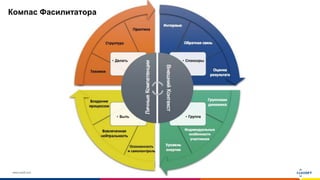
Компас Фасилитатора
www.luxoft.com
Личные Компетенции
www.luxoft.com
Делать (что надо уметь делать
фасилитатору)
www.luxoft.com
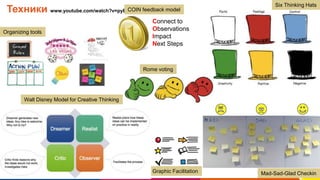
Rome voting
Техники www.youtube.com/watch?v=pyBm5drWnhU
Mad-Sad-Glad CheckinGraphic Facilitation
Organizing tools
COIN feedback model
Connect to
Observations
Impact
Next Steps
Six Thinking Hats
Walt Disney Model for Creative Thinking
www.luxoft.com
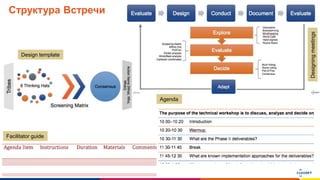
Структура Встречи
Designingmeetings
Design template
Agenda
Facilitator guide
www.luxoft.com
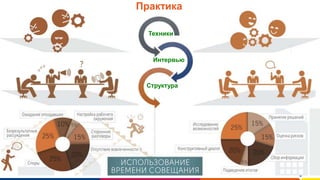
Практика
Техники
Интервью
Структура
www.luxoft.com
Быть (каким надо быть
фасилитатору)
www.luxoft.com
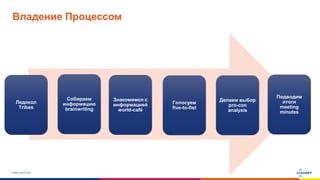
Владение Процессом
Ледокол
Tribes
Собираем
информацию
brainwriting
Знакомимся c
информацией
world-café
Голосуем
five-to-fist
Делаем выбор
pro-con
analysis
Подводим
итоги
meeting
minutes
www.luxoft.com
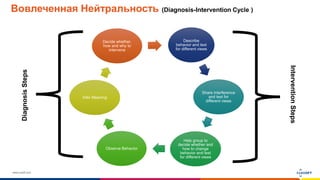
Вовлеченная Нейтральность (Diagnosis-Intervention Cycle )
Describe
behavior and test
for different views
Share interference
and test for
different views
Help group to
decide whether and
how to change
behavior and test
for different views
Observe Behavior
Infer Meaning
Decide whether,
how and why to
intervene
DiagnosisSteps
InterventionSteps
www.luxoft.com
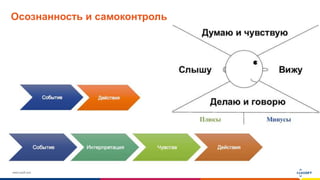
Осознанность и самоконтроль
www.luxoft.com
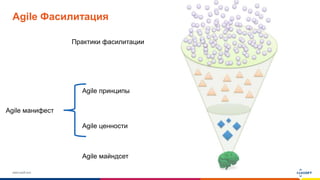
Agile Фасилитация
Agile майндсет
Agile ценности
Практики фасилитации
Agile принципы
Agile манифест
www.luxoft.com
Внешний Контекст
www.luxoft.com
Спонсоры
www.luxoft.com
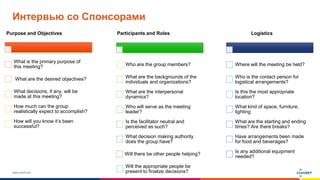
Интервью со Спонсорами
Purpose and Objectives
What is the primary purpose of
this meeting?
What are the desired objectives?
What decisions, if any, will be
made at this meeting?
How much can the group
realistically expect to accomplish?
How will you know it’s been
successful?
Participants and Roles
Who are the group members?
What are the backgrounds of the
individuals and organizations?
What are the interpersonal
dynamics?
Who will serve as the meeting
leader?
Is the facilitator neutral and
perceived as such?
What decision making authority
does the group have?
Will there be other people helping?
Will the appropriate people be
present to finalize decisions?
Logistics
Where will the meeting be held?
Who is the contact person for
logistical arrangements?
Is this the most appropriate
location?
What kind of space, furniture,
lighting
What are the starting and ending
times? Are there breaks?
Have arrangements been made
for food and beverages?
Is any additional equipment
needed?
www.luxoft.com
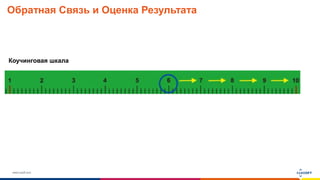
Обратная Связь и Оценка Результата
Коучинговая шкала
www.luxoft.com
Группа
www.luxoft.com
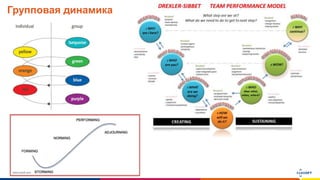
Групповая динамика
www.luxoft.com
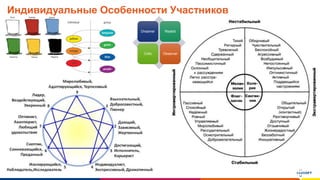
Индивидуальные Особенности Участников
Dreamer Realist
Critic Observer
www.luxoft.com
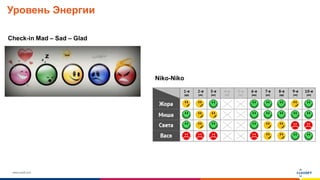
Уровень Энергии
Niko-Niko
Check-in Mad – Sad – Glad
www.luxoft.com
Что дальше?
www.luxoft.com
Читаем и смотрим
 Webinar How to facilitate meetings, Scrum events and group discussions
https://www.youtube.com/watch?v=pyBm5drWnhU
 Overview of webinars on facilitation http://www.slideshare.net/SvetlanaMukhinaICAgi/overview-of-webinars-on-
facilitation
 Фасилитация встреч по работе с требованиями https://youtu.be/5CB_BlxGr0Q
 Фасилитация проектных совещаний https://youtu.be/xyCAywefng0
 В чем причина микроменеджмента на проекте? https://www.linkedin.com/pulse/в-чем-причина-
микроменеджмента-на-проекте-svetlana
 Как я мотивирую себя делать неприятные задачиhttps://www.linkedin.com/pulse/как-я-мотивирую-себя-
делать-неприятные-задачи-svetlana
 Как мотивировать себя и свою команду http://www.slideshare.net/SvetlanaMukhinaICAgi/ii-60231841
 Осознанность в действии. Эннеаграмма, коучинг и развитие эмоционального интеллекта Роберт Тэллон ,
Марио Сикора
www.luxoft.com
События
Тренинги:
ICAgile Agile Team Facilitation – 30/06-01/07 в Киеве и 20/07-21/07 в Москвеhttp://www.luxoft-
training.ru/kurs/icagile_icp_agile_team_facilitation_icagile_icp-atf.html
For Luxoft employees https://inthr.luxoft.com/IntHRWebApp/aspx_PTC/CreateRequestInternal.aspx?Course=SDP-035
Митап:
Экспериментариум: фасилитация конфликтов в формате спонтанного
театраhttps://www.facebook.com/events/1567044000255985/
Вебинары:
7 main qualities of Agile team member https://attendee.gotowebinar.com/register/4051474223132743428?source=webinar
Что такое коучинг, чем коучинг не является и что такое Agile коучинг
https://attendee.gotowebinar.com/register/6313717198259291652?source=webinar
Интересные инициативы:
Feedback Culture in Luxoft - https://sentinel2.luxoft.com/sen/wiki/pages/viewpage.action?pageId=526240480
www.luxoft.com
www.luxoft.com
Спасибо!
Мои контакты:
https://www.facebook.com/Svetlana.Mukhina8
https://www.linkedin.com/in/svetlanamukhina

Обзор сертификационного тренинга по фасилитации ICAgile Agile Team Facilitation на примере модели Компас Фасилитатора

Editor's Notes

  • #15 More about the cycle http://rogerschwarzassociates.poweredbyeden.com/files/106/8403.pdf The Diagnosis-Intervention Cycle The group effectiveness model, the core values, and the ground rules for effective groups are all tools for diagnosing behavior in groups. But you still need a way to implement these tools. Specifically, you need to know when to intervene, what kind of intervention to make, how to say it, when to say it, and to whom. To help put these tools into practice, the Skilled Facilitator approach uses the diagnosis–intervention cycle, a six-step process: 1. Observe behavior. 2. Infer meaning. 3. Decide whether, how, and why to intervene. 4. Describe behavior, and test for different views. 5. Share your interference, and test for different views. 6. Help the group decide whether to change its behavior, and test for different views. The cycle is a structured and simple way to think about what is happening in the group and then to intervene consistent with the core values. It serves to guide the facilitator (and group members) into effective action. https://books.google.com.ua/books?id=9eHf_QoGY1MC&pg=PA69&lpg=PA69&dq=The+Diagnosis-Intervention+Cycle&source=bl&ots=xDPShSVLF2&sig=61r1wsD5f1qRsdKuL9yBW4o-fy4&hl=ru&sa=X&ei=EJ-aVIHeDaHOygPooYGYCA&ved=0CCYQ6AEwAQ#v=onepage&q=The%20Diagnosis-Intervention%20Cycle&f=false
  • #16 More about the cycle http://rogerschwarzassociates.poweredbyeden.com/files/106/8403.pdf The Diagnosis-Intervention Cycle The group effectiveness model, the core values, and the ground rules for effective groups are all tools for diagnosing behavior in groups. But you still need a way to implement these tools. Specifically, you need to know when to intervene, what kind of intervention to make, how to say it, when to say it, and to whom. To help put these tools into practice, the Skilled Facilitator approach uses the diagnosis–intervention cycle, a six-step process: 1. Observe behavior. 2. Infer meaning. 3. Decide whether, how, and why to intervene. 4. Describe behavior, and test for different views. 5. Share your interference, and test for different views. 6. Help the group decide whether to change its behavior, and test for different views. The cycle is a structured and simple way to think about what is happening in the group and then to intervene consistent with the core values. It serves to guide the facilitator (and group members) into effective action. https://books.google.com.ua/books?id=9eHf_QoGY1MC&pg=PA69&lpg=PA69&dq=The+Diagnosis-Intervention+Cycle&source=bl&ots=xDPShSVLF2&sig=61r1wsD5f1qRsdKuL9yBW4o-fy4&hl=ru&sa=X&ei=EJ-aVIHeDaHOygPooYGYCA&ved=0CCYQ6AEwAQ#v=onepage&q=The%20Diagnosis-Intervention%20Cycle&f=false