Chapter 6 Behavioral Guides
Values: Cultural Standards Values: statements about what we  should  do, think, how we  should  act and what we  should  not do Values are determined by larger principles (law, governments) and individually (from family, friends)
Values: Cultural Standards Values differ between people in the following ways: Salience: perceived importance Direction: values are seen as positive, negative, or having no value Degree: the intensity of value Values define appropriate vs inappropriate behavior within a culture; since cultures change, values change
Dominant American Values Individuality Freedom Equality Democracy Humanitarianism Progress activism Achievement Practicality Time  Informality Morality Are there any that you disagree with? Think about other cultures – are they the same??
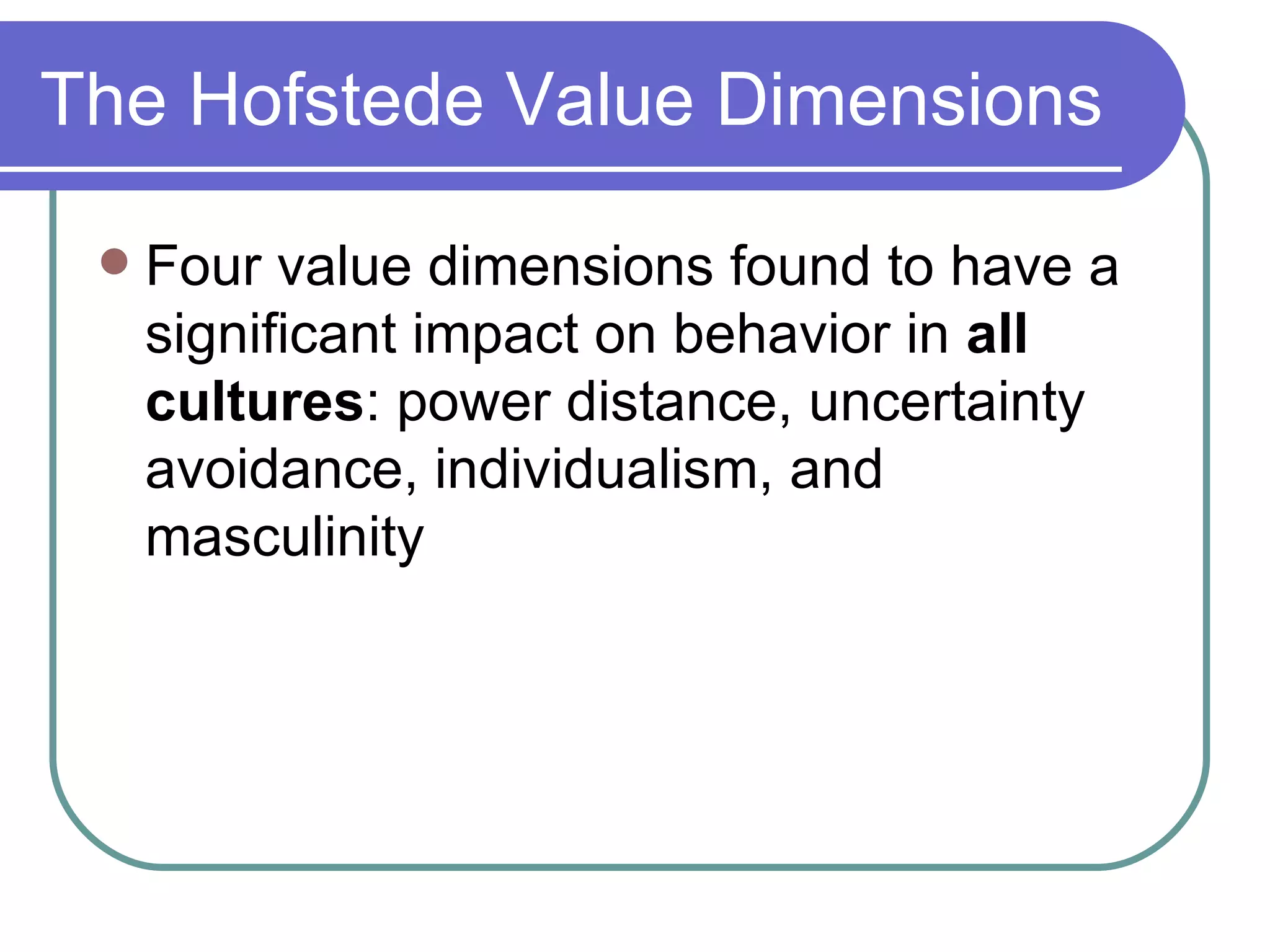
The Hofstede Value Dimensions Four value dimensions found to have a significant impact on behavior in  all cultures : power distance, uncertainty avoidance, individualism, and masculinity
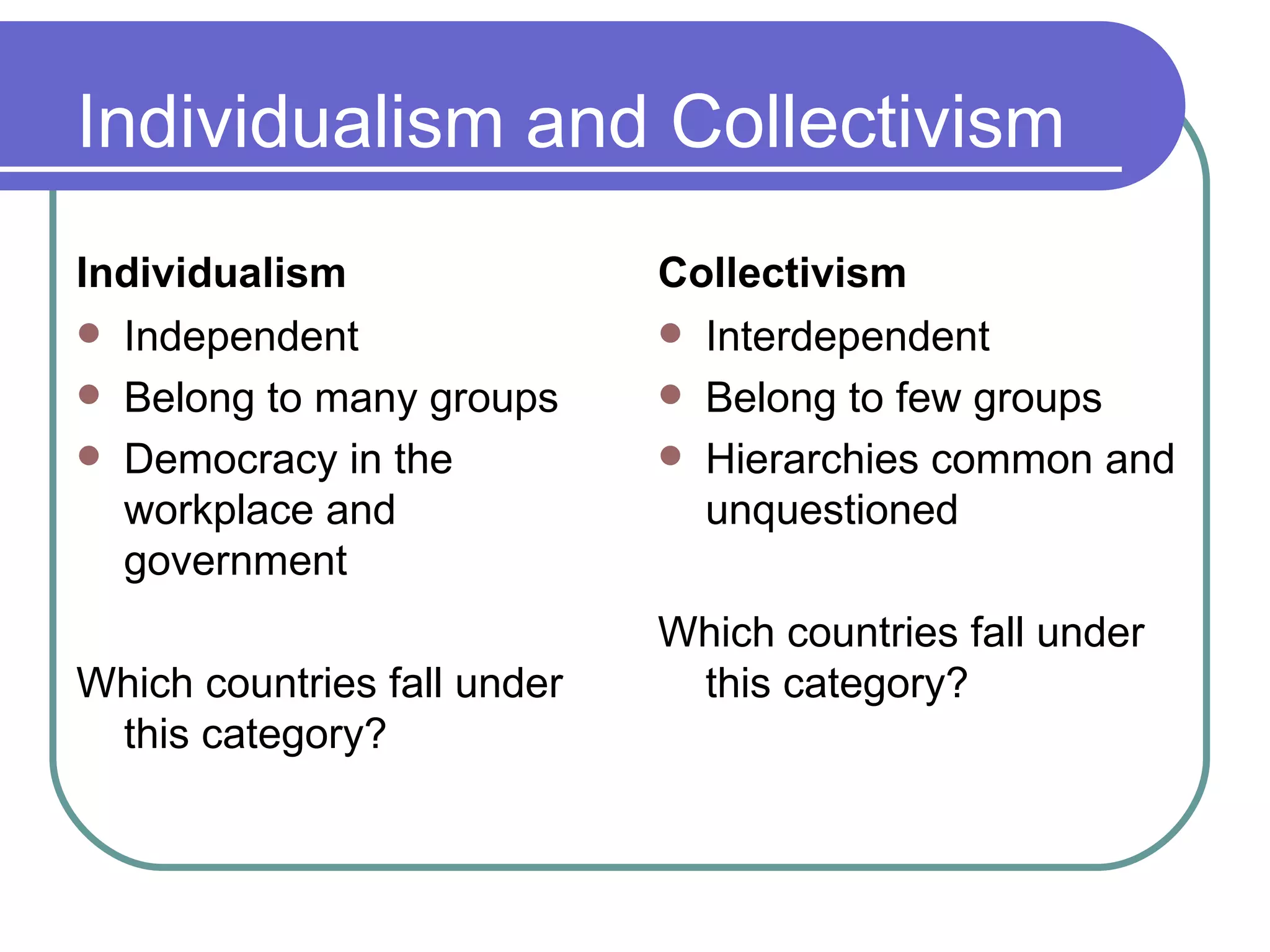
Individualism and Collectivism Individualism Independent Belong to many groups Democracy in the workplace and government Which countries fall under this category? Collectivism Interdependent Belong to few groups Hierarchies common and unquestioned Which countries fall under this category?
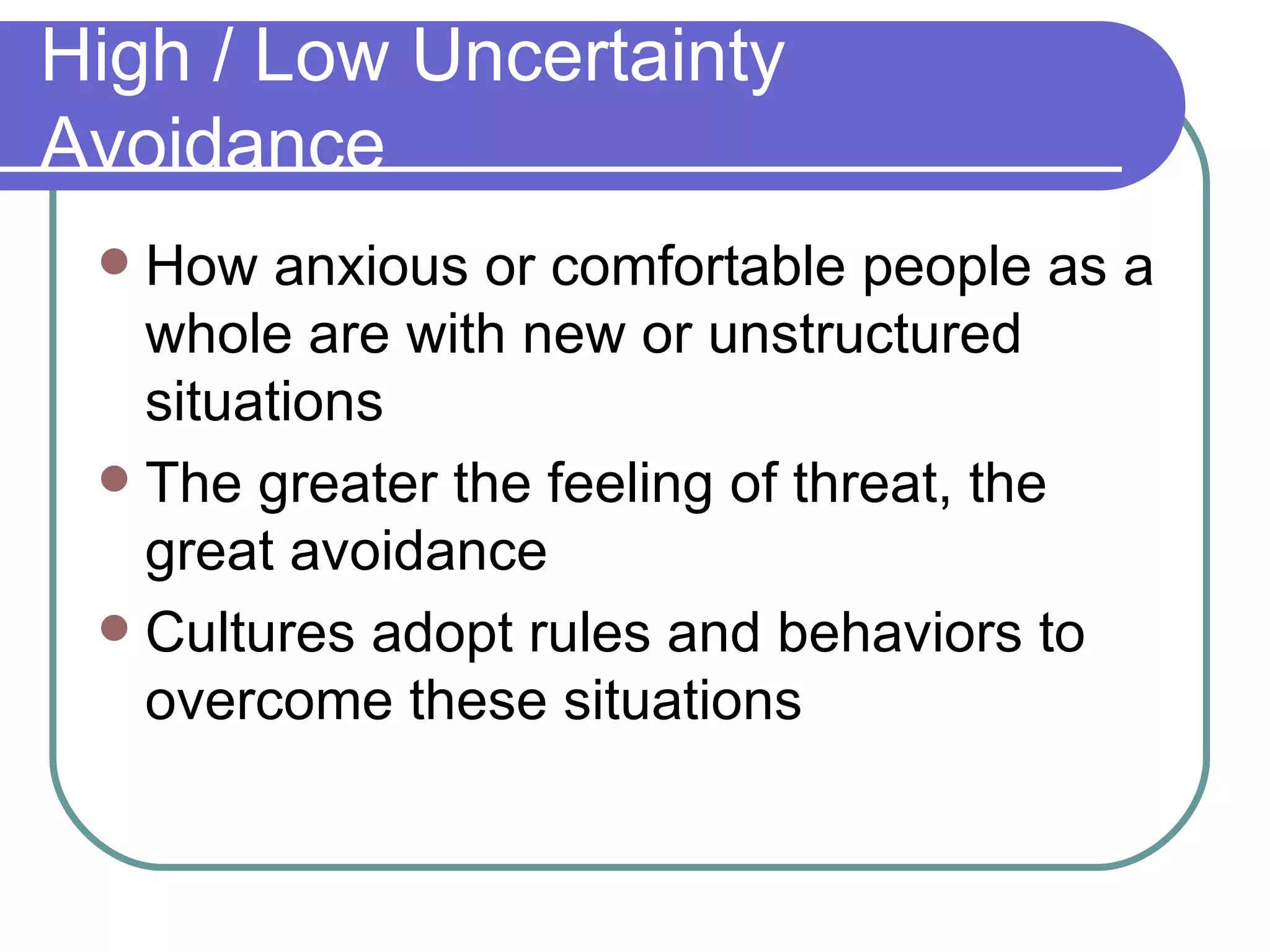
High / Low Uncertainty Avoidance How anxious or comfortable people as a whole are with new or unstructured situations The greater the feeling of threat, the great avoidance Cultures adopt rules and behaviors to overcome these situations
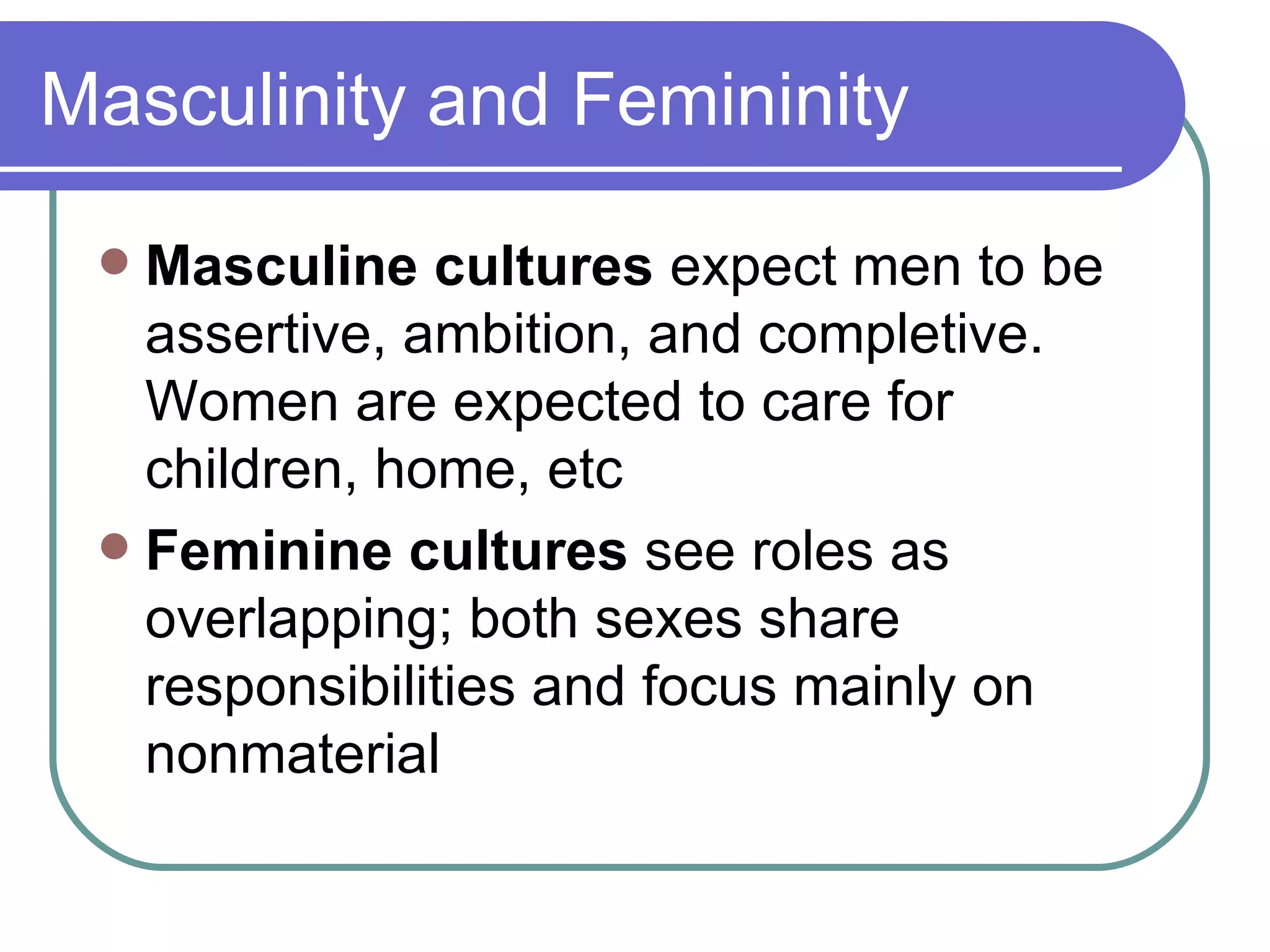
Masculinity and Femininity Masculine cultures  expect men to be assertive, ambition, and completive. Women are expected to care for children, home, etc Feminine cultures  see roles as overlapping; both sexes share responsibilities and focus mainly on nonmaterial
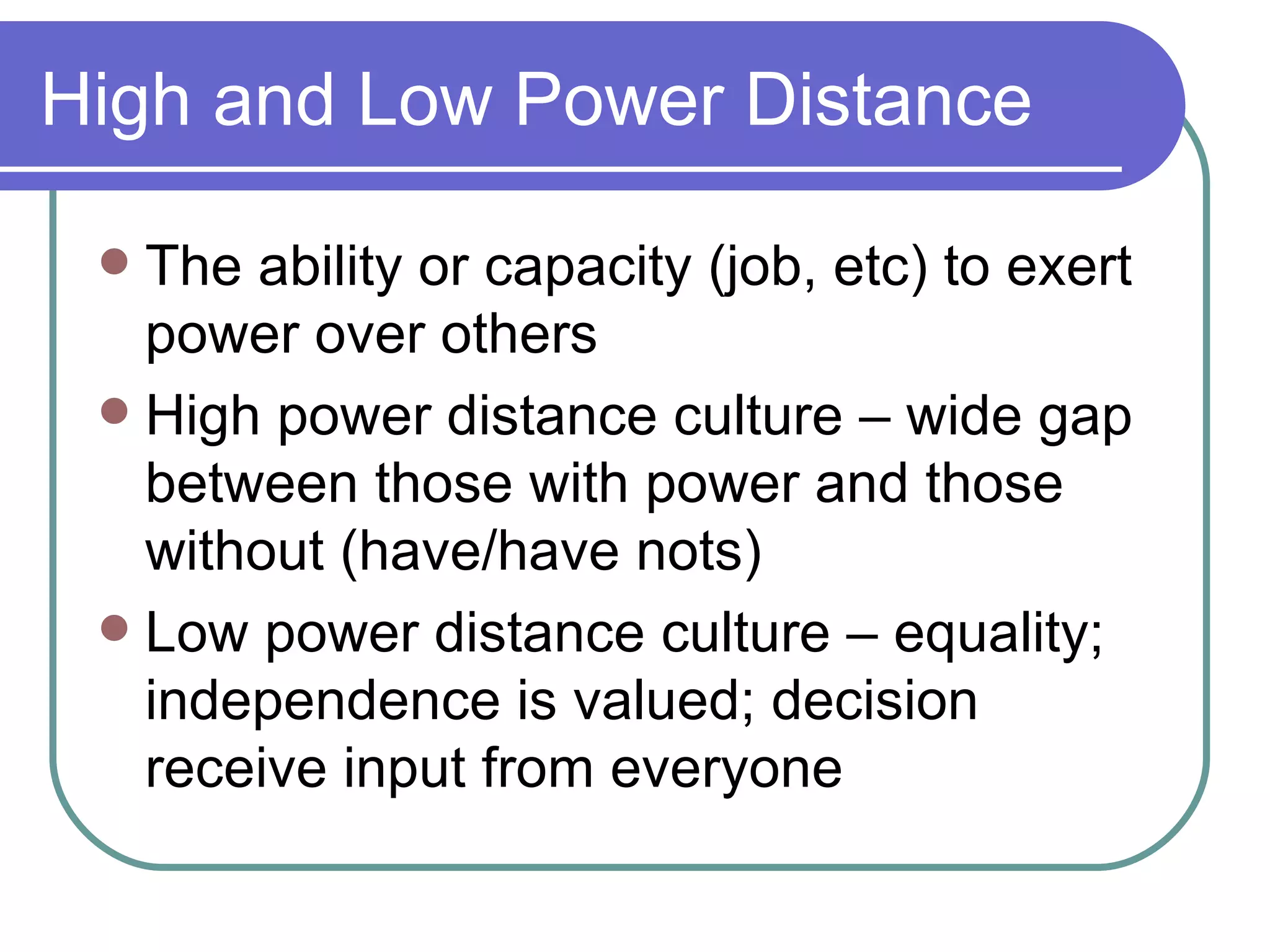
High and Low Power Distance The ability or capacity (job, etc) to exert power over others High power distance culture – wide gap between those with power and those without (have/have nots) Low power distance culture – equality; independence is valued; decision receive input from everyone

Chapter 6 Part 1 Cst229

  • 1.
  • 2.
    Values: Cultural StandardsValues: statements about what we should do, think, how we should act and what we should not do Values are determined by larger principles (law, governments) and individually (from family, friends)
  • 3.
    Values: Cultural StandardsValues differ between people in the following ways: Salience: perceived importance Direction: values are seen as positive, negative, or having no value Degree: the intensity of value Values define appropriate vs inappropriate behavior within a culture; since cultures change, values change
  • 4.
    Dominant American ValuesIndividuality Freedom Equality Democracy Humanitarianism Progress activism Achievement Practicality Time Informality Morality Are there any that you disagree with? Think about other cultures – are they the same??
  • 5.
    The Hofstede ValueDimensions Four value dimensions found to have a significant impact on behavior in all cultures : power distance, uncertainty avoidance, individualism, and masculinity
  • 6.
    Individualism and CollectivismIndividualism Independent Belong to many groups Democracy in the workplace and government Which countries fall under this category? Collectivism Interdependent Belong to few groups Hierarchies common and unquestioned Which countries fall under this category?
  • 7.
    High / LowUncertainty Avoidance How anxious or comfortable people as a whole are with new or unstructured situations The greater the feeling of threat, the great avoidance Cultures adopt rules and behaviors to overcome these situations
  • 8.
    Masculinity and FemininityMasculine cultures expect men to be assertive, ambition, and completive. Women are expected to care for children, home, etc Feminine cultures see roles as overlapping; both sexes share responsibilities and focus mainly on nonmaterial
  • 9.
    High and LowPower Distance The ability or capacity (job, etc) to exert power over others High power distance culture – wide gap between those with power and those without (have/have nots) Low power distance culture – equality; independence is valued; decision receive input from everyone