i_shake
Technical Architecture
Problems
● Internet access is too expensive.
● Internet access is not widely available.
● Internet access may not provide good quality of
experience for certain applications.
Solution - Cost of Service
●
●
●
●
●
●
●

Standardize on Wi-Fi to reduce cost. Wi-Fi has the most cost competitive
and innovative ecosystem.
Use advanced Wi-Fi mesh technology to reduce the cost of backhaul.
Simplify billing to a single flat rate plan. Network ensures fair use of
resources across users.
Automatically and in real time traffic engineer the network to make use of
available network resources.
Automate operational aspects of network where possible.
Partner with multiple ISPs and steer delay tolerant traffic across cheaper
links.
Cache content to reduce ISP load.
Solution - Network Availability
● Use Wi-Fi mesh technology to extend reach of carrier
access network.
● Use longhaul microwave technology if required.
● Use solar power where needed.
● Operate over any Carrier Access technology.
Solution - Quality of Experience
●
●
●
●
●
●
●

Use best in class Wi-Fi access points. Be aware of distinctions between
indoor and outdoor implementations.
Detect Skype voice flows, prioritize and condition for best quality.
Detect video flows, prioritize and condition for good quality.
Automatically and in real time traffic engineer the network to make use of
available network resources.
Cache content at local data center to avoid delays and congestion over
ISP links.
Ensure all users get equal access to available network capacity.
Automatically adjust RF parameters to achieve good network performance.
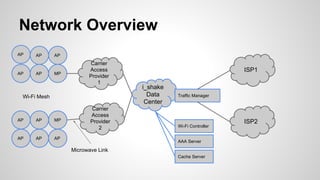
Network Overview
AP

AP

AP

AP

AP

MP

Carrier
Access
Provider
1

Wi-Fi Mesh

AP

AP

AP

AP

MP

Carrier
Access
Provider
2

AP

ISP1
i_shake
Data
Center

Traffic Manager

Wi-Fi Controller
AAA Server

Microwave Link
Cache Server

ISP2
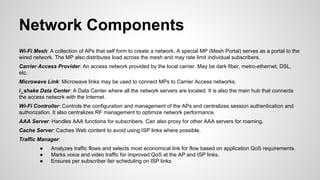
Network Components
Wi-Fi Mesh: A collection of APs that self form to create a network. A special MP (Mesh Portal) serves as a portal to the
wired network. The MP also distributes load across the mesh and may rate limit individual subscribers.
Carrier Access Provider: An access network provided by the local carrier. May be dark fiber, metro-ethernet, DSL,
etc.
Microwave Link: Microwave links may be used to connect MPs to Carrier Access networks.
i_shake Data Center: A Data Center where all the network servers are located. It is also the main hub that connects
the access network with the Internet.
Wi-Fi Controller: Controls the configuration and management of the APs and centralizes session authentication and
authorization. It also centralizes RF management to optimize network performance.
AAA Server: Handles AAA functions for subscribers. Can also proxy for other AAA servers for roaming.
Cache Server: Caches Web content to avoid using ISP links where possible.
Traffic Manager:
●
●
●

Analyzes traffic flows and selects most economical link for flow based on application QoS requirements.
Marks voice and video traffic for improved QoS at the AP and ISP links.
Ensures per subscriber fair scheduling on ISP links

#i_shake Technical Architecture

  • 1.
  • 2.
    Problems ● Internet accessis too expensive. ● Internet access is not widely available. ● Internet access may not provide good quality of experience for certain applications.
  • 3.
    Solution - Costof Service ● ● ● ● ● ● ● Standardize on Wi-Fi to reduce cost. Wi-Fi has the most cost competitive and innovative ecosystem. Use advanced Wi-Fi mesh technology to reduce the cost of backhaul. Simplify billing to a single flat rate plan. Network ensures fair use of resources across users. Automatically and in real time traffic engineer the network to make use of available network resources. Automate operational aspects of network where possible. Partner with multiple ISPs and steer delay tolerant traffic across cheaper links. Cache content to reduce ISP load.
  • 4.
    Solution - NetworkAvailability ● Use Wi-Fi mesh technology to extend reach of carrier access network. ● Use longhaul microwave technology if required. ● Use solar power where needed. ● Operate over any Carrier Access technology.
  • 5.
    Solution - Qualityof Experience ● ● ● ● ● ● ● Use best in class Wi-Fi access points. Be aware of distinctions between indoor and outdoor implementations. Detect Skype voice flows, prioritize and condition for best quality. Detect video flows, prioritize and condition for good quality. Automatically and in real time traffic engineer the network to make use of available network resources. Cache content at local data center to avoid delays and congestion over ISP links. Ensure all users get equal access to available network capacity. Automatically adjust RF parameters to achieve good network performance.
  • 6.
  • 7.
    Network Components Wi-Fi Mesh:A collection of APs that self form to create a network. A special MP (Mesh Portal) serves as a portal to the wired network. The MP also distributes load across the mesh and may rate limit individual subscribers. Carrier Access Provider: An access network provided by the local carrier. May be dark fiber, metro-ethernet, DSL, etc. Microwave Link: Microwave links may be used to connect MPs to Carrier Access networks. i_shake Data Center: A Data Center where all the network servers are located. It is also the main hub that connects the access network with the Internet. Wi-Fi Controller: Controls the configuration and management of the APs and centralizes session authentication and authorization. It also centralizes RF management to optimize network performance. AAA Server: Handles AAA functions for subscribers. Can also proxy for other AAA servers for roaming. Cache Server: Caches Web content to avoid using ISP links where possible. Traffic Manager: ● ● ● Analyzes traffic flows and selects most economical link for flow based on application QoS requirements. Marks voice and video traffic for improved QoS at the AP and ISP links. Ensures per subscriber fair scheduling on ISP links