Downloaded 36 times


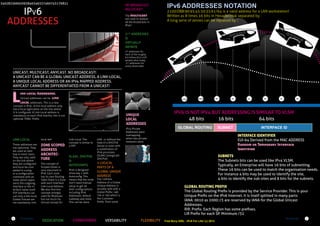
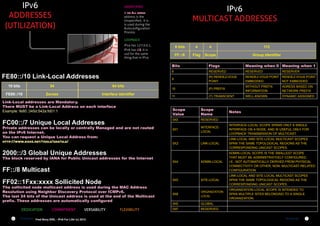
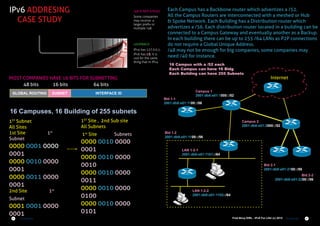


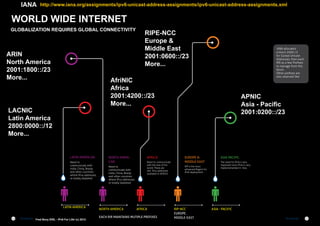
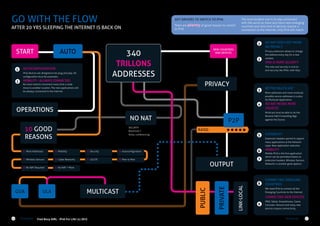


The document discusses IPv6 and its advantages over IPv4. Some key points: - IPv6 addresses are 128 bits, compared to 32 bits for IPv4, allowing for virtually unlimited unique addresses. IPv6 uses unicast, multicast, and anycast but not broadcast. - IPv6 simplifies the header format and allows for extension headers to add new features. It also eliminates checksums and performs fragmentation only at the source. - IPv6 was designed for autoconfiguration, allowing nodes to automatically obtain addresses and other information via protocols like SLAAC and DHCPv6.


