HYPERSENSITIVITY
AND ITS CLASSIFICATION
Presented by : Suman Bhattarai
Roll Number : 50 (Fifty)
B.V.Sc & A.H
Agriculture and Forestry University
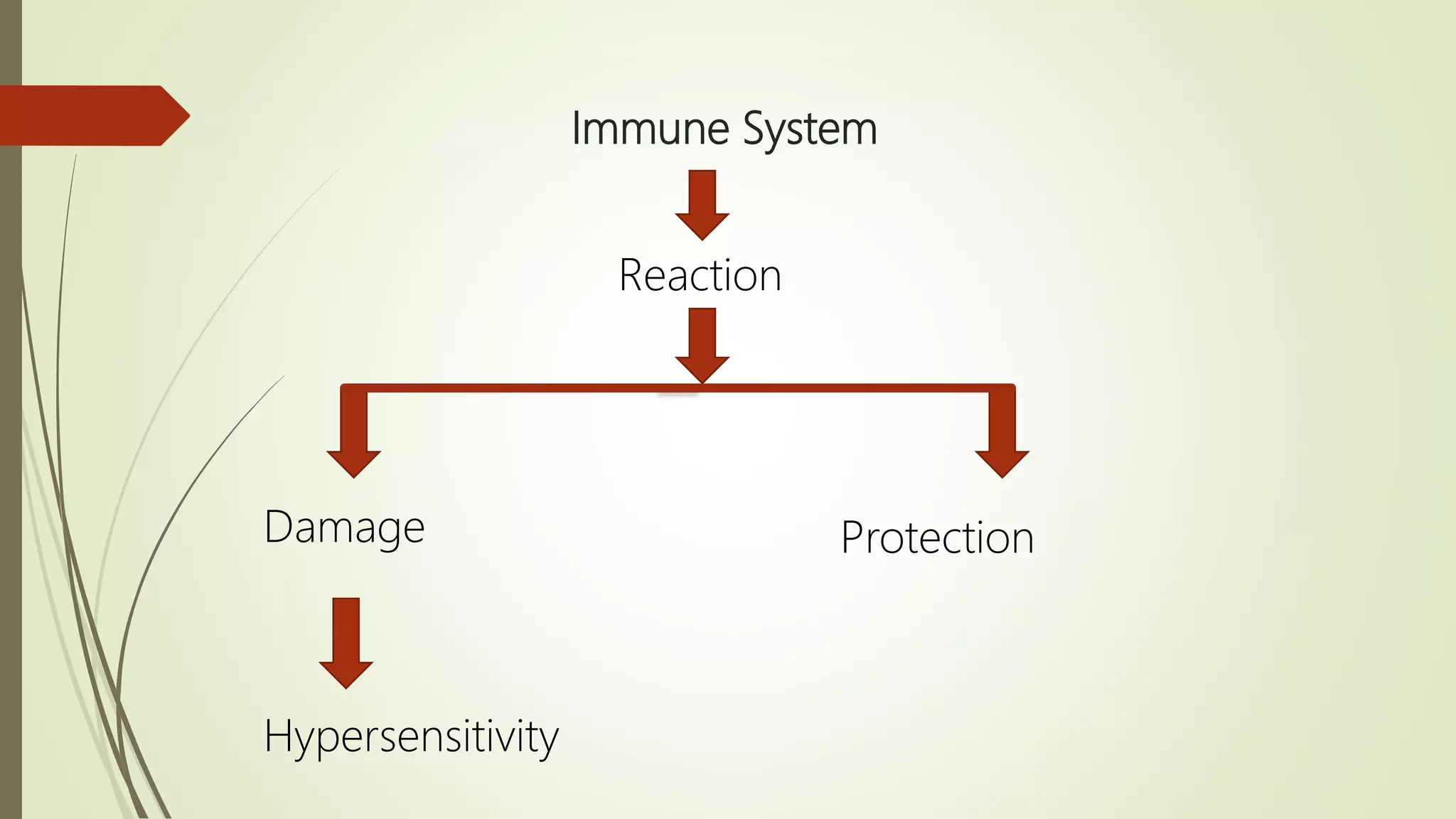
Immune System
Reaction
Damage Protection
Hypersensitivity
Hyper-sensitivity :
Greek Word : “Huper” Means over,above and sensitivity
means ability to detect and respond to slight changes
signal
consequence of adaptive immune reaction
Exaggerated reaction or undesired immune
response of immune system ( a.k.a
intolerance )
Results in host damage and other
pathophysiological changes
Occurs when already sensitized individual is re-exposed to
same foreign substances
 Essentially has 2 compartments
: 1st dose = Priming or sensitizing dose of antigen
2nd dose = Shocking dose of same antigen that results in
injurious consequences
 Antigen : may be exogenous environmental( dust, drugs,
pollen, food, microbes, chemicals ) and endogenous self type
Both humoral and cell mediated arms of immune response
participates
Causes : 1) When Immune system overreacts to
foreign antigens
2) or mechanism of self tolerance fails
 Signs and symptoms
fever, chills, muscle or joint pain, headaches, rales, cough,
chronic bronchitis, shortness of breath, anorexia or weight
loss, fatigue, fibrosis of the lungs, and clubbing of fingers or
toes.
Consequences :
Tissue injury and Death
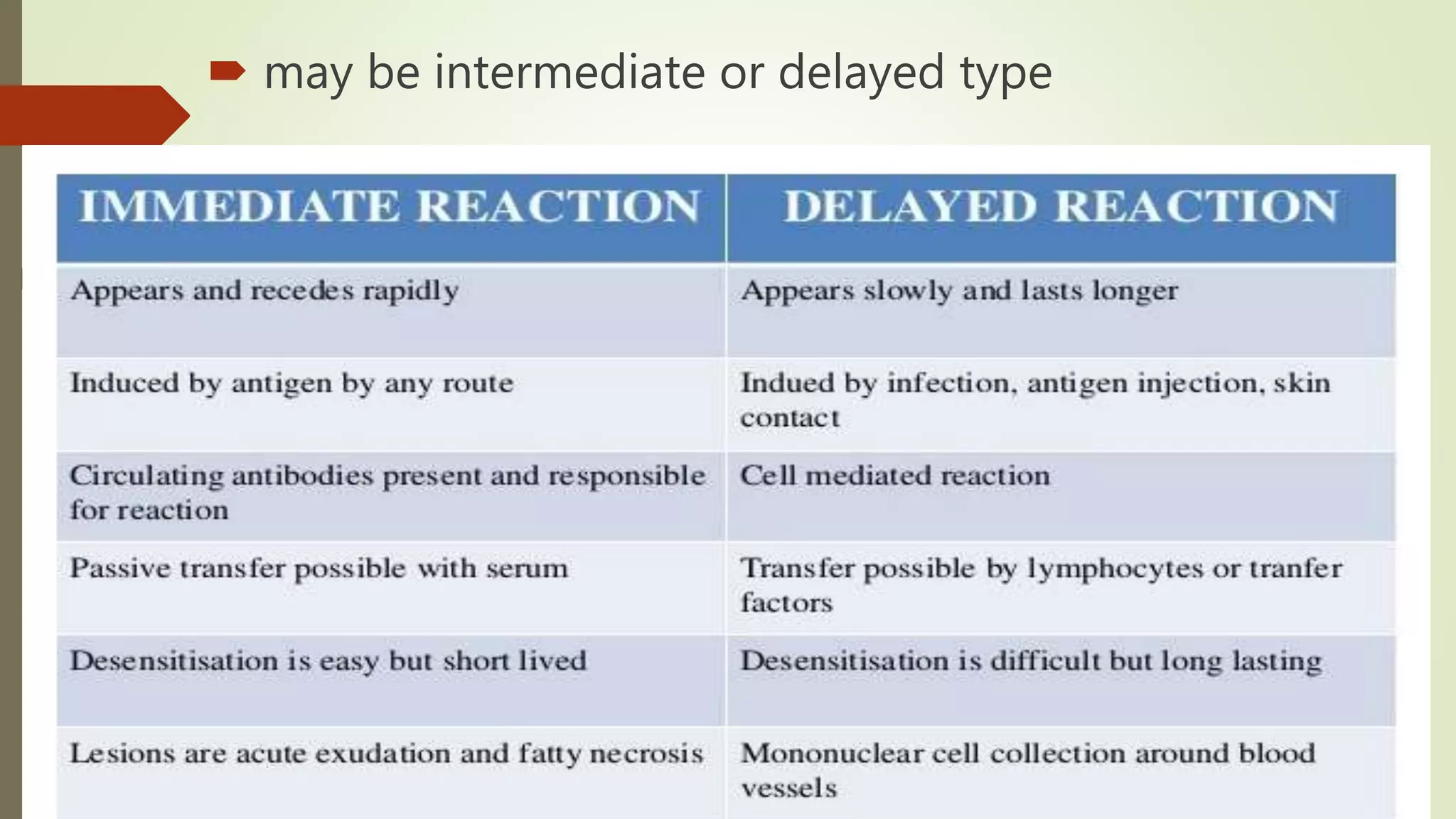
 may be intermediate or delayed type
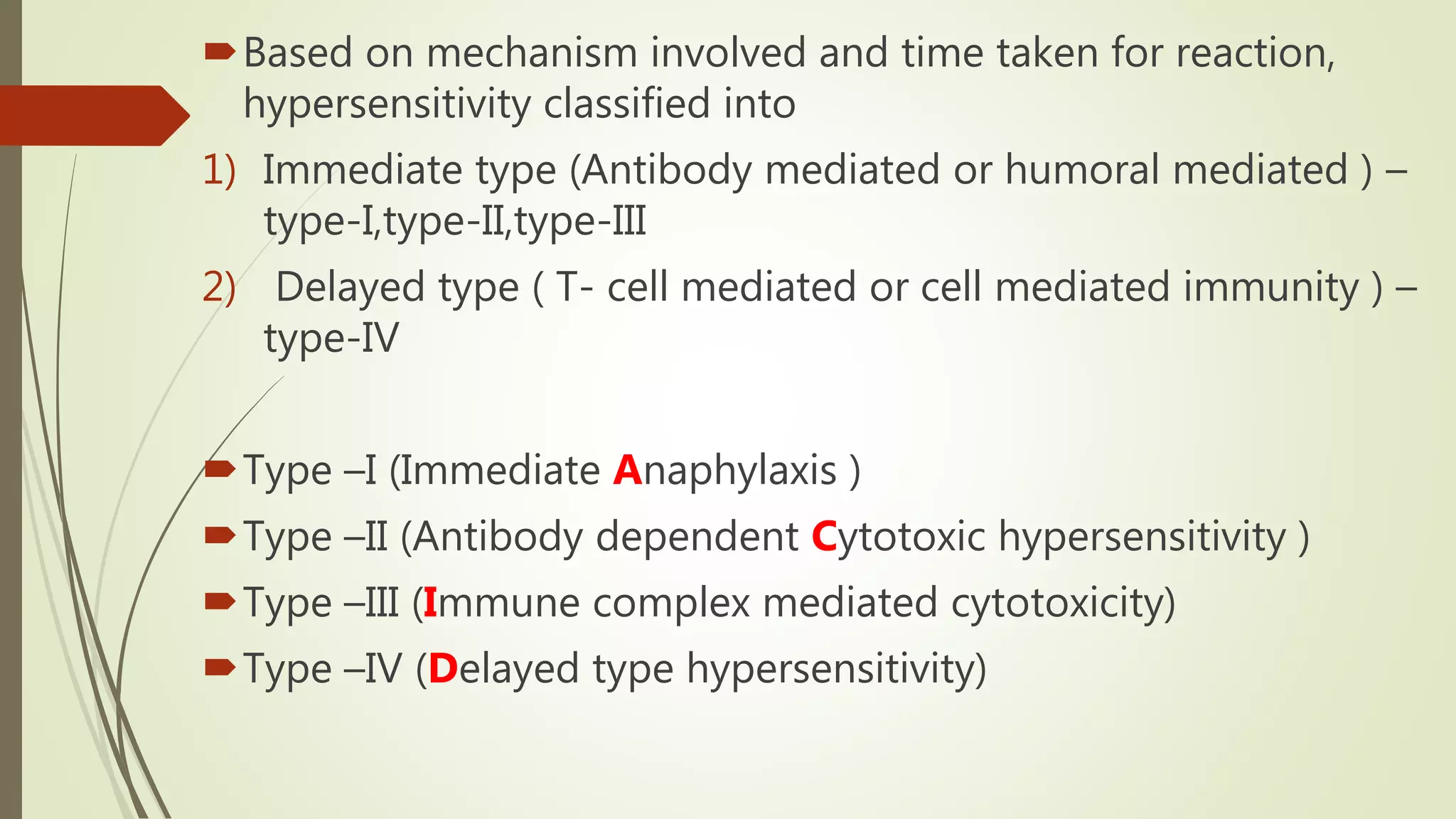
Based on mechanism involved and time taken for reaction,
hypersensitivity classified into
1) Immediate type (Antibody mediated or humoral mediated ) –
type-I,type-II,type-III
2) Delayed type ( T- cell mediated or cell mediated immunity ) –
type-IV
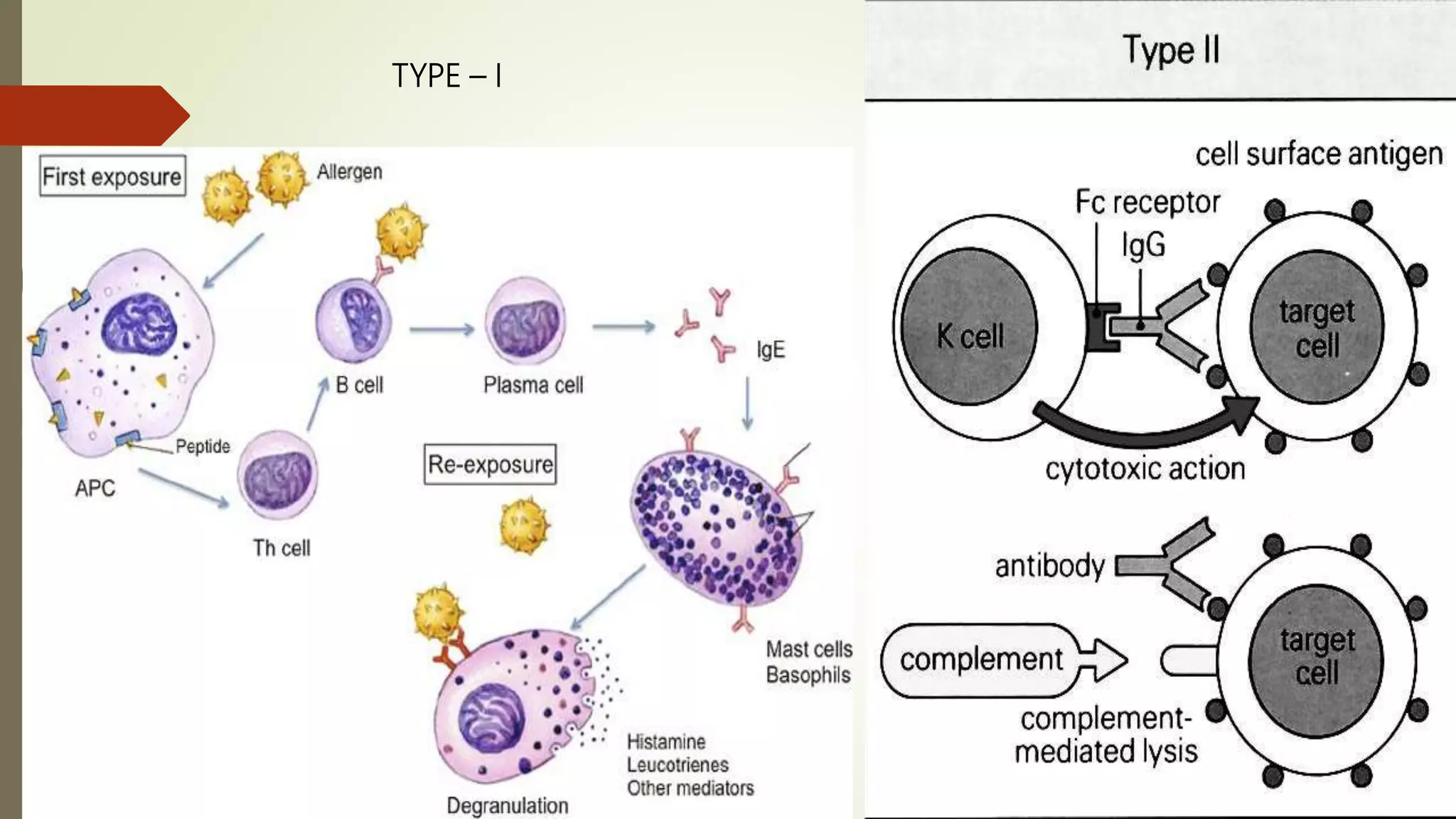
Type –I (Immediate Anaphylaxis )
Type –II (Antibody dependent Cytotoxic hypersensitivity )
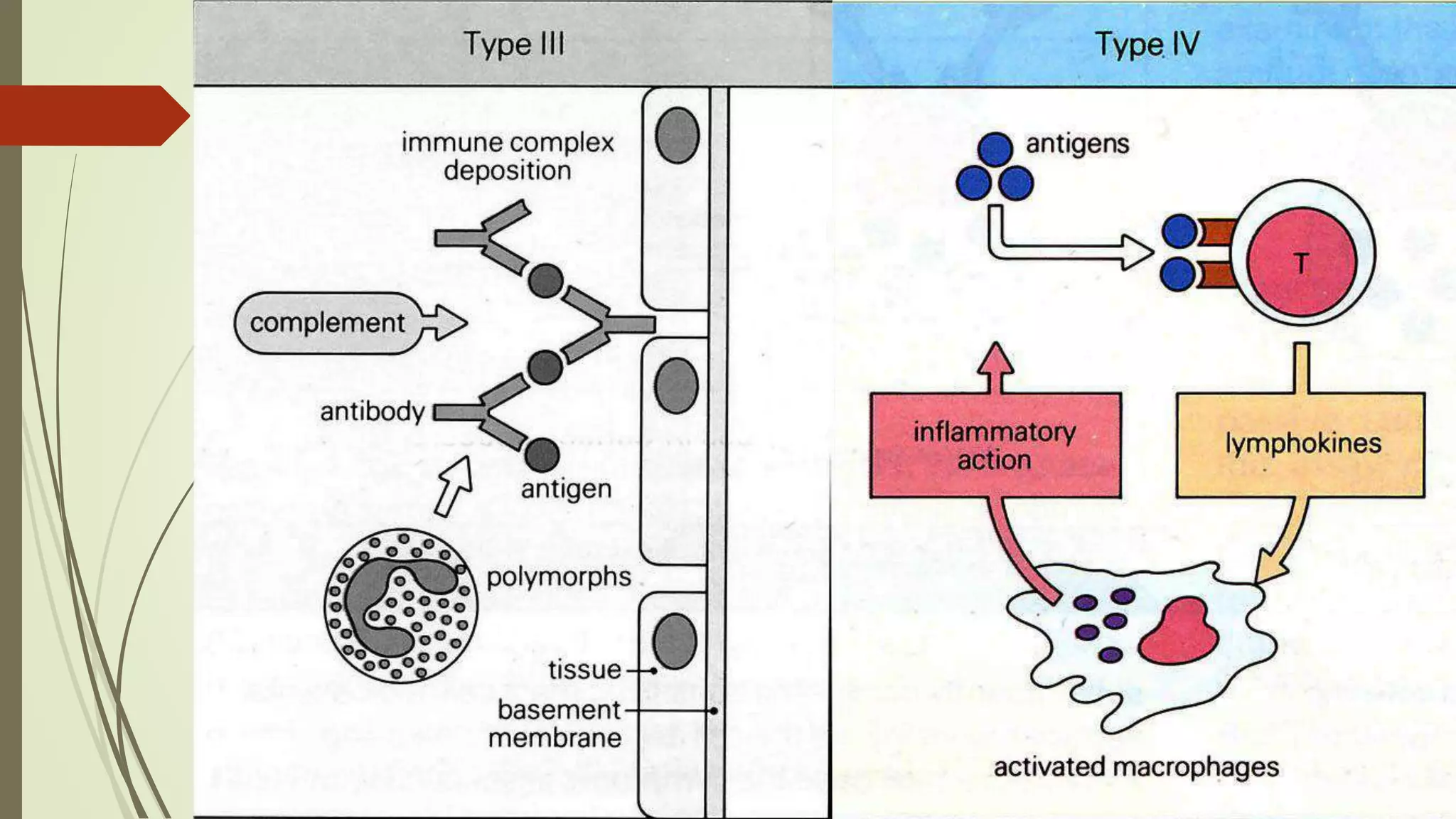
Type –III (Immune complex mediated cytotoxicity)
Type –IV (Delayed type hypersensitivity)
TYPE – I
Hypersensitivity & its classification by suman bhattarai

Hypersensitivity & its classification by suman bhattarai

  • 1.
    HYPERSENSITIVITY AND ITS CLASSIFICATION Presentedby : Suman Bhattarai Roll Number : 50 (Fifty) B.V.Sc & A.H Agriculture and Forestry University
  • 2.
  • 3.
    Hyper-sensitivity : Greek Word: “Huper” Means over,above and sensitivity means ability to detect and respond to slight changes signal consequence of adaptive immune reaction Exaggerated reaction or undesired immune response of immune system ( a.k.a intolerance ) Results in host damage and other pathophysiological changes
  • 4.
    Occurs when alreadysensitized individual is re-exposed to same foreign substances  Essentially has 2 compartments : 1st dose = Priming or sensitizing dose of antigen 2nd dose = Shocking dose of same antigen that results in injurious consequences  Antigen : may be exogenous environmental( dust, drugs, pollen, food, microbes, chemicals ) and endogenous self type Both humoral and cell mediated arms of immune response participates
  • 5.
    Causes : 1)When Immune system overreacts to foreign antigens 2) or mechanism of self tolerance fails  Signs and symptoms fever, chills, muscle or joint pain, headaches, rales, cough, chronic bronchitis, shortness of breath, anorexia or weight loss, fatigue, fibrosis of the lungs, and clubbing of fingers or toes. Consequences : Tissue injury and Death
  • 6.
     may beintermediate or delayed type
  • 7.
    Based on mechanisminvolved and time taken for reaction, hypersensitivity classified into 1) Immediate type (Antibody mediated or humoral mediated ) – type-I,type-II,type-III 2) Delayed type ( T- cell mediated or cell mediated immunity ) – type-IV Type –I (Immediate Anaphylaxis ) Type –II (Antibody dependent Cytotoxic hypersensitivity ) Type –III (Immune complex mediated cytotoxicity) Type –IV (Delayed type hypersensitivity)
  • 8.