BY :- Mr. Baljinder Singh
Assistant Professor
PIMS, Panipat
An endocrine disorder in which there is
insufficient amount or lack of insulin
secretion to metabolize carbohydrates.
It is characterized by hyperglycemia,
glycosuria and ketonuria.
Diabetes mellitus is a group of
metabolic diseases characterized by
elevated levels of glucose in the blood
(hyperglycemia) resulting from defects in
insulin secretion, insulin action, or both
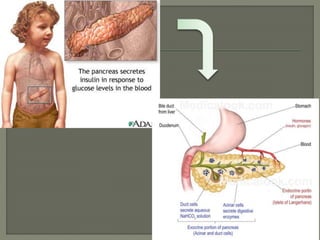
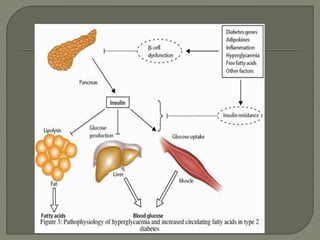
Insulin, a hormone produced by the
pancreas, controls the level of glucose in
the blood by regulating the production and
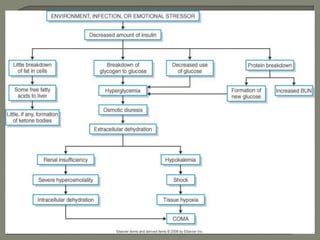
storage of glucose. In the diabetic state, the
cells may stop responding to insulin or the
pancreas may stop producing insulin entirely.
This leads to hyperglycemia, which may
result in acute metabolic complications such
as diabetic ketoacidosis (DKA) and
hyperglycemic hyperosmolar nonketotic
syndrome (HHNS).
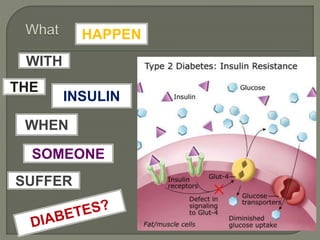
THE
INSULIN
WHEN
SOMEONE
SUFFER
HAPPEN
WITH
 Risk of diabetes typically increase when
you are:
 Older age (45 years or older)
 Less active (sedentary life)
 Overweight or obese
 Family history of diabetes
 Pre-diabetes
 High blood pressure
 High lipids (triglycerides and low
HDL)
 Diabetes during pregnancy or baby
>9 lbs.
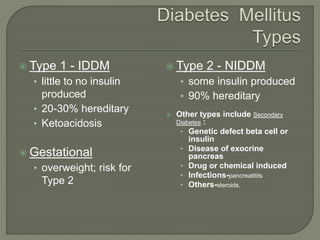
 Type 1 - IDDM
• little to no insulin
produced
• 20-30% hereditary
• Ketoacidosis
 Gestational
• overweight; risk for
Type 2
 Type 2 - NIDDM
• some insulin produced
• 90% hereditary
 Other types include Secondary
Diabetes :
• Genetic defect beta cell or
insulin
• Disease of exocrine
pancreas
• Drug or chemical induced
• Infections-pancreatitits
• Others-steroids,
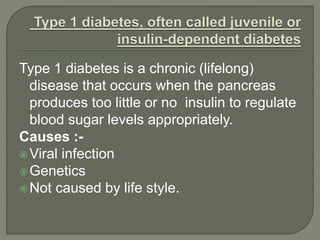
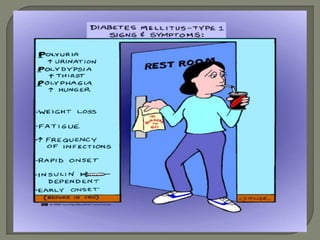
Type 1 diabetes is a chronic (lifelong)
disease that occurs when the pancreas
produces too little or no insulin to regulate
blood sugar levels appropriately.
Causes :-
Viral infection
Genetics
Not caused by life style.
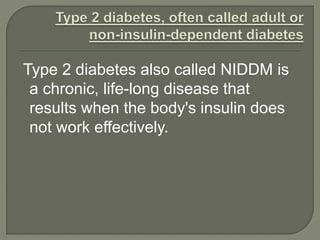
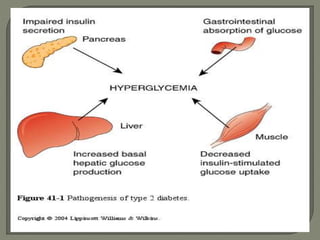
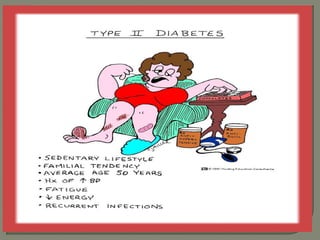
Type 2 diabetes also called NIDDM is
a chronic, life-long disease that
results when the body's insulin does
not work effectively.
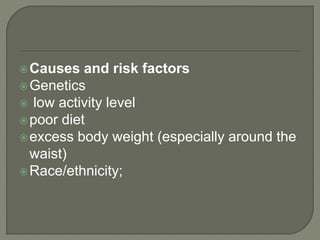
Causes and risk factors
Genetics
 low activity level
poor diet
excess body weight (especially around the
waist)
Race/ethnicity;
PATHOPHYSIOLOGY
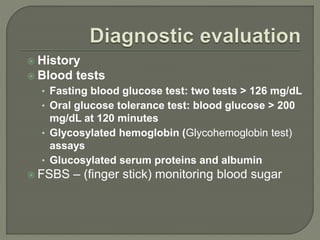
 History
 Blood tests
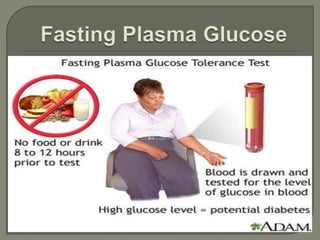
• Fasting blood glucose test: two tests > 126 mg/dL
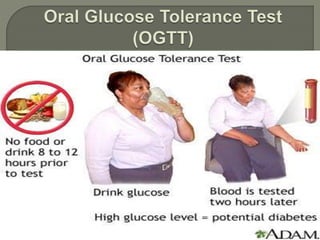
• Oral glucose tolerance test: blood glucose > 200
mg/dL at 120 minutes
• Glycosylated hemoglobin (Glycohemoglobin test)
assays
• Glucosylated serum proteins and albumin
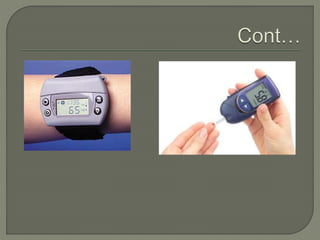
 FSBS – (finger stick) monitoring blood sugar
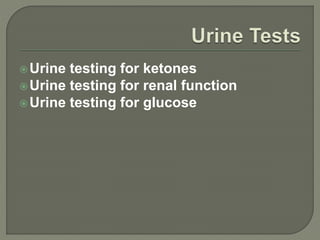
Urine testing for ketones
Urine testing for renal function
Urine testing for glucose
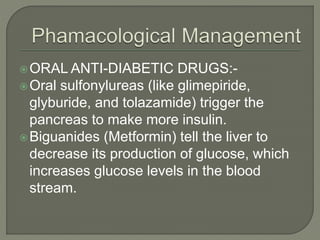
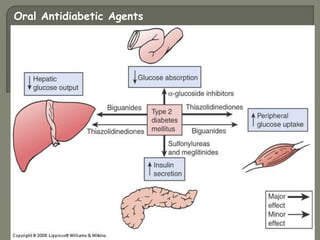
ORAL ANTI-DIABETIC DRUGS:-
Oral sulfonylureas (like glimepiride,
glyburide, and tolazamide) trigger the
pancreas to make more insulin.
Biguanides (Metformin) tell the liver to
decrease its production of glucose, which
increases glucose levels in the blood
stream.
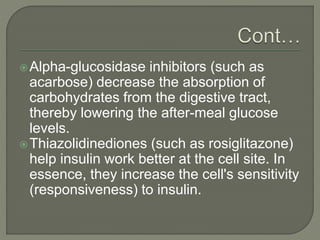
Alpha-glucosidase inhibitors (such as
acarbose) decrease the absorption of
carbohydrates from the digestive tract,
thereby lowering the after-meal glucose
levels.
Thiazolidinediones (such as rosiglitazone)
help insulin work better at the cell site. In
essence, they increase the cell's sensitivity
(responsiveness) to insulin.
Oral Antidiabetic Agents
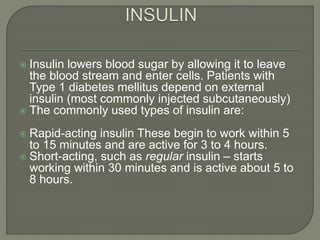
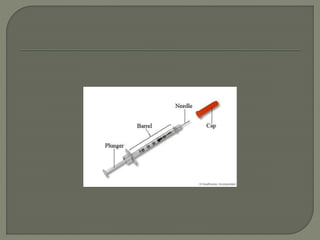
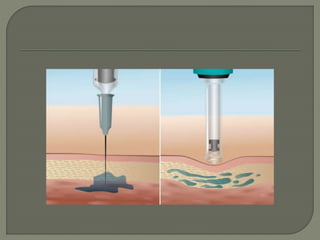
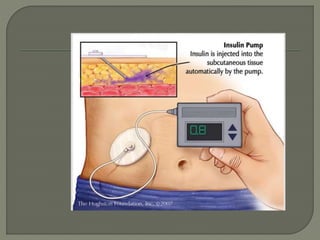
 Insulin lowers blood sugar by allowing it to leave
the blood stream and enter cells. Patients with
Type 1 diabetes mellitus depend on external
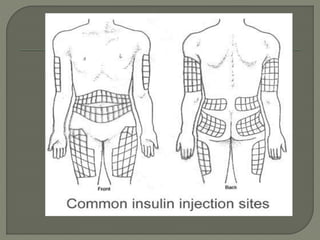
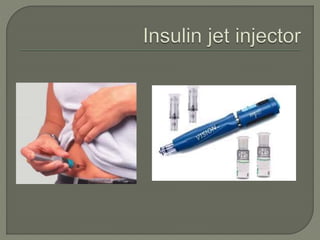
insulin (most commonly injected subcutaneously)
 The commonly used types of insulin are:
 Rapid-acting insulin These begin to work within 5
to 15 minutes and are active for 3 to 4 hours.
 Short-acting, such as regular insulin – starts
working within 30 minutes and is active about 5 to
8 hours.
Intermediate-acting,– starts working in 1 to
3 hours and is active 16 to 24 hours.
Long-acting, insulin – starts working in 4 to
6 hours, and is active well beyond 32
hours.
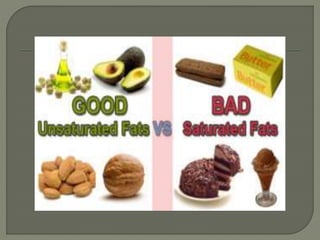
Diabetes Diet: A healthy diet is
key to controlling blood sugar
levels and preventing diabetes
complications.
Eat a consistent, well-balanced
diet that is high in fiber, low in
saturated fat, and low in
concentrated sweets.
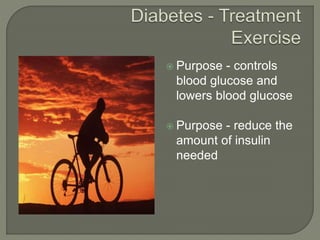
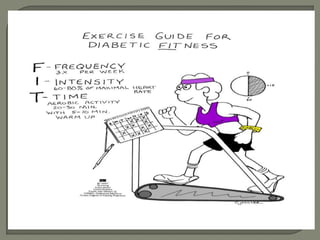
 Purpose - controls
blood glucose and
lowers blood glucose
 Purpose - reduce the
amount of insulin
needed
 Urine - Ketones
 FBS
 Wear ID Bracelet
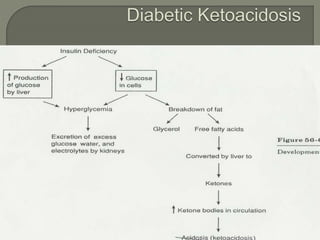
Diabetic ketoacidosis
Hyperglycemic-hyperosmolar-
nonketotic syndrome
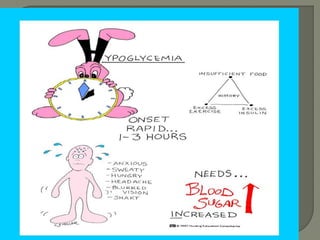
Hypoglycemia from too much insulin or
too little glucose
 Physical
 General signs
 Ill appearance
 Dry skin
 Dry mucous membranes
 Decreased skin turgor
 Vital signs
 Tachycardia
 Hypotension
 Tachypnea
 Hypothermia
 Fever, if infection
 Specific signs
 Ketotic breath (fruity, with acetone smell)
 Confusion
 Coma
 Abdominal tenderness
1. Fluids
- If in shock, initial resuscitation with normal saline. Dehydration
should then be corrected gradually over 48 to 72 hour
using 0.45% Saline
- Monitor :
- Fluid input and output
- Electrolytes, creatinine and acid-base status regularly
- Neurological states
2. Insulin
- insulin infusion is started, titrating the dose according to the
blood glucose. Monitor blood glucose regularly.
- aim for gradual reduction of blood glucose .
Cardiovascular disease
Cerebrovascular disease
Retinopathy (vision) problems
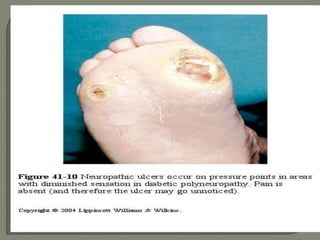
Diabetic neuropathy
Diabetic nephropathy
Male erectile dysfunction
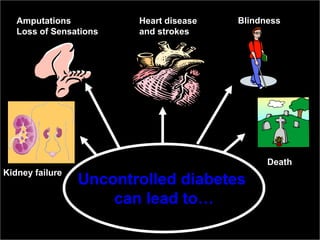
Uncontrolled diabetes
can lead to…
Kidney failure
Amputations
Loss of Sensations
Heart disease
and strokes
Blindness
Death
By :- Baljinder Singh ,
Assistant Professor
PIMS, Panipat
08053142473

Diabetes mellitus complete Disorder Exclusively for Nursing Students

  • 1.
    BY :- Mr.Baljinder Singh Assistant Professor PIMS, Panipat
  • 2.
    An endocrine disorderin which there is insufficient amount or lack of insulin secretion to metabolize carbohydrates. It is characterized by hyperglycemia, glycosuria and ketonuria.
  • 3.
    Diabetes mellitus isa group of metabolic diseases characterized by elevated levels of glucose in the blood (hyperglycemia) resulting from defects in insulin secretion, insulin action, or both
  • 4.
    Insulin, a hormoneproduced by the pancreas, controls the level of glucose in the blood by regulating the production and storage of glucose. In the diabetic state, the cells may stop responding to insulin or the pancreas may stop producing insulin entirely. This leads to hyperglycemia, which may result in acute metabolic complications such as diabetic ketoacidosis (DKA) and hyperglycemic hyperosmolar nonketotic syndrome (HHNS).
  • 7.
  • 8.
     Risk ofdiabetes typically increase when you are:  Older age (45 years or older)  Less active (sedentary life)  Overweight or obese  Family history of diabetes  Pre-diabetes  High blood pressure  High lipids (triglycerides and low HDL)  Diabetes during pregnancy or baby >9 lbs.
  • 9.
     Type 1- IDDM • little to no insulin produced • 20-30% hereditary • Ketoacidosis  Gestational • overweight; risk for Type 2  Type 2 - NIDDM • some insulin produced • 90% hereditary  Other types include Secondary Diabetes : • Genetic defect beta cell or insulin • Disease of exocrine pancreas • Drug or chemical induced • Infections-pancreatitits • Others-steroids,
  • 10.
    Type 1 diabetesis a chronic (lifelong) disease that occurs when the pancreas produces too little or no insulin to regulate blood sugar levels appropriately. Causes :- Viral infection Genetics Not caused by life style.
  • 11.
    Type 2 diabetesalso called NIDDM is a chronic, life-long disease that results when the body's insulin does not work effectively.
  • 12.
    Causes and riskfactors Genetics  low activity level poor diet excess body weight (especially around the waist) Race/ethnicity;
  • 13.
  • 20.
     History  Bloodtests • Fasting blood glucose test: two tests > 126 mg/dL • Oral glucose tolerance test: blood glucose > 200 mg/dL at 120 minutes • Glycosylated hemoglobin (Glycohemoglobin test) assays • Glucosylated serum proteins and albumin  FSBS – (finger stick) monitoring blood sugar
  • 23.
    Urine testing forketones Urine testing for renal function Urine testing for glucose
  • 25.
    ORAL ANTI-DIABETIC DRUGS:- Oralsulfonylureas (like glimepiride, glyburide, and tolazamide) trigger the pancreas to make more insulin. Biguanides (Metformin) tell the liver to decrease its production of glucose, which increases glucose levels in the blood stream.
  • 26.
    Alpha-glucosidase inhibitors (suchas acarbose) decrease the absorption of carbohydrates from the digestive tract, thereby lowering the after-meal glucose levels. Thiazolidinediones (such as rosiglitazone) help insulin work better at the cell site. In essence, they increase the cell's sensitivity (responsiveness) to insulin.
  • 27.
  • 28.
     Insulin lowersblood sugar by allowing it to leave the blood stream and enter cells. Patients with Type 1 diabetes mellitus depend on external insulin (most commonly injected subcutaneously)  The commonly used types of insulin are:  Rapid-acting insulin These begin to work within 5 to 15 minutes and are active for 3 to 4 hours.  Short-acting, such as regular insulin – starts working within 30 minutes and is active about 5 to 8 hours.
  • 29.
    Intermediate-acting,– starts workingin 1 to 3 hours and is active 16 to 24 hours. Long-acting, insulin – starts working in 4 to 6 hours, and is active well beyond 32 hours.
  • 35.
    Diabetes Diet: Ahealthy diet is key to controlling blood sugar levels and preventing diabetes complications. Eat a consistent, well-balanced diet that is high in fiber, low in saturated fat, and low in concentrated sweets.
  • 37.
     Purpose -controls blood glucose and lowers blood glucose  Purpose - reduce the amount of insulin needed
  • 39.
     Urine -Ketones  FBS  Wear ID Bracelet
  • 41.
  • 43.
     Physical  Generalsigns  Ill appearance  Dry skin  Dry mucous membranes  Decreased skin turgor  Vital signs  Tachycardia  Hypotension  Tachypnea  Hypothermia  Fever, if infection  Specific signs  Ketotic breath (fruity, with acetone smell)  Confusion  Coma  Abdominal tenderness
  • 44.
    1. Fluids - Ifin shock, initial resuscitation with normal saline. Dehydration should then be corrected gradually over 48 to 72 hour using 0.45% Saline - Monitor : - Fluid input and output - Electrolytes, creatinine and acid-base status regularly - Neurological states 2. Insulin - insulin infusion is started, titrating the dose according to the blood glucose. Monitor blood glucose regularly. - aim for gradual reduction of blood glucose .
  • 45.
    Cardiovascular disease Cerebrovascular disease Retinopathy(vision) problems Diabetic neuropathy Diabetic nephropathy Male erectile dysfunction
  • 46.
    Uncontrolled diabetes can leadto… Kidney failure Amputations Loss of Sensations Heart disease and strokes Blindness Death
  • 48.
    By :- BaljinderSingh , Assistant Professor PIMS, Panipat 08053142473

Editor's Notes

  • #10 Type 1 Insulin Dependent Diabetes, IDDM -previous classifications – juvenile diabetes, juvenile – onset, ketosis prone, brittle Type 2 Non-Insulin Dependent DM -Adult-onset diabetes Maturity-onset diabetes ketosis resistant diabetes, stable diabetes Diet changes plus oral hypoglycemic agents, or insulin injections; have seen some people with DM with exercise – no med. If glucose level is 250 mgdl and ketonuria – no exercise till lowered. Smogyi effect – chronic insulin
  • #21 Normal blood glucose range is 60 -110mgdl. Glucose Tolerance Test Fasting Blood Sugar (fasting 4 hours)
  • #39 Four reasons for exercise – Purpose – decrease the need of insulin; Overweight – walk daily, follow diet Type 2; reduce calories Purpose – increae transport of glucose into muscle cells and not to exercise if hyperglyecimia above 250 and glycosuria
  • #43 Kusamul respiration Metabolize fats for energy
  • #46 Circulatory Sensory (Optic) Renal Neurological Infection/Surgical Patient