NAME: SAMER AZIZ
ROLL NO: DE-068
SUBJECT: PHYSICAL PHARMACY
HYDROLYSIS
HYDROLYSIS:
DEFINATION:
 the chemical breakdown of a compound due to
reaction with water is called hydrolysis
TYPES ON THE BASIS OF CHEMICAL
REACTION:
1. Ionic hydrolysis
2. Molecular hydrolysis
 Ionic hydrolysis
It occur when the salt of
weak acids and weak
bases interact with
water to give either
alkaline or acidic
solution
 Molecular hydrolysis:
It is much slower and
irreversible process it is
catalized by hydrogen
or hydroxyl ion e.g. the
local anesthetics
TYPES OF HYDROLYSIS:(ON THE
BASIS OF DRUG DEGRADATION)
 ESTER HYDROLYSIS:
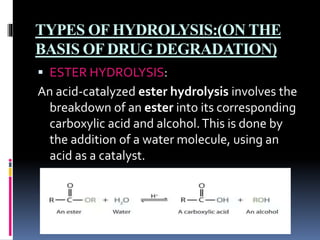
An acid-catalyzed ester hydrolysis involves the
breakdown of an ester into its corresponding
carboxylic acid and alcohol.This is done by
the addition of a water molecule, using an
acid as a catalyst.
EXAMPLE OF DRUGSWHICH UNDER GO
ESTER HYDROLYSIS:
1. Tetracaine
2. Atropine
3. Physostigmine
4. Procaine
5. Asprin
AMIDE HYDROLYSIS:
 when amides are hydrolysed in the presence
of dilute acids such as dilute hydrochloric
acid.The acid acts as a catalyst for the
reaction between the amide and water.
EXAMPLES OF DRUGS WHICH
UNDERGOAMIDE HYDROLYSIS:
1. Dibucaine
2. Ergometrine
3. Chloramphenicol
4. Niacinamide
5. Barbiturates
RING HYDROLYSIS:
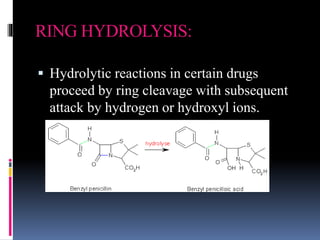
 Hydrolytic reactions in certain drugs
proceed by ring cleavage with subsequent
attack by hydrogen or hydroxyl ions.
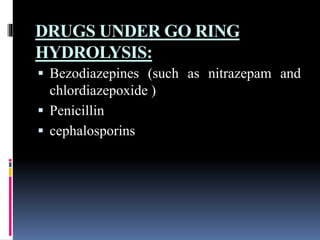
DRUGS UNDER GO RING
HYDROLYSIS:
 Bezodiazepines (such as nitrazepam and
chlordiazepoxide )
 Penicillin
 cephalosporins
hydrolysis

hydrolysis

  • 1.
    NAME: SAMER AZIZ ROLLNO: DE-068 SUBJECT: PHYSICAL PHARMACY HYDROLYSIS
  • 2.
    HYDROLYSIS: DEFINATION:  the chemicalbreakdown of a compound due to reaction with water is called hydrolysis TYPES ON THE BASIS OF CHEMICAL REACTION: 1. Ionic hydrolysis 2. Molecular hydrolysis
  • 3.
     Ionic hydrolysis Itoccur when the salt of weak acids and weak bases interact with water to give either alkaline or acidic solution  Molecular hydrolysis: It is much slower and irreversible process it is catalized by hydrogen or hydroxyl ion e.g. the local anesthetics
  • 4.
    TYPES OF HYDROLYSIS:(ONTHE BASIS OF DRUG DEGRADATION)  ESTER HYDROLYSIS: An acid-catalyzed ester hydrolysis involves the breakdown of an ester into its corresponding carboxylic acid and alcohol.This is done by the addition of a water molecule, using an acid as a catalyst.
  • 5.
    EXAMPLE OF DRUGSWHICHUNDER GO ESTER HYDROLYSIS: 1. Tetracaine 2. Atropine 3. Physostigmine 4. Procaine 5. Asprin
  • 6.
    AMIDE HYDROLYSIS:  whenamides are hydrolysed in the presence of dilute acids such as dilute hydrochloric acid.The acid acts as a catalyst for the reaction between the amide and water.
  • 7.
    EXAMPLES OF DRUGSWHICH UNDERGOAMIDE HYDROLYSIS: 1. Dibucaine 2. Ergometrine 3. Chloramphenicol 4. Niacinamide 5. Barbiturates
  • 8.
    RING HYDROLYSIS:  Hydrolyticreactions in certain drugs proceed by ring cleavage with subsequent attack by hydrogen or hydroxyl ions.
  • 9.
    DRUGS UNDER GORING HYDROLYSIS:  Bezodiazepines (such as nitrazepam and chlordiazepoxide )  Penicillin  cephalosporins