Harnessing Hydro
Priyank Jain
Topics
• Status and development
• Upcoming capacity
• Challenges
• Way ahead
Introduction
• Over 97,000 MW of the country’s total hydro
potential remains untapped.
• Hydro capacity addition has steadily declines
,even after states have encouraged the private
participation.
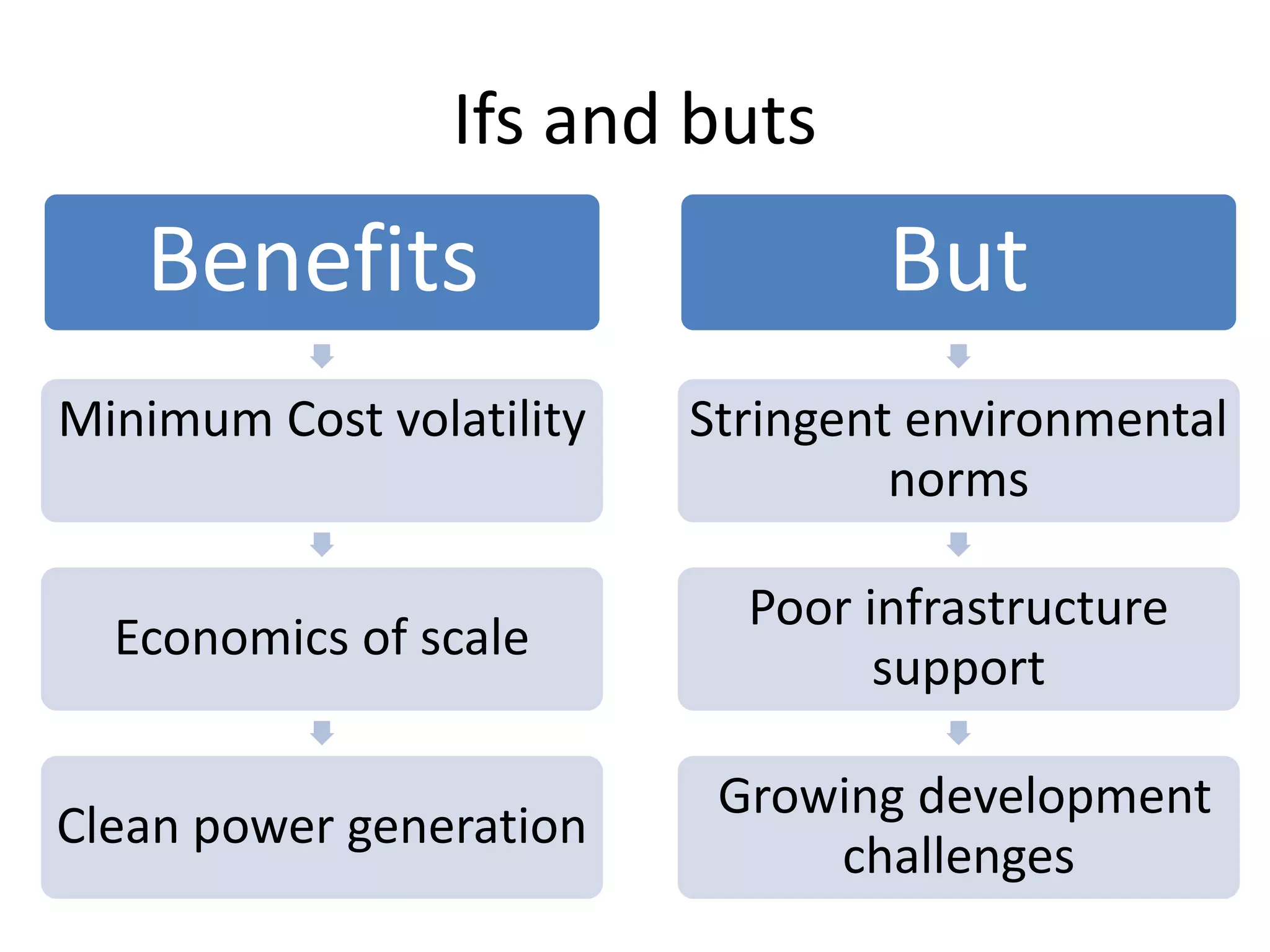
Ifs and buts
Benefits
Minimum Cost volatility
Economics of scale
Clean power generation
But
Stringent environmental
norms
Poor infrastructure
support
Growing development
challenges
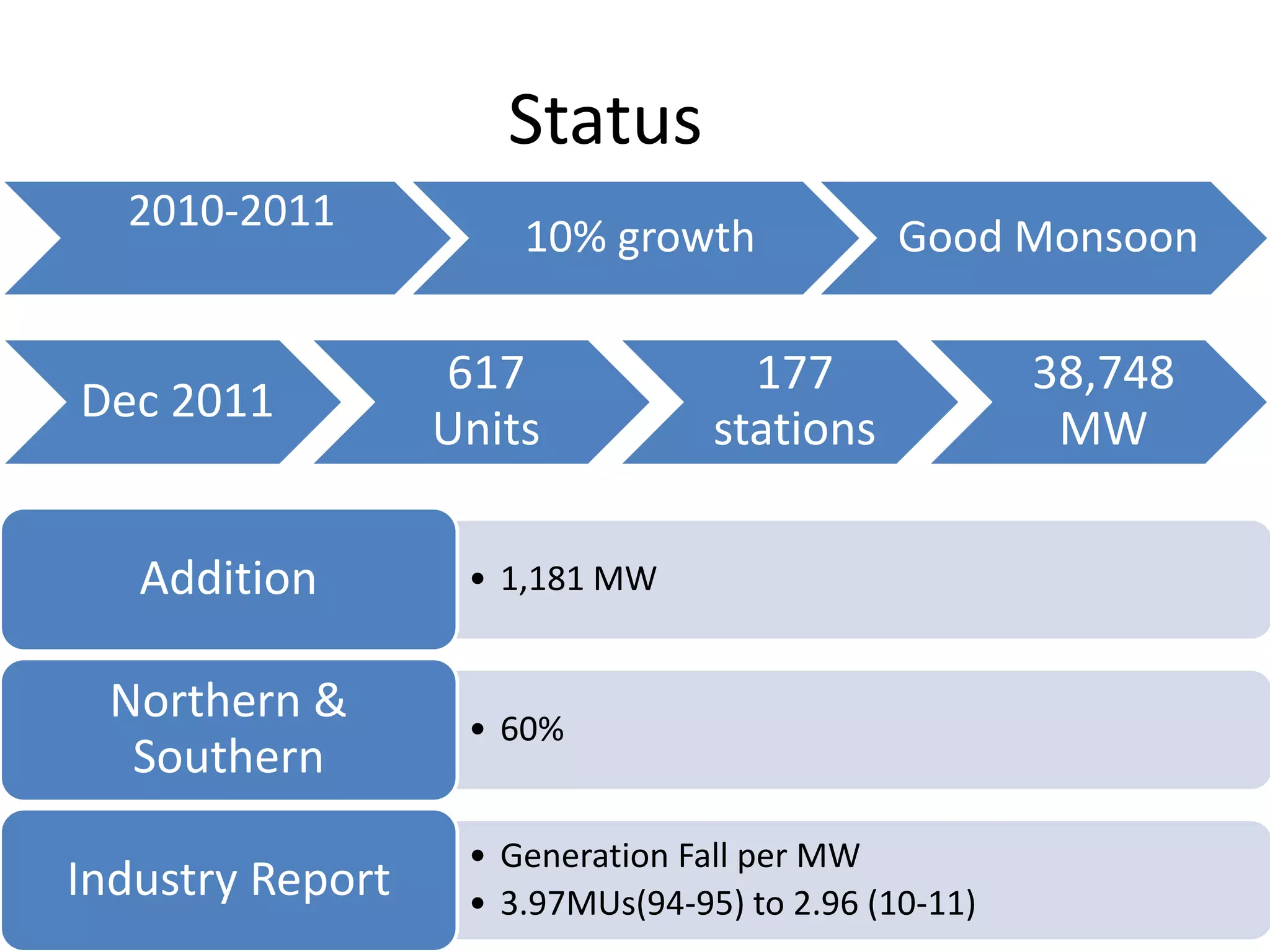
Status
2010-2011
10% growth Good Monsoon
• 1,181 MWAddition
• 60%
Northern &
Southern
• Generation Fall per MW
• 3.97MUs(94-95) to 2.96 (10-11)
Industry Report
Dec 2011
617
Units
177
stations
38,748
MW
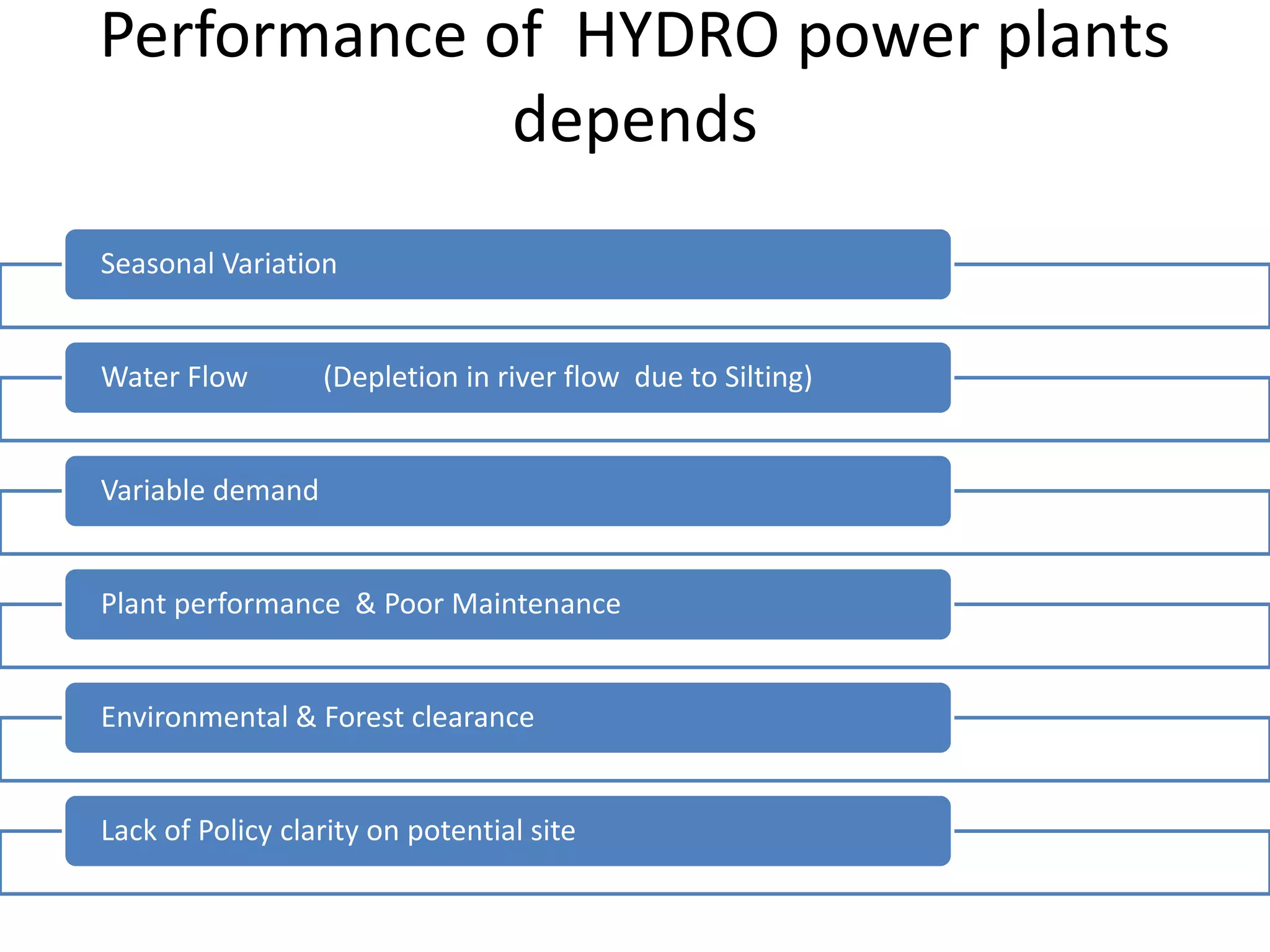
Performance of HYDRO power plants
depends
Seasonal Variation
Water Flow (Depletion in river flow due to Silting)
Variable demand
Plant performance & Poor Maintenance
Environmental & Forest clearance
Lack of Policy clarity on potential site
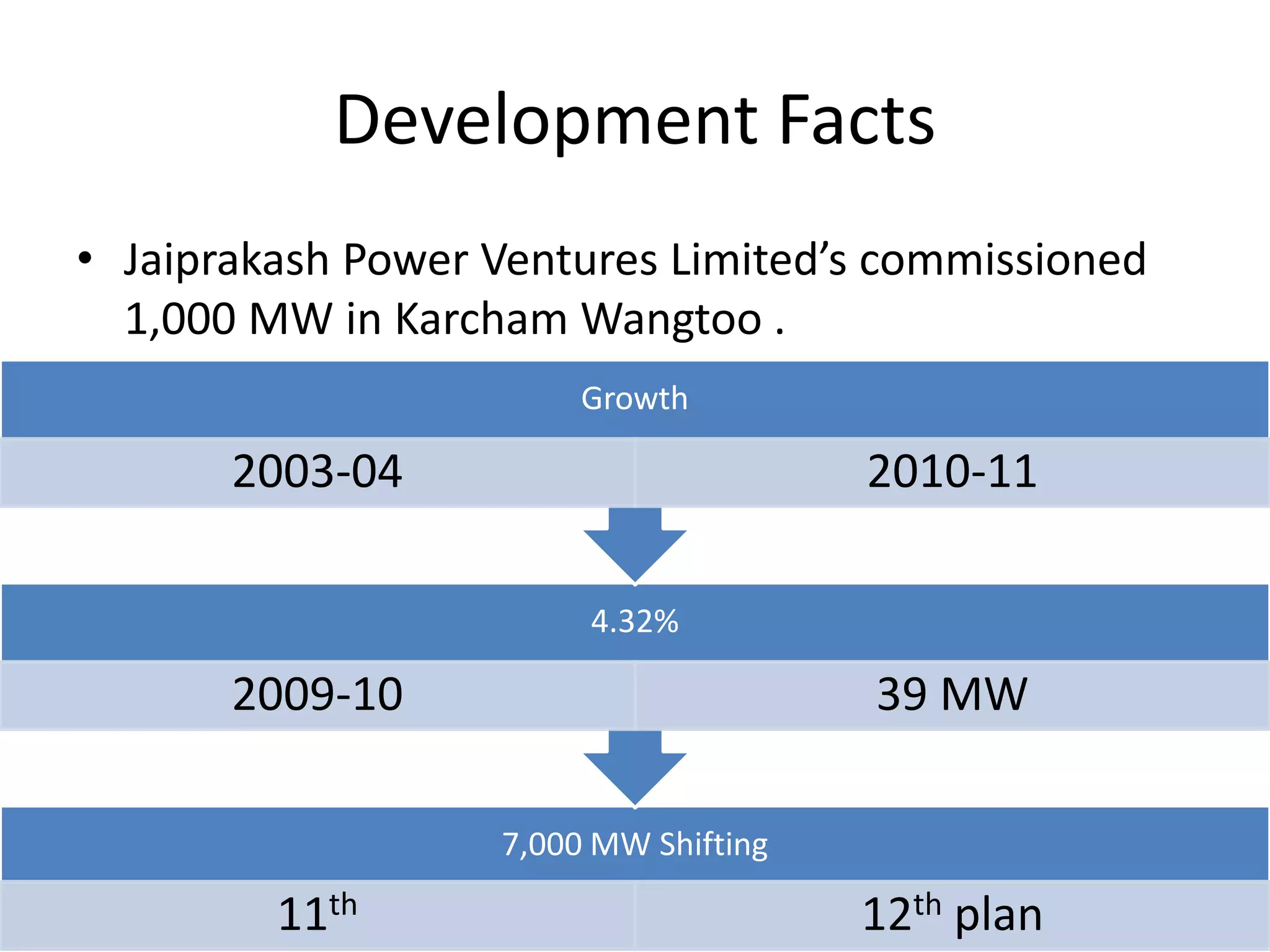
Development Facts
• Jaiprakash Power Ventures Limited’s commissioned
1,000 MW in Karcham Wangtoo .
7,000 MW Shifting
11th 12th plan
4.32%
2009-10 39 MW
Growth
2003-04 2010-11
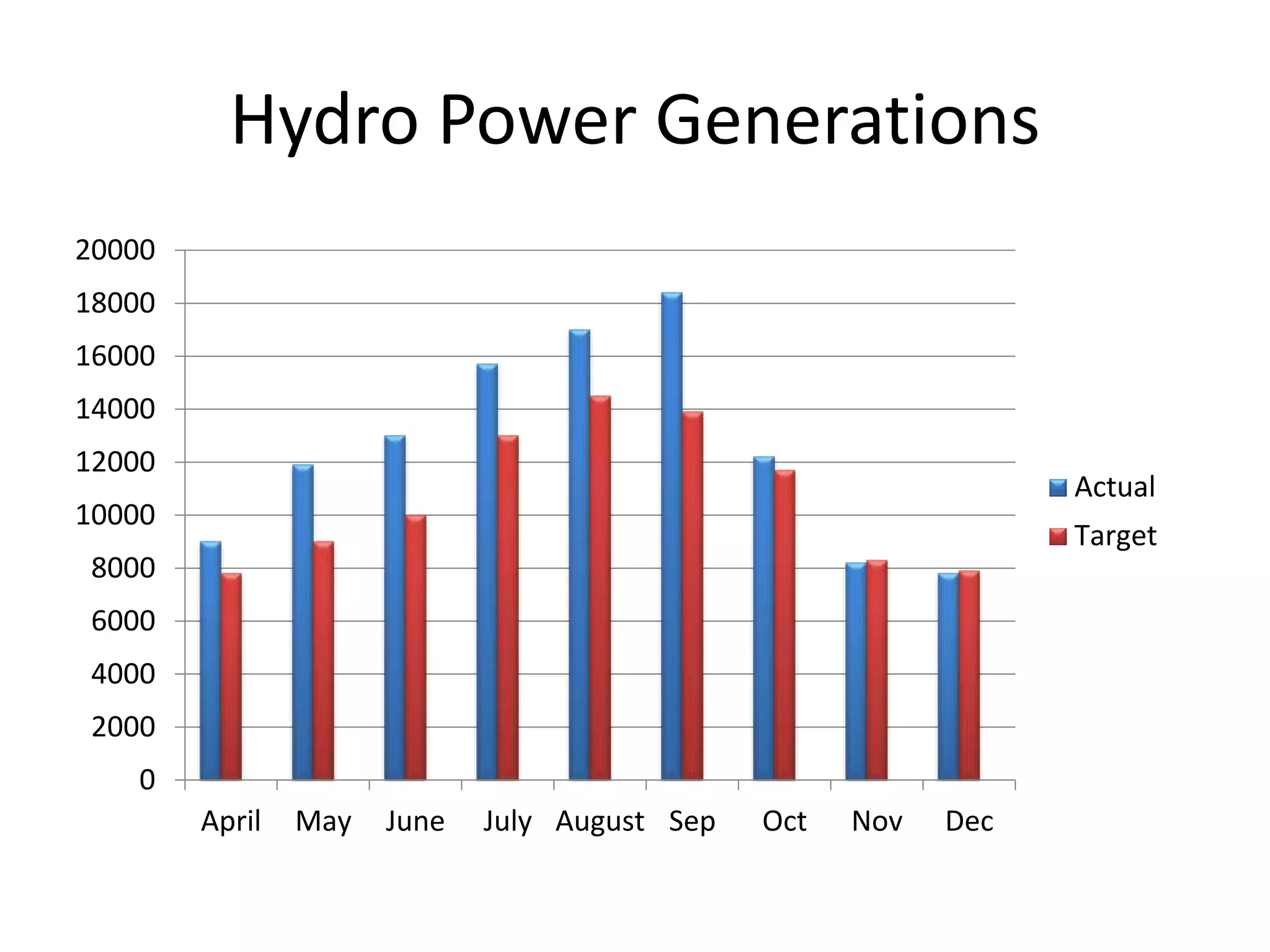
Hydro Power Generations
0
2000
4000
6000
8000
10000
12000
14000
16000
18000
20000
April May June July August Sep Oct Nov Dec
Actual
Target
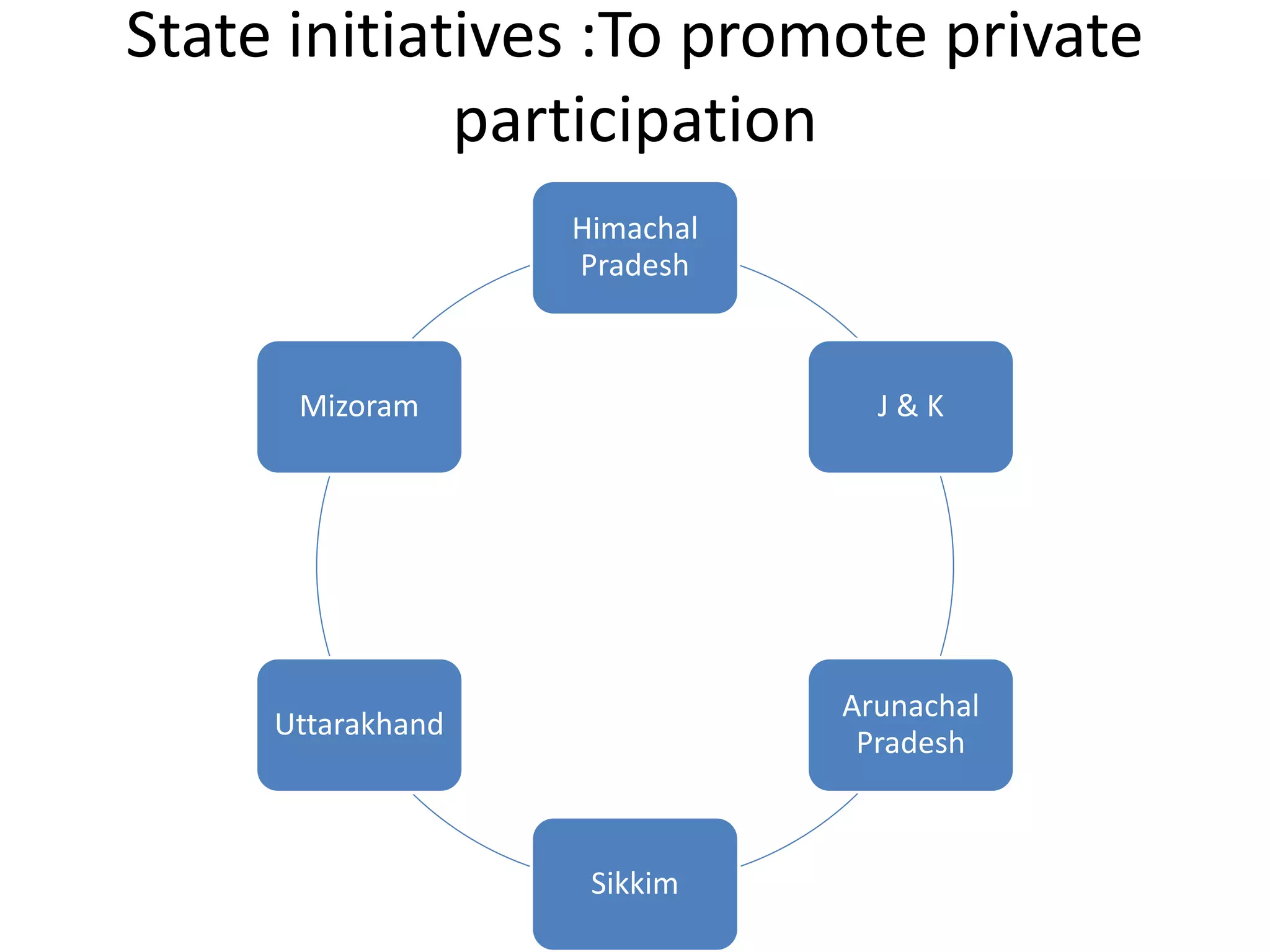
State initiatives :To promote private
participation
Himachal
Pradesh
J & K
Arunachal
Pradesh
Sikkim
Uttarakhand
Mizoram
Playing with Policies
• Policy criteria to allocate the capacities have been
mostly based on :
• Upfront premium
• Share of free power
• Joint ventures
• Majorly allotted under Build-own-operate-
transfer model.
• Mizoram sought viability gap funding from the
union government under a PPP model .
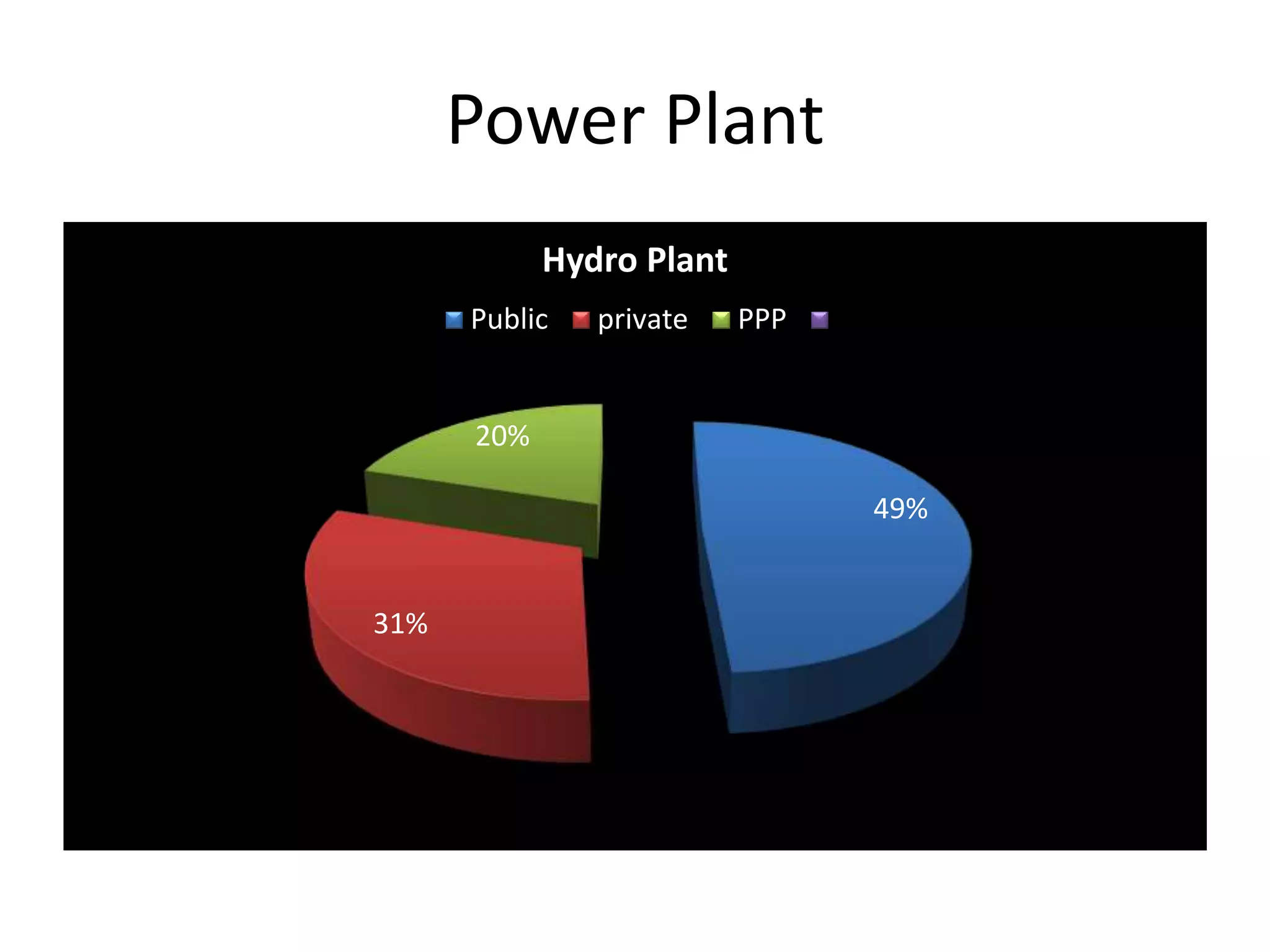
Power Plant
49%
31%
20%
Hydro Plant
Public private PPP
But……………
• But J&K under Water Resource Act,2010
impose a tax on NHPC of Rs.1.5 billion for
using water.
• Soon Himachal Pradesh also introducing HP
electricity (Taxation of generation) Bill .
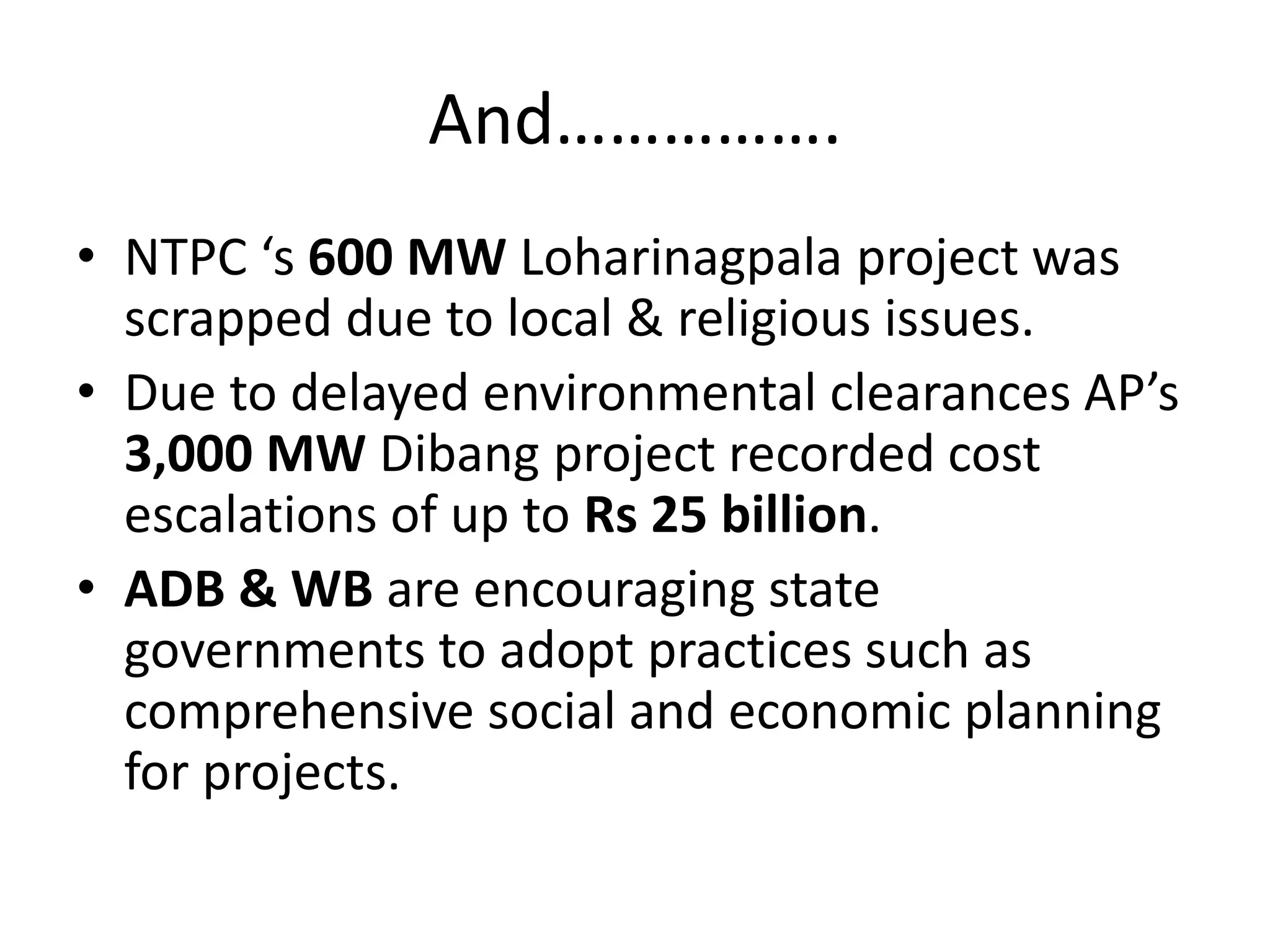
And…………….
• NTPC ‘s 600 MW Loharinagpala project was
scrapped due to local & religious issues.
• Due to delayed environmental clearances AP’s
3,000 MW Dibang project recorded cost
escalations of up to Rs 25 billion.
• ADB & WB are encouraging state
governments to adopt practices such as
comprehensive social and economic planning
for projects.
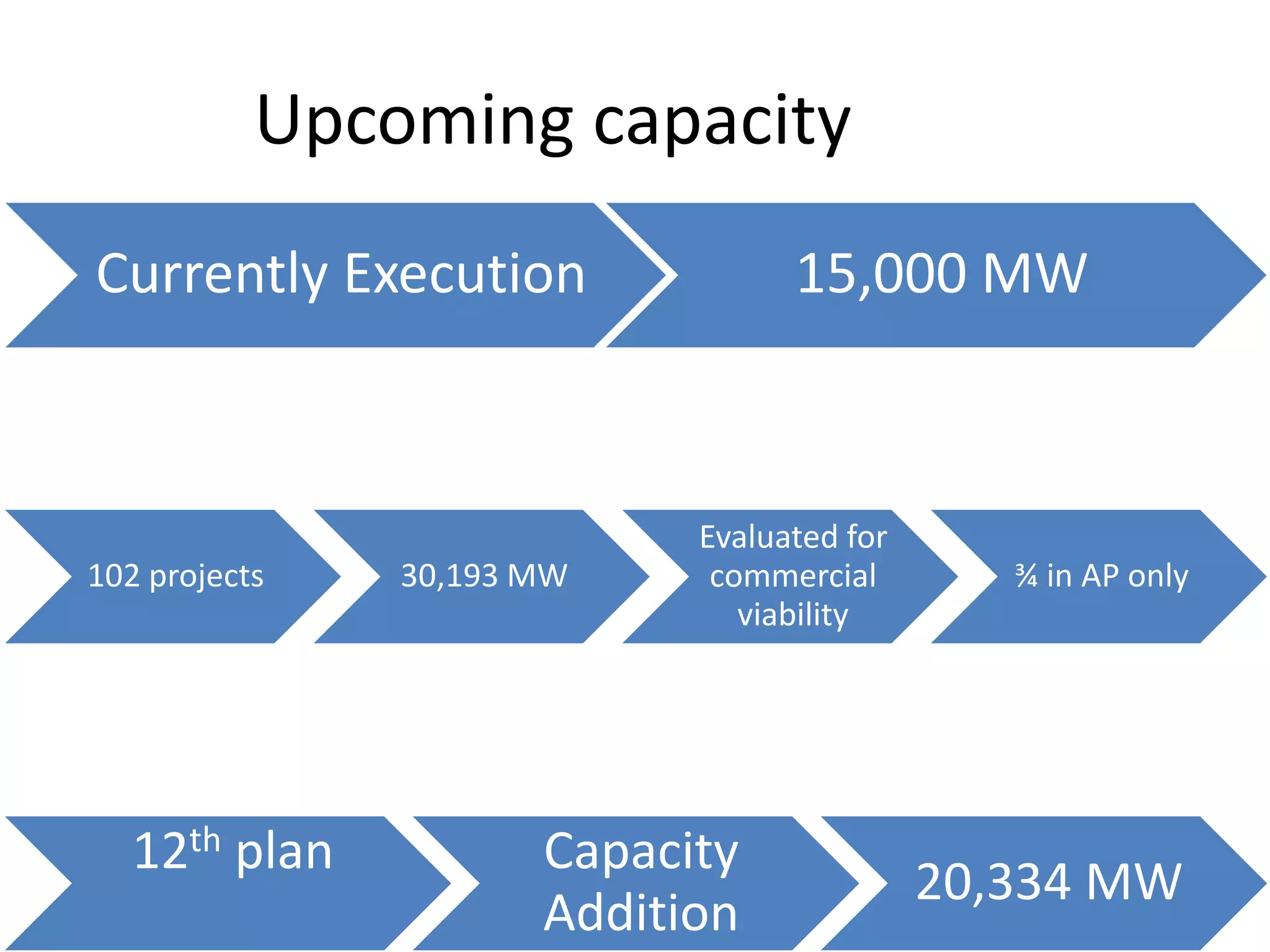
Upcoming capacity
Currently Execution 15,000 MW
12th plan Capacity
Addition
20,334 MW
102 projects 30,193 MW
Evaluated for
commercial
viability
¾ in AP only
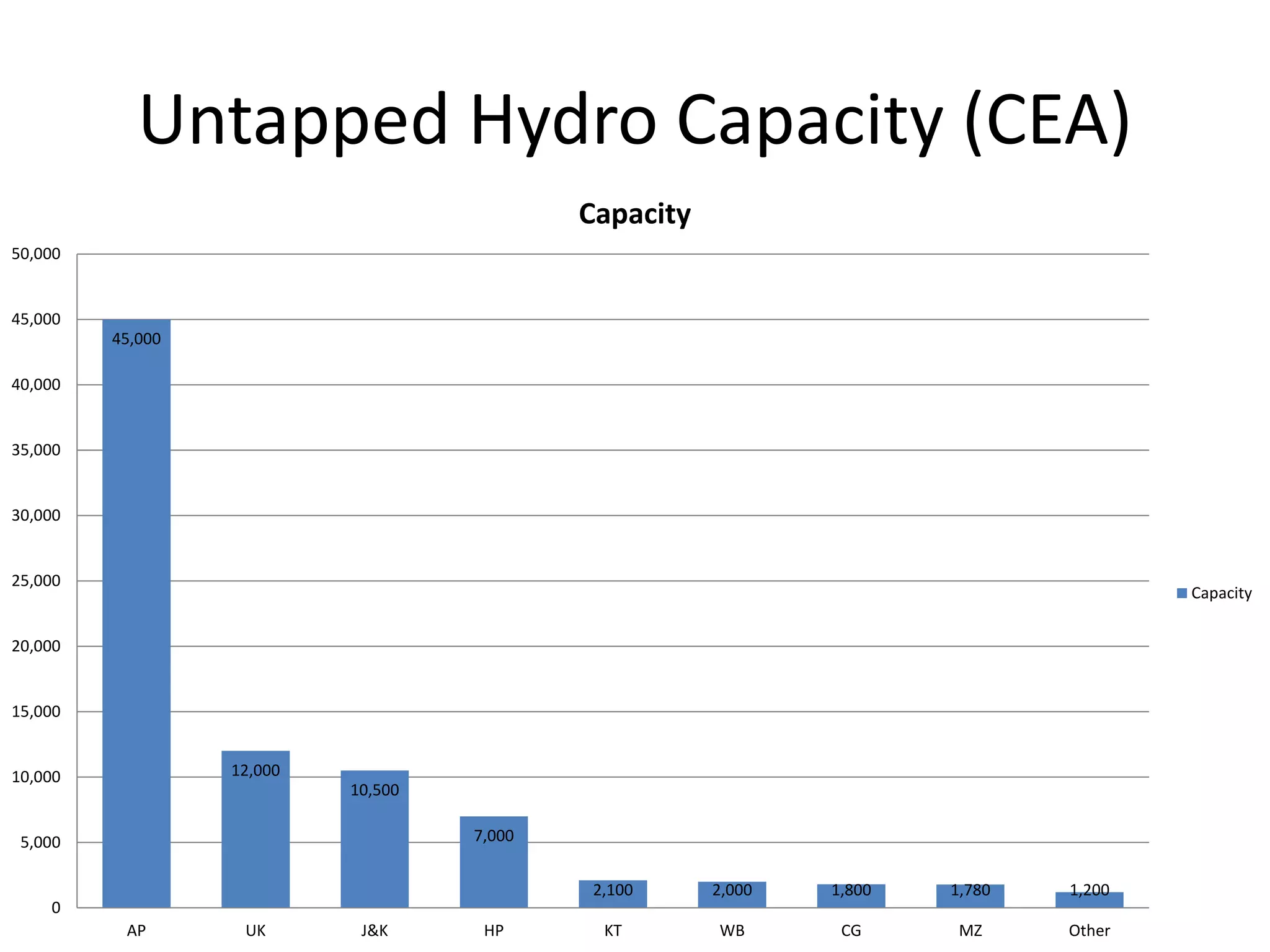
Untapped Hydro Capacity (CEA)
45,000
12,000
10,500
7,000
2,100 2,000 1,800 1,780 1,200
0
5,000
10,000
15,000
20,000
25,000
30,000
35,000
40,000
45,000
50,000
AP UK J&K HP KT WB CG MZ Other
Capacity
Capacity
Challenges
• Project completion risk (6-7 years)
• Infrastructure challenges
Way ahead
• Huge untapped potential.
• Cleaner choice.
• Can help to achieving its voluntary
international commitment to reduce carbon
intensity by 15 % in coming 8 -10 years.

Hydro Power Harnessing priyank

  • 1.
  • 2.
    Topics • Status anddevelopment • Upcoming capacity • Challenges • Way ahead
  • 3.
    Introduction • Over 97,000MW of the country’s total hydro potential remains untapped. • Hydro capacity addition has steadily declines ,even after states have encouraged the private participation.
  • 5.
    Ifs and buts Benefits MinimumCost volatility Economics of scale Clean power generation But Stringent environmental norms Poor infrastructure support Growing development challenges
  • 6.
    Status 2010-2011 10% growth GoodMonsoon • 1,181 MWAddition • 60% Northern & Southern • Generation Fall per MW • 3.97MUs(94-95) to 2.96 (10-11) Industry Report Dec 2011 617 Units 177 stations 38,748 MW
  • 7.
    Performance of HYDROpower plants depends Seasonal Variation Water Flow (Depletion in river flow due to Silting) Variable demand Plant performance & Poor Maintenance Environmental & Forest clearance Lack of Policy clarity on potential site
  • 8.
    Development Facts • JaiprakashPower Ventures Limited’s commissioned 1,000 MW in Karcham Wangtoo . 7,000 MW Shifting 11th 12th plan 4.32% 2009-10 39 MW Growth 2003-04 2010-11
  • 9.
  • 11.
    State initiatives :Topromote private participation Himachal Pradesh J & K Arunachal Pradesh Sikkim Uttarakhand Mizoram
  • 12.
    Playing with Policies •Policy criteria to allocate the capacities have been mostly based on : • Upfront premium • Share of free power • Joint ventures • Majorly allotted under Build-own-operate- transfer model. • Mizoram sought viability gap funding from the union government under a PPP model .
  • 13.
  • 14.
    But…………… • But J&Kunder Water Resource Act,2010 impose a tax on NHPC of Rs.1.5 billion for using water. • Soon Himachal Pradesh also introducing HP electricity (Taxation of generation) Bill .
  • 15.
    And……………. • NTPC ‘s600 MW Loharinagpala project was scrapped due to local & religious issues. • Due to delayed environmental clearances AP’s 3,000 MW Dibang project recorded cost escalations of up to Rs 25 billion. • ADB & WB are encouraging state governments to adopt practices such as comprehensive social and economic planning for projects.
  • 16.
    Upcoming capacity Currently Execution15,000 MW 12th plan Capacity Addition 20,334 MW 102 projects 30,193 MW Evaluated for commercial viability ¾ in AP only
  • 18.
    Untapped Hydro Capacity(CEA) 45,000 12,000 10,500 7,000 2,100 2,000 1,800 1,780 1,200 0 5,000 10,000 15,000 20,000 25,000 30,000 35,000 40,000 45,000 50,000 AP UK J&K HP KT WB CG MZ Other Capacity Capacity
  • 19.
    Challenges • Project completionrisk (6-7 years) • Infrastructure challenges
  • 20.
    Way ahead • Hugeuntapped potential. • Cleaner choice. • Can help to achieving its voluntary international commitment to reduce carbon intensity by 15 % in coming 8 -10 years.