Future of Hydro Power 
Development in India 
M M MADAN 
President (Hydro Business) 
Jindal Power Ltd
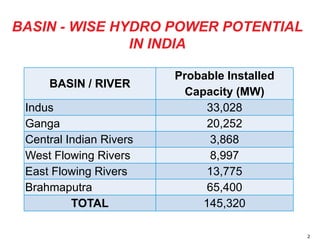
BASIN - WISE HYDRO POWER POTENTIAL 
IN INDIA 
2 
BASIN / RIVER 
Probable Installed 
Capacity (MW) 
Indus 33,028 
Ganga 20,252 
Central Indian Rivers 3,868 
West Flowing Rivers 8,997 
East Flowing Rivers 13,775 
Brahmaputra 65,400 
TOTAL 145,320
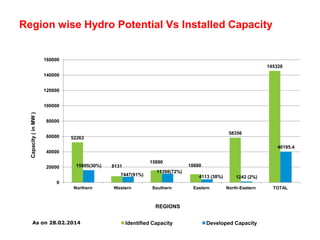
Region wise Hydro Potential Vs Installed Capacity 
52263 
8131 
15890 
10680 
58356 
145320 
15995(30%) 
7447(91%) 
11398(72%) 
4113 (38%) 1242 (2%) 
40195.4 
160000 
140000 
120000 
100000 
80000 
60000 
40000 
20000 
0 
Northern Western Southern Eastern North-Eastern TOTAL 
REGIONS 
Identified Capacity Developed Capacity 
Capacity ( in MW ) 
As on 28.02.2014
Hydro Power in India 
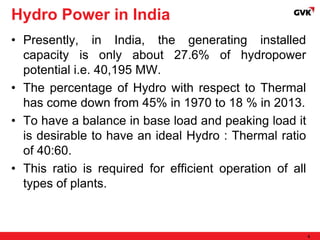
• Presently, in India, the generating installed 
capacity is only about 27.6% of hydropower 
potential i.e. 40,195 MW. 
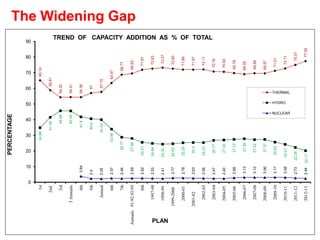
• The percentage of Hydro with respect to Thermal 
has come down from 45% in 1970 to 18 % in 2013. 
• To have a balance in base load and peaking load it 
is desirable to have an ideal Hydro : Thermal ratio 
of 40:60. 
• This ratio is required for efficient operation of all 
types of plants. 
4
65.14 
58.81 
54.32 
54.41 
54.36 
57 
57.75 
63.47 
68.77 
69.52 
71.87 
72.63 
73.27 
72.60 
71.99 
71.97 
72.11 
70.76 
70.60 
69.78 
69.05 
69.66 
69.57 
71.21 
72.71 
75.01 
77.39 
34.86 
41.49 
45.68 
45.59 
41.8 
40.6 
40.02 
33.96 
28.77 
27.99 
25.51 
24.84 
24.32 
24.63 
25.25 
25.4 
25.33 
26.77 
27.00 
27.37 
27.82 
27.22 
27.37 
25.62 
24.21 
22.26 
20.17 
3.84 
2.4 
2.25 
2.57 
2.46 
2.59 
2.62 
2.53 
2.41 
2.77 
2.76 
2.63 
2.56 
2.47 
2.40 
2.85 
3.13 
3.12 
3.06 
3.17 
3.08 
2.73 
2.44 
0 
10 
20 
30 
40 
50 
60 
70 
80 
90 
1st 
2nd 
3rd 
3 Annuals 
4th 
5th 
Annual 
6th 
7th 
Annuals 91-92,92-93 
8th 
1997-98 
1998-99 
1999-2000 
2000-01 
2001-02 
2002-03 
2003-04 
2004-05 
2005-06 
2006-07 
2007-08 
2008-09 
2009-10 
2010-11 
2011-12 
2012-13 
PERCENTAGE 
PLAN 
TREND OF CAPACITY ADDITION AS % OF TOTAL 
THERMAL 
HYDRO 
NUCLEAR 
The Widening Gap
Advantages vs Challenges in Hydro 
Power Development 
1. Although there are many advantages of Hydro Power 
but the Challenges are creating all the advantages 
into disadvantages. 
2. The advantages and challenges have been discussed 
many times at many forums and regularly but ground 
level solutions are not implemented effectively. 
3. I will mention only few major challenges which are 
creating obstructions in the development process of 
Hydro Power and Private developers are losing 
confidence. 
6
4. Forest clearance is a long and tedious process and 
clearance is given after a lot of expenditure has 
been incurred by the developer. 
5. Uncertainty always remains as the project may be 
rejected on the ground of of number of trees which 
are likely to be felled. 
6. Changes in the conditions of TOR for requiring 
additional release of Environment Flow. 
7. Stopping of under construction projects- for Example 
Uttarakhand Hydro projects and Lower Subansiri 
Hydro Power Projects.- lose of investors confidence. 
7 
Challenges in Hydro Power Development
8. Lack of adequate infrastructure – roads, rail, river 
ports for transportation of construction material and 
power equipment to remote locations- specially in 
Arunachal Pradesh. 
9. Issues in Evacuation of power from remote generation 
sites of Arunachal Pradesh. 
10.Study of Carrying capacity and cumulative study of 
River Basins after DRP approval. 
11.Double payment of land cost- specially in Arunachal 
Pradesh where there are no land records and 
payment to locals as well as forest department is 
made at very high rates. 
12.Non declaration by state Govt about the project lying 
in wild life sanctuary. 
8 
Challenges in Hydro Power Development
Land acquisition 
• Consent of 80 per cent of landowners required in 
case of land acquired by private companies and 70 
per cent for land acquired under Public Private 
Partnership (PPP) model for public purpose. 
• Compensation up to four times the market value in 
rural areas and twice in urban areas. (in Arunachal 
Pradesh there is no reference of Market Value still 
very high rates are taken as base. 
• Mandatory Social Impact Analysis (SIA) to assess 
nature of public interest and estimation of socio-economic 
impact prior to acquisition. 
9 
Challenges in Hydro Power Development
The Way Forward 
1. Two part tariff for Hydro power and Hydro 
purchase Obligation to encourage Hydro Power 
Development. 
2. In Principal Forest Clearance must be given 
during Feasibility stage so that there is no 
uncertainty and money can be spent for the right 
purpose. 
3. Formula for deciding clearances based density of 
trees in a particular forest specially in Ar pradesh. 
4. Stalled projects must be started to gain 
promoters confidence. 
10
5. Political consensus to restart the Stalled 
Projects. 
6. Two key areas that need to be addressed to 
promote hydro power development: 
-Strengthen EIA follow-up and Social Impact 
Assessment to strengthen public involvement. 
7. Provide central subsidy for development of 
roads, rail, river ports, transmission lines to cover 
high initial tariffs from partial loading on 
infrastructure. 
11 
The Way Forward
8. Removal of misunderstanding that Hydro 
project contributed to Uttarakhand disaster. 
9. Formulation of clear cut policies for forest 
Payment and land payment in Ar P. 
10. The fact that hydro projects help mitigate the fury 
of floods can be gauged from the fact, that had 
Tehri Dam not withheld 90 per cent of the flood 
inflows during the June’3 floods, the Rishikesh 
and Hardwar would have been washed away. 
11. Therefore more storage projects to be built based 
on the requirement and technical feasibility of the 
area. 
12 
The Way Forward
THANK YOU !!! 
13

Future of Hydro Power Development in India

  • 1.
    Future of HydroPower Development in India M M MADAN President (Hydro Business) Jindal Power Ltd
  • 2.
    BASIN - WISEHYDRO POWER POTENTIAL IN INDIA 2 BASIN / RIVER Probable Installed Capacity (MW) Indus 33,028 Ganga 20,252 Central Indian Rivers 3,868 West Flowing Rivers 8,997 East Flowing Rivers 13,775 Brahmaputra 65,400 TOTAL 145,320
  • 3.
    Region wise HydroPotential Vs Installed Capacity 52263 8131 15890 10680 58356 145320 15995(30%) 7447(91%) 11398(72%) 4113 (38%) 1242 (2%) 40195.4 160000 140000 120000 100000 80000 60000 40000 20000 0 Northern Western Southern Eastern North-Eastern TOTAL REGIONS Identified Capacity Developed Capacity Capacity ( in MW ) As on 28.02.2014
  • 4.
    Hydro Power inIndia • Presently, in India, the generating installed capacity is only about 27.6% of hydropower potential i.e. 40,195 MW. • The percentage of Hydro with respect to Thermal has come down from 45% in 1970 to 18 % in 2013. • To have a balance in base load and peaking load it is desirable to have an ideal Hydro : Thermal ratio of 40:60. • This ratio is required for efficient operation of all types of plants. 4
  • 5.
    65.14 58.81 54.32 54.41 54.36 57 57.75 63.47 68.77 69.52 71.87 72.63 73.27 72.60 71.99 71.97 72.11 70.76 70.60 69.78 69.05 69.66 69.57 71.21 72.71 75.01 77.39 34.86 41.49 45.68 45.59 41.8 40.6 40.02 33.96 28.77 27.99 25.51 24.84 24.32 24.63 25.25 25.4 25.33 26.77 27.00 27.37 27.82 27.22 27.37 25.62 24.21 22.26 20.17 3.84 2.4 2.25 2.57 2.46 2.59 2.62 2.53 2.41 2.77 2.76 2.63 2.56 2.47 2.40 2.85 3.13 3.12 3.06 3.17 3.08 2.73 2.44 0 10 20 30 40 50 60 70 80 90 1st 2nd 3rd 3 Annuals 4th 5th Annual 6th 7th Annuals 91-92,92-93 8th 1997-98 1998-99 1999-2000 2000-01 2001-02 2002-03 2003-04 2004-05 2005-06 2006-07 2007-08 2008-09 2009-10 2010-11 2011-12 2012-13 PERCENTAGE PLAN TREND OF CAPACITY ADDITION AS % OF TOTAL THERMAL HYDRO NUCLEAR The Widening Gap
  • 6.
    Advantages vs Challengesin Hydro Power Development 1. Although there are many advantages of Hydro Power but the Challenges are creating all the advantages into disadvantages. 2. The advantages and challenges have been discussed many times at many forums and regularly but ground level solutions are not implemented effectively. 3. I will mention only few major challenges which are creating obstructions in the development process of Hydro Power and Private developers are losing confidence. 6
  • 7.
    4. Forest clearanceis a long and tedious process and clearance is given after a lot of expenditure has been incurred by the developer. 5. Uncertainty always remains as the project may be rejected on the ground of of number of trees which are likely to be felled. 6. Changes in the conditions of TOR for requiring additional release of Environment Flow. 7. Stopping of under construction projects- for Example Uttarakhand Hydro projects and Lower Subansiri Hydro Power Projects.- lose of investors confidence. 7 Challenges in Hydro Power Development
  • 8.
    8. Lack ofadequate infrastructure – roads, rail, river ports for transportation of construction material and power equipment to remote locations- specially in Arunachal Pradesh. 9. Issues in Evacuation of power from remote generation sites of Arunachal Pradesh. 10.Study of Carrying capacity and cumulative study of River Basins after DRP approval. 11.Double payment of land cost- specially in Arunachal Pradesh where there are no land records and payment to locals as well as forest department is made at very high rates. 12.Non declaration by state Govt about the project lying in wild life sanctuary. 8 Challenges in Hydro Power Development
  • 9.
    Land acquisition •Consent of 80 per cent of landowners required in case of land acquired by private companies and 70 per cent for land acquired under Public Private Partnership (PPP) model for public purpose. • Compensation up to four times the market value in rural areas and twice in urban areas. (in Arunachal Pradesh there is no reference of Market Value still very high rates are taken as base. • Mandatory Social Impact Analysis (SIA) to assess nature of public interest and estimation of socio-economic impact prior to acquisition. 9 Challenges in Hydro Power Development
  • 10.
    The Way Forward 1. Two part tariff for Hydro power and Hydro purchase Obligation to encourage Hydro Power Development. 2. In Principal Forest Clearance must be given during Feasibility stage so that there is no uncertainty and money can be spent for the right purpose. 3. Formula for deciding clearances based density of trees in a particular forest specially in Ar pradesh. 4. Stalled projects must be started to gain promoters confidence. 10
  • 11.
    5. Political consensusto restart the Stalled Projects. 6. Two key areas that need to be addressed to promote hydro power development: -Strengthen EIA follow-up and Social Impact Assessment to strengthen public involvement. 7. Provide central subsidy for development of roads, rail, river ports, transmission lines to cover high initial tariffs from partial loading on infrastructure. 11 The Way Forward
  • 12.
    8. Removal ofmisunderstanding that Hydro project contributed to Uttarakhand disaster. 9. Formulation of clear cut policies for forest Payment and land payment in Ar P. 10. The fact that hydro projects help mitigate the fury of floods can be gauged from the fact, that had Tehri Dam not withheld 90 per cent of the flood inflows during the June’3 floods, the Rishikesh and Hardwar would have been washed away. 11. Therefore more storage projects to be built based on the requirement and technical feasibility of the area. 12 The Way Forward
  • 13.