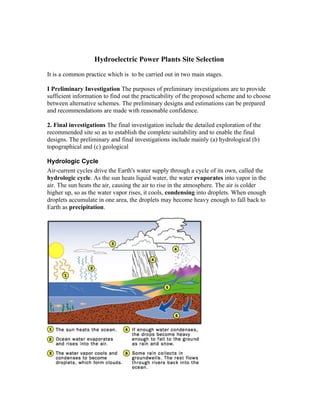
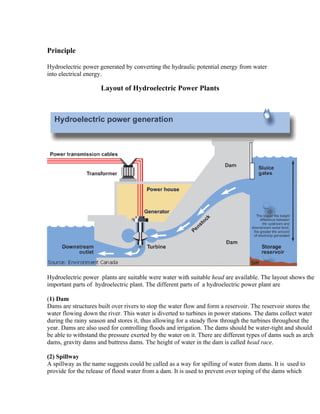
Hydroelectric power plants site selection involves two main stages: (1) Preliminary investigations to assess feasibility and choose between alternatives, allowing preliminary designs and cost estimates to be prepared; and (2) Final investigations of the recommended site for detailed exploration to establish suitability and enable final designs. Key components of hydroelectric power plants include dams to form reservoirs, spillways to release flood waters, penstocks or tunnels to carry water from reservoirs to turbines, surge tanks to regulate water pressure, and power stations containing turbines coupled to generators to convert the kinetic energy of flowing water into electricity. Advantages include low operating costs and no greenhouse gas emissions during power generation, while disadvantages can include environmental disruption and the need to relocate communities.