Human Resource Planning
by,
Sadiah
Ola Alali
Sadaf sultana
Sadiya shaheen
Talking points
• What is HRP?
• Why Human Resource planning is important?
• Features
• Objectives of HRP
• HRP process
• Need of HRP
• Benefits
• Types
• Approaches to human resource planning
• Forecasting Human resource availability
• Forecasting Techniques
• Guidelines for making HRP effective
• Factors affecting Human Resource Planning
• Challenges for HR planning
• Barriers to HR planning
• Requirements for effective HR plan
• conclusion
• HRP is a sub-system of total organizational
planning
• HRP facilitates the realization of the company’s
objectives for the future by providing the right
type and number of personnel.
• HRP is also called Manpower planning,personnel
planning or Employment planning.
What is HRP?
Importance of HR
• Future personnel needs
• Coping with change
• Creating highly talented personnel
• Protection of weaker sections
• International strategies
Features
• Futuristic
• Continuous process
• Part of corporate planning
• Flexibility
• Long term and short term plans
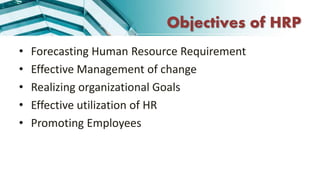
Objectives of HRP
• Forecasting Human Resource Requirement
• Effective Management of change
• Realizing organizational Goals
• Effective utilization of HR
• Promoting Employees
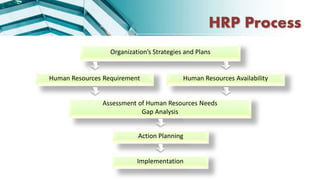
HRP Process
Organization’s Strategies and Plans
Human Resources Requirement Human Resources Availability
Assessment of Human Resources Needs
Gap Analysis
Action Planning
Implementation
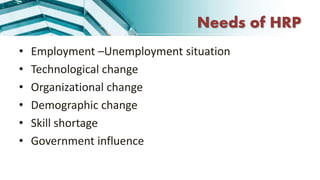
Needs of HRP
• Employment –Unemployment situation
• Technological change
• Organizational change
• Demographic change
• Skill shortage
• Government influence
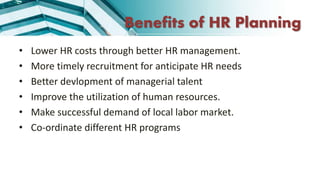
Benefits of HR Planning
• Lower HR costs through better HR management.
• More timely recruitment for anticipate HR needs
• Better devlopment of managerial talent
• Improve the utilization of human resources.
• Make successful demand of local labor market.
• Co-ordinate different HR programs
Types of HR planning
 SHORT TERM
• Approaches to matching a weak individual and a job
• For optimum utilization of the strong incumbent.
 LONG TERM
• Projecting manpower requirements.
• Taking stock of existing manpower
• Recruitment & selection
• HR devlopment
Approaches to HR planning
Two Approaches used in forecasting the demand for
human resources are-
Quantitative
qualitative
Forecasting HR availability
• Forecasting the supply of internal human resources
• Forecasting the supply of external human resources
Forecasting Techniques
• Managerial judgment
• Ratio-trend analysis
• Work study techniques
• Delphi technique
• Other techniques
GUIDELINES FOR MAKING HRP EFFECTIVE
1. Integration with Organizational Plans
2. Period of HR Planning
3.Proper Organization
4. Support of Top Management
5. Involvement of Operating Executives
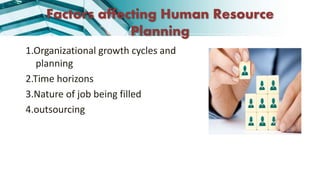
Factors affecting Human Resource
Planning
1.Organizational growth cycles and
planning
2.Time horizons
3.Nature of job being filled
4.outsourcing
Challenges for HR Planning
• Globalization
• Handling multicultural/Diverse Workforce
• Employee selection
• Training & Devlopment
• Balance with work life
• Retaining Talents
• conflict Managing
Barriers to HR plan
• Time consuming
• Incompatible information
• Conflicts between short term and long term HR needs
• Trade unions
• Uncertainties
• Conflicts between quantitative and qualitative
approaches of HRP
Requirements for effective HR plan
• HR plan must be as a part of corporate planning.
• HR plan duties should be centralized in different management
level
• Plan should be prepared by skill levels rather than by
aggregates
• The time horizon of the plan must be long enough to permit
any remedial action.
conclusion
• An effective HRP is required for an organisation to be
effective
• HRP needs to be fully integrated to be organization
plan
• Secret of success is the right type of people available
in the right number at time at right place.
Thank you..

humanresourceplanningppt1-191004105108.pdf

  • 1.
    Human Resource Planning by, Sadiah OlaAlali Sadaf sultana Sadiya shaheen
  • 2.
    Talking points • Whatis HRP? • Why Human Resource planning is important? • Features • Objectives of HRP • HRP process • Need of HRP • Benefits • Types • Approaches to human resource planning • Forecasting Human resource availability • Forecasting Techniques • Guidelines for making HRP effective • Factors affecting Human Resource Planning • Challenges for HR planning • Barriers to HR planning • Requirements for effective HR plan • conclusion
  • 3.
    • HRP isa sub-system of total organizational planning • HRP facilitates the realization of the company’s objectives for the future by providing the right type and number of personnel. • HRP is also called Manpower planning,personnel planning or Employment planning. What is HRP?
  • 4.
    Importance of HR •Future personnel needs • Coping with change • Creating highly talented personnel • Protection of weaker sections • International strategies
  • 5.
    Features • Futuristic • Continuousprocess • Part of corporate planning • Flexibility • Long term and short term plans
  • 6.
    Objectives of HRP •Forecasting Human Resource Requirement • Effective Management of change • Realizing organizational Goals • Effective utilization of HR • Promoting Employees
  • 7.
    HRP Process Organization’s Strategiesand Plans Human Resources Requirement Human Resources Availability Assessment of Human Resources Needs Gap Analysis Action Planning Implementation
  • 8.
    Needs of HRP •Employment –Unemployment situation • Technological change • Organizational change • Demographic change • Skill shortage • Government influence
  • 9.
    Benefits of HRPlanning • Lower HR costs through better HR management. • More timely recruitment for anticipate HR needs • Better devlopment of managerial talent • Improve the utilization of human resources. • Make successful demand of local labor market. • Co-ordinate different HR programs
  • 10.
    Types of HRplanning  SHORT TERM • Approaches to matching a weak individual and a job • For optimum utilization of the strong incumbent.  LONG TERM • Projecting manpower requirements. • Taking stock of existing manpower • Recruitment & selection • HR devlopment
  • 11.
    Approaches to HRplanning Two Approaches used in forecasting the demand for human resources are- Quantitative qualitative
  • 12.
    Forecasting HR availability •Forecasting the supply of internal human resources • Forecasting the supply of external human resources
  • 13.
    Forecasting Techniques • Managerialjudgment • Ratio-trend analysis • Work study techniques • Delphi technique • Other techniques
  • 14.
    GUIDELINES FOR MAKINGHRP EFFECTIVE 1. Integration with Organizational Plans 2. Period of HR Planning 3.Proper Organization 4. Support of Top Management 5. Involvement of Operating Executives
  • 15.
    Factors affecting HumanResource Planning 1.Organizational growth cycles and planning 2.Time horizons 3.Nature of job being filled 4.outsourcing
  • 16.
    Challenges for HRPlanning • Globalization • Handling multicultural/Diverse Workforce • Employee selection • Training & Devlopment • Balance with work life • Retaining Talents • conflict Managing
  • 17.
    Barriers to HRplan • Time consuming • Incompatible information • Conflicts between short term and long term HR needs • Trade unions • Uncertainties • Conflicts between quantitative and qualitative approaches of HRP
  • 18.
    Requirements for effectiveHR plan • HR plan must be as a part of corporate planning. • HR plan duties should be centralized in different management level • Plan should be prepared by skill levels rather than by aggregates • The time horizon of the plan must be long enough to permit any remedial action.
  • 19.
    conclusion • An effectiveHRP is required for an organisation to be effective • HRP needs to be fully integrated to be organization plan • Secret of success is the right type of people available in the right number at time at right place.
  • 20.