Introduction
• • HumanResource Planning (HRP) ensures the right number of employees
with the right skills.
• • It aligns workforce needs with organizational goals.
• • HRP helps anticipate future HR requirements and challenges.
3.
Definition
• • HRPis the process of forecasting and planning for future human resource
needs.
• • It involves analyzing current workforce and predicting future
requirements.
• • Ensures optimal utilization of employees.
4.
Objectives of HumanResource Planning
• • Ensure the right number of employees at the right time.
• • Improve employee utilization and productivity.
• • Identify gaps in workforce skills and competencies.
• • Support organizational growth and strategic goals.
5.
Importance of HRP
•• Helps in succession planning and career development.
• • Minimizes workforce shortages or surpluses.
• • Ensures cost-effective recruitment and training.
• • Aligns HR strategy with business objectives.
6.
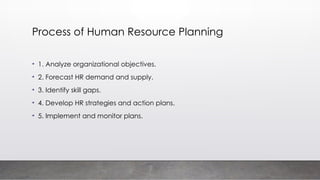
Process of HumanResource Planning
• 1. Analyze organizational objectives.
• 2. Forecast HR demand and supply.
• 3. Identify skill gaps.
• 4. Develop HR strategies and action plans.
• 5. Implement and monitor plans.
7.
HR Forecasting
• •Predict future HR needs based on business growth.
• • Analyze internal and external labor market trends.
• • Identify workforce shortages or surpluses.
8.
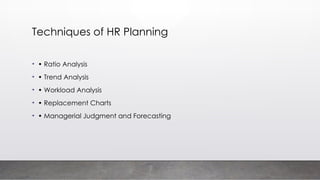
Techniques of HRPlanning
• • Ratio Analysis
• • Trend Analysis
• • Workload Analysis
• • Replacement Charts
• • Managerial Judgment and Forecasting
9.
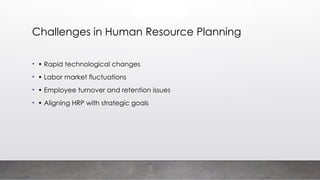
Challenges in HumanResource Planning
• • Rapid technological changes
• • Labor market fluctuations
• • Employee turnover and retention issues
• • Aligning HRP with strategic goals
10.
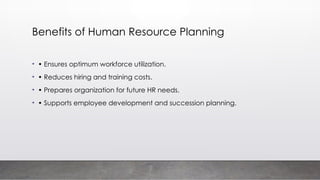
Benefits of HumanResource Planning
• • Ensures optimum workforce utilization.
• • Reduces hiring and training costs.
• • Prepares organization for future HR needs.
• • Supports employee development and succession planning.
11.
Modern Trends inHuman Resource Planning
• • Use of HR analytics and AI forecasting.
• • Flexible workforce and gig economy.
• • Strategic alignment of HR with business goals.
• • Emphasis on employee engagement and retention.
12.
Conclusion
• • HRPensures the right workforce for organizational success.
• • Helps manage skills, succession, and workforce challenges.
• • Aligning HRP with strategic goals maximizes efficiency and productivity.
• • Continuous monitoring and review of HR plans is essential.