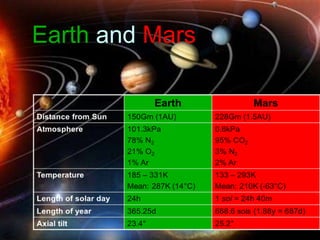
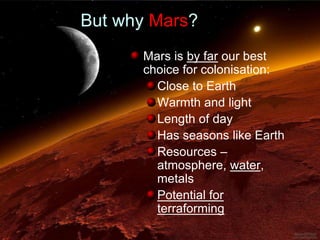
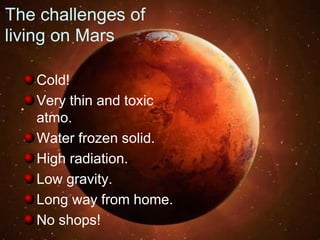
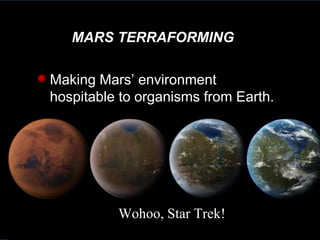
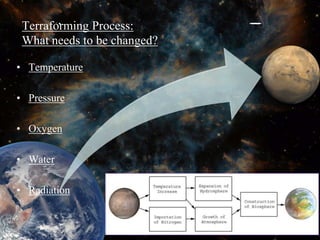
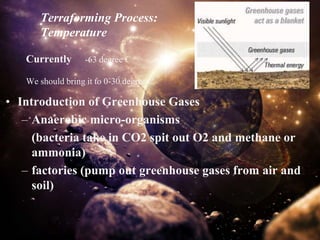
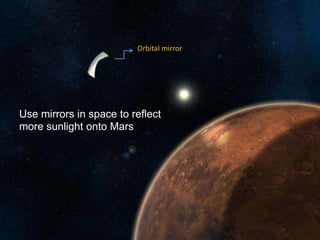
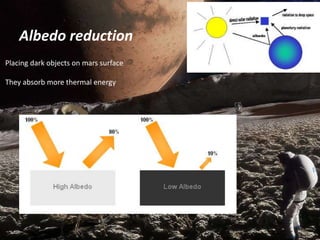
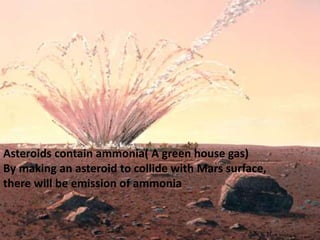
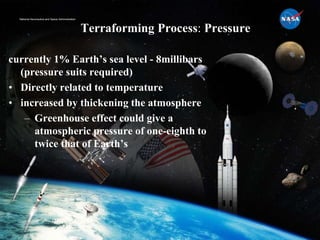
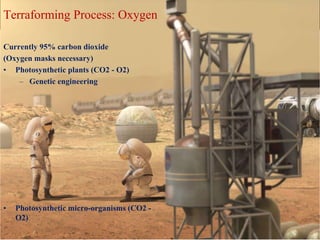
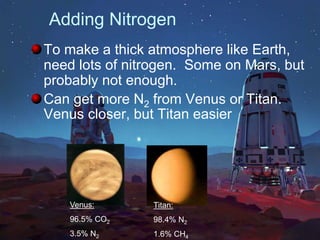
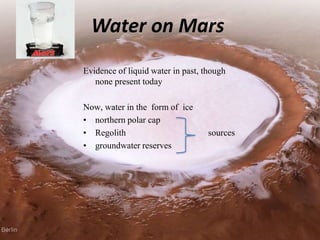
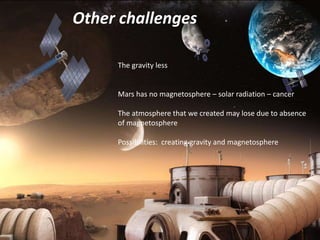
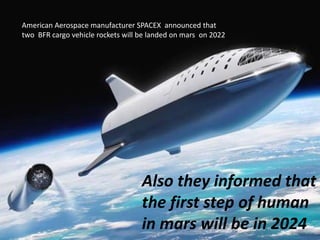
Mars is the best candidate for human colonization due to its proximity to Earth and potential resources. However, terraforming Mars to support Earth-like life presents significant challenges due to the planet's cold temperatures, thin atmosphere, lack of liquid water and protection from radiation. The terraforming process would involve introducing greenhouse gases to raise temperatures, thickening the atmosphere, generating oxygen through photosynthesis, and melting ice caps to provide water. While technology is not yet advanced enough to terraform Mars, NASA plans to send the first astronauts to Mars by 2030, with the goal of terraforming the planet to support human life within 1000 years through these gradual environmental modifications.