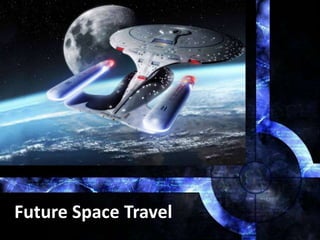
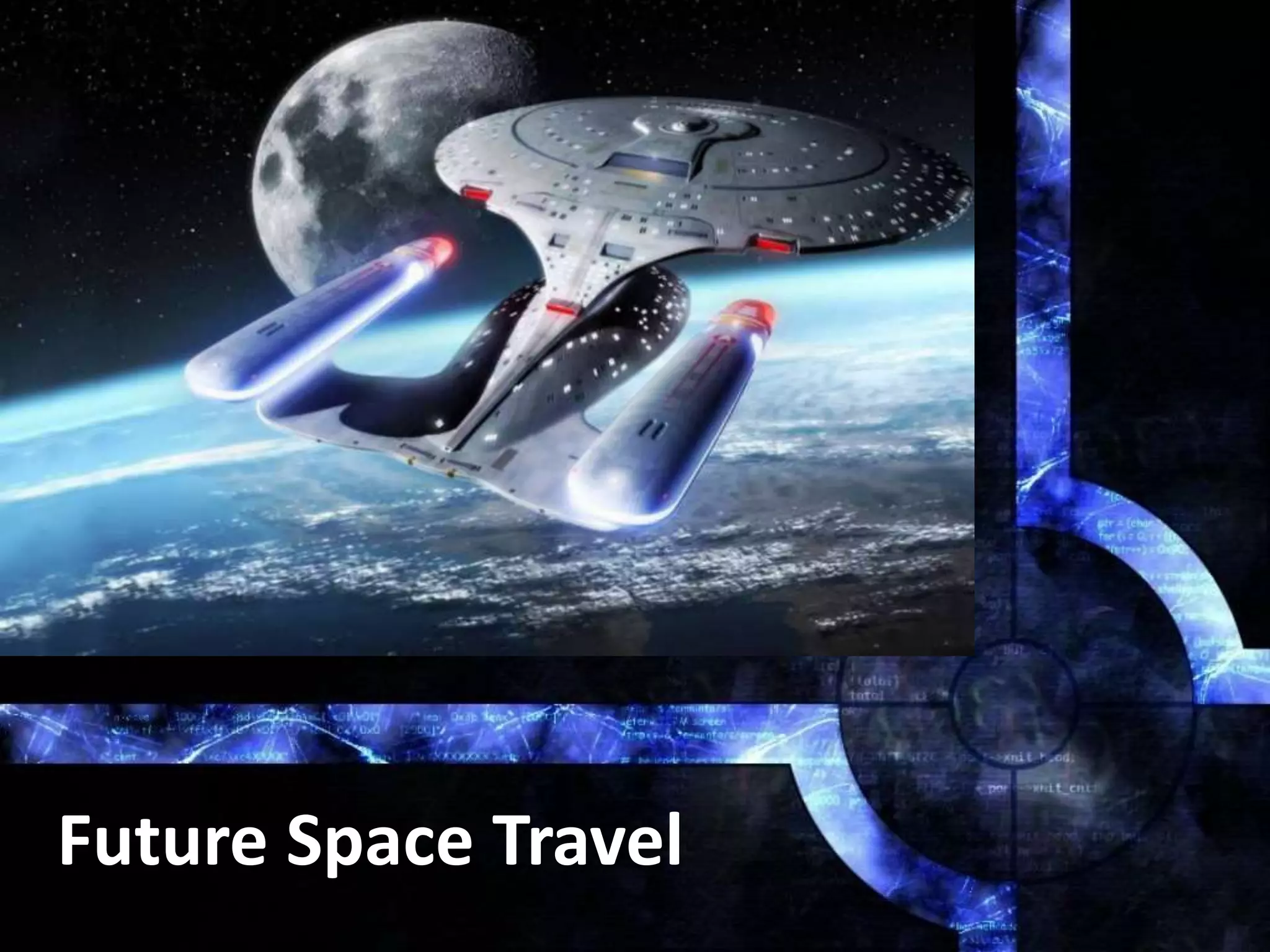

Future Space Travel
Futuristic Models:
• The General Theory of Relativity
suggests dimensions beyond time
and 3 dimensional space
• SOME FUTURE MODELS :
1. Warp Drive.
2. Nuclear pulse propulsion.
3. Solar sail.
Solar Sails
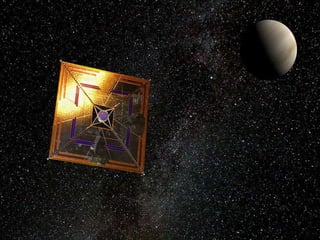
• Also called as “light sails” & “photon sails”.
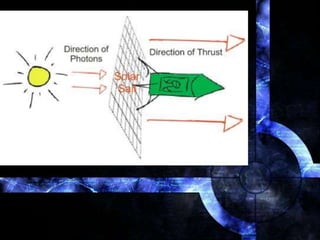
• Uses the radiation pressure or the solar
pressure from stars to push large ultra thin
mirrors to high speed.
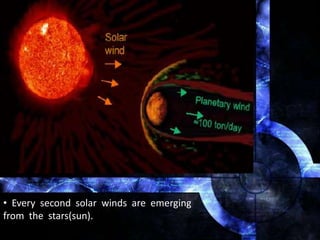
• Every second solar winds are emerging
from the stars(sun).
• It offers the possibility of low cost operations.
• Solar pressure affects almost every objects in
the universe.
• A typical spacecraft going to Mars, for example,
will be displaced by thousands of kilometers by
solar pressure.
• For using this energy effectively “solar sails”
theory is formed.
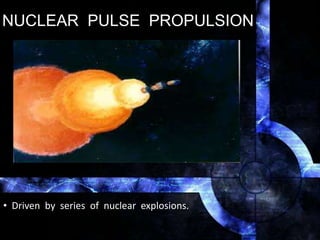
NUCLEAR PULSE PROPULSION
• Driven by series of nuclear explosions.
• Increases speed by stage by stage..
• Atlast it acquires the “Speed of light”..
• CURRENT PROJECTS :
• Project Orion :
-would use nuclear bombs as propellant,
possible with existing technology.
• Project Medusa :
-uses large sail to maximize energy
deposited by nuclear blast.
• Antimatter Catalyzed NPP :
-antimatter reduces the amount of material
needed for fission reaction.
Warp drive
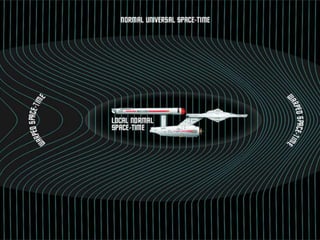
• Uses gravitational effect to compress
the space-time in front of spacecraft
then expand the space-time behind
it.
• Relativity suggest it might be
possible..
• Outside observers would see the spacecraft
move “faster than light”.
• Inside observers would not feel any
acceleration
• The net effect is rather like surfing where you
are nearly stationary with respect to the wave,
but are traveling with the speed of the wave.
• Nasa currently working on such a theory
called “SPEEDS”.
• It could take a spacecraft to Alpha Centauri
in a mere two weeks eventhough the system is
4.3 light-years away..
 In the next 50 years, science fiction will
have become science fact.
 Space-Opens endless number of channels
for engineers.
 The final adventure for those seeking the
unknown.
 Perhaps you will be the one to discover
this type of technology..
FUTURE SPACE TECHNOLOGY

FUTURE SPACE TECHNOLOGY

  • 1.
  • 2.
    Futuristic Models: • TheGeneral Theory of Relativity suggests dimensions beyond time and 3 dimensional space • SOME FUTURE MODELS : 1. Warp Drive. 2. Nuclear pulse propulsion. 3. Solar sail.
  • 3.
    Solar Sails • Alsocalled as “light sails” & “photon sails”. • Uses the radiation pressure or the solar pressure from stars to push large ultra thin mirrors to high speed.
  • 4.
    • Every secondsolar winds are emerging from the stars(sun).
  • 6.
    • It offersthe possibility of low cost operations. • Solar pressure affects almost every objects in the universe. • A typical spacecraft going to Mars, for example, will be displaced by thousands of kilometers by solar pressure. • For using this energy effectively “solar sails” theory is formed.
  • 7.
    NUCLEAR PULSE PROPULSION •Driven by series of nuclear explosions.
  • 8.
    • Increases speedby stage by stage.. • Atlast it acquires the “Speed of light”.. • CURRENT PROJECTS : • Project Orion : -would use nuclear bombs as propellant, possible with existing technology. • Project Medusa : -uses large sail to maximize energy deposited by nuclear blast. • Antimatter Catalyzed NPP : -antimatter reduces the amount of material needed for fission reaction.
  • 9.
    Warp drive • Usesgravitational effect to compress the space-time in front of spacecraft then expand the space-time behind it. • Relativity suggest it might be possible..
  • 10.
    • Outside observerswould see the spacecraft move “faster than light”. • Inside observers would not feel any acceleration • The net effect is rather like surfing where you are nearly stationary with respect to the wave, but are traveling with the speed of the wave.
  • 12.
    • Nasa currentlyworking on such a theory called “SPEEDS”. • It could take a spacecraft to Alpha Centauri in a mere two weeks eventhough the system is 4.3 light-years away..
  • 13.
     In thenext 50 years, science fiction will have become science fact.  Space-Opens endless number of channels for engineers.  The final adventure for those seeking the unknown.  Perhaps you will be the one to discover this type of technology..